










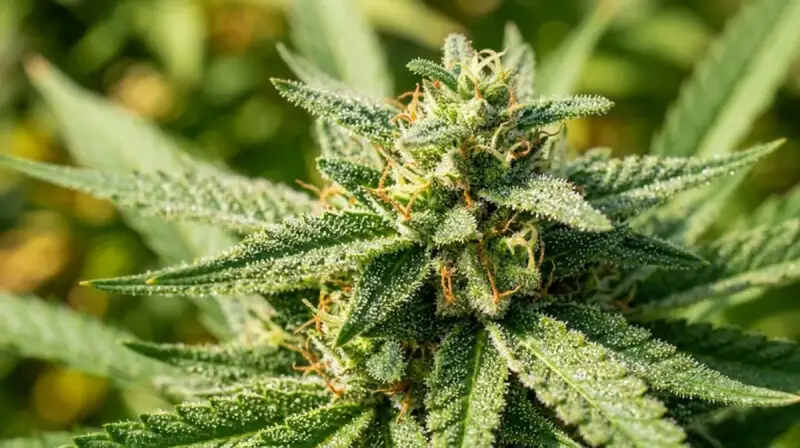
- Genetics: Blueberry (Indica) × Haze (Sativa) — Santa Cruz, California, early 2000s
- THC Range: 17–24% — medium-high potency; suitable for intermediate to experienced consumers
- Dominant Terpenes: Myrcene · Caryophyllene · Terpinolene — responsible for its blueberry-vanilla aroma
- Primary Effects: Euphoria, creativity, full-body relaxation without heavy sedation
- Best Medical Uses: Chronic pain, depression, fatigue, mild anxiety, appetite loss
- Yield: 17–21 oz/m² indoors · up to 21 oz/plant outdoors — among the highest-yielding popular strains
Origin & Why Blue Dream Dominates US Dispensaries
Blue Dream has ranked consistently among the top-selling cannabis strains in the United States by dispensary volume for well over a decade — a position no other hybrid has managed to hold as reliably. A sativa-dominant cross of Blueberry and legendary Haze, it solves a problem most strains cannot: it delivers genuine physical relief without killing productivity. That combination makes it the default recommendation across the US strain market for daytime use, medical patients managing chronic pain or depression, and first-time growers who want reliable yields without complexity.
California Origins
Blue Dream emerged from the Santa Cruz cannabis scene in the early 2000s, bred within California's then-nascent medical framework. The original breeder is disputed — common with strains that predate formal seed bank records — but the Blueberry × Haze parentage is universally accepted. California was producing the most influential hybrids of that era, and Blue Dream spread north through the Pacific Northwest before going national with the wave of state legalizations in the early 2010s.
How the Genetics Shape the High
The Blueberry parent (indica-dominant) contributes physical ease, appetite stimulation, and the strain's signature berry terpene profile. The Haze parent (sativa-dominant) drives the cerebral component — the clear-headed euphoria, mental energy, and creative uplift. The 60/40 split means neither side overwhelms the other: you get a high that starts in the head and settles into the body, without the couch-lock of heavy indicas like Granddaddy Purple or the racing intensity of pure Haze. That balance is the product, not a side effect.
Cannabinoid & Terpene Profile
The sativa/indica label explains the direction of Blue Dream's effects — the terpene profile explains the intensity and character. Blue Dream's profile is among the most thoroughly documented of any US commercial strain, which is part of why it behaves so consistently across different cultivars.
| Compound | Typical Level | Effect Contribution | Aroma Note |
|---|---|---|---|
| THC | 17–24% | Euphoria, appetite, pain relief | — |
| CBD | 0.1–0.2% | Minimal anti-anxiety buffer | — |
| Myrcene | Dominant (0.4–0.6%) | Muscle ease, sedation modulator | Earthy, musky, mango |
| Caryophyllene | Secondary (0.2–0.4%) | Anti-inflammatory, CB2 agonist | Spicy, peppery, woody |
| Terpinolene | Tertiary (0.1–0.3%) | Uplifting, light sedation | Floral, fruity, fresh pine |
| Pinene | Trace (0.05–0.15%) | Alertness, memory retention | Sharp pine, clean |
The dominant myrcene level matters beyond aroma: high-myrcene strains enhance permeability of the blood-brain barrier, which is why Blue Dream at 19% THC can hit harder than some 24% strains with a different terpene foundation. Caryophyllene's CB2 receptor activity — unique among terpenes — adds a direct anti-inflammatory layer that explains why pain patients specifically gravitate toward this strain over comparably potent alternatives.
Effects: What to Expect

Onset, Peak & Duration
- Onset (smoked/vaped): 2–5 minutes — cerebral lift first, often felt as gentle pressure behind the eyes
- Peak window: 30–60 minutes — euphoria is fullest, creative thinking most pronounced
- Body relaxation: Arrives 20–30 minutes in, complementing the mental state rather than overtaking it
- Total duration: 2–3 hours; tolerance and dose size are the primary variables
- Edibles: Onset delayed 45–90 minutes; full experience lasts 4–6 hours — start low
- Comedown: Gentle — fades gradually without the heavy grogginess of indica-dominant strains
- Best suited for: Intermediate to experienced consumers; beginners should start with a single small inhalation and wait 10 minutes before continuing
"The consistent appeal of Blue Dream comes down to its predictability. Patients managing chronic conditions need a strain that behaves the same way every session — and Blue Dream's well-documented terpene profile delivers reliable relief without the sedation that makes high-THC indicas impractical during the day."
Medical Applications
- Chronic pain: Combined CB1 (THC) and CB2 (caryophyllene) activity provides meaningful analgesic relief without full sedation — functional daytime pain management
- Depression & mood disorders: Sativa-dominant strains consistently outperform indica-heavy options for mood elevation; the Haze genetics drive this directly
- Fatigue: One of few high-THC strains routinely recommended for daytime fatigue — the energizing Haze component prevents the sedation most other potent strains induce
- Appetite stimulation: Present but gentler than with heavy indicas; useful for patients who need appetite support without being locked to a couch
- Mild to moderate anxiety: Effective at controlled doses; higher doses carry the same paradoxical anxiety risk as all high-THC strains in sensitive individuals
Blue Dream vs. Similar Strains
The decision between Blue Dream and its closest alternatives comes down to one axis: how much body weight versus mental clarity you need. Here is how it benchmarks against the strains most frequently compared to it at US dispensaries.
| Strain | Type | THC | Best For | vs. Blue Dream |
|---|---|---|---|---|
| Blue Dream | Hybrid 60/40 S | 17–24% | Daytime, creativity, pain | — Reference — |
| Sour Diesel | Sativa-dominant | 19–25% | Energy, focus, depression | More cerebral, less body relief, sharper taste |
| Gorilla Glue #4 | Hybrid 50/50 | 25–32% | Heavy pain, insomnia, stress | Significantly stronger, sedating — not for daytime |
| Girl Scout Cookies | Hybrid 40/60 I | 17–28% | Euphoria, appetite, nausea | More body-heavy, sweeter flavor, indica tilt |
| OG Kush | Hybrid 55/45 I | 19–26% | Stress relief, classic Kush taste | Heavier body, earthier — afternoon rather than daytime |
| Jack Herer | Sativa-dominant | 15–24% | Focus, motivation, clarity | More head-focused, less physical ease |
If you want the blueberry flavor profile with more body weight, Granddaddy Purple — the indica parent in Blue Dream's lineage — delivers exactly that. If you need the daytime energy component but find Blue Dream's body relaxation unnecessary, Sour Diesel is the cleaner alternative.
Growing Blue Dream
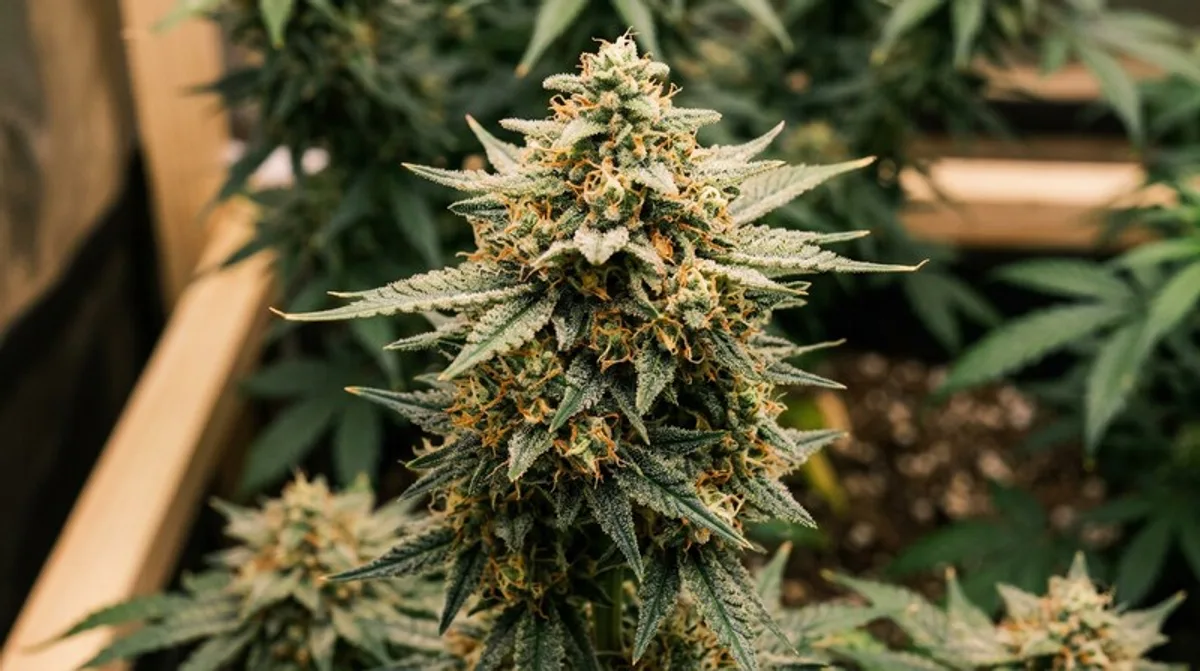
Blue Dream is one of the most beginner-accessible strains that still rewards experienced growers with top-tier yields. Haze genetics push vertical growth aggressively — expect plants that want to reach 6+ feet indoors — but disease resistance and feeding tolerance are excellent, making it forgiving of the minor errors that ruin more sensitive cultivars. Full setup guidance in our beginner's growing guide.
Indoor Growing
Blue Dream thrives in soil and hydro equally. Height management is the primary challenge — without training, it will outgrow most tent setups. Key parameters:
- Training: SCROG or topping — Blue Dream responds exceptionally well to both; dramatically increases canopy coverage and usable light penetration
- Lighting: 600–1000W HPS or LED equivalent; this is a light-hungry strain that stretches toward any low-intensity source
- Nutrients: Heavy nitrogen feeder in veg, then transition hard to phosphorus/potassium at flip; follow a structured feeding schedule — Blue Dream is slightly prone to nutrient lockout if pH drifts
- pH: 6.0–7.0 in soil · 5.5–6.5 in hydro
- Yield: 17–21 oz/m² (475–600g/m²) under dialed-in conditions
- Flower time: 9–10 weeks — longer than many hybrids, but the yield volume justifies it
Outdoor Growing
Outdoors, Blue Dream excels in warm, Mediterranean-style climates — fitting given its California origins. Plants can exceed 10 feet and produce extraordinary per-plant yields. Check your state's plant count limit before planning — most recreational states cap home grows at 3–6 plants. Harvest window falls in late October in Northern Hemisphere grows. Blue Dream's terpene profile — particularly the terpinolene and myrcene responsible for the blueberry aroma — is sensitive to rushed drying; follow a proper curing protocol (7–10 day hang-dry at 60–65°F, 4–8 weeks in sealed glass) to preserve what makes this strain worth growing.
Blue Dream & Drug Testing
Blue Dream's typical dispensary flower runs 19–22% THC. At that potency, daily consumers should expect urine detection windows of 30–60+ days after cessation — not because Blue Dream is unusual, but because any high-THC strain consumed daily causes significant metabolite accumulation in fat tissue. Occasional users (once or twice per week) typically clear in 7–14 days. For exact timelines by test type:
- Urine test — 3–7 days (single use) to 30–90+ days (daily use) — the most common workplace test
- Blood test — THC clears blood within 1–2 days for occasional users; not used for standard workplace testing
- Hair follicle test — detects any use within the past 90 days regardless of when you last consumed
- Factors affecting detection — body fat percentage, metabolism, and hydration level all shift your personal window significantly
If you have an upcoming test, the drug test resource hub covers every test type in detail, including what the science actually says about detox methods.
Blue Dream Buying Checklist
Not all Blue Dream flower is equal — cultivator, grow conditions, and time since harvest all determine whether you get the experience this strain is known for or a mediocre lookalike. Use this at the dispensary counter:
- Harvest date: Within the last 6 months — terpene degradation accelerates sharply after that point; blueberry aroma fades first
- Moisture content: Should spring back slightly when squeezed — not powder-dry (over-dried) and not wet/sticky (under-cured)
- Trichomes under loupe: Cloudy-to-amber is ideal; clear trichomes = harvested too early, brown/degraded = old stock
- Aroma: Authentic Blue Dream smells of sweet blueberry with floral and earthy undertones — if it smells like hay, chemicals, or has no aroma, pass
- COA terpene panel: Request the lab report and look for myrcene and terpinolene in the top three — a "Blue Dream" without these cannot confirm genetic authenticity, regardless of label
- State legal status: Verify your state's current rules via our cannabis laws by state guide before purchasing
Frequently Asked Questions
Is Blue Dream good for anxiety?
At controlled, low-to-moderate doses, yes — Blue Dream's euphoric, mood-lifting effect regularly helps users override mild anxious thoughts. The sativa-dominant profile keeps the head clear rather than foggy. However, THC-sensitive individuals or anyone prone to cannabis-induced paranoia need to be careful: at high doses, any high-THC strain can paradoxically amplify anxiety rather than relieve it, and Blue Dream's 20%+ ceiling makes that risk real if you overshoot. Start with one small inhalation, wait 10 minutes, and evaluate before continuing. For condition-specific guidance, see our medical cannabis section.
How long does a Blue Dream high last?
Smoked or vaped, the experience runs 2–3 hours from onset to comedown, with the peak occurring in the first 60–90 minutes. Edibles extend this significantly — onset is delayed by 45–90 minutes and the full experience can last 4–6 hours. Blue Dream's comedown is notably gentle compared to heavy indica strains: rather than a hard stop, the high fades gradually into a relaxed baseline. Tolerance, body weight, and the specific THC concentration of the product all shift these numbers.
Where in the US is Blue Dream available?
Blue Dream is stocked by the vast majority of dispensaries in every state with a recreational program — California, Colorado, Washington, Michigan, New York, and 20+ others. In medical-only states, availability depends on which cultivators hold licenses in that market, but Blue Dream's commercial appeal means it is grown wherever cannabis cultivation is permitted. See the full picture in our cannabis legal status by state guide.
What terpenes make Blue Dream smell like blueberries?
The blueberry character comes from the interplay of myrcene (musky, fruity base note from the Blueberry parent), terpinolene (sweet, floral top note that reads as fresh berries), and trace linalool in some phenotypes (a lavender-adjacent roundness that softens the sweetness). The Haze side contributes earthy-herbal undertones that prevent the profile from being one-dimensionally fruit-forward. If a labeled "Blue Dream" smells primarily of fuel or pine with no berry character, the genetics are not what the label claims — ask for the terpene panel on the COA.