










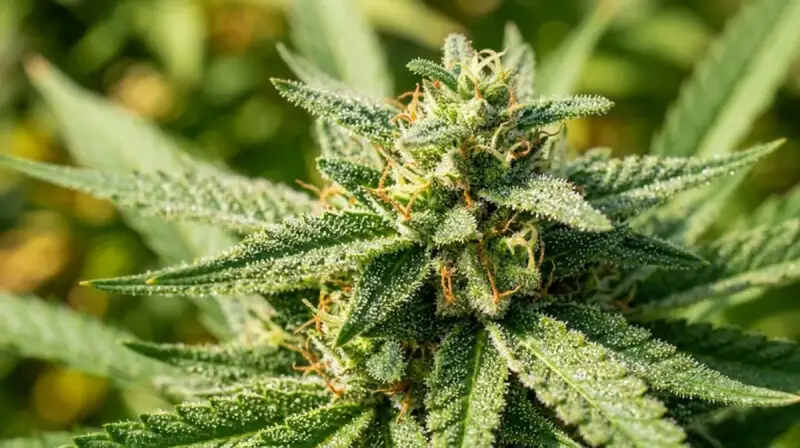
- Schafer et al. (2012): first controlled evidence. Low-dose cannabis (7.5 mg THC) significantly increased verbal divergent thinking (Alternative Uses Task) scores; 22 mg THC produced impairment versus placebo, establishing the clear inverted-U dose-response curve for cannabis and creativity.
- Divergent thinking enhancement, convergent impairment. Cannabis reliably enhances the generation of multiple creative possibilities from a single starting point. It does not enhance convergent thinking (finding one correct answer) and may mildly impair it even at low doses due to working memory effects.
- Default Mode Network loosening. Cannabis reduces suppression of the DMN, allowing the resting-state associative network to remain partially active during thinking — the substrate of “conceptual blending,” where distant ideas spontaneously connect in new combinations.
- Dopamine D2 and thalamic filtering. Reuter et al. (2006) linked low thalamic D2 receptor density to higher creative thinking, because low D2 filtering allows more unusual associations to reach consciousness. THC-driven dopamine release partially replicates this low-filtering state.
- Pseudo-profound creativity warning. Users consistently rate their own creative output more highly when high than when sober, but blind evaluations often show the same or lower quality. The feeling of creativity is more reliably enhanced than the measurable output quality, particularly for execution-phase work.
- Historical creative cannabis users. Louis Armstrong was an early and vocal advocate for cannabis and its effects on musical improvisation. Aldous Huxley wrote extensively on altered states and creative perception, though his primary focus was mescaline. Bill Murray has referenced cannabis use in creative contexts. These anecdotes align with but do not prove the pharmacological case.
- Tolerance reduces creativity benefit. Gruber et al. (2012) found that chronic heavy cannabis users showed reduced divergent thinking capacity in their sober state compared to non-users, suggesting long-term heavy use may impair the same cognitive flexibility that occasional use enhances.
Divergent vs. Convergent Thinking: The Core Distinction
Creativity is not a single cognitive capacity but a spectrum of abilities, and cannabis does not enhance all of them equally. The fundamental distinction in creativity research is between divergent thinking and convergent thinking — two modes that are neurologically distinct and that respond very differently to cannabis.
Divergent thinking is the ability to generate many different, unconventional ideas from a single starting point. J.P. Guilford’s Alternate Uses Task is the standard measure: given a brick, list as many possible uses as you can think of (doorstop, sculpture material, bookmark, weapon, heat reservoir, percussion instrument, and so on). High divergent thinking scores involve both quantity (fluency), variety (flexibility), and unusualness (originality). This is the brainstorming, ideation, free-association mode of creative cognition, and it is the mode most consistently enhanced by low-dose cannabis.
Convergent thinking is the ability to identify the single correct answer that connects multiple pieces of information — measured by Remote Associates Tests where three words must be connected by a fourth. It requires focused, sequential, working-memory-intensive processing. Cannabis does not enhance convergent thinking and can mildly impair it even at low doses. This is why cannabis is pharmacologically appropriate for the brainstorming phase of creative work and pharmacologically inappropriate for the analytical, problem-solving phase.
Schafer et al. (2012): What the Study Actually Showed
The first controlled randomized study on cannabis and creativity — Schafer et al. (2012), published in Psychopharmacology — recruited recreational cannabis users and administered either placebo, low-dose cannabis (7.5 mg THC inhaled), or high-dose cannabis (22 mg THC inhaled) before testing on verbal divergent thinking tasks.
The results were significant and instructive. At 7.5 mg THC, verbal divergent thinking scores improved significantly compared to placebo (p<0.05), with improvements in both fluency (quantity of ideas) and originality (unconventionality of ideas). At 22 mg THC, scores declined below placebo — participants generated fewer and less original ideas, reflecting that the cognitive costs of higher-dose THC (working memory impairment, thought disorganization) outweighed the disinhibitory benefits. The dose-response relationship was a clear inverted U: enhancement peaks at a moderate dose and impairment takes over at higher doses.
A critical detail: participants who were rated as having lower baseline creativity showed the largest improvements at low doses. Participants who were already highly creative at baseline showed smaller or no enhancement, suggesting cannabis has the greatest creative benefit as a tool for breaking habitual thinking in ordinarily non-fluent individuals rather than as an amplifier of already-exceptional creative capacity.
| THC Dose | Divergent Thinking | Convergent Thinking | Working Memory | Practical Use |
|---|---|---|---|---|
| 2.5–5 mg (microdose) | Mild enhancement; no impairment | Unchanged | Intact | Focus-compatible creative warmup; all-day subtle enhancement |
| 7.5 mg (Schafer optimum) | Significant enhancement; peak creativity | Mildly reduced | Minor reduction | Brainstorming; ideation; writing first drafts; musical improvisation |
| 15–20 mg | Variable; experience-dependent | Moderate decline | Moderate reduction | Free-association brainstorming; deep creative immersion; experienced users |
| 22 mg+ (Schafer “impaired”) | Impaired vs. placebo | Significant decline | Significant impairment | Not recommended for intentional creative work |
The Default Mode Network and Conceptual Blending
The Default Mode Network (DMN) is a set of brain regions active during mind-wandering, self-referential thinking, and rest that is normally suppressed during focused task engagement. It is the neural substrate of the spontaneous thought, daydreaming, and loose association that characterizes the mind when not rigidly focused — precisely the conditions associated with creative incubation and unexpected insight.
Cannabis reduces the normal task-related DMN suppression, allowing more of the resting-state associative activity to persist even during goal-directed thinking. This produces what cognitive scientists call “conceptual blending”: the spontaneous combination of concepts from distant semantic domains into novel configurations. The feeling that two seemingly unrelated ideas are suddenly and profoundly connected — the “I’ve never thought of it that way before” creative insight — is the experiential manifestation of DMN-mediated conceptual blending that cannabis pharmacologically facilitates.
Dopamine, Thalamic Filtering, and Creative Association
Reuter et al. (2006) published a landmark study connecting thalamic dopamine D2 receptor density to creative thinking. Individuals with lower D2 receptor density in the thalamus — a region that normally gates the flow of information to the cortex — showed significantly higher scores on divergent thinking tasks. The proposed mechanism: lower thalamic filtering allows a wider range of unusual associations and loosely connected concepts to reach cortical awareness, producing the broader associative repertoire that divergent creativity requires.
THC-driven dopamine release, including in thalamic regions, partially replicates this low-filtering state. By temporarily reducing the efficiency of the thalamic gate, cannabis allows more unusual, peripherally associated ideas to surface in conscious thought. This is the pharmacological basis of the characteristic cannabis creative state where “everything seems related to everything else” — not a mystical property but a measurable consequence of reduced thalamic dopamine filtering.
Limonene and Terpinolene: The Creative Terpenes
Limonene elevates limbic dopamine and serotonin, reducing the anxiety and self-judgment that suppress creative expression. For artists and writers whose primary obstacle is not lack of ideas but fear of judgment and perfectionism, limonene-rich strains offer the most direct pharmacological counter: they lower the evaluative anxiety that blocks creative risk-taking. Strains high in limonene include Tangie, Super Lemon Haze, and Durban Poison.
Terpinolene produces an uplifting, cerebrally stimulating quality through multiple monoamine pathways. Terpinolene-dominant strains (Jack Herer, Durban Poison, Ghost Train Haze) are consistently associated by users with the most generative, idea-rich creative states. Its precise molecular mechanism for the creative effect is not fully characterized, but its consistent consumer association with creative mental states and its stimulatory effect profile make it the leading creative terpene in cannabis pharmacognosy.
Alpha-pinene adds the AChE inhibition that preserves working memory, meaning that pinene-rich creative strains (Jack Herer) produce the idea-generation benefit with less of the short-term memory impairment that makes it difficult to hold creative threads together long enough to develop them.
Strains for Creative Work
| Strain | Type | THC % | Creative Terpenes | Creative Score | Best Creative Application |
|---|---|---|---|---|---|
| Jack Herer | Sativa | 18–23% | Terpinolene, Limonene, Ocimene, Pinene | 9.5 / 10 | Writing, music composition, visual art, brainstorming |
| Durban Poison | Pure Sativa | 18–26% | Terpinolene, Ocimene, myrcene (low) | 9.3 / 10 | Ideation, writing, innovative problem-framing |
| Super Lemon Haze | Sativa-dominant | 18–22% | Terpinolene, Ocimene, caryophyllene | 9.1 / 10 | Design, comedy writing, musical improvisation |
| AK-47 | Sativa-dominant Hybrid | 17–22% | Myrcene, Caryophyllene, Limonene | 8.8 / 10 | Artistic flow; balanced creativity with mild body ease |
| Blue Dream | Sativa-Hybrid | 17–24% | Myrcene, Caryophyllene, Pinene | 8.6 / 10 | Relaxed creative flow; accessible to moderate users |
| Chemdawg | Hybrid | 19–24% | Caryophyllene (high), Myrcene, Limonene | 8.4 / 10 | Cerebral-creative; confident ideation; music and performance |
Creative Use Protocol
To use cannabis deliberately for creativity: vaporize 1–2 puffs from a terpinolene or limonene-dominant sativa targeting approximately 7.5 mg THC, 20–30 minutes before your creative session. Have your materials ready and your environment prepared before onset. Keep a dedicated notepad for capturing ideas — the hyperassociative state generates connections faster than working memory can hold them, and many high-quality ideas will evaporate before execution without written capture.
Use cannabis for ideation, not execution. First-draft writing, initial design sketching, musical improvisation, and conceptual roadmapping benefit from the divergent, associative state. Editing, technical implementation, and quality-control work should be done sober, when convergent thinking and precision are restored. Cannabis is a brainstorming tool, not a complete creative workflow solution.
Avoid cannabis creativity sessions when fatigued: the working memory impairment compounds with tiredness, tipping the experience toward cognitive fog rather than creative flow. Morning or early afternoon sessions after adequate sleep and food produce the best outcomes. Review state regulations at our state guide.
Tolerance and the Long-Term Creativity Question
Gruber et al. (2012) and subsequent research raise an important caution: chronic heavy cannabis users show measurable reductions in baseline (sober-state) divergent thinking and cognitive flexibility compared to non-users. The implication is that the short-term creativity enhancement from occasional cannabis use may reverse into a long-term impairment of sober creative capacity with daily heavy use. Cannabis’s relationship with creativity is best characterized as an occasional-use tool: periodic sessions that leverage the disinhibitory window without producing the tolerance and baseline cognitive changes associated with daily dependence.
Frequently Asked Questions
Should I use cannabis before or during creative work?
Before. The optimal window is to have the cannabis effect well-established (15–30 minutes post-inhalation) before beginning the creative session, so the peak disinhibitory state coincides with the work. Starting to work while the effect is still building can produce distracted, unfocused behavior. Have materials ready and sit down to create once the effect has settled into its characteristic flow state.
Is microdosing cannabis better for creativity than standard doses?
Microdosing (2.5–5 mg THC) produces creative enhancement with essentially no cognitive impairment, making it appropriate for creative work that requires both ideation and execution. For pure brainstorming sessions, the 7.5 mg Schafer optimum may produce stronger divergent thinking. The best approach depends on the creative task: microdose for creative work that requires sustained attention and execution; standard low-dose for free-flowing ideation, first drafts, and brainstorming.
Does cannabis help with writer’s block?
Writer’s block typically involves excessive self-criticism, inability to produce imperfect output, and rigid adherence to mental templates. Low-dose cannabis directly addresses all three: it reduces prefrontal self-evaluation, lowers the bar for putting words on the page, and expands the range of associative connections available. The practical recommendation for writer’s block is to use cannabis for producing rough material (first drafts, free-writing, brainstorming) without editing, capturing everything, and returning to the material sober for evaluation and refinement.
Can cannabis help musicians improvise?
Musical improvisation is a primarily divergent creative task that benefits from looser associations, reduced fear of wrong notes, and heightened responsiveness to harmonic and rhythmic patterns. Low-dose cannabis’s DMN loosening and pattern-recognition amplification align well with the cognitive demands of improvisation. Many jazz musicians of the bebop era documented cannabis as a deliberate performance tool for exactly these reasons. At moderate doses, temporal distortion can impair rhythmic precision; controlled low doses avoid this problem.