










How to Grow Trainwreck
Humboldt County legend - a fast-hitting, potent sativa-dominant hybrid with lemon-pine aromas and a powerful energising high.
Trainwreck Grow Timeline
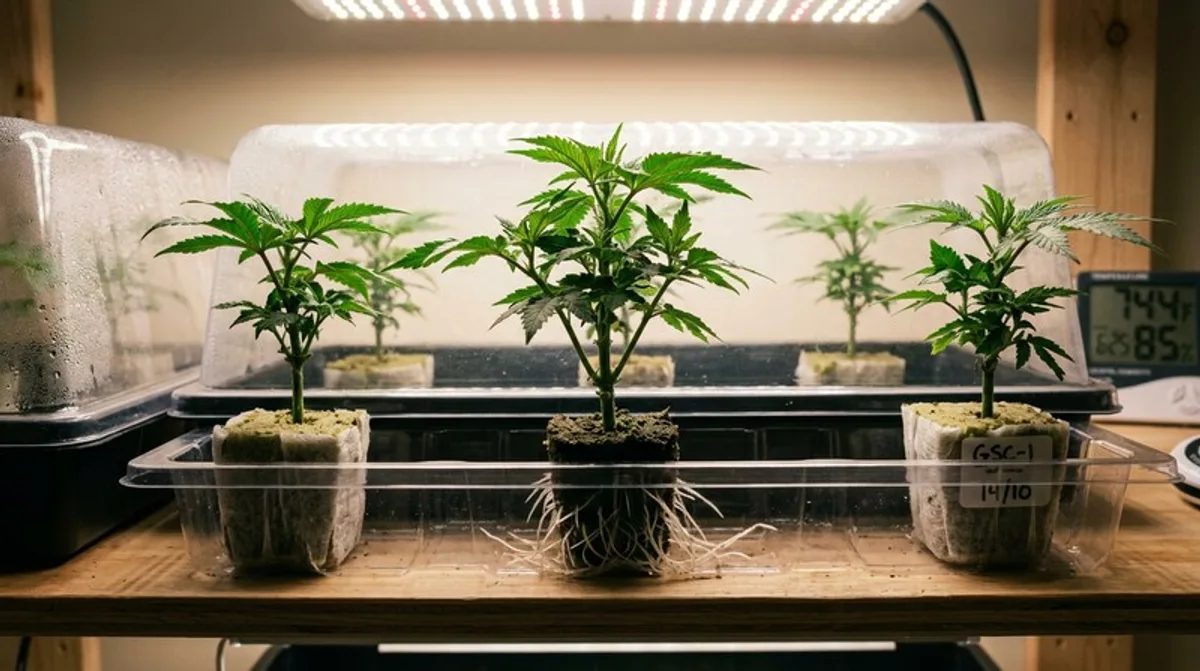
Trainwreck Seeds & Genetics
Genetics: Mexican x Thai x Afghani | Breeder: Humboldt County, California (1970s) | Type: Sativa-dominant Hybrid
Trainwreck originated in Humboldt County, California in the 1970s through a cross of Mexican and Thai sativas with Afghani indica. Its name reportedly comes from a train accident near the original grow site. It is the parent of Pineapple Express and other popular California strains. Seeds are available feminised and autoflowering from multiple breeders. For growing fundamentals, visit our beginner cannabis growing guide.
Indoor vs Outdoor Growing Trainwreck
Trainwreck requires height management indoors - top at the 4th-5th node and implement SCROG to maximise yield. See our SCROG guide. Flip to 12/12 after 4-5 weeks of veg. Its vigorous growth responds well to all training methods. Outdoors, Trainwreck is a powerhouse in warm climates. Plant in large containers or directly in the ground with full sun exposure. Our outdoor growing guide covers site preparation.
Nutrients & Feeding for Trainwreck
Trainwreck has moderate-to-high nutrient demand. In veg, nitrogen-dominant at EC 1.2-1.8. Transition to bloom formula at flowering onset. CalMag supplementation is beneficial throughout. Flush 10-14 days before harvest to preserve lemon-pine terpene profile. Full feeding schedule in our nutrients guide.
Common Problems & Solutions
Height management is the primary indoor challenge - Trainwreck grows aggressively in the first weeks of flowering. Humidity control is important as its moderately dense buds can trap moisture. Maintain RH below 50% during flowering. Some phenotypes show calcium deficiency in late flower - supplement with CalMag.
Harvest, Drying & Curing Trainwreck
Trainwreck is ready when 75-85% of trichomes are cloudy with some amber to preserve its classic energising effect. The lemon-pine aroma peaks at harvest. Dry 7-10 days at 18-21C in dark ventilated conditions. Cure 3-5 weeks in glass jars, burping daily in first two weeks. Full harvest process in our harvest guide.
Full terpene profile, effects and uses of Trainwreck.
Terpenes & Effects
Frequently Asked Questions
Is Trainwreck easy to grow?
Trainwreck is moderately challenging due to its sativa height and vigorous growth. It is however relatively resilient and tolerant of minor environmental fluctuations.
How long does Trainwreck flower?
Trainwreck flowers in 8-10 weeks indoors. The indica phenotypes finish on the shorter end while sativa-dominant phenos take closer to 10 weeks.
What yield does Trainwreck produce?
Indoor yields average 400-500g/m2 under quality lighting with SCROG training. Outdoor plants in warm climates can exceed 500g per plant.
What makes Trainwreck so potent?
Trainwreck is known for exceptionally high THC levels often exceeding 20-25%, combined with a fast-hitting cerebral effect that earned it its name.
Does Trainwreck grow well indoors?
Yes, though height management is essential. SCROG or topping during veg keeps Trainwreck manageable in grow tents.
Is Trainwreck good for outdoor growing?
Trainwreck thrives outdoors in warm, sunny climates and finishes by mid-October. Its vigorous growth produces impressive outdoor yields.