










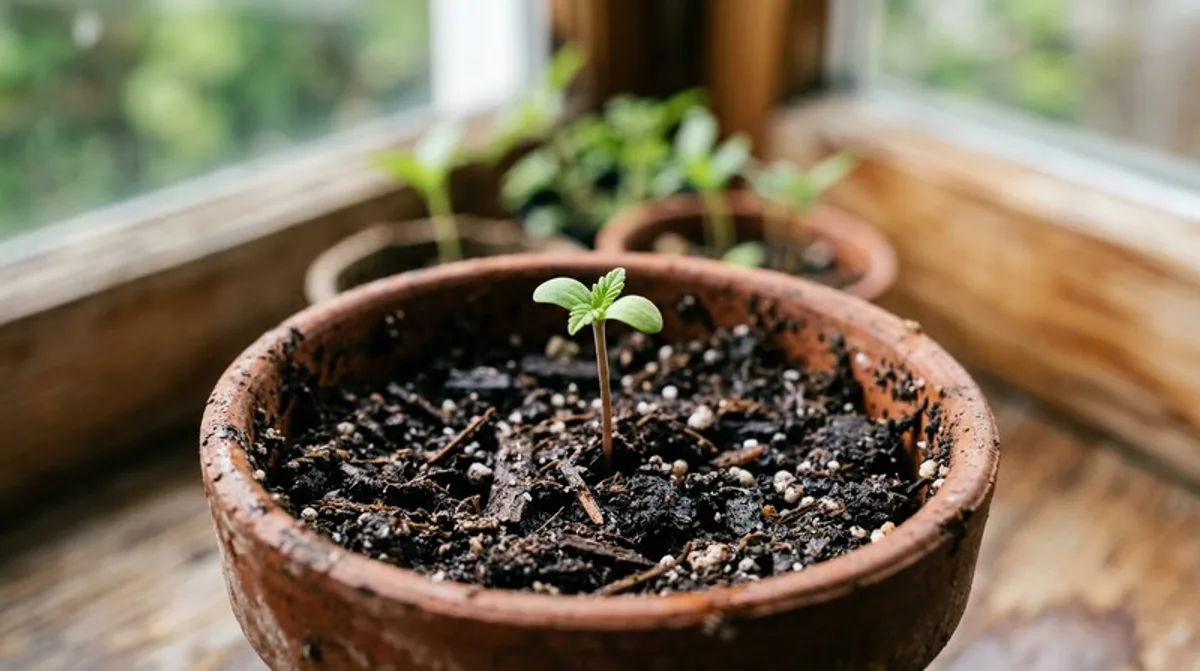
- Autoflowering cannabis strains complete their full life cycle in 60–90 days from seed to harvest, significantly faster than photoperiod varieties.
- Autoflowers flower based on age rather than light cycle, making them ideal for beginner and indoor growers with less light control.
- Modern autoflower strains can yield 50–200+ grams per plant indoors, with outdoor plants sometimes exceeding 250g under optimal conditions.
- The optimal light schedule for autoflowers is 18–20 hours of light per day throughout their entire lifecycle.
- Autoflowering genetics originate from Cannabis ruderalis, a subspecies native to Central Asia and Eastern Europe that adapted to short summers.
- Due to their compact size (typically 30–100 cm tall), autoflowers are well-suited to stealth grows, balconies, and small spaces.
- Autoflowers are more sensitive to overfeeding than photoperiod plants — they require roughly 30–50% less nutrient concentration during feeding.
What Are Autoflowering Cannabis Plants?
Autoflowering cannabis plants represent one of the most significant innovations in modern cannabis cultivation. Unlike traditional photoperiod strains that require a shift to a 12/12 light schedule to trigger flowering, autoflowers begin producing buds automatically after a set number of weeks — typically between 2 and 4 weeks from germination. This trait comes from Cannabis ruderalis, a hardy subspecies that evolved in the harsh, short summers of Siberia, Central Asia, and Eastern Europe, developing the ability to flower based on maturity rather than light availability.
Over the past two decades, breeders have crossed ruderalis genetics with high-potency indica and sativa strains to produce autoflowering varieties that retain the best of both worlds: the speed and hardiness of ruderalis with the flavor, potency, and yield of premium photoperiod genetics. Today's autoflowers bear little resemblance to the low-THC, minimal-yield plants of the early 2000s. Modern examples regularly test above 20% THC and deliver harvests that rival many photoperiod strains in both quality and quantity. Learn more about the wide variety of cannabis strains available to find an autoflower that fits your goals.
In practice, the appeal of autoflowers extends well beyond speed. Growers in legal states and regions appreciate the ability to run multiple harvests per year indoors — some experienced cultivators complete 4–5 full cycles annually under the same lighting setup. This production cadence is simply impossible with photoperiod genetics without dedicated separate vegetative and flowering rooms. If you're just starting out, reviewing your local cannabis cultivation laws before you begin is an essential first step.
The Genetics Behind Autoflowering Cannabis
The autoflowering trait is tied to the Cannabis ruderalis subspecies, which naturally grows at latitudes above 50°N where summers are brief and unpredictable. According to research available through the National Institutes of Health, cannabis genetics are complex and highly variable, but the ruderalis lineage carries a recessive gene set that removes the plant's dependence on photoperiod cues. When breeders stabilize these genetics across multiple generations — typically F4 or F5 generations and beyond — the resulting autoflowering offspring reliably flower on schedule regardless of the light cycle they receive.
Early autoflowering hybrids suffered from diluted potency and underwhelming yields because breeders struggled to express strong indica or sativa traits alongside the ruderalis autoflowering gene. Advances in selective breeding over the last decade have largely solved these challenges. Seed banks now offer autoflowering versions of legendary photoperiod cultivars — including autoflowering Gorilla Glue, Blue Dream, and Wedding Cake variants — that express comparable cannabinoid and terpene profiles to their photoperiod counterparts. For a deeper dive into cannabis plant biology and subspecies classifications, Wikipedia's Cannabis ruderalis entry provides a useful overview of the plant's natural habitat and characteristics.
Key Differences Between Autoflowers and Photoperiod Plants
Understanding these differences helps growers choose the right approach for their available space, experience level, and growing goals. The table below summarizes the most important distinctions:
| Characteristic | Autoflowering | Photoperiod |
|---|---|---|
| Flowering Trigger | Age (2–4 weeks from germination) | Light schedule shift to 12/12 |
| Total Life Cycle | 60–90 days seed to harvest | 4–6+ months (indoors) |
| Typical Height | 30–100 cm | 60 cm – 3+ meters outdoors |
| Average Indoor Yield | 50–200g per plant | 100–600g+ per plant |
| Optimal Light Schedule | 18–20 hrs throughout lifecycle | 18 hrs veg / 12 hrs flower |
| Cloning | Not recommended (age-dependent) | Fully clonable |
| Heavy Training (Topping) | High risk — limited recovery time | Recommended — ample recovery time |
| Nutrient Sensitivity | High — use 30–50% less than label | Standard feeding schedules apply |
| Harvests Per Year (Indoor) | 4–5 cycles | 2–3 cycles |
- Autoflowers flower automatically based on age — no light schedule changes required.
- Cannabis ruderalis genetics provide the autoflowering trait; modern breeding has significantly improved potency and yield.
- Total life cycle of 60–90 days enables 4–5 indoor harvests per year.
- Autoflowers stay compact (30–100 cm), making them ideal for small or discreet grow spaces.
- Cloning autoflowers is ineffective — always grow from seed to preserve the full lifecycle.
Setting Up Your Grow Space for Autoflowers
Before you drop a single seed, getting your environment dialed in is the most important step in a successful autoflower grow. Because autoflowers have a fixed and unforgiving timeline, there is no opportunity to pause growth and correct major environmental issues the way you might delay flowering in a photoperiod grow. Every day counts, and a well-prepared grow space will pay dividends throughout the entire cycle. Whether you're growing in a spare closet, a dedicated grow tent, or a sunny balcony, the fundamentals remain the same: proper lighting, temperature, humidity, and airflow.
From real-world experience, growers who spend an extra week dialing in their environment before the first seed drops consistently produce heavier, healthier harvests than those who troubleshoot problems on the fly. Investing in a reliable digital thermometer/hygrometer combo is one of the most valuable purchases a new autoflower grower can make — you cannot fix what you cannot measure.
Choosing the Right Grow Space
Autoflowers are forgiving when it comes to space, but they still need adequate room for root development and canopy airflow. A 2×2 foot grow tent comfortably accommodates 1–4 autoflower plants depending on training methods used. For a 4×4 tent, 4–9 plants is a common and productive configuration. When selecting or configuring your grow space, target the following environmental parameters:
- Temperature: 70–85°F (21–29°C) during lights-on; keep lights-off temps within 10°F of lights-on to avoid heat stress and excessive transpiration.
- Humidity: 60–70% RH during seedling stage; 40–60% during vegetative growth; 40–50% during flowering; drop to 35–45% in the final 2 weeks to reduce mold and bud rot risk.
- Air circulation: At least one oscillating fan to strengthen stems, prevent hot spots, and discourage pest and mold colonization.
- Exhaust/Intake: A properly sized inline fan with carbon filter ensures fresh air exchange and odor control — size your fan for at least one full air exchange per minute in your grow space volume.
- CO₂: Ambient CO₂ (~400 ppm) is sufficient for most home grows; supplemental CO₂ can boost yields meaningfully in advanced sealed-room setups with optimized lighting and temperature.
Lighting Requirements for Autoflowers
Light is arguably the single most important investment you'll make in your grow room. Autoflowers are light-hungry plants that perform best under intense, full-spectrum illumination maintained for 18–20 hours per day from seed to harvest. LED grow lights have become the industry standard for home growers due to their energy efficiency, low heat output, full-spectrum capability, and dramatically reduced electricity costs compared to legacy HID systems. A quality LED panel drawing 200–600W (actual draw, not "equivalent" wattage) is appropriate for a 2×4 to 4×4 foot tent.
HID lighting (High-Pressure Sodium and Metal Halide) remains popular among experienced growers for its intense photon output, though it generates significant heat that requires robust ventilation and climate management. For autoflowers specifically, CMH (Ceramic Metal Halide) lights offer an excellent full-spectrum option that bridges the gap between HID intensity and LED efficiency, producing a light spectrum particularly well-suited to robust terpene and cannabinoid development. Explore our full cannabis growing guides for detailed lighting comparisons, PPFD charts, and setup tutorials tailored to different grow sizes and budgets.
Selecting the Right Growing Medium
Autoflowers perform best in light, airy growing mediums that promote oxygen flow to the root zone. A mix of 70% high-quality coco coir or peat-based potting mix with 30% perlite is a tried-and-true combination that provides excellent drainage while retaining enough moisture for consistent root zone hydration. Pure coco coir grown in a hand-watered or drip-fed system is popular among experienced growers for its precision feeding capability and resistance to overwatering. Hydroponics — including Deep Water Culture (DWC) and nutrient film technique — can dramatically accelerate growth and boost yields in autoflowers, with some DWC growers reporting 30–50% yield increases compared to equivalent soil grows.
Avoid dense, heavy soils that retain too much water — autoflowers are especially susceptible to root rot and the growth-stunting effects of overwatering. If growing organically, a living soil approach with pre-amended "super soil" can reduce feeding complexity significantly, allowing autoflowers to draw the nutrients they need on their own schedule. For growers interested in the relationship between cannabis cultivation and soil health, NIH-published botanical research offers relevant insights into plant-soil interactions.
Container Size and Type
Container selection has a measurable impact on autoflower performance. Fabric pots — also called smart pots or air pots — are widely recommended for autoflowers because they allow oxygen to reach the root zone through the sides of the container, naturally air-pruning roots and preventing the root-bound conditions that hard plastic pots can create. A 3-gallon fabric pot is the sweet spot for most autoflower varieties, providing adequate root volume without excess medium that stays wet too long between waterings. Larger autoflower varieties that stretch toward the 90–100 cm range may benefit from 5-gallon containers.
- Dial in your environment before germinating — temperature, humidity, and airflow are non-negotiable foundations.
- LED lights drawing 200–600W actual power are the preferred lighting solution for most home autoflower growers.
- Aim for 18–20 hours of light per day from seed to harvest — no light schedule changes needed.
- Use a light, well-draining medium with 30% perlite to prevent overwatering and root zone oxygen deprivation.
- 3-gallon fabric pots are the ideal container for most autoflower strains grown indoors.
Germination, Seedling Stage, and Early Care
A strong start is essential for autoflowers, which have no time to recover from early setbacks. The germination and seedling phases set the foundation for everything that follows — a stressed seedling may stunt the plant's growth for its entire abbreviated lifecycle. Fortunately, germinating cannabis seeds is straightforward when you follow a few basic principles, and autoflower seedlings are generally robust once established. Given that autoflowers begin their internal flowering clock from the moment of germination, getting them off to the fastest possible start is a priority, not a luxury.
Germinating Autoflower Seeds
The paper towel method remains one of the most popular and