










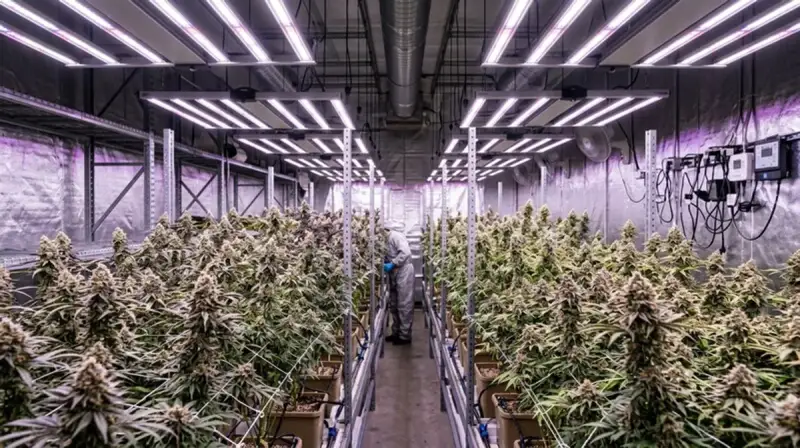
- The cannabis flowering stage typically lasts 8–11 weeks depending on strain genetics, with indica-dominant varieties finishing faster (7–9 weeks) than sativa-dominant plants (10–14 weeks).
- Switching to a 12/12 light cycle (12 hours light, 12 hours darkness) is the primary trigger for photoperiod cannabis plants to enter the flowering stage indoors.
- Phosphorus and potassium demands increase by up to 40–60% during peak flower development, while nitrogen needs drop significantly after the first two weeks of flowering.
- Trichome color is the most reliable harvest indicator — milky white trichomes indicate peak THC, while amber trichomes signal THC degradation into CBN.
- Maintaining relative humidity between 40–50% during late flowering drastically reduces the risk of botrytis (bud rot) and powdery mildew infestations.
- Autoflowering cannabis varieties enter the flowering stage automatically at 2–4 weeks of age, regardless of light schedule, completing the full cycle in 8–10 weeks total.
- A proper flush period of 1–2 weeks before harvest, using only plain pH-balanced water, is widely practiced to improve the final flavor and smoothness of the harvested flower.
What Is the Cannabis Flowering Stage?
The cannabis flowering stage is the most critical and rewarding phase of the plant's life cycle. It's the period during which cannabis plants shift their biological energy away from vegetative leaf and stem growth and redirect it entirely toward the production of buds, resin, and seeds (if pollinated). For home cultivators and commercial growers alike, understanding this stage in detail is the difference between a mediocre harvest and a spectacular one.
In nature, cannabis is a short-day plant, meaning it begins to flower when day length shortens as summer transitions to autumn. Indoors, growers replicate this phenomenon by manually switching their light timers to a 12/12 schedule — 12 hours of uninterrupted light followed by 12 hours of complete darkness. Outdoors, the plant senses the change in photoperiod naturally, typically beginning to flower in late July through September depending on your geographic location and local climate.
Understanding the flowering stage isn't just about flipping a switch. It requires attention to nutrition, environment, pest management, and timing. Each week of flowering brings observable changes to the plant, and experienced growers learn to read these visual cues with precision. For those researching specific cultivars, our strain guides offer detailed flowering time estimates for hundreds of popular varieties.
Photoperiod vs. Autoflowering Cannabis
One of the most fundamental distinctions in cannabis cultivation is whether you're growing a photoperiod or autoflowering variety. Photoperiod plants — which represent the vast majority of classic cannabis genetics — rely entirely on light schedule changes to trigger flowering. They will continue to grow vegetatively indefinitely under 18/6 or 24/0 lighting conditions and only begin to flower once the dark period is extended to approximately 12 hours.
Autoflowering varieties, derived primarily from Cannabis ruderalis genetics, flower based on age rather than light schedule. These plants typically begin showing pre-flowers at 2–4 weeks old and complete their full life cycle — from seed to harvest — in as little as 60–75 days. This makes them particularly attractive for growers in states with short outdoor growing seasons or strict plant count regulations. However, autoflowering plants generally produce smaller yields and are less forgiving of training stress compared to photoperiod varieties. For a deeper dive into how cannabis genetics influence growth characteristics, our explainers section provides accessible breakdowns of the science behind ruderalis hybridization.
Early Signs That Flowering Has Begun
Within the first 1–2 weeks after flipping to a 12/12 light cycle, photoperiod plants will begin showing unmistakable signs of flowering. The most visible early indicator is the appearance of pre-flowers at the node sites — the junctions where branches meet the main stem. Female pre-flowers appear as tiny white pistils (hairs), while male pre-flowers are small pollen sacs that resemble miniature bunches of grapes. Identifying plant sex at this stage is critical for seeded vs. sensimilla production.
Additionally, most plants will experience a dramatic growth surge known as the "flowering stretch," during which plants can increase in height by 50–200% of their vegetative size. This is especially pronounced in sativa-dominant genetics. Growers should plan canopy height accordingly before initiating the flip, as underestimating the stretch is one of the most common beginner mistakes. From real-world experience, growers running tall sativa-leaning hybrids in low-ceiling tents routinely encounter light burn issues during the stretch if they haven't implemented a screen or supercropping strategy beforehand — planning ahead saves crops.
- Cannabis flowers when exposed to 12+ hours of uninterrupted darkness per day (photoperiod plants) or at 2–4 weeks of age (autoflowering plants).
- Female pre-flowers display white pistils; male pre-flowers show pollen sacs — sex identification at this stage is essential for sensimilla production.
- The "flowering stretch" can increase plant height by 50–200%, particularly in sativa-dominant varieties — plan canopy height before flipping.
- Autoflowering varieties complete seed-to-harvest in as little as 60–75 days, ideal for short outdoor seasons or multi-cycle indoor grows.
- Outdoor photoperiod plants naturally begin flowering in late July through September depending on geographic latitude.
Week-by-Week Flowering Stage Breakdown
The flowering stage is not a monolithic event — it's a progression of distinct biological phases, each with its own nutritional requirements, environmental needs, and visual characteristics. Breaking the flowering period into weekly checkpoints gives growers a structured framework for decision-making. While exact timing varies by strain and environment, the following week-by-week guide applies to the majority of photoperiod indica/sativa hybrids with an 8–9 week flowering period.
From real-world experience, the growers who achieve the most consistent results are those who keep detailed grow journals throughout the flowering stage, noting pH, EC readings, temperature, humidity, and any visual changes observed in the canopy. This data becomes invaluable for replicating success in future runs and diagnosing problems early before they escalate into crop-threatening situations. For more foundational techniques, visit our comprehensive growing guides.
Weeks 1–3: Transition and Early Flower Formation
During weeks 1–3, the plant is transitioning from vegetative mode to reproductive mode. Energy is being redirected hormonally, and the plant is simultaneously stretching vertically and beginning bud site formation. The plant's hormonal profile shifts dramatically during this window, with auxin levels dropping and gibberellin and ethylene production ramping up to facilitate reproductive development. Key characteristics of this phase include:
- Rapid vertical growth (the "flowering stretch") — expect 50–200% height increase
- Appearance of white pistils at all major node sites
- Reduction in leaf production; plant stops pushing new vegetative growth
- Slight decrease in nitrogen uptake as phosphorus and potassium demands begin to rise
- Odor begins to develop, though it's still mild at this stage
- Root zone activity increases as the plant expands its nutrient uptake capacity
Growers should avoid heavy training techniques like topping or fimming during this period. Low-stress training (LST) such as gentle branch bending is still acceptable to open up bud sites to light. Begin transitioning your nutrient program toward a "bloom" formulation with reduced nitrogen (N) and increased phosphorus (P) and potassium (K) ratios. This is also an appropriate time to apply any final preventative integrated pest management (IPM) sprays, as foliar applications become inadvisable once dense bud structures have formed.
Weeks 4–6: Bud Development and Swelling
This is when the magic really begins. By week 4, distinct bud structures called calyxes are forming at every node site, stacking on top of each other to create the cola formations that define a mature cannabis plant. Trichome production increases noticeably, and the plant's aroma becomes significantly more pronounced. During weeks 5–6, buds enter their most intensive swelling phase, driven by sustained high phosphorus and potassium availability and optimal environmental conditions:
- Calyxes stack rapidly, forming dense colas along main stems and branches
- Trichome coverage increases visibly on sugar leaves and bud surfaces
- Nutrient demands peak — this is the most critical feeding window of the entire grow
- Humidity management becomes crucial; target 45–50% RH to prevent mold
- Vertical stretch slows and largely stops by week 5
- Terpene profiles begin to intensify — distinct cultivar aromas become recognizable
Most growers find that weeks 5–6 are the most demanding in terms of active monitoring. The rapidly developing bud mass creates dense, humid microclimates within the canopy that can accelerate pathogen development if airflow is insufficient. Running oscillating fans both above and below the canopy at this stage is a non-negotiable practice in any serious operation.
Weeks 7–9: Ripening and Pre-Harvest Assessment
During the final weeks of flowering, the plant undergoes significant ripening changes that culminate in harvest readiness. Bud density increases, white pistils begin to darken and curl inward (turning orange, red, or brown), and trichome color transitions from clear to milky white to amber. This is the window in which harvest timing decisions become critical — a difference of even 5–7 days can meaningfully shift the cannabinoid and terpene profile of the final product. Growers should obtain a jeweler's loupe (30x minimum) or digital microscope to inspect trichomes closely during this phase.
According to research accessible through the National Institutes of Health, cannabinoid biosynthesis and terpene expression are dynamic processes that continue shifting throughout the ripening window, making precise timing a key variable in the final product's potency and effect profile. Understanding the medical implications of cannabinoid ratios is explored further in our medical cannabis section.
During weeks 7–9, plants also begin to show natural signs of senescence — some yellowing of fan leaves is normal and indicates the plant is pulling stored nutrients back toward the developing flowers. This is a healthy process. However, rapid yellowing that moves aggressively into sugar leaves surrounding buds may indicate a phosphorus or potassium deficiency that should be addressed immediately.
- Weeks 1–3 are dominated by the flowering stretch and early pistil formation — avoid heavy training and begin transitioning to bloom nutrients.
- Weeks 4–6 represent peak bud development — nutrient demands are highest and canopy management (defoliation, airflow) is most critical.
- Weeks 7–9 are the ripening phase — trichome inspection with a 30x+ loupe is essential for accurate harvest timing.
- Pistil color change (white to orange/red) is a secondary harvest indicator; trichome color is the primary and most accurate method.
- Natural fan leaf yellowing in late flower is expected — aggressive yellowing of sugar leaves signals a potential nutrient deficiency requiring attention.
Optimal Environmental Conditions During Flowering
Cannabis plants during the flowering stage have distinct environmental requirements that differ meaningfully from their vegetative preferences. Getting the environment dialed in is non-negotiable for achieving maximum yields, potency, and terpene expression. Even the best genetics and nutrient programs will underperform in a poorly controlled environment. The flowering stage demands tighter control over temperature, humidity, CO₂, and airflow than any other phase of the plant's life.
In practice, most experienced cultivators running indoor operations invest in dedicated climate control equipment before their first flowering run — including inline fans with carbon filters, environmental controllers with temperature and humidity probes, and supplemental dehumidifiers for the late flowering phase. These investments pay dividends in both yield quality and mold prevention, and experienced growers universally agree that environmental control is the highest-leverage variable in indoor cultivation outcomes.
Temperature Management
Cannabis flowering plants thrive within a specific temperature band that balances photosynthetic efficiency with terpene preservation. Exceeding these ranges causes measurable harm to terpene expression and cannabinoid development, while temperatures that are too cold slow metabolic processes and reduce nutrient uptake efficiency. Experienced growers treat temperature as a tool — not just a parameter to maintain — using strategic temperature differentials to influence plant development and expression:
- Lights-on temperature: 68–78°F (20–26°C) is ideal. Above 85°F, terpenes begin to volatilize and are permanently lost from developing buds.
- Lights-off (dark period) temperature: Should be 10–15°F cooler than lights-on, mimicking natural nighttime temperature drops. A consistently cool dark period promotes anthocyanin expression (purple coloration) in susceptible strains and is associated with improved terpene retention.
- Late flowering temperatures: Dropping temps to the lower end of the range (65–72°F) in the final 2 weeks can enhance resin density and terpene production as the plant responds to stress signals that mimic late-season outdoor conditions.
- Root zone temperature: Keep growing medium between 65–75°F. Cold roots (below 60°F) dramatically reduce nutrient uptake and can trigger lockout symptoms even when nutrient solutions are properly formulated.
Humidity and VPD During Flowering
Humidity management is arguably the single most important environmental variable during the flowering stage from a crop protection standpoint. High humidity in dense canopies creates ideal conditions for Botrytis cinerea (gray mold/bud rot) and powdery mildew, both of which can devastate an entire crop within