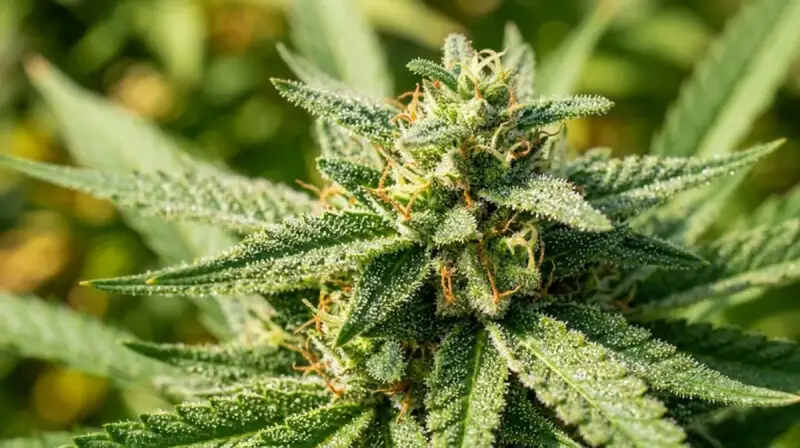
Cannabis Effects
Cannabis Mood Boost:
Antidepressant Properties
Cannabis interacts with the brain’s mood-regulation systems through at least three distinct mechanisms: CB1 receptor-mediated antidepressant pathways, dopaminergic reward activation, and CBD’s direct serotonin receptor agonism. Clinical surveys and preclinical research increasingly support antidepressant potential—with important caveats about dose, frequency, and long-term risk.
CB1 Antidepressant
CBD 5-HT1A
Dose-Critical
Adjunct Use
AK
Ann Karim — Cannabis Science Writer
Reviewed by ZenWeedGuide editorial team · Updated 2026-05-15
7 Key Findings
- Hill et al. (2009) established a direct correlation between anandamide deficiency and depressive symptoms, providing the biological basis for cannabis as a mood agent.
- Linge et al. (2016) demonstrated CB1-mediated antidepressant effects in preclinical models, establishing the receptor mechanism.
- Turna et al. (2019) found 72% of 1,429 survey respondents reported improved depression symptoms with cannabis use, with CBD-dominant products rated most effective.
- CBD acts as a 5-HT1A serotonin partial agonist—the same receptor mechanism targeted by buspirone and contributing to SSRI action.
- THC provides faster but tolerance-prone mood boost; CBD provides slower, more sustainable, tolerance-resistant support.
- Chronic heavy THC use is independently associated with worsened long-term depression through dopamine system downregulation.
- Cannabis as an adjunct (not replacement) for treatment-resistant depression shows promise in case series, but large controlled trials are lacking.
The endocannabinoid system (ECS) is not incidental to mood regulation—it is central to it. CB1 receptors are densely expressed in the hippocampus, prefrontal cortex, amygdala, and anterior cingulate cortex, all structures that are abnormal in major depressive disorder. The ECS regulates neurogenesis, synaptic plasticity, HPA axis activity, and serotonin/dopamine transmission.
Hill et al. (2009) published the foundational observation: post-mortem brain tissue from suicide victims showed significantly reduced CB1 receptor binding and lower anandamide levels in prefrontal cortex compared to controls. This “anandamide deficiency hypothesis” parallels the earlier serotonin deficiency hypothesis underlying SSRI development, and suggests that restoring endocannabinoid tone could have antidepressant effects.
Linge et al. (2016) extended this with controlled preclinical experiments: CB1 receptor agonism produced antidepressant-like effects in forced swim and tail suspension models (standard preclinical antidepressant screens), and these effects were blocked by CB1 antagonists. The CB1 antidepressant mechanism appears to involve enhanced neurotrophin (BDNF) signalling and hippocampal neurogenesis—the same downstream pathway activated by classical antidepressants after weeks of use.
Clinical Evidence: Key Studies
| Study |
Type |
Key Finding |
Limitation |
| Hill et al., 2009 |
Post-mortem / correlational |
Anandamide deficiency in depressed/suicide brains; CB1 binding reduced |
Causation not established; post-mortem only |
| Linge et al., 2016 |
Preclinical (rodent) |
CB1 agonism produces antidepressant behaviour; BDNF-dependent |
Animal models; human translation uncertain |
| Turna et al., 2019 |
Patient survey (n=1,429) |
72% reported improved depression; CBD products rated most effective |
Self-report, selection bias, no controls |
| Zanelati et al., 2010 |
Preclinical |
CBD produces antidepressant effects via 5-HT1A serotonin receptors |
Animal study; dose extrapolation difficult |
| Crippa et al., 2011 |
Human RCT (n=10, anxiety/depression) |
CBD (400mg single dose) reduced anxiety and improved mood in SAD |
Small sample, acute not chronic dosing |
Cannabis vs. Antidepressants: Mechanism Comparison
| Agent |
Primary Mechanism |
Onset |
Tolerance |
Side Effect Profile |
Evidence Level |
| SSRIs |
Serotonin reuptake inhibition |
2–6 weeks |
Low (efficacy) |
Sexual dysfunction, weight gain, discontinuation syndrome |
Very high (RCT) |
| SNRIs |
Serotonin + norepinephrine reuptake inhibition |
2–6 weeks |
Low (efficacy) |
Hypertension, sweating, nausea |
Very high (RCT) |
| Bupropion |
Dopamine + norepinephrine reuptake inhibition |
1–4 weeks |
Low |
Insomnia, dry mouth, seizure risk |
High (RCT) |
| THC (cannabis) |
CB1 agonism, dopamine release |
Minutes |
Develops in weeks |
Intoxication, anxiety risk, memory |
Low (survey/preclinical) |
| CBD (cannabis) |
5-HT1A agonism, TRPV1, endocannabinoid augmentation |
Days–weeks |
Low / minimal |
Generally well tolerated; drug interactions |
Moderate (small RCTs) |
Best Cannabis Strains for Mood Boost
| Strain |
Type |
THC / CBD |
Primary Terpenes |
Mood Profile |
Best Application |
| Jack Herer |
Sativa |
15–24% THC |
Terpinolene, caryophyllene, Ocimene |
Inspired, positive, clear |
Mild depression, creative block |
| Tangie |
Sativa |
19–22% THC |
limonene, myrcene, Caryophyllene |
Citrus brightness, optimism |
Situational mood drop |
| Harlequin |
High-CBD Sativa |
7–15% THC / 6–15% CBD |
Myrcene, pinene, Caryophyllene |
Gentle, sustained, functional |
Daily mood support, anxiety-prone |
| Strawberry Cough |
Sativa |
15–20% THC |
Myrcene, Caryophyllene, Pinene |
Uplifted, social warmth |
Social anxiety + depression |
| ACDC |
High-CBD Hybrid |
1–6% THC / 14–20% CBD |
Myrcene, Pinene, Caryophyllene |
Non-intoxicating, stable mood |
Daily adjunct, treatment-resistant depression |
| Durban Poison |
Sativa Landrace |
15–20% THC |
Terpinolene, Myrcene, Ocimene |
Clean energy + mood lift |
Dysthymia, low energy depression |
| Cannatonic |
High-CBD Hybrid |
5–10% THC / 10–17% CBD |
Myrcene, Caryophyllene, Pinene |
Calm, gentle mood stabilisation |
Anxiety-linked depression |
| Blue Dream |
Sativa-dominant Hybrid |
17–24% THC |
Myrcene, Caryophyllene, Pinene |
Balanced, accessible mood boost |
Mild depression, general use |
| Super Lemon Haze |
Sativa |
19–25% THC |
Terpinolene, Ocimene, Myrcene |
Bright, energetic, sustained |
Morning use, low motivation |
| Pennywise |
1:1 Indica (Harlequin × Jack the Ripper) |
~12% THC / ~12% CBD |
Myrcene, Caryophyllene, Pinene |
Balanced, non-intoxicating calm boost |
Daily mood support, PTSD |
Tolerance, Long-Term Use, and Mood Risk
The most important nuance in cannabis as a mood agent is the long-term risk inversion. Short-term low-to-moderate THC use reliably boosts mood through dopamine and CB1 mechanisms. Regular high-dose use over months and years produces the opposite effect through two primary mechanisms:
First, dopamine receptor downregulation in the PFC and NAcc reduces the brain’s baseline capacity for pleasure and motivation. Users require cannabis to feel normal rather than good. Second, HPA axis dysregulation from chronic CB1 overstimulation impairs cortisol regulation, producing elevated baseline stress reactivity that worsens the subjective experience of depression.
The practical conclusion for users seeking mood support: occasional or low-frequency use (2–4 times weekly maximum) with CBD-dominant or balanced products at low THC doses is the approach most likely to provide sustained mood benefit without long-term worsening. Daily high-dose THC use for depression is strongly contraindicated by the available evidence.
Cannabis and Depression: What the Research Shows
Related Guides










