










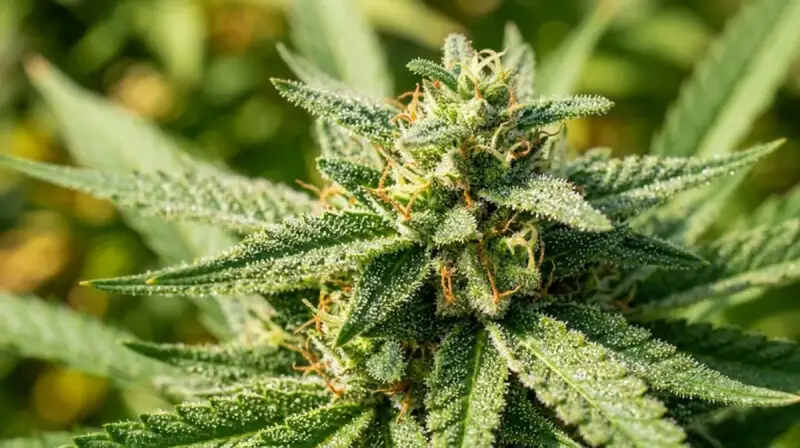
Pennywise: The Best Balanced CBD:THC Strain for Anxiety-Prone Users
Named after Stephen King’s terrifying clown, Pennywise is one of cannabis’s most reassuring strains — a balanced 1:1 CBD:THC hybrid that delivers the mood lift and mild euphoria of cannabis without the anxiety, paranoia, or disorientation that can accompany high-THC varieties. Created by Subcool of TGA Subcool Seeds, a breeder who helped define the medical cannabis era in the United States, Pennywise fills a unique niche: it is the ideal starting point for anxiety-prone users, a functional daily strain for those who need clarity alongside relief, and a versatile medical tool for conditions ranging from epilepsy to chronic pain.
- Genetics: Harlequin × Jack the Ripper (TGA Subcool Seeds / Subcool)
- THC: 8–15%
- CBD: 8–15%
- CBD:THC Ratio: 1:1 (balanced)
- Top Terpenes: Myrcene, Caryophyllene, Pinene
- Effects: Mild euphoria without anxiety; functional, clear-headed; 1:1 CBD prevents THC overwhelm
- Medical: Anxiety, PTSD, epilepsy, pain — ideal for THC-sensitive users
- Flavour: Coffee, pepper, earthy, mild citrus
- Growing: Moderate, 8-9 weeks, 400g/m², cold-tolerant (Harlequin heritage)
| Attribute | Detail |
|---|---|
| Type | Balanced Hybrid |
| Genetics | Harlequin × Jack the Ripper |
| Breeder | Subcool / TGA Subcool Seeds (USA) |
| THC | 8–15% |
| CBD | 8–15% |
| CBD:THC Ratio | 1:1 (balanced) |
| Primary Terpenes | Myrcene, Caryophyllene, Pinene |
| Flavour | Coffee, pepper, earthy, citrus undertones |
| Effects | Mild euphoria, clear-headed, functional, anxiety-free at standard doses |
| Medical | Anxiety, PTSD, epilepsy, chronic pain, inflammation |
| Flower Time | 8–9 weeks (56–63 days) |
| Indoor Yield | ~400g/m² |
| Difficulty | Moderate |
Genetics: Harlequin × Jack the Ripper
Pennywise brings together two complementary genetic streams. Harlequin is a CBD-dominant sativa (typically 5:2 CBD:THC) with Swiss landrace, Colombian Gold, Thai, and Nepali heritage — one of the earliest widely available high-CBD strains in the US medical cannabis market. Jack the Ripper is a potent sativa-dominant hybrid from TGA Subcool Seeds’ own catalogue, a Jack Herer-derived cross known for strong cerebral effects, high THC, and clean lemon-citrus flavour.
The cross between Harlequin’s CBD genetics and Jack the Ripper’s THC-dominant sativa character produces a variety that inherits CBD expression from Harlequin while the Jack the Ripper background contributes cerebral clarity and energy. The result is a strain where CBD and THC are present in approximately equal concentrations — a ratio that produces a qualitatively unique effect profile distinct from either THC-dominant or CBD-dominant strains.
Subcool — the breeder behind TGA Subcool Seeds — was one of the most prolific and influential US cannabis breeders of the medical cannabis era. His breeding documentation, shared openly in the cannabis growing community through his books (“Dank: The Quest for the Very Best Marijuana”) and online forums, established a standard for transparency and rigour in cannabis breeding that influenced a generation of American breeders. Pennywise was one of his contributions to the emerging high-CBD market — a market he recognised was underserved while most breeders were focused exclusively on THC maximisation.
TGA Subcool Seeds operated until 2020, when Subcool passed away following complications from COPD and pneumonia. The breeding legacy of TGA — which includes Jack the Ripper, Pandora’s Box, Agent Orange, Space Queen, Chernobyl, and Vortex alongside Pennywise — is preserved in seed form through various banks that licensed his genetics and through the community of growers who maintain them.
Terpene Profile
| Terpene | Aroma Note | Effect Role | Also Found In |
|---|---|---|---|
| Myrcene | Earthy, musky, tropical, pepper | Potentiates both CBD and THC; mild relaxation; anti-inflammatory | OG Kush, Harlequin, Blue Dream |
| Caryophyllene | Spicy, peppery, woody, coffee | CB2 agonist; anti-inflammatory; analgesic; anxiolytic contribution | GSC, Sour Diesel, OG Kush |
| Pinene (α-Pinene) | Fresh pine, forest, clean herbal | Anti-inflammatory; bronchodilatory; memory-supportive | ACDC, Jack Herer, Romulan |
The myrcene-caryophyllene combination in Pennywise is well-suited to its medical applications: both terpenes contribute anti-inflammatory and analgesic properties that amplify the CBD component’s own mechanisms. Caryophyllene’s CB2 activity is particularly relevant for pain and inflammation, while pinene’s bronchodilatory and memory-supporting properties may partially counteract any mild THC-induced cognitive effects, keeping the experience clear-headed even at higher doses.
Effects: How 1:1 CBD:THC Changes the Experience
The 1:1 CBD:THC ratio in Pennywise produces an effect profile that cannot be replicated by combining a high-THC strain with a CBD supplement. The interaction between CBD and THC at the receptor level is fundamentally different from taking them separately or at very different ratios.
At 1:1, CBD modulates CB1 receptor activity — the receptor through which THC produces its psychoactive effects — by acting as a partial negative allosteric modulator. This means CBD physically changes the shape of the CB1 receptor in a way that reduces THC’s binding efficiency, dampening psychoactivity without eliminating it. The result is a mild, manageable euphoria that preserves mood elevation while eliminating the anxiety, racing thoughts, and disorientation that can accompany higher-THC material.
Onset (0–15 Minutes)
Pennywise’s onset is notably gentle: a gradual mood lift and soft physical relaxation arriving together without the sharp cerebral rush of high-THC strains. For anxiety-prone users, this smooth onset is a critical advantage — the gentle progression allows comfortable assessment and dose adjustment.
Peak (15–90 Minutes)
The peak is characterised by elevated mood, mild euphoria, and a pleasant physical warmth — none of which escalates to the disorienting intensity of high-THC varieties. Users typically remain fully functional: capable of normal conversation, work, and social activity. This functional high is the defining characteristic of 1:1 CBD:THC strains and the reason Pennywise has found a dedicated following among daily medical users who need relief without impairment.
Tail (90–180 Minutes)
Effects taper smoothly into a comfortable relaxed state. No heavy sedation, no significant body load, no cognitive fog. Many users describe the tail as simply feeling “normal but better” — a baseline improvement in mood and physical comfort without any intoxication markers.
Medical Uses
- Anxiety: Pennywise is one of the most consistently recommended strains for anxiety disorders. The 1:1 ratio prevents the anxiety amplification that makes many patients avoid cannabis entirely, while preserving the mood-elevating, worry-reducing benefits that make cannabis useful for anxiety management in the first place.
- PTSD: The combination of mild euphoria, physical relaxation, and absence of anxiety-inducing effects makes Pennywise well-suited to PTSD management, particularly for patients who have had adverse reactions to high-THC products.
- Epilepsy: CBD’s anticonvulsant properties are active at the concentrations present in Pennywise. While not as CBD-dominant as ACDC or Ringo’s Gift, the 1:1 ratio provides meaningful CBD doses alongside manageable THC. Particularly useful for adult epilepsy patients who can tolerate mild psychoactivity.
- Chronic Pain: The combination of THC’s analgesic receptor activity, CBD’s multi-pathway pain modulation, and caryophyllene’s CB2 activity produces effective pain relief across a range of chronic conditions.
- Inflammation: Multiple anti-inflammatory mechanisms are active simultaneously in Pennywise: CBD, caryophyllene (CB2), and pinene all contribute to reducing inflammatory signalling.
Consult a licensed healthcare provider before using cannabis for medical conditions. Individual responses to CBD:THC ratios vary significantly.
Pennywise vs. Other CBD Options
| Strain | CBD | THC | Ratio | Best For |
|---|---|---|---|---|
| Pennywise | 8–15% | 8–15% | 1:1 | Anxiety-prone users wanting some euphoria; PTSD; daily functional use |
| Harlequin | 8–16% | 4–7% | 5:2 | More CBD-leaning; minimal psychoactivity; daytime pain relief |
| Ringo’s Gift | 10–24% | ~1% | 20:1 | Zero psychoactivity; epilepsy; patients who cannot tolerate any THC |
| ACDC | 14–20% | <1% | 20:1 | Zero psychoactivity; high-CBD medical dosing; extraction base |
| Charlotte’s Web | 13–17% | <0.3% | 50:1+ | Paediatric epilepsy; pharmaceutical-grade CBD consistency; zero THC |
Growing Pennywise
Pennywise is a moderately easy cultivar that performs well in a range of environments. Its Harlequin heritage contributes cold tolerance — unusual in a balanced hybrid — making it more forgiving in variable climates than many cannabis strains. The compact-to-medium height and 8–9 week flower time make it well-suited to standard indoor growing setups.
| Factor | Indoor | Outdoor |
|---|---|---|
| Flowering Time | 8–9 weeks (56–63 days) | Early to mid-October |
| Yield | ~400g/m² | 350–500g per plant |
| Height | 80–120cm | 100–160cm |
| Difficulty | Moderate (beginner-accessible) | Moderate |
| Cold Tolerance | Good (Harlequin genetics) | Good — suitable for temperate climates |
| Mould Resistance | Good | Good |
| COA Testing | Recommended — verify CBD:THC ratio per batch | Recommended |
Pennywise is notably more forgiving than many high-CBD strains, which can be sensitive to environmental stress. Its Harlequin-derived cold tolerance means it can be grown successfully in climates where other cannabis varieties would struggle. This makes it a practical outdoor option in the UK, northern Europe, Canada, and higher-elevation US regions.
Indoors, standard growing techniques apply: good lighting, proper airflow, and humidity management below 50% in late flower. Low-stress training during veg improves yield without stressing the plant. The 8–9 week flower time makes scheduling straightforward for indoor growers. Batch testing of harvested material is advisable to confirm the CBD:THC ratio, as phenotypic variation can shift the balance toward either cannabinoid.
Pennywise is not a high-yield strain. Like most CBD-expressing varieties, it invests metabolic energy into cannabinoid profile rather than bulk mass. Growers should expect solid but not exceptional yields and price their product accordingly for the medical market it serves.
Drug Test Detection Windows
| Test Type | Occasional User | Regular User | Daily User |
|---|---|---|---|
| Urine | 3–7 days | 10–21 days | Up to 30+ days |
| Blood | 1–3 days | 3–7 days | 7–14 days |
| Saliva | 24–72 hours | 3–5 days | Up to 7 days |
| Hair Follicle | Up to 90 days | Up to 90 days | Up to 90 days |
Despite lower THC than typical cannabis, Pennywise’s 8–15% THC is still detectable by standard drug tests. See our full drug testing guide.
Related Guides
Ringo’s Gift Jack Herer Myrcene Guide Caryophyllene Guide Cannabis for Anxiety Cannabis for Epilepsy Cannabis for PTSD CBD Guide Drug Testing Guide All StrainsBuying Pennywise: What to Look For
Pennywise is particularly valuable for specific user profiles, and purchasing the right batch is important:
- Verify the ratio: The 1:1 CBD:THC ratio is the core value proposition of Pennywise. Request a COA and verify that both cannabinoids are present in approximately equal concentrations. Batches skewed significantly toward THC will be more psychoactive; batches skewed toward CBD will be less so.
- Aroma: Pennywise should have an earthy, coffee-pepper aroma from its caryophyllene-myrcene-pinene profile. Sweet or fruity aromas indicate different genetics.
- Medical dispensary preference: Pennywise is a medical-focused strain and is more reliably available at medical dispensaries. Recreational shops may carry it intermittently.
- For anxiety-prone users: Start with a very small amount regardless of the CBD:THC ratio. Even at 1:1, individual sensitivity to THC varies significantly. A single inhalation, followed by a 20-minute wait, is the appropriate starting approach.
- Cold tolerance advantage: For growers in northern climates considering cultivation, Pennywise’s Harlequin-derived cold tolerance makes it one of the more practical outdoor CBD strains for temperate climates.
Pennywise is available across California, Colorado, and other legal US medical markets. Its TGA Genetics lineage means it is also available in seed form from seed banks that licensed Subcool’s genetics, making it accessible to home cultivators in legal jurisdictions globally.
Frequently Asked Questions
Jordan Price
Cannabis Cultivation Specialist — ZenWeedGuide
Jordan specialises in cannabis genetics, CBD:THC ratio research, terpene science, and cultivation. His medical cannabis guides draw on clinical research and patient outcome data from legal cannabis programmes.