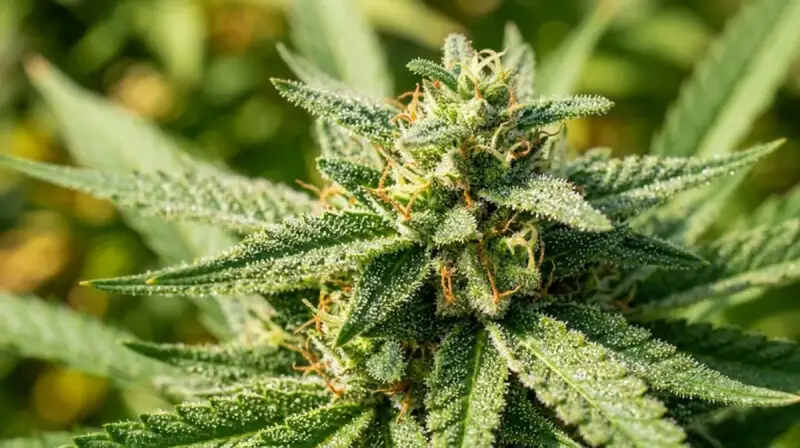
Thai × Purple Thai × Afghani — created by DJ Short. 17–22% THC, legendary blueberry flavor, High Times Cannabis Cup Best Indica 2000.
THC
17–22%
CBD
<0.5%
Type
Indica 80/20
Flowering
8–9 Weeks
7 Key Findings
DJ Short Blueberry is one of the most influential cannabis strains ever created — developed by underground breeder DJ Short in the 1970s–80s and named for its unmistakable blueberry fruit aroma and flavor
Won the High Times Cannabis Cup for Best Indica in 2000 — considered the benchmark for berry-flavored indica genetics and parent to hundreds of blueberry crosses worldwide
THC 17–22% with a classic indica profile: warm full-body relaxation, mild cerebral euphoria, and strong analgesic properties without overwhelming sedation at standard doses
The blueberry flavor comes from an unusual combination of myrcene, pinene, and anthocyanin-producing genetics — the purple-blue coloring that develops in cool conditions enhances both appearance and flavor complexity
DJ Short’s original genetics are among the most preserved and sought-after in cannabis — authentic DJ Short seeds command significant collector premiums on the heritage seed market
Excellent medical strain: pain relief, insomnia, nausea, stress — the body relaxation without heavy sedation makes it functional for daytime medical use at moderate doses
Parent to: Blue Dream (Blueberry × Haze), Blue Cheese (Blueberry × UK Cheese), Berry White, Blueberry Headband — arguably the most influential indica variety in modern cannabis genetics
Strain Overview
DJ Short Blueberry is not just a strain — it is a genetic foundation of modern cannabis. The breeder known as DJ Short (a deliberate nom de plume protecting his identity during decades of underground work in the US Pacific Northwest) spent years in the 1970s and 1980s working with landrace genetics obtained through the same smuggler networks that brought Colombian Gold and Panama Red to the USA. His goal was to create a stable, flavorful indica-dominant hybrid that preserved the best qualities of each parent lineage.
The result was Blueberry: a cross of Thai sativa, Purple Thai, and Afghani indica that expressed an entirely unexpected flavor profile. The fruity sweetness was unlike anything in cannabis at the time — a genuine blueberry berry scent that growers initially thought was contamination or flavor manipulation, before realizing it was a natural terpene expression unique to this genetic combination.
Blueberry won the High Times Cannabis Cup Best Indica category in 2000 — at that point already 20–30 years old — cementing its status not just as a classic but as a still-relevant, actively-competitive genetics. Today it is the direct parent of Blue Dream, which has been one of the top-three selling strains in US dispensaries for over a decade.
Property
Detail
Genetics
Thai × Purple Thai × Afghani
Breeder
DJ Short (Pacific Northwest, USA)
Era
1970s–1980s development; 2000 Cannabis Cup
Classification
Indica dominant (80% Indica / 20% Sativa)
THC Range
17–22%
CBD
<0.5%
Awards
High Times Cannabis Cup Best Indica, 2000
Effects Profile
DJ Short Blueberry is an 80/20 indica-dominant hybrid with an effect experience that reflects its unusual three-way genetics. Unlike pure indica strains that produce immediate heavy sedation, Blueberry starts with a warm, happy euphoria — the Thai sativa 20% making itself felt in the initial cerebral lift. Within 20–30 minutes, the indica base takes over: a deep, warm body relaxation spreads outward, reducing muscle tension and pain, and establishing a deeply comfortable physical state.
The key distinction that has made Blueberry a medical favorite for decades is that this relaxation, while complete, does not immediately produce couch-lock or sedation at moderate doses. Users describe feeling “melted in the best way” — physically at ease but mentally present enough to hold conversation, watch a film, or engage in calm creative activities. At higher doses, sedation increases significantly and sleep onset is facilitated.
Effect
Intensity
Notes
Relaxation
Very High
Full-body warmth and ease
Euphoria
High
Thai sativa contribution; initial uplift
Happiness
High
Warm contentment throughout
Body High
High
Heavy but not paralyzing at standard doses
Creativity
Moderate
Daydream-like; gentle creative openness
Sedation
Moderate
Increases with dose; sleep at high doses
Terpene Profile
The terpene profile of DJ Short Blueberry is one of the most analyzed and discussed in cannabis genetics, because it presents a scientific puzzle: the extraordinary fruit sweetness is not fully explained by any single terpene. Myrcene dominates, contributing the earthy-musky base and sedative amplification. Pinene is unusually prominent for an indica strain — this is the Thai sativa genetic inheritance expressing itself — and it contributes the fresh, almost pine-berry quality that adds dimensional complexity to the blueberry base.
The full blueberry flavor expression requires the interaction of myrcene and pinene with the specific anthocyanin-producing gene expression that DJ Short’s selective breeding stabilized over decades. This is why many “Blueberry” crosses fail to replicate the original flavor: the genetics must be specifically from DJ Short’s original lines, not from downstream crosses that have diluted the trait.
DJ Short Blueberry smells like what its name promises: fresh blueberries, sweet mixed berries, and a creamy sweetness that is unusual in cannabis. Properly grown and cured specimens have an aroma that is genuinely reminiscent of blueberry muffins or fresh berry jam — a fruity sweetness without chemical or artificial overtones. The depth comes from the interplay of myrcene’s earthy base, pinene’s fresh pine-berry brightness, and linalool’s soft floral sweetness.
The flavor matches and sometimes exceeds the aroma. On the inhale: sweet berry fruit with a creamy, smooth quality. On the exhale: a longer, more complex finish of berry, vanilla, and a faint pine note from the pinene. The aftertaste lingers for minutes. Long-term cannabis consumers consistently describe authentic DJ Short Blueberry as one of the most immediately pleasurable flavor experiences in cannabis — approachable for beginners, sophisticated enough to impress connoisseurs.
Growing Guide
DJ Short Blueberry is a medium-to-hard difficulty grow that rewards patient, attentive growers with exceptional results. The challenge lies primarily in phenotype stability: authentic DJ Short genetics produce variable phenotypes, and selecting for the strongest blueberry expression requires either obtaining stable clone-only cuts or running multiple seedlings and selecting the most expressive plants. Mass-market “Blueberry” seeds sold under generic labels often lack the genuine DJ Short genetics and perform differently.
When grown correctly, the plant forms dense, heavy colas with the characteristic blue-purple hue that develops when nighttime temperatures drop below 60°F (15°C) during the final two weeks. This temperature management is key: without cool nights, the buds remain green, and while the terpene expression is still good, the full Blueberry visual and flavor profile requires the anthocyanin activation. Curing for 4–8 weeks is essential — the berry aroma intensifies dramatically with extended cure time.
Parameter
Value
Notes
Difficulty
Medium–Hard
Phenotype selection required for best expression
Indoor Yield
400–500 g/m²
Dense colas; support stakes recommended
Outdoor Yield
600–800 g/plant
Temperate climate with cool autumn nights
Height
90–150 cm
Moderate stretch; manageable indoors
Flowering Time
8–9 weeks
Photoperiod; standard commercial timeline
Climate
Temperate (cool late flower)
Pacific NW, Central Europe, similar regions
Curing
4–8 weeks minimum
Berry aroma intensifies significantly with cure
Medical Uses
DJ Short Blueberry has been a medical cannabis staple since the earliest days of California’s Proposition 215 dispensary system in the late 1990s. Its balanced indica effect — deeply relaxing but not completely sedating at standard doses — fills a therapeutic gap that heavier indicas cannot: patients can use it during the day for pain, stress, and nausea management while remaining functional enough to complete daily tasks.
For chronic pain, the combination of myrcene’s muscle-relaxant properties, caryophyllene’s CB2 anti-inflammatory activity, and the full-body indica relaxation provides effective multi-mechanism relief. Insomnia patients who find daytime indica strains too heavy benefit from Blueberry’s functional window before sedation sets in at higher evening doses. For nausea — particularly chemotherapy-related nausea — Blueberry has been consistently recommended by medical dispensary staff for its smooth, pleasant consumption experience and reliable antiemetic effect.