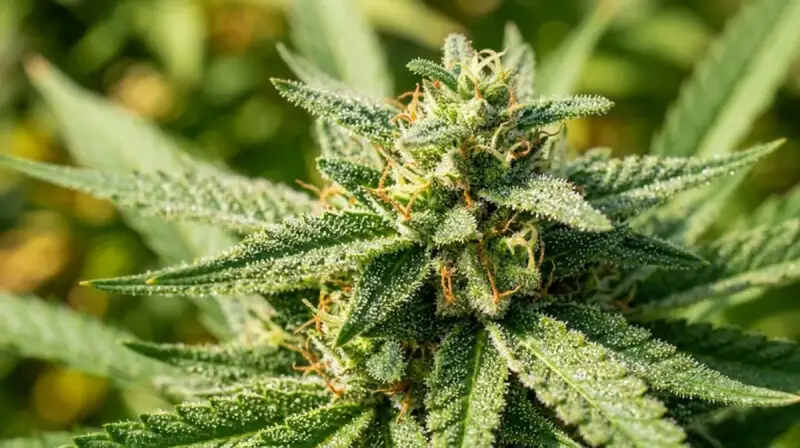
Cannabis Effects
Cannabis Relaxed Effect:
Body & Mind Unwinding
Relaxed is the most universally desired cannabis effect—and the most commonly reported. Unlike sleepy or couch-locked, relaxed means calm but functional: reduced muscle tension, quieted emotional reactivity, and a gentler mental pace while remaining present and engaged. Understanding the mechanisms helps you achieve it reliably.
Balanced Hybrids
Caryophyllene + Myrcene
5–10 mg THC
Functional Calm
AK
Ann Karim — Cannabis Science Writer
Reviewed by ZenWeedGuide editorial team · Updated 2026-05-15
7 Key Findings
- CB1 receptors in the basal ganglia reduce involuntary muscle tension, producing the characteristic physical relaxation of cannabis.
- CB1 activation in the limbic system quiets emotional reactivity without eliminating responsiveness—the functional calm that defines the relaxed state.
- Myrcene and linalool both facilitate GABA-A activity, independently contributing to muscle relaxation and anxiolysis.
- Beta-caryophyllene activates CB2 receptors in the peripheral nervous system, reducing inflammation-related tension in muscles and joints.
- Relaxed is functionally different from sedated: relaxed = calm + functional; sedated = reduced arousal + impaired activity capacity.
- Balanced hybrids at 5–10 mg THC produce the most consistent relaxed effect across user populations.
- CBD addition at 1:1 ratio extends relaxation duration and reduces anxiety risk—the most reliable approach for regular daytime users.
How Cannabis Produces the Relaxed Effect
Physical relaxation stems primarily from CB1 receptor activation in the basal ganglia, a group of brain structures that regulates voluntary and involuntary movement and muscle tone. When CB1 receptors are activated, the basal ganglia reduces excitatory output to motor neurons, lowering resting muscle tension throughout the body. This is why even moderate cannabis doses produce a noticeable softening of physical tension in the shoulders, jaw, and throughout the musculature.
Mental relaxation follows a parallel pathway. CB1 activation in the limbic system—particularly the amygdala and hippocampus—reduces emotional reactivity and the stress response. The amygdala’s threat-detection sensitivity decreases, making previously stressful thoughts feel less urgent and more manageable. Importantly, at relaxation doses this reduction in reactivity does not impair awareness or cognition significantly—the user remains present but no longer overwhelmed.
Beta-caryophyllene, a terpene found at high concentrations in many hybrid and indica strains, adds a peripheral component by activating CB2 receptors in tissues outside the central nervous system. CB2 activation reduces local inflammatory signalling in muscles and joints, contributing to the physical ease associated with relaxed cannabis effects even independently of psychoactive CB1 pathways.
The Relaxation Spectrum: Stimulating to Couch-Locked
| State |
THC Range |
Terpene Profile |
Functional Capacity |
Best Application |
| Stimulating |
Low–moderate |
Terpinolene, limonene dominant |
Full |
Creativity, exercise, social |
| Relaxed |
5–10 mg THC |
Caryophyllene + Myrcene |
Maintained (calm functional) |
Stress relief, social ease, pain |
| Sedated |
10–20 mg THC |
High myrcene, Linalool |
Reduced |
Pre-sleep, deep muscle relief |
| Couch-Locked |
>20 mg THC or high dose indica |
Very high myrcene, CBN |
Minimal |
Severe insomnia, end-stage cancer pain |
Best Terpenes for Relaxation
| Terpene |
Receptor Target |
Relaxation Mechanism |
Physical vs. Mental |
| Beta-Caryophyllene |
CB2 (peripheral) |
Anti-inflammatory, tissue relaxation |
Primarily physical |
| Myrcene |
A1 adenosine, GABA facilitation |
Muscle sedation, mental calm |
Both (dose-dependent) |
| Linalool |
GABA-A positive allosteric modulator |
Neural excitability reduction, anxiolysis |
Primarily mental |
| Alpha-pinene |
Acetylcholinesterase inhibition |
Maintains alertness during relaxation (counters memory fog) |
Mental (balancing) |
Best Relaxed Cannabis Strains
| Strain |
Type |
THC |
Primary Terpenes |
Relaxation Character |
Couch-Lock Risk |
| Blue Dream |
Hybrid |
17–24% |
Myrcene, Caryophyllene, Pinene |
Body relaxed + mental clarity |
Low |
| White Widow |
Hybrid |
18–25% |
Caryophyllene, Myrcene, Limonene |
Full-body relaxation, maintained energy |
Low–moderate |
| Girl Scout Cookies |
Hybrid (Indica-dominant) |
19–28% |
Caryophyllene, Limonene, Linalool |
Deep but functional body calm |
Moderate at low dose |
| Cannatonic |
High-CBD Hybrid |
5–10% THC / 10–17% CBD |
Myrcene, Caryophyllene, Pinene |
Gentle, clear-headed relaxation |
Very low |
| Harlequin |
Sativa (high-CBD) |
7–15% THC / 6–15% CBD |
Myrcene, Pinene, Caryophyllene |
Alert and relaxed simultaneously |
Very low |
| Pink Kush |
Indica |
20–22% |
Caryophyllene, Limonene, Myrcene |
Heavy physical relaxation |
Moderate (dose-dependent) |
| Afghan Kush |
Landrace Indica |
15–20% |
Myrcene, Caryophyllene, Limonene |
Classic body relaxation |
Moderate |
| ACDC |
High-CBD Hybrid |
1–6% THC / 14–20% CBD |
Myrcene, Pinene, Caryophyllene |
Non-intoxicating relaxation |
None |
| Critical Mass |
Indica |
17–22% |
Myrcene, Caryophyllene, Pinene |
Smooth relaxation, easy onset |
Low–moderate |
| OG Kush |
Hybrid (Indica-dominant) |
19–26% |
Myrcene, Limonene, Caryophyllene |
Stress-melting relaxation |
Moderate at standard dose |
Scenario Guide: Matching Relaxation Type to Context
| Scenario |
Target Effect |
Recommended Profile |
Suggested Strains |
Dose |
| Work stress decompression |
Mental calm, maintained function |
Balanced hybrid, Caryophyllene+Limonene |
Blue Dream, White Widow |
5–7.5 mg THC inhaled |
| Social anxiety |
Anxiety reduction, social ease |
High-CBD, Myrcene+Pinene |
Harlequin, Strawberry Cough |
2.5–5 mg THC + 5–10 mg CBD |
| Physical tension / muscle pain |
Muscle relaxation, anti-inflammatory |
Indica-leaning, Caryophyllene dominant |
Pink Kush, OG Kush, GSC |
7.5–10 mg THC |
| Pre-sleep wind-down |
Graduated relaxation toward sleep |
Indica, Myrcene+Linalool |
Granddaddy Purple, Bubba Kush |
7.5–12 mg THC, 1h before bed |
Relaxed Without Intoxication: CBD and Low-THC Options
For users who need the relaxed effect but cannot tolerate significant intoxication—whether for professional, safety, or personal reasons—high-CBD strains and balanced ratios are effective alternatives. CBD produces relaxation through 5-HT1A serotonin partial agonism and TRPV1 desensitisation without meaningful CB1 psychoactivity at standard doses.
ACDC and Cannatonic (both with CBD:THC ratios of 2:1 to 20:1) produce measurable muscle relaxation and anxiolysis in clinical settings. The combination of CBD with low-dose THC (1:1 ratio) consistently outperforms either compound alone for the relaxed effect, a pharmacological synergy researchers attribute to CBD modulating CB1 receptor sensitivity.
Cannabis Relaxation: The Mechanism
Related Guides










