










Baking with cannabis is the most popular form of home edible production — and for good reason. Baked goods mask the herbal flavour of cannabis oil or butter, they store well, and they are easy to portion. But getting the science right requires understanding three non-negotiable steps: decarboxylation, infusion, and dose calculation. Skip any one of them and your brownies either do nothing or send you to the sofa for six hours.
This guide covers each step in plain terms, with a focus on practical home baking. Recipes and further inspiration are sourced from ZenCannaKitchen, which publishes one of the largest collections of cannabis-infused recipes online.
Step 1: Decarboxylation — Activating Your Cannabis
Raw cannabis flower contains THCA, not THC. THCA is non-intoxicating. Heat causes a chemical reaction (decarboxylation) that removes a carboxyl group from THCA, converting it into active THC. Without this step your baked goods will have little to no effect.
- Preheat your oven to 230°F / 110°C (fan/convection) or 245°F / 118°C (conventional). Use an oven thermometer — home ovens are routinely off by 15-25°F.
- Grind the cannabis coarsely — not to a powder. Spread it in a single layer on a parchment-lined baking tray.
- Bake for 30-45 minutes, checking at 25 minutes. The material should turn from bright green to a light golden-brown and smell warm and nutty.
- Remove and allow to cool completely before using. Decarboxylated cannabis stores in an airtight jar for up to three months.
| Temperature | Time | Result |
|---|---|---|
| 220°F / 104°C | 45 min | Gentle — preserves terpenes, lower THC activation (~60%) |
| 230°F / 110°C | 35 min | Recommended — good THC conversion, some terpene retention |
| 245°F / 118°C | 30 min | Standard — efficient THC activation (~80%) |
| 260°F / 127°C | 20 min | Fast — risk of THC degradation to CBN if overshot |
Step 2: Making Cannabutter
Cannabutter is the foundation of most cannabis baking. THC and other cannabinoids are fat-soluble — they bind to the fats in butter during the infusion process. The resulting butter can then replace regular butter cup-for-cup in any baking recipe.
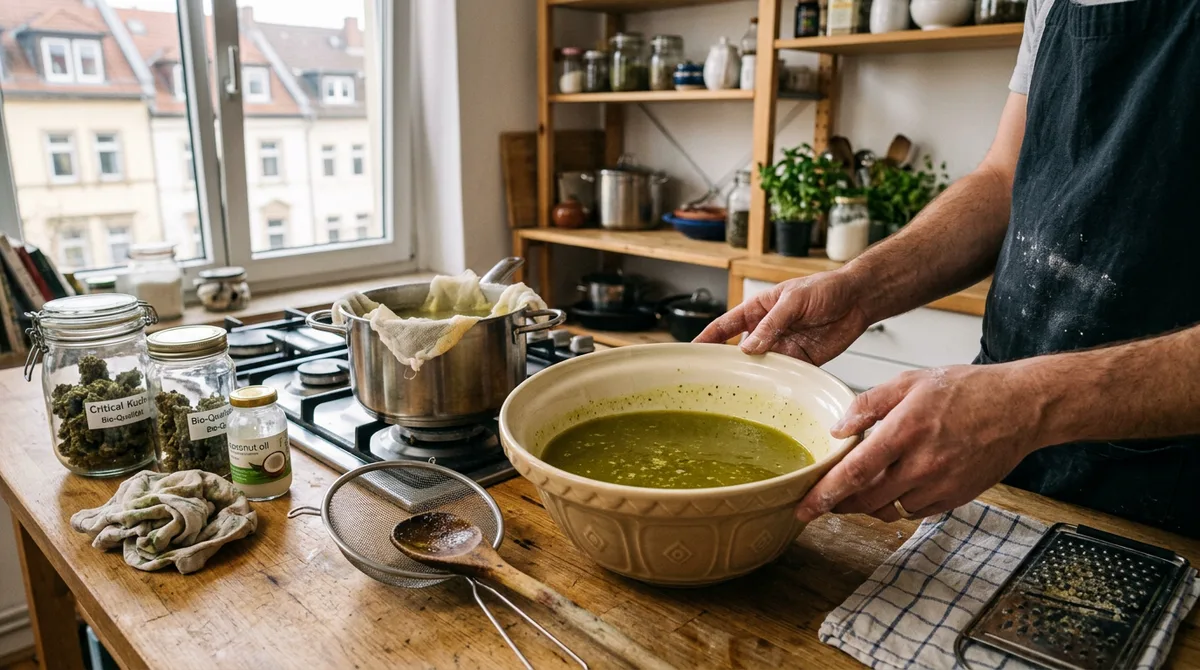
Classic Cannabutter Recipe
| Ingredient | Amount |
|---|---|
| Unsalted butter | 225g (1 cup) |
| Decarboxylated cannabis (ground) | 7g (quarter ounce) |
| Water | 240ml (1 cup) |
- Combine butter and water in a small saucepan over the lowest heat setting. Melt the butter slowly — do not boil.
- Add the ground, decarboxylated cannabis. Stir to combine.
- Maintain a temperature of 160-180°F (71-82°C) for 2-3 hours. Use a kitchen thermometer. Temperatures above 200°F will degrade cannabinoids.
- Strain through cheesecloth or a fine mesh strainer into a container. Press the plant matter to extract all the butter.
- Refrigerate. Once solid, the layer of cannabis-infused butter separates from the water. Remove it and discard the water.
- Store in the fridge for up to 2 weeks, or freeze for 6 months.
Step 3: Dosage Calculation
This is the step most home bakers skip — and the reason so many edible overconsumption stories exist. Always calculate before you bake.
| Example | Calculation | Result |
|---|---|---|
| 7g at 20% THC | 7,000mg × 0.20 = 1,400mg total | ~980mg active (70% efficiency) |
| Batch of 16 brownies | 980mg ÷ 16 | ~61mg per brownie |
| Beginner dose | 2.5-5mg | Cut each brownie into 12-24 pieces |
Use less cannabis if you want a manageable dose per standard serving size. 3.5g at 20% THC in a batch of 16 brownies gives roughly 30mg per brownie — still strong, but more manageable when cut in half.
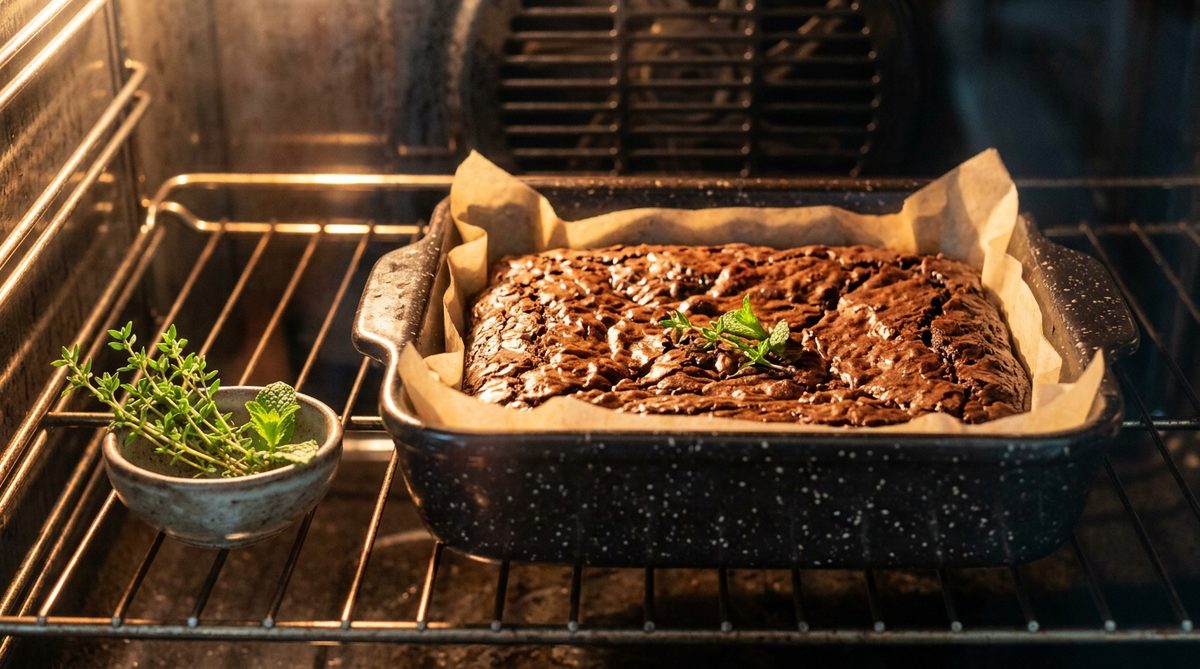
Cannabis Brownie Recipe
| Ingredient | Amount |
|---|---|
| Cannabutter | 115g (half cup) |
| Dark chocolate (70%+) | 100g |
| Caster sugar | 200g |
| Eggs | 2 large |
| Vanilla extract | 1 tsp |
| Plain flour | 80g |
| Cocoa powder | 30g |
| Salt | pinch |
- Preheat oven to 350°F / 175°C. Line a 20×20cm tin with parchment.
- Melt cannabutter and chocolate together in a double boiler or microwave in 30-second bursts. Stir until smooth. Do not overheat — keep below 200°F.
- Whisk in sugar, then eggs one at a time, then vanilla. The batter should become thick and glossy.
- Fold in flour, cocoa, and salt until just combined. Do not overmix.
- Pour into the prepared tin. Bake 22-26 minutes — the centre should be just set with a slight wobble.
- Cool completely before cutting into 16 squares. Mark dosage per square before serving.
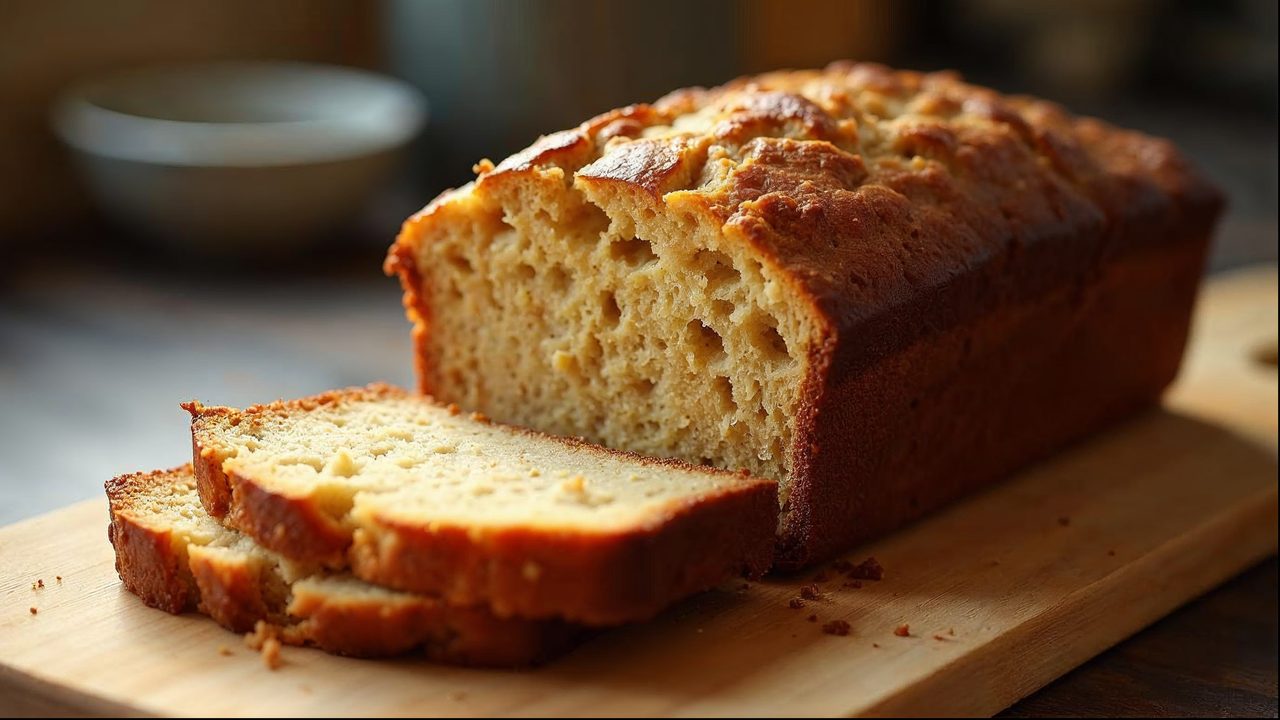
Cannabis Banana Bread
Banana bread is one of the most forgiving cannabis baking recipes — the dense, moist crumb absorbs cannabutter perfectly, and the strong banana flavour naturally masks any cannabis taste.
| Ingredient | Amount |
|---|---|
| Ripe bananas (mashed) | 3 large (~300g) |
| Cannabutter (melted) | 80g |
| Brown sugar | 150g |
| Egg | 1 large |
| Vanilla extract | 1 tsp |
| Baking soda | 1 tsp |
| Salt | 1/4 tsp |
| All-purpose flour | 190g |
- Preheat oven to 325°F / 165°C. Grease a standard loaf tin.
- Mash bananas thoroughly in a large bowl. Mix in melted cannabutter.
- Add sugar, egg, and vanilla. Stir well.
- Sprinkle in baking soda and salt. Fold in flour until just combined.
- Pour into the tin. Bake 55-65 minutes until a skewer inserted in the centre comes out clean.
- Cool in the tin 10 minutes before turning out. Slice into 12 pieces and label with dosage.
Cannabis Cookies
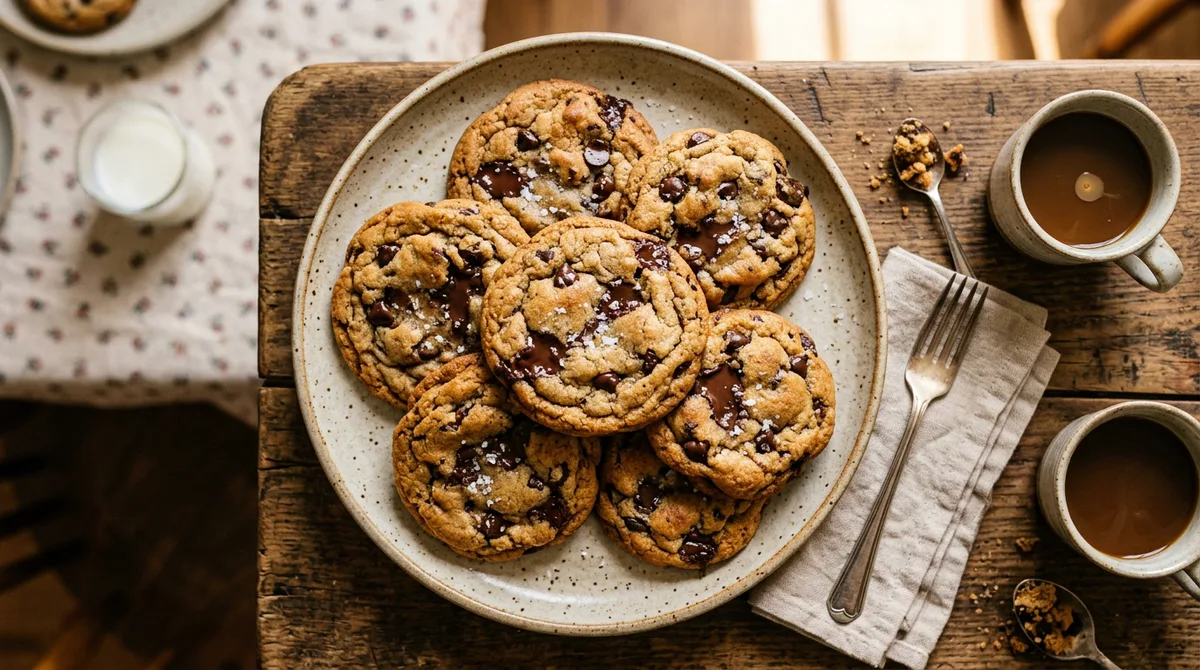
Classic drop cookies — chocolate chip, peanut butter, oatmeal raisin — all work well with cannabutter as a direct swap for regular butter. Key tips:
- Chill the dough for 30 minutes before baking — cannabutter is softer than regular butter and chilled dough spreads less.
- Bake at 325°F / 165°C rather than the typical 375°F — lower temperatures keep THC degradation to a minimum during the short bake time.
- Size consistently — use a cookie scoop so every cookie has the same weight and therefore the same dose.
- Count your cookies — label the batch with total THC and dose per cookie before anyone eats one.
Watch: Cannabis Coconut Macaroons (Video)
A straightforward English-language tutorial on baking cannabis-infused coconut macaroons — a naturally gluten-free option that is very easy to dose and store.
Baking Temperature Rules to Protect Potency
THC is relatively heat-stable at standard baking temperatures, but there are limits. These rules keep your baked goods potent:
| Rule | Why It Matters |
|---|---|
| Keep baking temp below 375°F / 190°C | THC starts degrading to CBN above this point during extended baking |
| Never melt cannabutter above 200°F / 93°C | Boiling or direct high heat destroys cannabinoids before they reach the batter |
| Add cannabis oil after removing from heat when possible | Drizzling cannabis olive oil on warm (not hot) food preserves maximum potency |
| Use a water bath for cheesecakes and custards | Water-bath baking keeps internal temperature at 212°F — safer for cannabutter |
Frequently Asked Questions
What temperature do you bake cannabis at for decarboxylation? +
Decarboxylation converts inactive THCA into psychoactive THC. Spread ground cannabis on a baking sheet and heat at 220-245°F (104-118°C) for 30-45 minutes. Higher temperatures or longer times degrade THC into CBN, reducing potency. Use an oven thermometer — most home ovens run 10-25°F hot.
How do I make cannabutter for baking? +
Melt 1 cup (225g) butter with 1 cup water in a saucepan on low heat. Add 7-10g decarboxylated, ground cannabis. Simmer on the lowest setting for 2-3 hours, stirring occasionally, keeping temperature below 200°F. Strain through cheesecloth into a container, refrigerate until solid, then remove the separated water layer. Use cup-for-cup in any baking recipe.
Why do cannabis brownies hit harder than other edibles? +
Brownies are dense, fat-rich, and typically use more cannabutter per serving than lighter baked goods. The high cocoa and fat content also slows digestion, prolonging THC absorption and intensifying the effect. Always wait at least 90 minutes before eating a second piece.
How do I calculate the dosage in homemade cannabis baked goods? +
Start with total THC: weight of cannabis in mg multiplied by THC percentage (e.g. 7g at 20% = 1,400mg). Assume roughly 70% decarboxylation efficiency (~980mg active). Divide by the number of servings. A batch of 16 brownies gives about 61mg per brownie — well above a beginner dose of 2.5-5mg. Reduce cannabis quantity or cut pieces smaller.
Can I substitute cannabis oil for cannabutter in baking? +
Yes. Cannabis-infused coconut oil works cup-for-cup in most recipes calling for butter or vegetable oil. Coconut oil has very high saturated fat content, making it an efficient cannabinoid carrier. Avoid using it in recipes that require a solid fat at room temperature, such as pie crusts or layer cake frosting.