









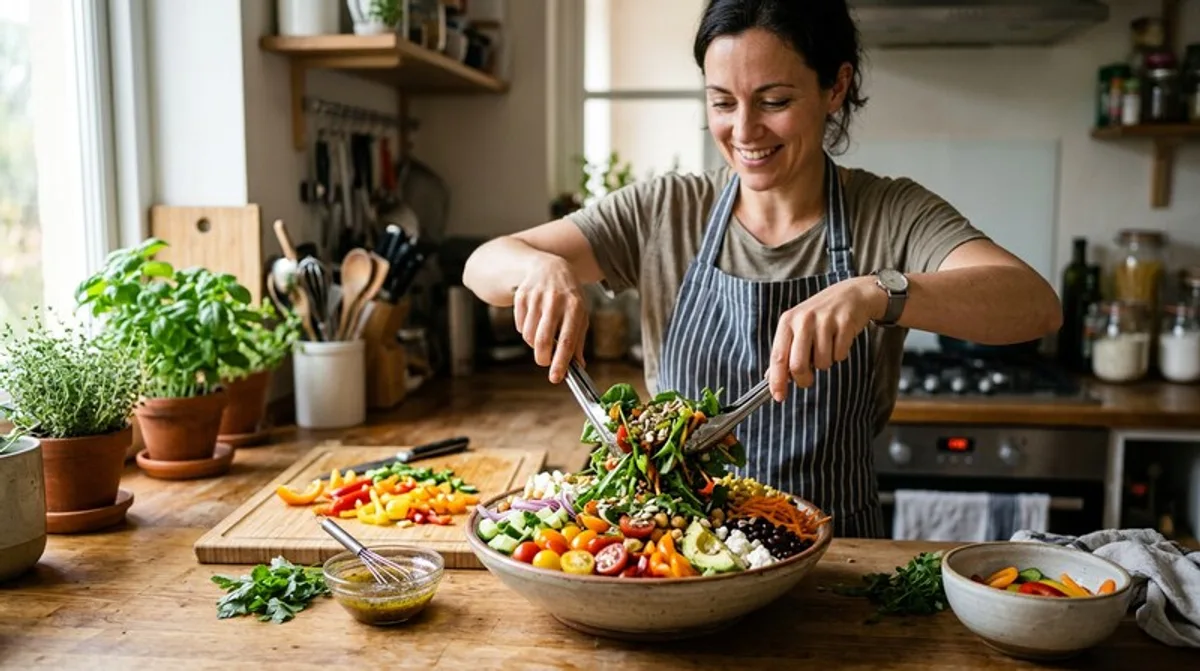
Cannabis Cooking Guide: Everything You Need to Know About Making Edibles at Home
ZenWeedGuide Editorial Team |
By the ZenWeedGuide Editorial Team | Updated 2024 | 10 min read
- Cannabis edibles are the fastest-growing product category in the legal cannabis market, driven by consumers seeking smoke-free consumption methods.
- Decarboxylation — heating cannabis to activate THC — is the most critical and most often skipped step in home cannabis cooking.
- Edible effects last 4–8 hours and can be 2–3× more potent than inhaled cannabis due to liver metabolism converting THC to 11-hydroxy-THC.
- The FDA and state cannabis regulators consistently recommend starting with 2.5–5mg THC for new edible consumers.
- Cannabis laws vary significantly by state — always verify your state's cannabis regulations before purchasing or cooking with cannabis.
- Homemade edibles carry inherent dosing uncertainty; commercial products in licensed dispensaries are lab-tested for accurate potency labeling.
- High-fat carriers like coconut oil and clarified butter are the most effective bases for cannabis infusions due to cannabinoid fat-solubility.
Background: The Rich History of Cannabis Edibles
Cannabis edibles are far from a modern invention. Humans have been incorporating cannabis into food and drink for thousands of years. One of the earliest documented examples is bhang, a beverage made from ground cannabis mixed with milk, spices, and sometimes nuts, which has been consumed in India for religious and ceremonial purposes for at least 3,000 years. In ancient China, hemp seeds were considered a food staple, and cannabis-infused preparations appeared in medicinal texts as early as 2737 BCE.
In the United States, cannabis edibles have had a complicated legal and cultural trajectory. Before prohibition began in earnest with the Marihuana Tax Act of 1937, cannabis tinctures and preparations were widely sold in pharmacies. The counterculture movement of the 1960s popularized homemade "space brownies" and other infused baked goods. Alice B. Toklas — the partner of author Gertrude Stein — famously included a "haschich fudge" recipe in her 1954 cookbook, cementing cannabis edibles in American popular culture.
The modern legal edibles market began taking shape after California passed Proposition 215 in 1996, the first medical cannabis law in the US. Dispensaries began selling infused products, and by the time Colorado and Washington legalized recreational cannabis in 2012, edibles had become a sophisticated commercial category with chocolates, gummies, beverages, and more. Today, understanding the science behind edibles — from decarboxylation to dosing — is essential for both home cooks and curious consumers.
The rise of home cooking with cannabis also parallels broader food culture trends: the farm-to-table movement, interest in functional foods, and a growing awareness among medical cannabis patients that edibles offer longer-lasting relief than inhaled methods. For patients managing chronic pain, anxiety, or sleep disorders, a carefully dosed edible can provide sustained therapeutic benefit through an entire night.
Key Developments: Cannabis Cooking Milestones
| Year | Milestone | Significance |
|---|---|---|
| ~1000 BCE | Bhang consumed in India | Earliest documented cannabis-infused food/drink traditions |
| 1954 | Alice B. Toklas Cookbook published | Mainstream US cultural introduction to cannabis edibles |
| 1996 | California Prop 215 passes | Medical cannabis dispensaries begin selling infused products |
| 2012 | CO & WA recreational legalization | Regulated commercial edibles market officially launches |
| 2014 | Colorado introduces 10mg serving standard | Becomes the national benchmark for edible dosing regulation |
| 2016 | Cannabis cooking shows & books proliferate | Mainstream media legitimizes culinary cannabis |
| 2019 | Cannabis beverages & nano-emulsification emerge | Faster-onset water-soluble edibles disrupt the market |
| 2022 | More states expand legal markets | Edibles become leading product category in multiple states |
| 2024 | Precision infusion devices mainstream | Home cooks can now dose edibles with near-commercial accuracy |

Impact on Consumers: How Cannabis Cooking Affects Everyday Users
For the millions of Americans who consume cannabis, cooking at home represents one of the most cost-effective and customizable ways to access edibles. A single ounce of mid-grade flower purchased at a legal dispensary can yield dozens of servings of infused butter or oil — far more economically than buying pre-made edibles. This is particularly meaningful for medical cannabis patients on fixed incomes or those who consume frequently for symptom management.
The central challenge for home cooks is dosing accuracy. Unlike commercial products that are lab-tested and labeled with precise milligram counts, homemade edibles can vary significantly in potency from batch to batch — and even within the same batch, depending on how thoroughly the infused oil or butter was mixed into the recipe. This inconsistency is the primary reason emergency room visits related to cannabis overconsumption skew heavily toward edibles, particularly among inexperienced users.
The "start low, go slow" mantra championed by harm reduction advocates like NORML is especially critical for edible consumers. The delay between consumption and onset — anywhere from 30 minutes to 2 hours depending on individual metabolism, body weight, and whether food was consumed beforehand — means users may feel nothing initially and consume more, leading to an uncomfortably intense experience hours later.
Selecting the right cannabis strain also matters. Indica-dominant strains are traditionally favored for edibles intended to promote relaxation or sleep, while sativa-leaning varieties may be preferred for daytime culinary use. Understanding the terpene profiles of your chosen strain can help predict the flavor contribution and the nuanced character of the high. High-myrcene strains, for example, may produce more sedating effects, while limonene-dominant varieties tend toward uplifting experiences.
Consumers should also consider the drug testing implications of edible consumption. Because edibles produce stronger and longer-lasting metabolite presence than inhaled cannabis, THC metabolites can remain detectable in urine for significantly longer periods — a critical consideration for anyone subject to workplace drug screening.
The Cannabis Cooking Process: A Technical Deep Dive
Mastering cannabis cooking requires understanding three core technical concepts: decarboxylation, infusion, and dosage calculation. Getting any one of these wrong can result in edibles that are either disappointingly inert or unexpectedly overwhelming.
Decarboxylation is non-negotiable. Raw cannabis contains THCA (tetrahydrocannabinolic acid), which is the acidic, non-psychoactive precursor to THC. Heat causes a chemical reaction that removes a carboxyl group (COOH) from THCA, converting it to active THC. The optimal temperature window is 220–245°F (104–118°C) for 30–45 minutes. At higher temperatures or longer durations, THC begins to degrade into CBN, a mildly sedating cannabinoid. Spread ground cannabis in a single layer on a parchment-lined baking sheet and bake in a pre-heated, accurately calibrated oven. The cannabis will shift from bright green to a slightly golden-brown color and develop a warm, nutty aroma when properly decarboxylated.
Infusion involves combining your decarboxylated cannabis with a fat carrier. The most common methods include stovetop double-boiler infusion (2–4 hours at 160–180°F), slow cooker infusion (4–8 hours on low setting), and dedicated infusion machines like the Ardent FX or Magical Butter Machine, which automate both decarboxylation and infusion with greater temperature precision. Regardless of method, always use a thermometer — temperatures above 200°F during infusion will degrade cannabinoids and compromise potency.
Dosage calculation follows a straightforward formula. Multiply the weight of your cannabis in milligrams by the decimal THC percentage: 1 gram (1,000mg) at 20% THC contains approximately 200mg of THC. A typical batch of cannabutter using 7 grams (7,000mg) at 20% THC could theoretically yield 1,400mg total THC. Divided across 24 brownies, that equals roughly 58mg per brownie — far above the recommended beginner dose of 2.5–5mg. Understanding this math is essential for responsible home cooking.
| Infusion Method | Time Required | Temperature Control | Potency Consistency | Best For |
|---|---|---|---|---|
| Double Boiler (Stovetop) | 2–4 hours | Manual / Moderate | Good with attention | Butter, coconut oil |
| Slow Cooker (Crockpot) | 4–8 hours | Low / Set-and-forget | Moderate | Large batches |
| Ardent FX / Nova | 1–2 hours total | Precise / Automated | Excellent | Precision dosing |
| Magical Butter Machine | 1–2 hours | Automated | Very Good | Oils, tinctures, butter |
| Cold Infusion (Freezer) | 24–48 hours | Passive / No heat | Low–Moderate | THCA preservation |
Industry Perspective: The Booming Edibles Market
The commercial edibles market has evolved dramatically from its early dispensary days of unmarked, inconsistently dosed treats. Today it represents one of the most lucrative and innovative segments of the legal cannabis industry. Market research firm Grand View …