










- Inhalation (smoking/vaping): fastest onset at 5–15 minutes
- Edibles convert THC to 11-OH-THC via liver — more potent and longer-lasting
- Dry herb vaping delivers 30–40% bioavailability vs 10–35% for smoking
- Transdermal patches deliver systemic THC over 8–12 hours
- Topicals provide local relief with no psychoactive effect
Inhalation Methods
Smoking (Joint, Pipe, Bong)
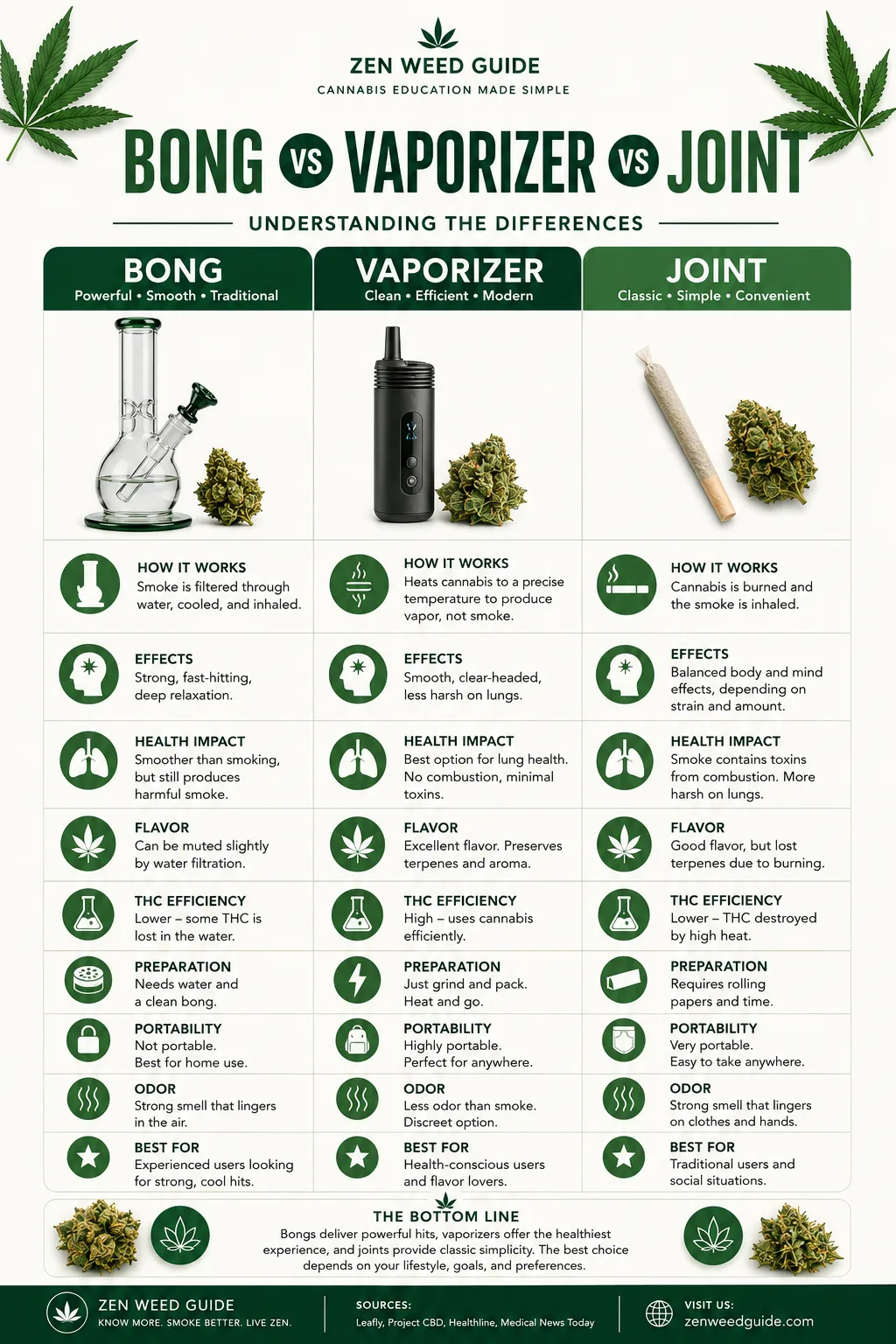
Smoking is the most common cannabis consumption method globally. Combustion temperatures of 450–900°C vaporise cannabinoids alongside hundreds of byproducts including carbon monoxide, benzene, and tar. Bioavailability ranges from 10–35% depending on inhalation depth and breath-hold duration. Onset is 5–10 minutes with peak effects at 20–30 minutes. Duration is 1–3 hours. Water filtration in bongs reduces some irritants but does not significantly alter bioavailability. The variability in smoking technique makes dosing difficult to control.
Dry Herb Vaporising
Dry herb vaporisers heat cannabis to 170–220°C, below combustion point. This produces a vapour rich in cannabinoids and terpenes with no combustion byproducts. Bioavailability improves to 30–40%. Onset is 5–15 minutes. Duration is similar to smoking at 1–3 hours. The vapour is smoother on the respiratory tract, and the lower temperature preserves more terpenes, contributing to the nuanced flavour and effects that connoisseurs prefer. Vaporising is the recommended inhalation method for medical cannabis patients.
Dabbing
Dabbing involves vaporising cannabis concentrates (wax, shatter, live resin) on a heated surface called a nail or banger, typically at 315–450°C. Concentrates contain 60–90% THC vs 15–30% in flower. Onset is 1–5 minutes — the fastest of all methods. Duration is 1–3 hours but intensity is significantly higher. Dabbing is not appropriate for low-tolerance users or beginners. High temperatures can degrade terpenes and produce toxic byproducts; low-temperature dabs at 315–370°C preserve flavour and reduce these risks.
Oral Methods
Edibles
Edibles include gummies, chocolates, baked goods, beverages, and capsules where THC is ingested and metabolised by the digestive tract and liver. The liver converts delta-9-THC to 11-hydroxy-THC (11-OH-THC), a more potent metabolite that crosses the blood-brain barrier more readily. This is why 10 mg of edible THC feels stronger than 10 mg smoked. Onset is 45–90 minutes depending on stomach contents, metabolism, and fat content of the edible (THC is fat-soluble). Duration is 4–8 hours. Bioavailability is only 4–20% due to first-pass metabolism, which is why the delivered dose per mg is lower but the experience is longer and more intense.
Sublingual Tinctures
Sublingual administration involves holding cannabis oil or tincture under the tongue for 60–90 seconds before swallowing. The mucous membrane under the tongue allows direct absorption into the bloodstream, partially bypassing first-pass liver metabolism. Onset is 15–45 minutes — faster than edibles. Bioavailability reaches 20–35%. Duration is 2–4 hours. Sublingual delivery offers better dose precision than smoking and faster onset than edibles, making it a preferred method for medical cannabis patients requiring consistent dosing.
Capsules and Pills
Cannabis capsules deliver THC, CBD, or combined cannabinoid formulas in a standardised dose via the digestive tract. The pharmacokinetic profile is essentially identical to edibles: onset 45–90 minutes, duration 4–8 hours, bioavailability 4–20%. Capsules offer precise dosing and are discreet, taste-neutral, and convenient for travel. They are the dominant delivery format in pharmaceutical cannabis preparations.
Topical and Transdermal Methods
Topical Creams and Balms
Topical cannabis products (creams, salves, roll-ons) are applied directly to the skin for localised relief. Cannabinoids bind to CB1 and CB2 receptors in the skin, subcutaneous tissue, and muscles without reaching the bloodstream in significant concentrations. There is no psychoactive effect. Onset is 20–45 minutes for localised relief. Duration is 2–4 hours. Topicals are used for joint pain, muscle soreness, and localised inflammation. They are legally available in many jurisdictions where psychoactive cannabis is still restricted.
Transdermal Patches
Transdermal patches use penetration enhancers to deliver cannabinoids through the skin and into the systemic bloodstream. Unlike topicals, transdermal delivery does produce systemic effects including potential psychoactivity from THC patches. Onset is slow at 1–2 hours. Duration is extended at 8–12 hours with controlled release. Patches are used for consistent all-day or overnight pain management and are particularly valuable for patients who cannot smoke or who need overnight coverage without redosing.
Complete Pharmacokinetic Comparison
| Method | Onset | Duration | Bioavailability | Best For | Disadvantages |
|---|---|---|---|---|---|
| Smoking | 5–10 min | 1–3 hr | 10–35% | Fast relief, social use | Combustion byproducts, variable dose |
| Dry herb vaping | 5–15 min | 1–3 hr | 30–40% | Health-conscious inhalation | Device cost, battery dependence |
| Dabbing | 1–5 min | 1–3 hr | High (variable) | High-tolerance users, concentrates | Not for beginners, equipment required |
| Edibles | 45–90 min | 4–8 hr | 4–20% | Long duration, discrete, no smoke | Delayed onset, 11-OH-THC potency |
| Sublingual | 15–45 min | 2–4 hr | 20–35% | Precise dosing, medical use | Taste, requires holding under tongue |
| Capsule / Pill | 45–90 min | 4–8 hr | 4–20% | Precise, discreet, tasteless | Slow onset, first-pass metabolism |
| Topical | 20–45 min | 2–4 hr | Local only | Pain/inflammation without psychoactivity | No systemic or psychoactive effect |
| Transdermal patch | 1–2 hr | 8–12 hr | Systemic | Overnight relief, consistent dosing | Slow onset, limited product variety |
Frequently Asked Questions
Dabbing has the fastest onset at 1–5 minutes due to the high concentration of cannabinoids and rapid lung absorption. Smoking follows at 5–10 minutes. Dry herb vaping is comparable at 5–15 minutes with fewer combustion byproducts.
When THC is metabolised by the liver, it converts to 11-hydroxy-THC (11-OH-THC), which is more potent and longer-lasting than delta-9-THC. Edibles deliver nearly all THC through this pathway, while inhalation largely bypasses it.
Smoking delivers 10–35% bioavailability. Dry herb vaping achieves 30–40% because vaporisation at lower temperatures is more efficient than combustion and produces no carbon monoxide or pyrolytic byproducts.
No. Standard topicals bind to local receptors in skin and muscles without reaching systemic circulation. Only transdermal patches with penetration enhancers deliver cannabinoids into the bloodstream and can produce systemic effects.
Sublingual tinctures held under the tongue for 60–90 seconds absorb directly through the mucous membrane with onset in 15–45 minutes. Bioavailability of 20–35% is higher than edibles because first-pass liver metabolism is partially bypassed.
Related Guides
Ann Karim
Cannabis educator and science writer at ZenWeedGuide. Specialises in translating peer-reviewed cannabis research into accessible consumer guidance.