










- Caryophyllene is the only terpene with direct cannabinoid receptor (CB2) binding activity
- Myrcene at >0.5% concentration enhances THC absorption through the blood-brain barrier
- Pinene may partially counteract THC-induced short-term memory impairment
- Linalool modulates GABA-A receptors — the same pathway as benzodiazepines
- Products with >2% total terpenes deliver more pronounced entourage effects
What Are Cannabis Terpenes?
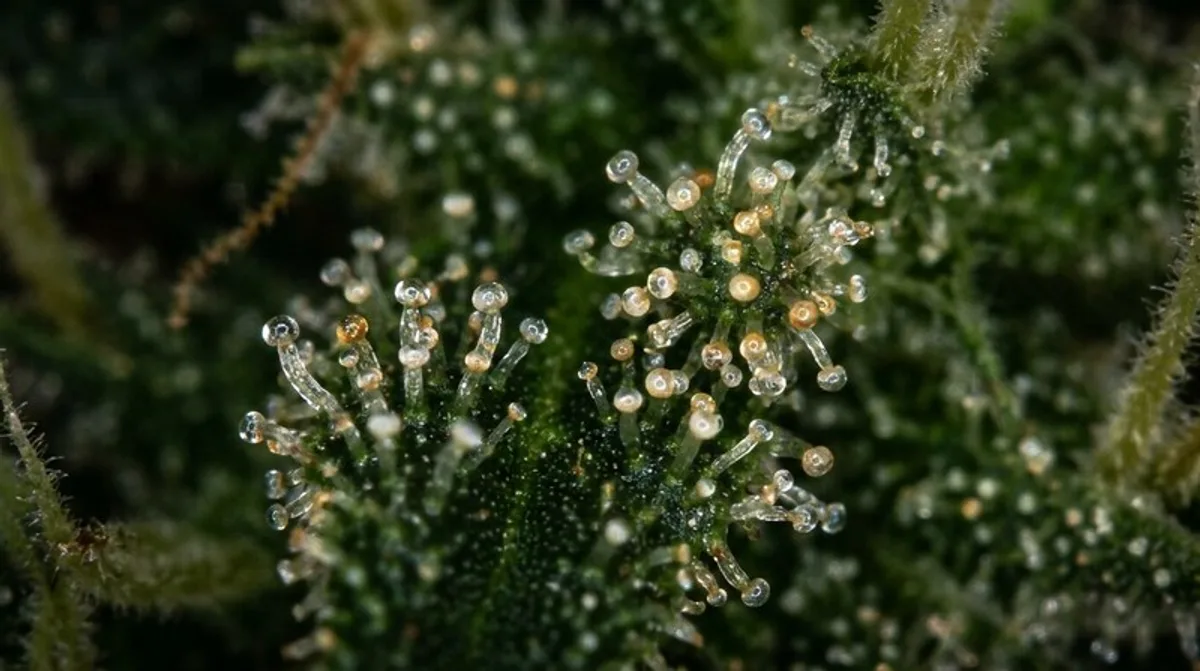
Terpenes are volatile aromatic compounds produced in the trichomes of the cannabis plant — the same resin glands that produce THC and CBD. Over 200 terpenes have been identified in cannabis, though 7–10 dominate most commercial strains. Beyond their role in flavour and aroma, terpenes interact with cannabinoid receptors, neurotransmitter systems, and membrane permeability in ways that meaningfully modify the cannabis experience. This is the pharmacological basis of the entourage effect.
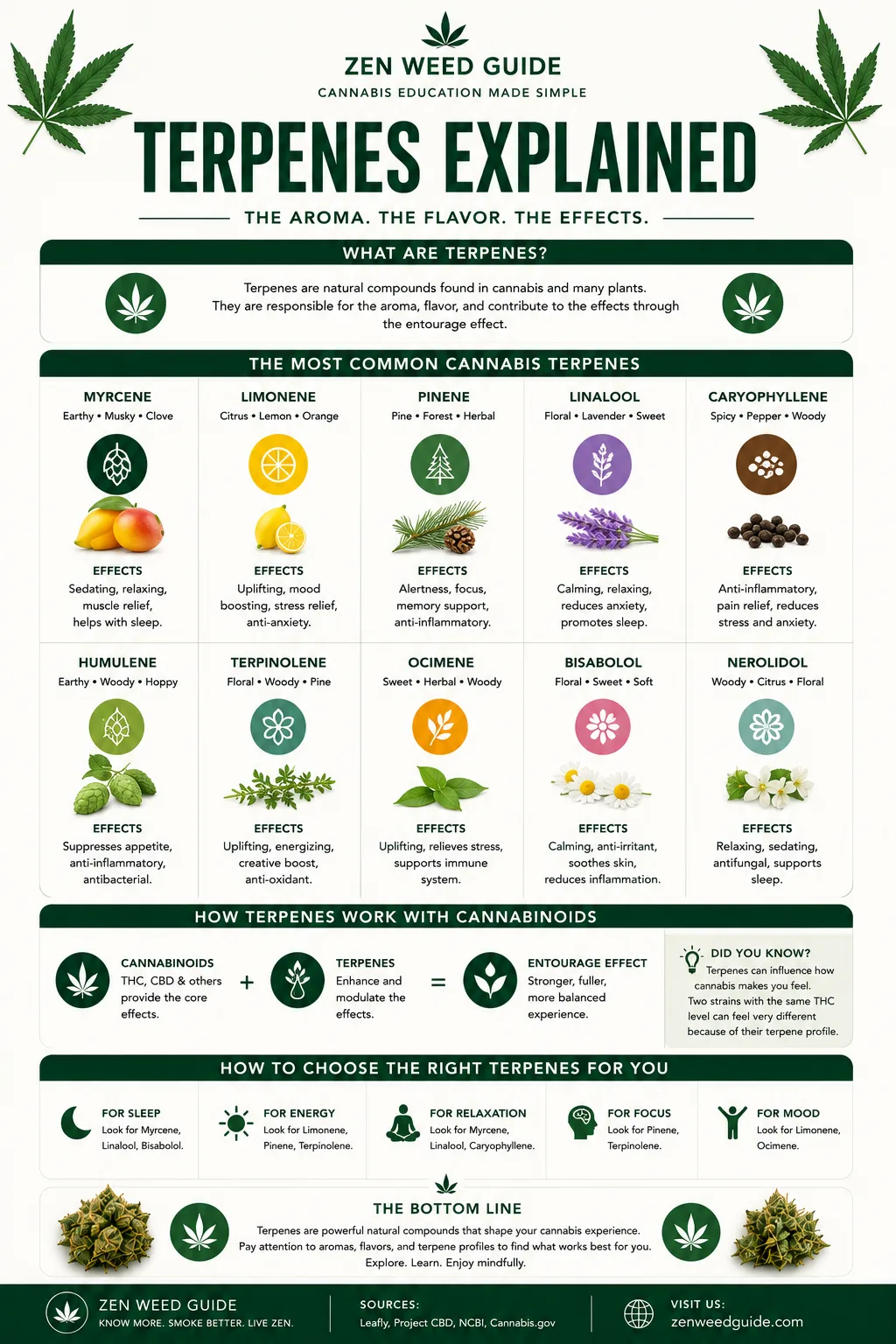
The 7 Most Important Cannabis Terpenes
1. Myrcene
Myrcene is the most abundant terpene in most commercial cannabis strains. It produces an earthy, musky, slightly fruity aroma. At concentrations above 0.5%, myrcene is associated with sedating and muscle-relaxant effects. Mechanistically, myrcene is believed to increase the permeability of cell membranes, including the blood-brain barrier, which can accelerate and enhance THC uptake. It also interacts with opioid receptors, contributing to analgesic effects. High-myrcene strains include OG Kush, Blue Dream, and Granddaddy Purple.
2. Limonene
Limonene is characterised by a bright citrus aroma — lemon, orange, and grapefruit. It is associated with uplifted mood, reduced anxiety, and increased energy. Limonene has documented anxiolytic effects in preclinical studies and is thought to interact with serotonin and dopamine receptors. It also demonstrates anti-fungal properties and is one of the most studied terpenes in food science. High-limonene strains include Super Lemon Haze, Durban Poison, and Strawberry Banana.
3. Caryophyllene
Caryophyllene is structurally unique among terpenes: it is the only terpene confirmed to directly bind to cannabinoid receptors, specifically CB2 receptors concentrated in the immune system and peripheral tissues. This binding activity classifies caryophyllene as a dietary cannabinoid. CB2 activation is associated with anti-inflammatory and analgesic effects without psychoactivity. Caryophyllene has a spicy, peppery, woody aroma and is also found in black pepper, cloves, and cinnamon. High-caryophyllene strains include GSC (Girl Scout Cookies), Sour Diesel, and Bubba Kush.
4. Pinene
Alpha-pinene is one of the most common terpenes in nature, also found in pine trees, rosemary, and sage. Its aroma is distinctly piney and fresh. Pinene is a bronchodilator — it relaxes airway smooth muscle and may improve lung function during inhalation. Of particular clinical interest is pinene’s role as an acetylcholinesterase inhibitor, meaning it slows the breakdown of acetylcholine, a neurotransmitter involved in memory consolidation. This mechanism may partially counteract THC-induced short-term memory impairment, a finding observed in several preclinical studies. High-pinene strains include Jack Herer, Dutch Treat, and Romulan.
5. Linalool
Linalool is the dominant terpene in lavender and is responsible for the characteristic floral, calming scent. In cannabis, it contributes to the relaxing, anti-anxiety properties of indica-dominant strains. Linalool modulates GABA-A receptor activity — the same inhibitory receptor system targeted by benzodiazepines and alcohol — which provides a pharmacological explanation for its sedating effects. It also demonstrates anticonvulsant properties in animal models. High-linalool strains include Amnesia Haze, Lavender, and LA Confidential.
6. Terpinolene
Terpinolene produces a complex, multi-layered aroma profile: fresh and piney with fruity and floral undertones. Unlike the more common terpenes, terpinolene appears in only a minority of strains but in high concentrations when it does. It is associated with cerebral, creative, and slightly uplifting effects. Terpinolene is chemically unstable compared to other terpenes, degrading more rapidly after harvest, which means terpinolene-dominant strains require fresher product to express these effects. High-terpinolene strains include Jack Herer, Golden Goat, and XJ-13.
7. Humulene
Humulene shares its aroma with hops (Cannabis and Humulus lupulus are closely related species) — earthy, woody, and slightly spicy. It is notable for being one of the few terpenes associated with appetite suppression rather than stimulation, making it relevant for medical cannabis patients managing weight. Humulene also demonstrates anti-inflammatory activity in multiple in vitro and animal studies. High-humulene strains include Headband, Sour Diesel, and White Widow.
Terpene Reference Table
| Terpene | Aroma | Receptor Activity | Therapeutic Associations | High-Terpene Strains |
|---|---|---|---|---|
| Myrcene | Earthy, musky | Opioid, membrane permeability | Sedation, analgesia, sleep | OG Kush, Blue Dream |
| Limonene | Citrus, lemon | Serotonin, dopamine | Mood elevation, anxiety relief | Super Lemon Haze, Durban Poison |
| Caryophyllene | Spicy, pepper | CB2 direct binding | Anti-inflammation, pain (no psychoactivity) | GSC, Bubba Kush |
| Pinene | Pine, fresh | Acetylcholinesterase inhibitor | Memory retention, bronchodilation | Jack Herer, Dutch Treat |
| Linalool | Floral, lavender | GABA-A modulation | Anxiety, sedation, anticonvulsant | Amnesia Haze, Lavender |
| Terpinolene | Fruity, fresh, piney | Limited data | Cerebral, creative, uplifting | Jack Herer, Golden Goat |
| Humulene | Hoppy, earthy, woody | CB1/CB2 indirect | Appetite suppression, anti-inflammation | Headband, White Widow |
How to Find High-Terpene Products
The most reliable way to find products with meaningful terpene concentrations is to request a certificate of analysis (COA) from the producer or dispensary. A COA is a third-party laboratory report listing all cannabinoids and terpenes detected, usually expressed as a percentage of total product weight. Look for:
- Total terpene content above 2% for noticeable entourage effects
- Dominant terpene listed first — this is the most influential on the experience
- Terpene preservation practices: low-temperature curing, live resin extractions, or fresh-frozen processing retain more terpenes than standard dried flower or distillate
- Storage: purchase freshly packaged product; terpenes degrade over time, particularly terpinolene and limonene
If a dispensary cannot provide a COA or does not list terpene data, request it before purchasing. Reputable producers make this data available for all batch lots.
Frequently Asked Questions
Caryophyllene is the only terpene that directly binds to cannabinoid receptors — specifically CB2 receptors in the immune system. This makes it technically a dietary cannabinoid. Its CB2 activity is associated with anti-inflammatory and analgesic effects without psychoactivity.
Myrcene’s sedating effects are most evident at concentrations above 0.5% of the product’s total terpene content. At this level, myrcene also enhances THC absorption through the blood-brain barrier by increasing membrane permeability.
Research suggests pinene may partially counteract THC-induced short-term memory impairment by inhibiting acetylcholinesterase, slowing the breakdown of acetylcholine which is involved in memory consolidation.
Request a certificate of analysis (COA) from the dispensary. Look for products with total terpene content above 2%. Ask specifically for dominant terpene data if COAs are not displayed prominently.
The entourage effect is the proposed synergistic interaction between cannabinoids and terpenes that produces an effect greater than any single compound alone. Myrcene may enhance THC; pinene may moderate its intensity; linalool may add anxiolytic properties. The theory is widely accepted by researchers though clinical evidence is still developing.
Related Guides
Ann Karim
Cannabis educator and science writer at ZenWeedGuide. Specialises in translating peer-reviewed cannabis research into accessible consumer guidance.