










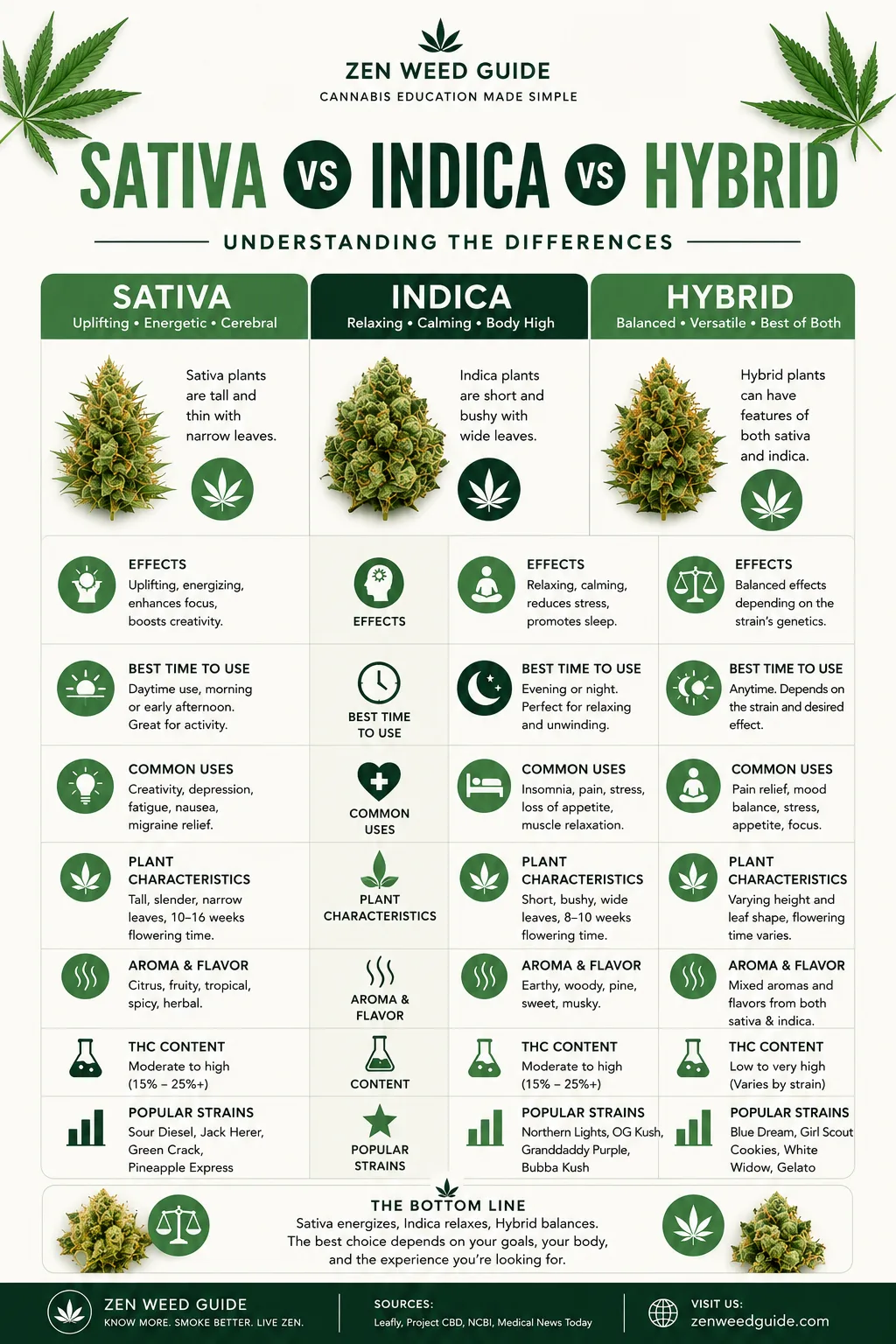
- Sawler et al. (2015) genomic analysis of 81 cannabis accessions found that commercial indica and sativa labels correlate weakly with actual genetic clusters — most dispensary cannabis is too hybridised to fit clean botanical categories.
- Chemotype classification (Type I: THC-dominant, Type II: intermediate, Type III: CBD-dominant/hemp) is the scientifically preferred framework for describing commercially relevant differences.
- Terpene profiles — not the indica/sativa label — are the most reliable predictor of subjective effect quality and are increasingly included on legal market certificates of analysis.
- Myrcene, the most abundant terpene in most commercial cannabis, has documented sedative properties in animal models and is strongly associated with the stereotypical “indica body high.”
- Limonene and terpinolene, more common in sativa-labelled products, are associated with anxiolytic and mood-elevating effects in preclinical research.
- The legal cannabis market still operates on the sativa/indica/hybrid framework because it functions as an effective consumer communication shorthand, even if botanically imprecise.
- Most modern dispensary hybrids carry genetics from 6 to 12 or more historical cultivars, making any single ancestral classification meaningless at the strain level.
The Genomics Reality: What Sawler 2015 Found
For decades, cannabis classification assumed that Cannabis sativa and Cannabis indica were distinct species with reliably different chemical and pharmacological profiles. Sativa from equatorial regions (Colombia, Thailand, Mexico) was described as tall, narrow-leafed, energising. Indica from highland regions (Afghanistan, Hindu Kush) was described as short, broad-leafed, sedating. These categories shaped decades of cultivation lore and remain the dominant framework in modern dispensaries.
In 2015, Sawler and colleagues published a genomic study sequencing 81 cannabis samples — including recreational, hemp, and wild cannabis — and constructing ancestry models. The key finding: recreational strains labelled sativa and indica showed substantial genetic admixture with each other. There was no clean genetic boundary between them. Hemp (fibre/CBD cultivars) formed its own distinct cluster with clear separation from recreational varieties, but the sativa-indica division within recreational cannabis did not hold up to genomic scrutiny. The authors concluded that the folk taxonomy based on morphological traits does not reflect molecular genetic reality in modern cultivated cannabis.
This does not mean the categories are useless. It means they describe a market communication convention and phenotypic tendency, not a reliable pharmacological prediction. Two products labelled “sativa” may have very different terpene and cannabinoid profiles. The responsible approach is to read the lab certificate attached to any legal market product.
Chemotype Classification: Type I, II, and III
The scientifically accepted alternative framework classifies cannabis by cannabinoid ratio rather than morphology. This system emerged from analytical chemistry research and the regulatory need to distinguish hemp from drug cannabis. It is increasingly used in medical cannabis programmes worldwide.
| Chemotype | THC:CBD Ratio | Typical THC % | Typical CBD % | Examples |
|---|---|---|---|---|
| Type I (THC-dominant) | THC >> CBD | 15 to 30% | <1% | OG Kush, Sour Diesel, Girl Scout Cookies |
| Type II (Intermediate) | ~1:1 THC:CBD | 6 to 14% | 6 to 14% | Penelope, Canna-Tsu, Harle-Tsu |
| Type III (CBD-dominant) | CBD >> THC | <0.3% | 8 to 20% | Charlotte’s Web, ACDC, Lifter (hemp) |
Virtually all recreational cannabis sold in dispensaries is Type I. Medical programmes increasingly stock Type II products for patients who need therapeutic cannabinoids without intense intoxication. Type III is hemp, federally legal in the US and available in health stores worldwide.
Terpene Profiles: The Real Predictor of Effects
Terpenes are aromatic compounds produced in the same trichome glands as cannabinoids. They influence the character of effects through direct pharmacological activity and through modulation of cannabinoid receptor signalling — the mechanism commonly called the entourage effect. A product’s dominant terpenes reliably predict whether it will feel stimulating, calming, creative, or sedating to a greater degree than the sativa/indica label.
| Terpene | Aroma | Associated Effects | More Common In |
|---|---|---|---|
| Myrcene | Earthy, musky, mango | Sedation, muscle relaxation, sleep | Indica-labelled |
| Limonene | Citrus, lemon | Mood lift, anxiolytic, energising | Sativa-labelled |
| Terpinolene | Floral, herbal, pine | Uplifting, creative, mild sedative at high dose | Sativa-labelled |
| Beta-caryophyllene | Pepper, spice, wood | Anti-anxiety, anti-inflammatory (CB2 agonist) | Hybrid/Indica |
| Linalool | Lavender, floral | Calming, anti-anxiety, sleep support | Indica-labelled |
| Alpha-pinene | Pine, fresh | Memory retention (acetylcholinesterase inhibitor), alertness | Sativa/Hybrid |
| Humulene | Hoppy, earthy | Appetite suppression, anti-inflammatory | Hybrid/Indica |
Why Dispensaries Keep Using the Categories — and How to Use Them Wisely
Despite the genomic evidence, every major dispensary point-of-sale system and cannabis app organises products primarily by sativa, indica, and hybrid. The categories persist because they serve a practical function: they communicate an expected experience in a shared language between budtender and customer. When a customer asks for an “indica for sleep,” they are expressing a preference for a myrcene-heavy, sedating, low-anxiety product. The budtender understands and filters accordingly. The system works as a semantic shorthand even when it fails as a botanical classification.
The sophisticated approach is to use the label as a first filter and then read the actual terpene panel. On legal market products, the certificate of analysis lists total terpene content and the percentage of individual terpenes. A product labelled “sativa” but dominated by myrcene will likely feel more indica-like in practice. A product labelled “indica” with high limonene and terpinolene may be more energising than the label implies. The terpene panel is the truth; the category label is the marketing summary.
Choosing by Effect: A Practical Decision Framework
Rather than asking “which type?”, ask what effect you need at what time. Morning and daytime use requiring focus and energy: seek limonene-dominant or terpinolene-dominant Type I products, typically labelled sativa or sativa-dominant hybrid. Afternoon creative or social sessions: caryophyllene-dominant hybrids offer balanced stimulation with anxiety buffering via CB2 activity. Evening relaxation and pain management: myrcene-dominant Type I or Type II products, typically labelled indica or indica-dominant hybrid. Sleep and severe pain: high-myrcene, high-linalool Type I with sedating terpene panels. CBD support or low intoxication: Type II (1:1) products at any time of day.
Related Guides
- Cannabis Terpenes: Complete Effects Guide
- THC vs CBD Visual Guide
- Best Cannabis Strains for Sleep
- Best Cannabis Strains for Anxiety
- Edibles Dosage Chart and Timeline
- How to Read a Cannabis Certificate of Analysis