











- Sawler (2015): most commercial indica and sativa strains are genetically near-identical hybrids
- Dispensary category correlates only 0.3–0.5 with intended user effect
- Morphological differences (leaf width, plant height) are real and consistent
- Effect differences are terpene-driven, not genetics-driven
- Indica strains trend toward myrcene; sativas toward terpinolene and limonene
The Genetic Reality: What Sawler 2015 Found
A landmark 2015 genetic study by Sawler et al. analysed cannabis strains sold as indica or sativa and found that the two categories are largely a marketing construct. Most commercial strains are hybrids with overlapping genetic profiles. The clearest genetic distinction exists between hemp varieties and drug varieties — not between indica and sativa within the drug cannabis group. This does not mean the labels are useless, but it does mean that predicting effects from a label alone is unreliable.
Physical Differences That Are Real
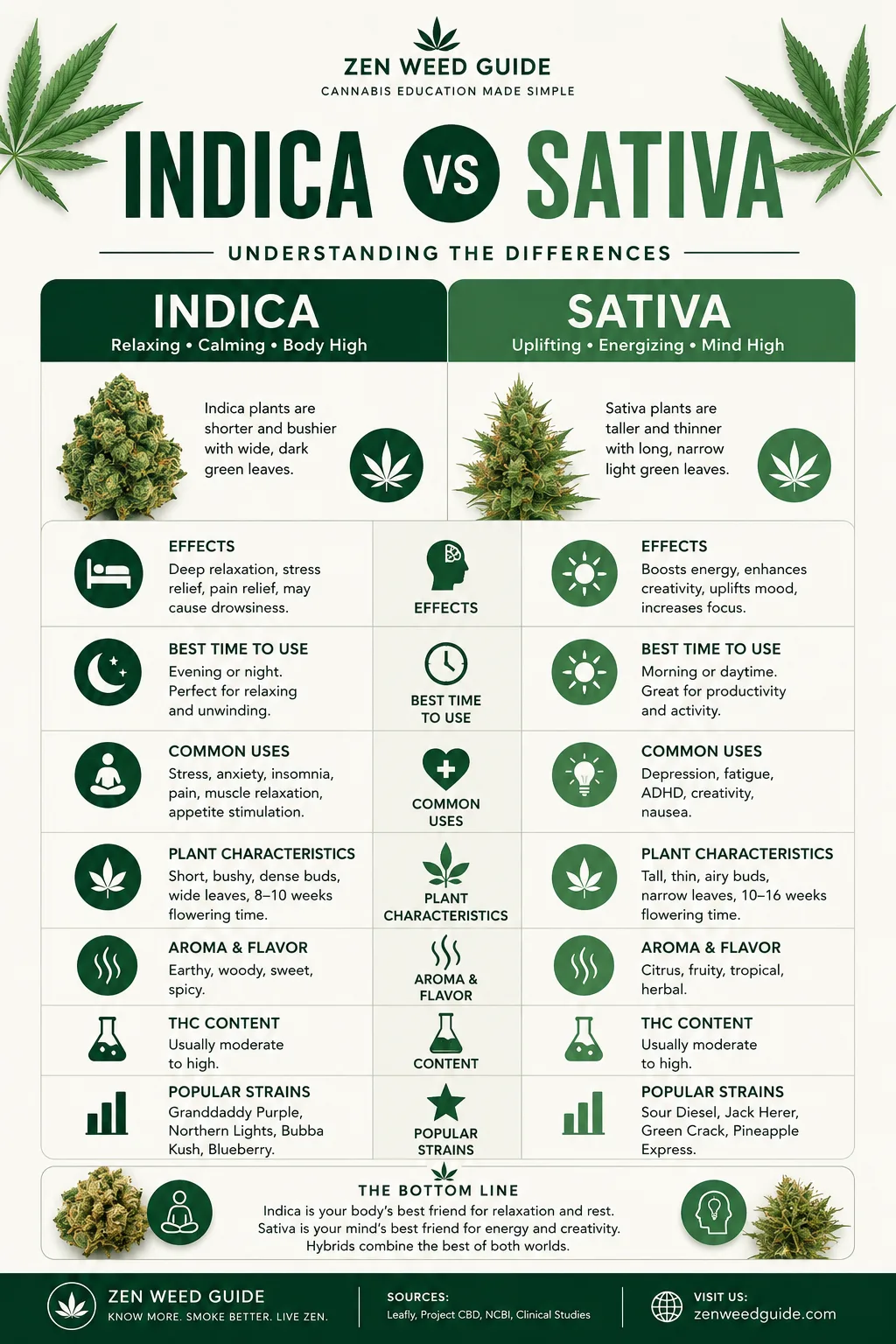
While genetic and effect differences are blurry, morphological differences between pure indica and pure sativa landraces are consistent. Indica plants originate from the Hindu Kush mountain range and developed short, dense growth patterns to survive harsh climates. Sativa landraces from equatorial regions grew tall and thin to maximise light exposure. These physical traits are preserved in modern breeding even when the chemical profiles have converged.
Effect Differences Are Terpene-Driven
The real reason two strains produce different experiences is terpene composition. Indica cultivars tend to accumulate higher concentrations of myrcene, which crosses the blood-brain barrier easily and has documented sedating and muscle-relaxant properties. Sativa cultivars tend toward terpinolene and limonene — terpenes associated with uplifted mood, focus, and anxiolytic effects. This is why a high-myrcene hybrid labelled sativa will feel more “indica-like” than a low-myrcene strain labelled indica.
Terpene Profiles by Category
| Terpene | Typical Category | Effect Association | Aroma |
|---|---|---|---|
| Myrcene | Indica-dominant | Sedating, muscle relaxant | Earthy, musky |
| Linalool | Indica-dominant | Calming, anti-anxiety | Floral, lavender |
| Limonene | Sativa-dominant | Mood-lifting, energising | Citrus |
| Terpinolene | Sativa-dominant | Cerebral, creative | Fruity, fresh |
| Caryophyllene | Hybrid/both | Anti-inflammatory, analgesic | Spicy, peppery |
| Pinene | Hybrid/both | Alertness, memory retention | Pine, fresh |
Physical Traits and Growing Comparison
| Factor | Indica | Sativa |
|---|---|---|
| Plant Height | Short, bushy (2–4 ft) | Tall, thin (6–12 ft) |
| Leaf Width | Wide, broad leaflets | Narrow, elongated leaflets |
| Flowering Time | 8–9 weeks | 10–16 weeks |
| Origin Climate | Hindu Kush mountains | Equatorial tropics |
| Effect Tendency | Relaxing, body-focused | Energising, cerebral |
| Best For | Evening, sleep, pain, stress | Daytime, creativity, focus |
| Key Terpenes | Myrcene, Linalool | Limonene, Terpinolene |
| Example Strains | Granddaddy Purple, Northern Lights | Sour Diesel, Jack Herer |
Why These Categories Still Exist
Despite weak genetic backing, indica and sativa labels remain standard in dispensaries because they serve a communication function. Consumers use these categories to set expectations before purchase. Budtenders use them as a starting point for conversations about desired experience. The labels work as shorthand — as long as consumers understand they are approximate tendencies rather than guarantees. The better dispensaries now pair category labels with dominant terpene information on product packaging.
Choosing by Terpene Profile vs Choosing by Label
For consistent results, experienced consumers select cannabis by terpene profile rather than by indica or sativa category. The approach: identify which terpenes produce your desired effect (myrcene for sleep, limonene for mood, caryophyllene for pain), then look for products with a certificate of analysis (COA) showing those terpenes as dominant. Products with total terpene content above 2% typically deliver more pronounced terpene effects. The indica or sativa label can still provide a rough starting point, but the COA terpene data will be far more predictive.
Frequently Asked Questions
Largely no. Sawler (2015) showed most commercial indica and sativa strains are genetically near-identical hybrids. Morphological differences are real, but effect differences are terpene-driven rather than rooted in genetic classification.
Indica strains tend toward myrcene (earthy, sedating) and linalool (floral, calming). These terpenes are associated with the body-relaxing effects attributed to indicas — not the indica genetics themselves.
The categories persist because they help set consumer expectations. They act as shorthand for intended experience. Most budtenders now supplement these labels with terpene information for more accurate guidance.
Research suggests yes. Dispensary category correlates only 0.3–0.5 with intended effect. Selecting by dominant terpene (myrcene, limonene, terpinolene) gives a more reliable prediction of personal experience.
Indica plants are short and bushy (2–4 ft) with wide leaves, flowering in 8–9 weeks. Sativa plants grow tall (6–12 ft) with narrow leaves, flowering in 10–16 weeks. These morphological differences are consistent even when chemical profiles converge.
Related Guides
Ann Karim
Cannabis educator and science writer at ZenWeedGuide. Specialises in translating peer-reviewed cannabis research into accessible consumer guidance.