










How to Grow Purple Haze
Immortalised by Jimi Hendrix, Purple Haze is a classic sativa with vivid purple colouration, berry aromas and a dreamy uplifting high.
Purple Haze Grow Timeline
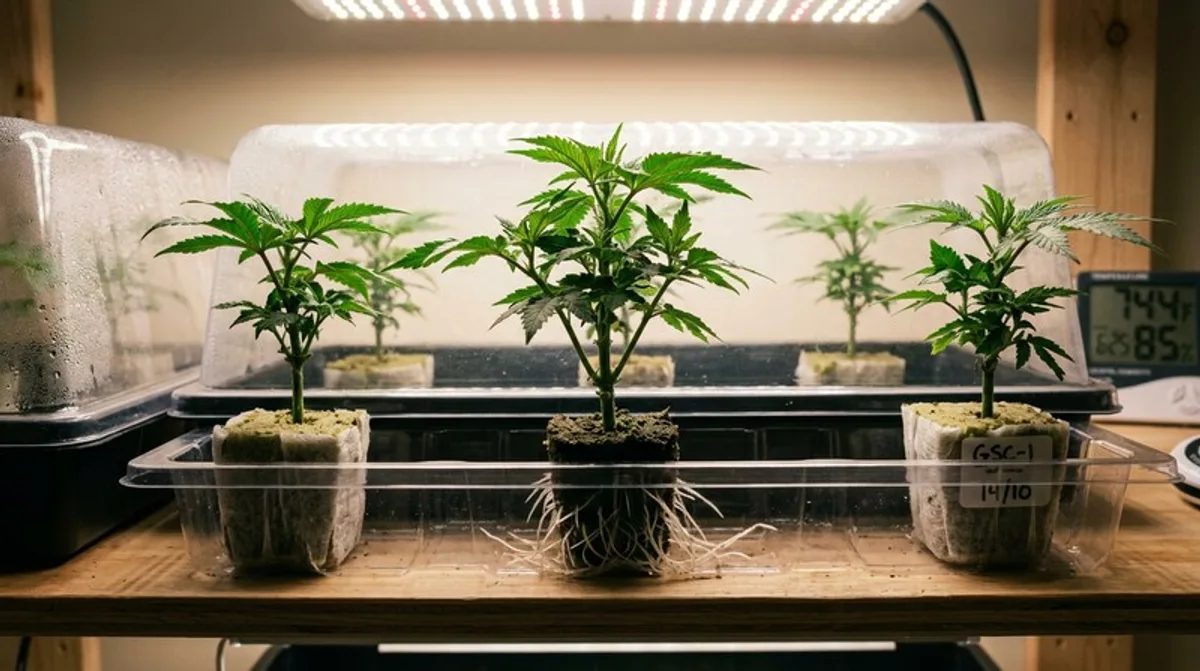
Purple Haze Seeds & Genetics
Genetics: Purple Thai x Haze | Breeder: Multiple (1960s California) | Type: Sativa-dominant Hybrid
Purple Haze is a cross of Purple Thai and Haze genetics, popularised in the 1960s San Francisco Bay Area and immortalised by Jimi Hendrix. Modern seeds are available feminised from multiple breeders. Known for vivid purple and blue phenotypes with sweet berry-grape aromatics. For growing instructions, visit our beginner cannabis growing guide.
Indoor vs Outdoor Growing Purple Haze
SCROG training is strongly recommended to manage Purple Haze sativa height - see our SCROG guide. Drop night temperatures to 15-18C in the final weeks to trigger maximum purple colouration. Outdoors, Purple Haze is spectacular in autumn when cool nights intensify the pigmentation. Our outdoor growing guide covers climate requirements.
Nutrients & Feeding for Purple Haze
Moderate nutrient requirements. Feed at 75-100% of recommended doses. Nitrogen-dominant in veg at EC 1.0-1.5, bloom nutrients from week 1 of flowering. CalMag beneficial throughout. Avoid excess nitrogen in late flowering which can inhibit purple colour expression. See our nutrients guide.
Common Problems & Solutions
Height management is the primary indoor challenge - without training Purple Haze can triple in size during flowering stretch. Maintain RH below 50% to prevent powdery mildew. Inspect weekly for spider mites. Early vegetative growth can be slow - this is normal.
Harvest, Drying & Curing Purple Haze
Harvest when trichomes are 75-85% cloudy to preserve uplifting cerebral effect. Purple colouration should be at its most vivid at harvest time. Dry in cool dark conditions 10-14 days. Cure 4-5 weeks in glass jars. Berry-grape aroma becomes more pronounced after proper curing. See our harvest guide.
Full terpene profile, effects and uses of Purple Haze.
Terpenes & Effects
Frequently Asked Questions
Why does Purple Haze turn purple?
Purple Haze develops purple pigmentation from anthocyanin compounds activated by cool night temperatures. Drop temps by 5-10C in the last 2-3 weeks to intensify the colour.
Is Purple Haze hard to grow?
Purple Haze is moderately challenging due to its sativa height and longer flowering time. Height management and humidity control are the main challenges.
How long does Purple Haze flower?
Purple Haze flowers in 9-10 weeks indoors. Outdoor plants are ready in mid-to-late October in the Northern Hemisphere.
What yield does Purple Haze produce?
Indoor yields average 400-450g/m2 under optimised conditions. Grown primarily for aesthetics and unique flavour rather than maximum yield.
Does Purple Haze really smell like berries?
Yes - Purple Haze has a distinctly sweet berry and grape aroma with earthy undertones. The scent intensifies with a proper post-harvest cure.
Can Purple Haze grow in cold climates?
Purple Haze can grow in cooler climates - the cold actually enhances purple colouration. However its long flowering time may be challenging in short-season regions.