










Lavender: The Linalool Cannabis Strain That Actually Smells Like the Herb
Lavender, created by Soma Seeds, occupies a genuinely rare position in cannabis — it is one of very few strains where linalool is the primary terpene rather than a minor note. Linalool is the compound that gives true lavender (Lavandula angustifolia) its distinctive floral calm, and it carries documented pharmacological activity through GABA receptor modulation and serotonin 5-HT1A agonism. The result is a strain whose calming, gently anxiolytic character is not simply the product of indica THC levels — it has mechanistic grounding in its unique terpene chemistry. For medical consumers, researchers, and cannabis enthusiasts interested in the frontier of terpene science, Lavender is a strain of particular interest.
- Genetics: Super Skunk × Big Skunk Korean × Afghani Hawaiian (Soma Seeds)
- THC Range: 14–20% (avg. ~16–17%)
- Top Terpenes: Linalool (primary), Myrcene, Caryophyllene
- Main Effects: Calming, relaxing, mood-uplifting, mild body sedation
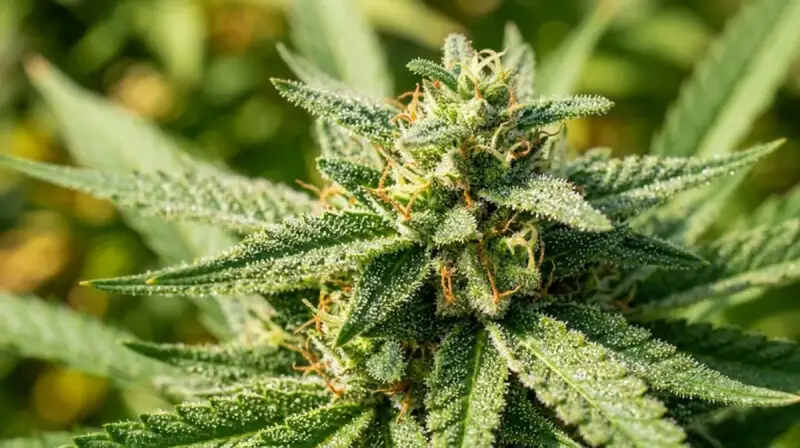
- Aroma: True lavender, floral, hash, sweet earth — uniquely floral for cannabis
- Medical Uses: Anxiety, stress, insomnia, mild pain, mood elevation
- Yield (Indoor): 350–450g/m² | Outdoor: 400–500g per plant
- Awards: High Times Cannabis Cup winner (Soma Seeds portfolio)
Genetics & Breeding: Soma Seeds and the Afghani Hawaiian Linalool Source
Lavender was developed by Soma Seeds, a seed bank founded in Amsterdam by Soma (born Steven Happe in New York) — a figure widely respected in cannabis genetics circles for his commitment to high-quality, thoughtfully bred varieties. Soma Seeds has been operating since the early 1990s and has won multiple High Times Cannabis Cups with varieties including Amnesia Haze and Lavender itself.
The genetics of Lavender are a three-way cross: Super Skunk × Big Skunk Korean × Afghani Hawaiian. Each component contributes distinct characteristics:
- Super Skunk: Skunk #1 × Afghan background; provides indica structure, yield, and earthy-hash base aroma.
- Big Skunk Korean: Korean landrace genetics; contributes unique terpene nuances and genetic diversity that moderates the typical Skunk character.
- Afghani Hawaiian: This is the critical linalool-source parent. Hawaiian landrace genetics are documented to carry elevated linalool concentrations compared to most cannabis origins, and this parent is responsible for the strain’s signature floral character.
The combination produces a plant that is genuinely unusual in its terpene expression — most cannabis consumers encounter linalool only as a minor secondary or tertiary terpene. In Lavender it is primary and perceptible, creating an aroma that experienced consumers describe as “cannabis that actually smells like lavender flowers” — a rare and memorable sensory experience.
Linalool: The Science Behind Lavender’s Calming Effect
Linalool’s pharmacological activity has been studied extensively in the aromatherapy and psychopharmacology literature. Unlike most terpenes whose effect mechanisms in cannabis remain theoretical or inferred, linalool’s activity pathways are documented through peer-reviewed research. The two primary mechanisms of relevance to Lavender strain consumers are:
| Mechanism | Receptor Target | Effect | Analogy | Research Support |
|---|---|---|---|---|
| GABA-A Receptor Modulation | GABA-A (positive allosteric modulator) | Reduces neuronal excitability, calming effect, mild anxiolysis | Similar mechanism to benzodiazepines (at much lower magnitude) | Hanson et al. 2005; Ueno et al. 2001 |
| Serotonin 5-HT1A Partial Agonism | 5-HT1A serotonin receptor | Mood stabilisation, anxiolytic, mild antidepressant | Shared mechanism with buspirone (anti-anxiety medication) | Russo 2011 (Terpenes & Cannabinoids Review) |
These are not marginal effects — linalool is one of the best-characterised anxiolytic compounds in the natural product pharmacology literature. When present at meaningful concentrations alongside THC (which modulates the endocannabinoid system’s own anxiety-relevant pathways) and caryophyllene (which activates CB2 receptors with anti-inflammatory and stress-reducing effects), the result is the multi-mechanism calming experience that makes Lavender distinctive among cannabis strains. This is a practical example of the “entourage effect” concept articulated by Russo (2011) — terpenes modifying and enhancing cannabinoid pharmacology in ways that single-compound or terpene-free extracts cannot replicate.
Linalool-Dominant Strains: Comparative Analysis
Most cannabis strains have linalool as a secondary or tertiary terpene at concentrations below 0.10%. The table below compares Lavender against strains with documented above-average linalool content, placing Soma’s Lavender in context within the broader cannabis terpene landscape.
| Strain | Linalool (approx. mg/g dry weight) | Primary Terpene | THC | Type | Effect Character |
|---|---|---|---|---|---|
| Lavender (Soma Seeds) | 1.5–3.5 mg/g | Linalool (primary) | 14–20% | Indica-dom. | Floral calm, anxiolytic |
| Do-Si-Dos | 0.8–2.0 mg/g | Caryophyllene | 22–28% | Indica-dom. | Heavy sedation, linalool accent |
| Amnesia Haze | 0.4–1.2 mg/g | Terpinolene | 20–25% | Sativa-dom. | Energetic, linalool minor note |
| Zkittlez | 0.3–1.0 mg/g | Caryophyllene | 18–23% | Indica-dom. | Relaxing, fruity, trace floral |
| Most cannabis strains (avg.) | <0.2 mg/g | Myrcene or Caryophyllene | Variable | Variable | Linalool pharmacologically insignificant |
Full Cannabinoid & Terpene Profile
Lavender’s moderate THC range (14–20%) is a deliberate feature of its character rather than a limitation. The relatively moderate potency makes it more accessible to sensitive users and reduces the anxiety risk that accompanies very high-THC strains — an important consideration for a strain marketed partly on its anxiolytic properties. The up-to-1% CBD content is higher than most modern hybrids and adds a mild modulating effect on THC’s psychoactivity.
| Compound | Type | Typical Level | Primary Effect | Aroma Note |
|---|---|---|---|---|
| THC | Cannabinoid | 14–20% | Mood elevation, relaxation | — |
| CBD | Cannabinoid | Up to 1% | THC modulation, mild anxiolytic | — |
| Linalool | Terpene | 0.30–0.65% | GABA-A modulation, 5-HT1A agonism, anxiolytic | True lavender, floral, sweet |
| Myrcene | Terpene | 0.20–0.40% | Sedation, muscle relaxation | Earthy, musky, slightly fruity |
| Caryophyllene | Terpene | 0.15–0.35% | CB2 anti-inflammatory, stress relief | Spicy, peppery, woody |
| Ocimene | Terpene | 0.05–0.15% | Mild uplifting | Sweet, herbal, floral accent |
Effects of Lavender Strain
The Lavender experience is softer, more nuanced, and more distinctly calming than typical indica hybrids of similar or higher THC content. The linalool terpene profile creates a quality of relaxation that consumers consistently describe as “peaceful” rather than “heavy” — a distinction that matters for medical users and those who find strong indicas uncomfortably sedating.
Phase 1: Gentle Mood Lift (0–20 min)
The onset is notably smooth — a gradual brightening of mood and dissolving of background stress without an abrupt cerebral jolt. Tension releases from the shoulders and face. There is a mild, pleasant mental clarity in this phase rather than stimulation. Linalool’s GABAergic calming effect appears to blunt the typical THC-driven initial stimulation, producing an unusually serene onset.
Phase 2: Relaxed Body Presence (20–75 min)
As the experience deepens, full-body relaxation develops progressively and comfortably. Muscles soften. Breathing slows. There is a pleasant, slightly dreamy quality to perception — colours may feel warmer, music more engaging, and ordinary comfortable sensations (warmth, softness, stillness) more pleasant and noteworthy. This phase is ideal for meditation, gentle music listening, slow reading, or light conversation. Activity remains possible — this is not a couch-lock indica.
Phase 3: Soft Sedation (75 min+)
The final phase settles into comfortable drowsiness. Sleep comes naturally and easily for most users at this stage, making Lavender an excellent evening strain for those with mild insomnia or who simply want to end the day on a calm, positive note. For anxiety management, stress reduction, and sleep support, this complete arc is well-suited.
Growing Lavender
Lavender is a moderately easy strain to cultivate and well-suited to intermediate growers. The plants grow with classic indica compact structure, staying manageable in height and producing medium yields of dense, aromatic buds. The floral terpene expression is particularly pronounced in cooler grow environments, and nighttime temperature drops in the final weeks of flower intensify both the linalool aroma and the purple pigmentation in susceptible phenotypes.
| Parameter | Indoor | Outdoor | Notes |
|---|---|---|---|
| Flowering Time | 8–9 weeks | Late September–Early October | Reliable, predictable |
| Yield | 350–450g/m² | 400–500g per plant | Medium — quality over volume |
| Height | 60–90cm | 100–140cm | Compact; manageable for all setups |
| Difficulty | Easy–Moderate | Easy–Moderate | Good beginner-to-intermediate strain |
| Linalool Expression | Enhanced at 18–22°C (day) / 14–16°C (night) | Cooler autumn temperatures ideal | Temperature drives terpene synthesis |
| Odour | Moderate-Strong floral | Moderate | Noticeably pleasant; carbon filter still recommended |
| Mould Resistance | Good | Good | Indica structure handles humidity well |
The primary cultivation tip for maximising Lavender’s signature linalool expression is temperature management. Linalool is a monoterpene alcohol whose biosynthesis in cannabis is upregulated by moderate temperature stress — specifically by cool nighttime temperatures. Growers who allow their tent or room temperature to drop to 14–16°C at lights-off during the final 2–3 weeks of flower consistently report stronger floral aroma in the finished product. This temperature differential also triggers anthocyanin expression if the phenotype carries the relevant pigmentation genes, producing the visually appealing purple hues that complement the lavender aroma. Read our growing guides for more on environmental optimisation.
Lavender and Drug Testing
Like all cannabis strains, Lavender’s THC metabolises into THC-COOH after consumption. Detection windows in standard drug tests depend on consumption frequency, body composition, and metabolic rate. The table below provides general reference ranges. Read our drug testing guide for complete information.
| Test Type | Occasional User | Regular User | Daily User |
|---|---|---|---|
| Urine | 3–7 days | 10–21 days | Up to 30+ days |
| Blood | 1–3 days | 3–7 days | 7–14 days |
| Saliva | 24–72 hours | 3–5 days | Up to 7 days |
| Hair Follicle | Up to 90 days | Up to 90 days | Up to 90 days |
Related Strain & Terpene Guides
Do-Si-Dos Amnesia Haze Granddaddy Purple Linalool Terpene Guide Myrcene Caryophyllene Cannabis for Anxiety Cannabis for Insomnia What Is a Terpene? All Strains