










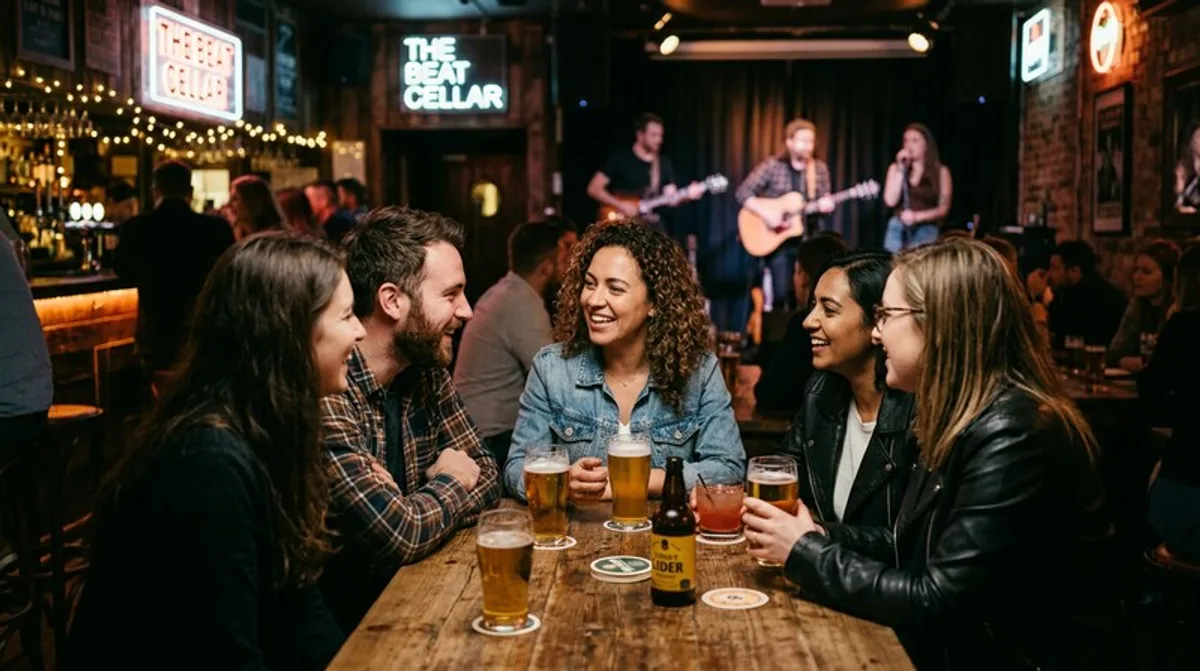
Liverpool Cannabis Travel Guide
Liverpool is one of the most culturally significant cities in the world — birthplace of The Beatles, home to one of Britain's most passionate football cultures, and a city whose music scene has shaped global pop culture across seven decades. Its cannabis history runs parallel: from the psychedelic awakening of the 1960s Merseybeat era, through the post-punk scene at Eric's Club, to the superclub years at Cream. For visiting cannabis consumers, Liverpool offers the same legal framework as the rest of the UK — recreational cannabis is illegal — but a city whose countercultural depth makes it one of Britain's most rewarding stops for anyone interested in the intersection of music, culture, and cannabis heritage.
- Legal Status: Cannabis illegal — Class B drug under UK Misuse of Drugs Act 1971
- Possession: Up to 5 years imprisonment; in practice, warnings common for small first-time amounts
- CBD: Legal throughout the UK; Liverpool has a growing Baltic Triangle and Bold Street CBD retail scene
- Medical Cannabis: Legal via UK specialist prescription since November 2018; NHS access very limited
- Cultural Context: Beatles psychedelic era (1960s), Eric's Club post-punk (1976–1980), Cream superclub (1992–2002)
- Airport: Liverpool John Lennon Airport (LPL) — do not attempt to carry cannabis through any terminal
Cannabis Laws in Liverpool
Liverpool falls under the same UK drug legislation as every other English city: the Misuse of Drugs Act 1971, under which cannabis is a Class B controlled substance. Possession carries up to 5 years imprisonment; supply and trafficking up to 14 years. Merseyside Police exercise discretion in enforcement, and a first-time tourist caught with a small personal amount may receive a cannabis warning rather than a full arrest — but this is never guaranteed and carries no legal right.
Liverpool's political culture — historically Labour, socially liberal, with a strong tradition of civic activism — makes it sympathetic to drug policy reform arguments. The city was at the forefront of harm reduction policy in the 1980s and 1990s, when Liverpool became known internationally for its progressive approach to heroin addiction through needle exchanges and community-based treatment. That pragmatic public health tradition continues to inform how Merseyside approaches drug enforcement. However, none of this changes the operative law. For the full UK legal framework, read our UK cannabis laws guide.
The Beatles and Cannabis: Liverpool's Psychedelic Legacy
Any serious account of Liverpool's cannabis cultural heritage must start with The Beatles. The most influential band in the history of recorded music were born and formed in Liverpool — at the Cavern Club on Mathew Street, in the terraced houses of Speke and Woolton, and in the Hamburg clubs where they honed their early sound. Their relationship with cannabis began in 1964 when Bob Dylan introduced them to the drug during a meeting in New York — an encounter that had an immediate and lasting impact on their creativity.
The period between 1965 and 1967 produced some of the most celebrated psychedelic music in history, with cannabis (and later LSD) playing a documented role in the creative process behind albums including Rubber Soul, Revolver, and Sgt. Pepper's Lonely Hearts Club Band. John Lennon, in particular, became one of the most outspoken voices of his era for drug policy reform and pacifism. His 1966 conviction for cannabis possession — the result of a police raid on his home — did nothing to suppress his advocacy. Even the name of Liverpool's John Lennon Airport acknowledges the city's pride in its most famous son.
The Beatles' legacy is visible across modern Liverpool in ways few other cities can claim for any single cultural phenomenon. The Cavern Club continues to operate on Mathew Street. The Beatles Story museum on the Albert Dock is one of the UK's most visited attractions, drawing over 300,000 visitors annually. For culturally curious cannabis consumers, the Mathew Street area offers a concentrated walking tour of the city's musical origins, from the Cavern to the pubs and venues that surrounded it.
"The Beatles didn't invent cannabis use — but they brought it from the margins into the living rooms of a generation. Liverpool's countercultural thread runs directly from that moment."
Eric's Club and the Post-Punk Era
A generation after the Beatles, Liverpool produced another burst of creative energy that had its own relationship with cannabis culture. Eric's Club on Mathew Street — not far from the original Cavern Club — operated from 1976 to 1980 and became the crucible of Liverpool's post-punk scene. Bands including Echo and the Bunnymen, The Teardrop Explodes, OMD (Orchestral Manoeuvres in the Dark), and Wah! all emerged from or passed through Eric's orbit.
The Eric's era was distinct from the Manchester Madchester scene that would follow a decade later — it was darker, more literary, more influenced by the industrial decay of Thatcherite Britain than by the euphoric hedonism of acid house. But cannabis was woven through it in the way it runs through most British creative subcultures of the era. Julian Cope of the Teardrop Explodes and Ian McCulloch of Echo and the Bunnymen were among the more conspicuously countercultural voices of early-1980s Britain.
Cream: Liverpool's Superclub Legacy
If Eric's was Liverpool's post-punk moment, Cream was its rave-era peak. Operating at Nation nightclub (now Invisible Wind Factory on the waterfront) from 1992 to 2002, Cream became one of the most celebrated nightclubs in the world — alongside the Hacienda in Manchester and Fabric in London. It helped pioneer the UK superclub format, bringing international DJs including Paul Oakenfold, Sasha, John Digweed, and Carl Cox to a city that embraced them with ferocious enthusiasm.
Cream's decade at Nation was the period when British club culture intersected most visibly with cannabis and MDMA use — the combination that defined the rave generation. While the club itself enforced drug policies, its cultural context was inseparable from the broader hedonism of 1990s British nightlife. The Cream brand has survived through festivals (Creamfields, held annually in Cheshire) and compilation albums; the Nation building reopened as the Invisible Wind Factory and continues as one of Liverpool's most significant live music venues.
Liverpool Neighbourhoods: Where to Explore
| Neighbourhood | Character | Why It Matters |
|---|---|---|
| Baltic Triangle | Post-industrial, creative, rapidly developing | Liverpool's arts and independent culture hub — galleries, music venues, bars, CBD shops, street art |
| Mathew Street | Historic, tourist, nightlife | Cavern Club, Beatles heritage, pubs, nightlife concentrated in a small area |
| Bold Street | Independent, bohemian, multicultural | Independent cafes, vintage shops, health food, CBD retailers, creative scene |
| Ropewalks | Nightlife, arts, gentrifying | Concert Square, independent bars, street art, the city's primary nightlife district |
| Lark Lane (Aigburth) | Village-like, bohemian, residential | Independent restaurants, wine bars, alternative lifestyle shops, local CBD retail |
| Albert Dock | Tourist, heritage, waterfront | Beatles Story museum, Tate Liverpool, waterfront bars — essential cultural stop |
The Baltic Triangle is the natural starting point for culturally curious visitors. Once the industrial heart of Liverpool's Victorian-era shipping industry, it has been transformed over the past fifteen years into the city's most dynamic creative district. Independent music venues including Camp and Furnace and 24 Kitchen Street operate here. Street art, independent galleries, and a concentration of independent food and drink venues make it the closest Liverpool equivalent to Manchester's Northern Quarter or London's Shoreditch.
Bold Street runs south from the city centre and has been Liverpool's bohemian main street for decades. Its concentration of independent cafes, bookshops, health food stores, and alternative lifestyle retailers makes it the natural home for legal CBD retail in the city. The street connects through to the Lark Lane corridor in Aigburth, where the independent village atmosphere continues.
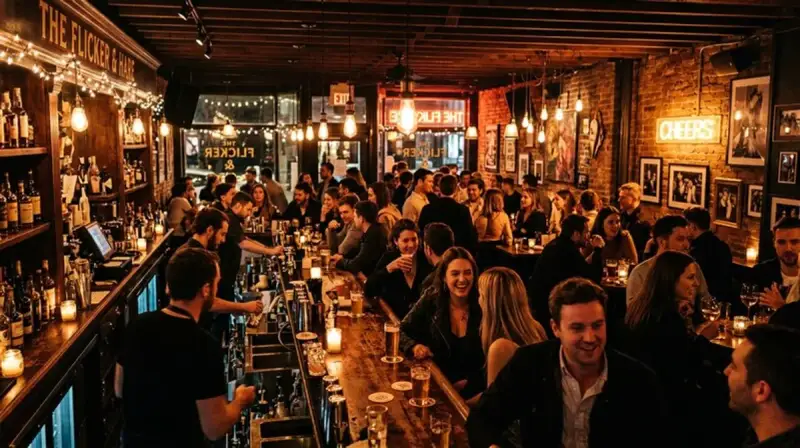
Liverpool's cultural identity — like the UK's broader cannabis culture — is inseparable from its music heritage and social scene.
Liverpool CBD Scene: Legal Cannabis Culture
Liverpool has developed a solid legal CBD retail market, driven by a young professional population, large student communities across four universities (University of Liverpool, Liverpool John Moores, Liverpool Hope, and Edge Hill in nearby Ormskirk), and the city's enduring countercultural identity. CBD oils, capsules, topicals, and food products are available across the Baltic Triangle, Bold Street, and Lark Lane.
As with all UK CBD purchases, ensure the product carries third-party lab certificates confirming THC content below 0.2% and FSA Novel Food compliance for any ingestible product. Our COA reading guide explains what to check on lab reports.
Practical Tips for Visiting Liverpool
Getting there: Liverpool John Lennon Airport (LPL) serves European and some long-haul destinations. UK Border Force operates at all terminals with drug detection equipment. Do not attempt to bring cannabis or THC products through Liverpool John Lennon Airport under any circumstances. Liverpool Lime Street station connects to London Euston in approximately 2 hours and to Manchester in 45 minutes.
Getting around: Liverpool city centre is compact and walkable. The Merseyrail network provides excellent coverage of the wider metropolitan area. The Baltic Triangle, Mathew Street, Bold Street, and the Albert Dock are all walkable from Lime Street. Lark Lane and Aigburth are a short bus or taxi ride from the city centre.
If approached by police: Merseyside Police officers have discretion in handling minor cannabis possession. Stay calm and cooperative. A first-time tourist with a small amount may receive a warning or formal cannabis caution; repeat offences or larger quantities will likely result in formal arrest. Know the location of your country's consular representation in Liverpool or London.
Drug testing: If you plan to consume legal CBD products and are subject to workplace or sports drug testing, review our drug testing guide first. Even compliant CBD products can occasionally cause false positives depending on test methodology and individual physiology.
External Resources
UK Drug Penalties (gov.uk) Transform Drug Policy Release (Drug Rights UK) Drug Science UK