










Bristol Cannabis Travel Guide
Bristol is unlike any other city in England. The birthplace of trip-hop, the spiritual home of Banksy, and the city that gave the world the "People's Republic of Stokes Croft" — Bristol has cultivated a distinctive countercultural identity built on independence, creativity, and a studied disregard for conventional authority. Its cannabis culture is inseparable from that identity: progressive, visible, and deeply embedded in the city's artistic and political DNA. The legal framework is the same as the rest of England — recreational cannabis is illegal — but Bristol's relationship with that law has always been complicated, and openly so.
- Legal Status: Cannabis illegal — Class B drug under UK Misuse of Drugs Act 1971
- Avon & Somerset Police: Historically one of the more pragmatic forces — minor first-time possession often results in warning rather than prosecution
- CBD: Legal throughout UK; strong scene in Stokes Croft, Clifton, and Cotham
- Medical Cannabis: Legal via UK specialist prescription since November 2018
- Cultural character: Countercultural, artistic, politically progressive — UK's most independently-minded city
- Key neighbourhoods: Stokes Croft, Clifton, Cotham, Montpelier, Bedminster, Southville
Cannabis Laws in Bristol: The Same Rules, a Different Attitude
Bristol falls within the Avon and Somerset Police area, and the same UK drug law applies here as everywhere in England. Cannabis is a Class B controlled substance under the Misuse of Drugs Act 1971. Possession, cultivation, and supply are all criminal offences with potential imprisonment. No part of Bristol is legally exempt from this framework.
What is different is the culture of enforcement. Avon and Somerset Police has been among the more vocal and progressive police forces in the UK regarding drug policy. The force has historically been open about applying discretion in minor cannabis possession cases, particularly for first-time offenders. Rather than automatic prosecution, officers have the option to issue a cannabis warning, refer to a drug diversion programme, or pursue no further action in appropriate circumstances.
Bristol's Police and Crime Commissioner has consistently engaged with the drug policy reform debate more directly than most English PCCs. This does not change the law — arrest and prosecution remain possible for any cannabis offence — but it reflects a political environment in which Bristol frequently positions itself ahead of the national conversation. For a full overview of UK cannabis law, medical access, and the reform movement, see our UK cannabis laws guide.
Bristol Cannabis Culture: Stokes Croft and the Counterculture
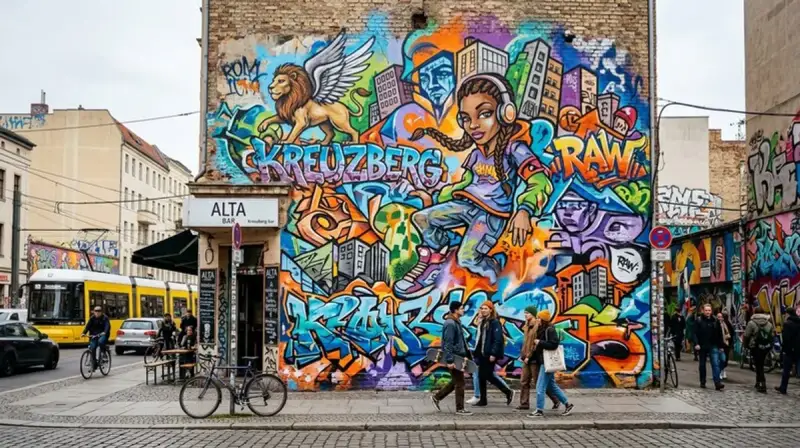
Understanding Bristol's cannabis culture requires understanding Stokes Croft — the neighbourhood that has become the symbolic heart of the city's alternative identity. Running north from the city centre toward Montpelier and St Pauls, Stokes Croft is a densely layered urban space of independent cafes, record shops, street art (much of it by Banksy and his Bristol contemporaries), grassroots political organisations, and a visible cannabis community that operates with a candour rarely seen in English cities.
Turbo Island — a small triangular piece of scrubland at the junction of Stokes Croft and Jamaica Street — has been an informal gathering point for decades. It is where Bristol's homeless community, activists, artists, and countercultural figures have congregated alongside those who simply want to exist outside the city's more sanitised spaces. Cannabis has always been part of that gathering. The area around it generates intense debate within Bristol itself: residents, council, police, and community groups have different views on how to relate to it, but it persists because it reflects something genuine about the neighbourhood's character.
"Bristol does not pretend. The cannabis culture here is visible in a way it is not in London or Manchester. The city has decided to be honest about itself."
Beyond Stokes Croft, the broader Montpelier and St Pauls neighbourhoods have long-standing West Indian communities with deep roots in Bristol's cannabis history. St Pauls was the site of the 1980 Bristol Riot — one of England's first significant urban uprisings of the modern era, triggered by a police raid on the Black and White Café, a community space widely understood to be a cannabis café. The riot preceded the Brixton and Toxteth riots of 1981 and contributed to a national conversation about policing, race, and the war on drugs that has never fully resolved. That history shapes the neighbourhood's relationship with cannabis policy to this day.
The Sound of Bristol: Trip-Hop and Cannabis
No account of Bristol's cannabis culture is complete without the music. In the early 1990s, a group of producers and artists working out of Bristol — most famously through the Wild Bunch sound system and the studios around the city — created a genre that came to be called trip-hop: a slow, bass-heavy, melancholic fusion of hip-hop beats, jazz samples, and atmospheric electronic production that sounded like nothing else being made anywhere in the world.
Massive Attack released Blue Lines in 1991 — widely regarded as the definitive trip-hop album and one of the most influential British records ever made. Portishead followed with Dummy in 1994, Tricky with Maxinquaye in 1995. These records did not just define a genre; they defined a vibe, an atmosphere, a particular Bristol-specific relationship with slowness, introspection, and the late-night textures of a city that takes itself seriously but never urgently. Cannabis is embedded in this music in a way that is not incidental but structural — the tempo, the texture, the space in the arrangements all reflect an aesthetic that emerged partly from cannabis culture.
Bristol's music scene remains vibrant and heavily bass-influenced. The city's drum and bass heritage — produced at clubs like Motion and through collectives like System — continues to produce internationally recognised artists. Arnolfini, the waterfront arts centre, and a dense network of independent venues make Bristol one of England's most musically active cities for its size. For anyone exploring the relationship between cannabis culture and music history, Bristol is a destination of genuine pilgrimage significance.
Banksy and Street Art: Cannabis Culture Made Visual
Bristol is the city that produced Banksy — the most globally recognised street artist alive and a figure whose work consistently engages with themes of authority, subversion, and the gap between official culture and lived reality. While Banksy has never explicitly positioned himself as a cannabis advocate, his work's consistent themes of questioning authority, exposing hypocrisy, and celebrating the marginalised align closely with the politics of cannabis reform.
Original Banksy works remain visible across Bristol, particularly in Stokes Croft, Clifton, and the harbourside. The Banksy versus Bristol Museum exhibition in 2009 drew hundreds of thousands of visitors. Street art as a whole is embedded in the city's visual identity in a way that reflects the same independent, anti-authoritarian spirit that makes Bristol's cannabis politics distinctive. Walking the street art trail in Stokes Croft and Montpelier is one of the most immersive ways to understand what makes Bristol different.
Bristol Neighbourhoods for Cultural Exploration
| Neighbourhood | Character | Why It Matters |
|---|---|---|
| Stokes Croft | Countercultural, street art, activism | Heart of Bristol alternative scene; CBD shops, vegan cafes, Banksy originals, Turbo Island |
| Montpelier | Bohemian, diverse, residential | Continuation of Stokes Croft energy; independent businesses; longstanding alternative community |
| St Pauls | Diverse, West Indian heritage, creative | Historical cannabis culture roots; St Pauls Carnival (August); community energy |
| Clifton | Upscale, Georgian, Suspension Bridge | University district; wellness shops; Clifton Village independent retail; Brunel sites |
| Cotham / Redland | Student-heavy, leafy, independent | Strong CBD and health food retail; University of Bristol adjacent |
| Southville / Bedminster | Creative, gentrifying, independent | Tobacco Factory arts venue; North Street independent shops; relaxed atmosphere |
Bristol CBD Scene
Bristol's countercultural identity has translated into one of the South West's most developed legal CBD markets. Specialist CBD retailers, health food stores with strong CBD ranges, and wellness studios selling topical CBD products are distributed across the city, concentrated particularly in Stokes Croft, Clifton Village, and the Cotham/Redland corridor.
As with all UK CBD purchases, look for products with third-party laboratory certificates of analysis confirming THC content below 0.2% and compliance with FSA Novel Food regulations for ingestible products. Bristol's independent retail culture means the CBD market skews toward smaller, more specialist brands rather than mass-market options — generally a positive indicator of quality and care. Our COA reading guide explains what to look for.
The St Pauls Carnival — Bristol's annual Caribbean street carnival held in July, one of the largest in England — brings the city's diverse communities together in the neighbourhood with the deepest historical cannabis roots. The carnival atmosphere celebrates Bristol's multicultural identity and is a significant cultural event in the city's calendar.
Practical Tips for Visiting Bristol
Getting there: Bristol Temple Meads is the main railway station, with direct links to London Paddington (1h45m), Birmingham, Manchester, and Cardiff. Bristol Airport (BRS) handles domestic and European routes. Do not attempt to bring cannabis through Bristol Airport.
Getting around: Bristol city centre is compact and walkable. The Stokes Croft–Clifton–Harbourside triangle covers most visitor-relevant areas on foot. Buses connect outer neighbourhoods like Bedminster and Redland. Bristol's notoriously hilly terrain makes cycling an adventure.
Drug testing: If you plan to use legal CBD products during your visit and are subject to workplace or sports drug testing, review our comprehensive drug testing guide before consuming. Even compliant CBD can occasionally trigger false positives.
Related guides: Planning a broader UK trip? Our London, Edinburgh, and Birmingham Manchester Brighton Travel Guide travel guides cover the rest of the UK's major cannabis-culture cities. For legal context across Europe, see our European cannabis laws overview.
Trusted External Resources
- UK Government: Drug Penalties Guide
- Transform Drug Policy Foundation — UK drug policy reform NGO
- Release — know-your-rights for drug law
- Drug Science — Prof. David Nutt independent research