










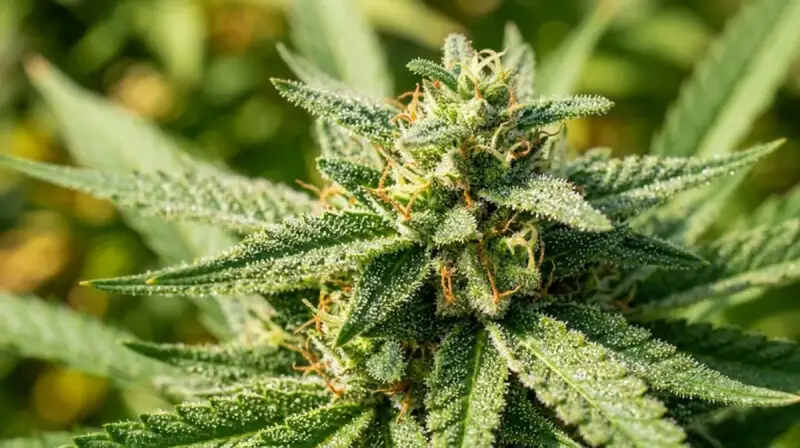
- True 50/50 balanced hybrid — delivers both cerebral euphoria and body relaxation without dominant couch-lock.
- One of the most beginner-friendly strains to grow: tolerates variable conditions, resists mold, short flowering window.
- Dense white trichome coating makes it one of the most visually distinctive strains in cannabis history.
- Myrcene-dominant terpene profile with earthy pine and mild floral notes; lower aroma intensity than diesel strains.
- Well-suited for daytime use, social settings, and creative work — most users remain functional at standard doses.
Genetics & Origins
White Widow was developed by Green House Seeds in the Netherlands in the early 1990s, crossing a Brazilian sativa landrace with a South Indian indica landrace. The resulting hybrid hit Amsterdam coffeeshops and immediately became a phenomenon, winning the High Times Cannabis Cup in 1995 and establishing itself as one of the most replicated and widely distributed strains in global cannabis history. Dozens of seed banks now carry White Widow phenotypes, though the original Green House Seeds version remains the most cited reference point.
The sativa/indica balance is reflected directly in the effect profile: the Brazilian sativa contributes the energetic cerebral onset and the creative, uplifting head effects, while the South Indian indica contributes the compact, resin-heavy bud structure and the grounding body warmth that prevents the high from becoming anxious or racey. This balance is why White Widow has maintained relevance for three decades — it occupies a rare middle ground that suits a wide range of consumer preferences and use cases. The strain also served as a foundation for other classic hybrids including White Rhino and Blue Widow.
Terpene Profile
White Widow’s aroma is more subtle and refined than pungent diesel strains, built on earthy pine and soft floral notes with a mild spicy undertone. The trichome density amplifies volatile terpene expression during grinding — the scent intensifies dramatically when the bud is broken apart. Myrcene dominates and is primarily responsible for the earthy, slightly musky base note, while caryophyllene and limonene add complexity without overwhelming the palate.
| Terpene | Aroma Note | Concentration | Functional Role |
|---|---|---|---|
| Myrcene | Earthy pine, musky floral | Dominant | Potentiates THC absorption; deepens body relaxation |
| Caryophyllene | Pepper, mild spice | Secondary | Binds CB2 receptors; anti-inflammatory pathway support |
| Limonene | Citrus, bright top note | Tertiary | Elevates mood; reduces anxiety; supports the sativa-side uplift |
Terpene ratios shift between phenotypes and curing methods. Lab-tested products from licensed producers carry a certificate of analysis (COA) with exact terpene percentages.
Effects: What to Expect
White Widow is one of the most accessible high-THC strains in terms of effect character. The balanced hybrid genetics mean that neither the cerebral sativa side nor the indica body relaxation dominates — the two work in tandem, which is why White Widow is used across daytime and evening contexts by consumers with varying experience levels. That said, upper-range phenotypes testing at 25% THC should still be approached with dose awareness, particularly by new consumers.
Onset (0–15 minutes)
A sharp mental clarity and mood lift arrive quickly, typically described as a wave of euphoria that builds behind the eyes and expands outward. Conversation becomes more fluid and engaged. Creative associations flow freely. The limonene-supported mood elevation is particularly noticeable in this early phase — many users report feeling markedly more positive and sociable within five to ten minutes of the first inhalation.
Peak (15–90 minutes)
The sativa-driven cerebral energy reaches full expression while the indica body component provides a grounding warmth that prevents the high from tipping into anxiety or disorientation. Sensory awareness sharpens — music, food, and visual detail become more engaging. Most users remain mobile and functional, making White Widow genuinely suitable for social situations, light physical activity, and creative work. The body warmth is present but not sedating, which is the hallmark distinction between White Widow and heavier indica-dominant strains.
Tail (90 minutes – 3 hours)
As THC is metabolized, the cerebral energy softens gradually into a comfortable relaxed state. Mild appetite stimulation typically appears during this phase. Some users report a gentle drowsiness toward the end of the session — White Widow transitions from productive to restful, making it viable for both afternoon use and early-evening wind-down. Unlike heavy indicas, the comedown rarely produces deep sedation or disorientation.
White Widow vs. Similar Strains
White Widow occupies a balanced middle ground that makes it useful as a reference point when comparing other hybrids. The table below highlights how it compares against its most commonly discussed alternatives.
| Strain | Type | THC Range | Key Difference vs. White Widow |
|---|---|---|---|
| Blue Dream | Sativa-dom Hybrid | 17–24% | More sativa-leaning; sweet berry aroma; longer, gentler onset |
| OG Kush | Indica-dom Hybrid | 19–26% | Heavier indica body; stronger couch-lock potential; pine-diesel aroma |
| Amnesia Haze | Sativa-dom Hybrid | 20–25% | More cerebral and stimulating; longer onset; less body effect |
Growing White Widow
| Parameter | Indoor | Outdoor |
|---|---|---|
| Flowering Time | 8–9 weeks | Early–mid October |
| Yield | 450–500 g/m² | 500–600 g/plant (ideal conditions) |
| Height | 60–100 cm | 100–180 cm |
| Difficulty | Easy | Easy |
| Optimal Temp. | 18–26°C (64–79°F) | Temperate to warm |
| Mold Resistance | Good — loose bud structure helps airflow | Good — handles humidity variation well |
White Widow is consistently rated one of the most beginner-friendly strains available — and for good reason. Its relatively loose bud structure (compared to ultra-dense indicas like OG Kush) allows for better airflow around colas, significantly reducing botrytis risk without requiring advanced humidity management. The plant tolerates minor nutrient imbalances and pH fluctuations that would stress less forgiving genetics. Indoor growers benefit from a compact 60–100 cm stature that fits well under standard grow tent setups, and the 8–9 week flower window means a crop is achievable within three months of flipping the light cycle. Outdoors, White Widow performs in a broad range of temperate climates — it finishes in early to mid-October in the Northern Hemisphere, before the autumn wet spells that can damage late-finishing strains. Topping once during early veg and supporting main colas with bamboo stakes is typically sufficient to maximize yield without complex training techniques.
Drug Test Detection Times
THC metabolites from White Widow — like all cannabis strains — are stored in fat tissue and released gradually. Detection windows depend on consumption frequency, metabolism, hydration, and body composition. The estimates below apply to moderate consumers; heavy or daily use extends all windows significantly.
| Test Type | Detection Window | Notes |
|---|---|---|
| Urine | 3–30+ days | Most common test; heavy users may exceed 30 days |
| Blood | Up to 36 hours | Reflects recent active intoxication |
| Saliva | 24–72 hours | Commonly used for roadside enforcement testing |
| Hair | Up to 90 days | Detects historical use; unreliable for single-session |
Medical & Therapeutic Use
White Widow is a popular choice among medical cannabis patients for conditions that benefit from mood improvement and moderate pain relief without heavy sedation. The limonene and myrcene combination supports a strong anxiolytic and antidepressant effect profile — patients managing stress, mild depression, and social anxiety frequently report that White Widow provides relief that allows them to remain functional and engaged. The mild CB2 receptor activity from caryophyllene contributes anti-inflammatory support relevant for patients with mild to moderate chronic pain, arthritis, or inflammation-related fatigue. Unlike high-THC indica-dominant strains, White Widow’s balanced profile makes it viable for patients who need therapeutic effects during active daytime hours. It is also frequently cited for managing fatigue — the energetic cerebral onset can counteract low-motivation states without inducing the stimulant-like anxiety of pure sativa strains.