










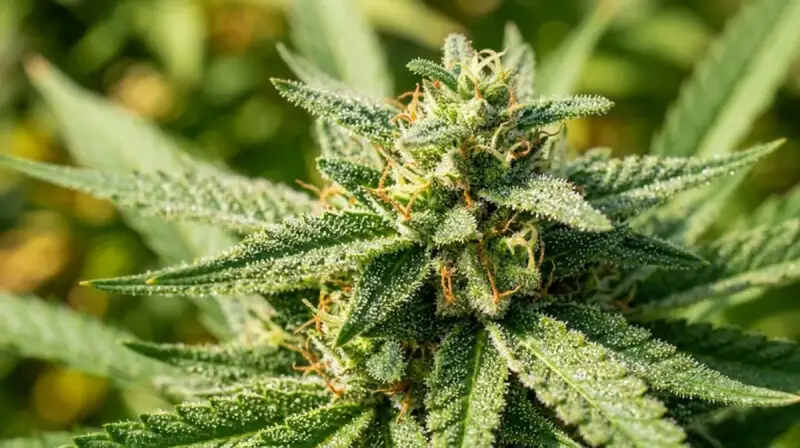
- Bred by Symbiotic Genetics: Clementine (sativa) × Purple Punch (indica), 70/30 sativa-dominant
- THC ranges 20–27%; CBD under 1%; dominant terpene is terpinolene
- Effects: fast-acting uplifting euphoria transitioning to light body relaxation — no heavy sedation
- Popular morning and brunch strain; the name directly references the classic champagne cocktail
- Medical uses: depression, fatigue, stress, and low-dose anxiety relief
- Flavor: bright orange citrus with sweet tropical berry from the Purple Punch parentage
- Indoor yield: 400–500 g/m²; flowering time 8–9 weeks; purple coloring possible in cool temperatures
Strain Quick-Reference
| Genetics | Clementine × Purple Punch |
| Breeder | Symbiotic Genetics |
| Type | Sativa-Dominant Hybrid (70/30) |
| THC | 20–27% |
| CBD | <1% |
| Primary Terpenes | Terpinolene, Myrcene, Caryophyllene |
| Flowering Time | 56–63 days (8–9 weeks) |
| Indoor Yield | 400–500 g/m² |
| Grow Difficulty | Moderate |
Genetics & Lineage
Mimosa was created by Symbiotic Genetics as a cross between Clementine and Purple Punch. The pairing is deliberate: Clementine provides the tangy citrus-forward sativa energy, while Purple Punch anchors the blend with indica-derived berry sweetness and physical ease.
Clementine itself is a Tangie × Lemon Skunk cross, meaning Mimosa carries a long lineage of citrus-dominant California genetics. Purple Punch traces back through Larry OG and Granddaddy Purple, contributing the grape-and-berry undertones that soften the citrus sharpness and add a distinctly dessert-like sweetness to the aroma.
The 70/30 sativa-to-indica ratio places Mimosa firmly in daytime territory without being a pure head-rush sativa. The indica influence from Purple Punch keeps the height manageable during cultivation and prevents the anxious edge that some high-sativa strains can produce at higher doses.
Since its release, Mimosa has become one of the most prominent strains in the modern dispensary market, consistently appearing on top-seller lists across California, Colorado, and other legal states. Multiple breeders have released feminized seeds, making it widely accessible to home cultivators.
Effects & Experience
Mimosa’s effects align closely with its sativa-dominant genetics. The onset is fast — typically within five minutes of inhalation — and characterized by an uplifting cerebral clarity that many users describe as motivating rather than racy.
Onset (0–10 Minutes)
A bright mood lift arrives quickly, accompanied by mild pressure behind the temples and an increase in sensory sharpness. Conversation flows easily; tasks feel approachable. This is the phase that earned Mimosa its “morning strain” reputation.
Peak (10–60 Minutes)
At the peak, the euphoric cerebral buzz intensifies while the Purple Punch indica genetics begin to introduce a light body warmth. This creates a social, creative window that functions well for brunch settings, outdoor activities, and creative work sessions. The body effect is present but not sedating — think relaxed shoulders rather than couch-lock.
Tail (60–150 Minutes)
As THC metabolism tapers off, the energetic edge softens into a calm, content baseline. Most users report full functional recovery within two to two-and-a-half hours, which is shorter than most heavy indica strains and makes Mimosa suitable for daytime use even on active days.
Higher doses (above 0.3 g for average tolerance) can introduce mild anxiety or racing thoughts in sensitive users due to the elevated terpinolene and THC content. Starting with a single inhalation and waiting ten minutes before redosing is standard advice for first-time users.
Medical Applications
Mimosa is most consistently reported by medical cannabis patients as effective for mood-related conditions, fatigue, and moderate stress. Its uplifting, energizing character makes it distinct from the sedating indica strains typically associated with medical use.
| Condition | Relevance | Dose Guidance |
|---|---|---|
| Depression | Terpinolene + limonene drive serotonergic mood elevation | Low–moderate; titrate slowly |
| Fatigue | Energizing sativa profile counters chronic low energy | Low–moderate morning dose |
| Stress | Caryophyllene binds CB2 receptors; reduces perceived stress load | Low–moderate; avoid high doses |
| Anxiety (mild) | Low-dose terpinolene can reduce anxious cognition; high doses may worsen | Very low dose only; not for severe anxiety |
Patients using cannabis for appetite stimulation or sleep will generally find better results with indica-dominant strains; Mimosa’s stimulating profile makes it counterproductive for those applications.
Flavor & Aroma Profile
The flavor profile of Mimosa is one of the most appealing in the hybrid category: bright, fresh orange citrus on the inhale, with a sweet tropical berry finish inherited from Purple Punch. The exhale introduces a light floral note from terpinolene that distinguishes Mimosa from simpler citrus strains.
| Terpene | Aroma Contribution | Effect Role |
|---|---|---|
| Terpinolene | Fresh citrus, floral, pine | Uplifting; mild sedative at high concentration; mood elevation |
| Myrcene | Earthy, mango, herbal | Potentiates THC; contributes body warmth from Purple Punch lineage |
| Caryophyllene | Spicy, pepper, wood | CB2 agonist; anti-inflammatory; balances the uplifting terps |
Fresh-cured Mimosa flower has a dominant nose of clementine orange that is immediately recognizable. On opening a well-cured jar, secondary notes of passionfruit, mango, and light berry emerge. The smoke or vapor is smooth and sweet, with minimal harshness even at higher temperatures.
Growing Guide
Mimosa is a moderate-difficulty cultivar that rewards growers who manage canopy height in the first weeks of flowering. The sativa heritage from Clementine drives a significant stretch in weeks 1–3 of flower, which can be controlled with topping during vegetative growth or by switching to 12/12 light earlier than usual.
| Factor | Indoor | Outdoor |
|---|---|---|
| Flowering Time | 56–63 days | Mid-October |
| Yield | 400–500 g/m² | 500–700 g/plant |
| Height (indoor) | 90–140 cm | 150–220 cm |
| Difficulty | Moderate | Moderate |
| Ideal Temp | 21–26 °C | Warm, Mediterranean |
| Ideal RH (late flower) | 40–50% | Low humidity critical |
The buds Mimosa produces are dense, trichome-covered, and noticeably resinous at harvest. Under cooler nighttime temperatures (below 18°C), anthocyanin production from the Purple Punch genetics can produce striking purple coloration in the calyxes and sugar leaves. This is cosmetic only and does not affect potency or flavor.
Feed schedule: keep nitrogen moderate during veg, then shift to higher phosphorus and potassium from week 3 of flower through the final two weeks before flush. Mimosa responds well to defoliation passes at days 21 and 35 of flower to improve light penetration and airflow to lower bud sites.
The dense bud structure makes Mimosa moderately susceptible to powdery mildew and botrytis in high-humidity environments. Maintain airflow with oscillating fans and avoid foliar feeding after week 4 of flower.
Similar Strains
| Strain | Type | THC | Key Difference |
|---|---|---|---|
| Clementine | Sativa | 17–26% | Sharper citrus; more purely cerebral; no berry sweetness |
| Purple Punch | Indica | 18–20% | Heavy sedation; grape candy flavor; evening-only use |
| Tangie | Sativa | 19–22% | Orange-dominant; higher energy ceiling; less body effect |
| Super Lemon Haze | Sativa | 16–25% | More complex citrus; longer-lasting head effect; hazier character |
Related Strains
- Clementine — Mimosa’s sativa parent; pure citrus energy without the berry
- Purple Punch — Mimosa’s indica parent; deeper relaxation and grape dessert flavor
- Tangie — Clementine’s parent; intense orange aroma, classic California sativa
- Super Lemon Haze — Award-winning layered citrus sativa from Green House Seeds
- Cherry Pie — Another fruity hybrid with balanced sativa/indica character
Drug Test Detection Windows
Cannabis metabolites from any strain including this one are stored in body fat and released gradually. Detection windows depend primarily on frequency of use, body composition, metabolism, and individual physiology.
| Test Type | Occasional Use | Daily Use | Notes |
|---|---|---|---|
| Urine | 3–7 days | Up to 30 days | Most common workplace test; detects THC-COOH metabolite |
| Blood | Up to 24 hours | Up to 7 days | Active THC clears fastest; used in roadside testing |
| Saliva | 24–48 hours | Up to 72 hours | Common roadside test; window shorter than urine |
| Hair | Potentially detectable | Up to 90 days | 1.5-inch sample covers ~90 days of growth |
THC potency does not directly extend detection windows. A single session with this high-THC strain is not detectably different from a lower-THC strain after 48 hours in urine. Frequency is the primary variable. See our full drug test guide for comprehensive testing information.
Cannabinoid & Terpene Synergy
The effects of any cannabis strain are not produced by THC alone. The entourage effect describes how cannabinoids (THC, CBD, CBG, CBN) and terpenes interact synergistically to modulate the overall experience. Understanding this helps explain why two strains with identical THC percentages can feel completely different.
- Myrcene + THC: Myrcene increases blood-brain barrier permeability, potentiating THC uptake and enhancing body relaxation. High-myrcene strains feel heavier than their THC% suggests.
- Caryophyllene + THC: Caryophyllene’s CB2 binding adds an anti-inflammatory layer to the experience and can reduce anxiety by modulating the endocannabinoid system independently of CB1.
- Limonene/Terpinolene + THC: Mood-elevating terpenes counterbalance the sedative tendency of high myrcene, producing the uplifting character in sativa-dominant and balanced hybrids.
- CBD + THC: Even trace amounts of CBD (0.1–0.5%) can attenuate THC-induced anxiety by partial CB1 antagonism. This is part of why full-spectrum products behave differently than pure THC isolates.
Explore Cannabis Strain Comparisons
Compare this strain side-by-side with others in our database to understand how genetics, terpene profile, and effect duration differ across varieties.
- Full Strain Comparison Tool — Side-by-side comparison for any two strains
- Effects Database — Find strains by specific effect profile
- Terpene Guide — Understand how individual terpenes shape the experience
- Growing Guides — Detailed cultivation resources for every skill level
- Medical Cannabis Guide — Condition-specific strain recommendations
Drug Test Detection Windows
Cannabis metabolites from any strain including this one are stored in body fat and released gradually. Detection windows depend primarily on frequency of use, body composition, metabolism, and individual physiology.
| Test Type | Occasional Use | Daily Use | Notes |
|---|---|---|---|
| Urine | 3–7 days | Up to 30 days | Most common workplace test; detects THC-COOH metabolite |
| Blood | Up to 24 hours | Up to 7 days | Active THC clears fastest; used in roadside testing |
| Saliva | 24–48 hours | Up to 72 hours | Common roadside test; window shorter than urine |
| Hair | Potentially detectable | Up to 90 days | 1.5-inch sample covers ~90 days of growth |
THC potency does not directly extend detection windows. A single session with this high-THC strain is not detectably different from a lower-THC strain after 48 hours in urine. Frequency is the primary variable. See our full drug test guide for comprehensive testing information.
Cannabinoid & Terpene Synergy
The effects of any cannabis strain are not produced by THC alone. The entourage effect describes how cannabinoids (THC, CBD, CBG, CBN) and terpenes interact synergistically to modulate the overall experience. Understanding this helps explain why two strains with identical THC percentages can feel completely different.
- Myrcene + THC: Myrcene increases blood-brain barrier permeability, potentiating THC uptake and enhancing body relaxation. High-myrcene strains feel heavier than their THC% suggests.
- Caryophyllene + THC: Caryophyllene’s CB2 binding adds an anti-inflammatory layer to the experience and can reduce anxiety by modulating the endocannabinoid system independently of CB1.
- Limonene/Terpinolene + THC: Mood-elevating terpenes counterbalance the sedative tendency of high myrcene, producing the uplifting character in sativa-dominant and balanced hybrids.
- CBD + THC: Even trace amounts of CBD (0.1–0.5%) can attenuate THC-induced anxiety by partial CB1 antagonism. This is part of why full-spectrum products behave differently than pure THC isolates.
Explore Cannabis Strain Comparisons
Compare this strain side-by-side with others in our database to understand how genetics, terpene profile, and effect duration differ across varieties.
- Full Strain Comparison Tool — Side-by-side comparison for any two strains
- Effects Database — Find strains by specific effect profile
- Terpene Guide — Understand how individual terpenes shape the experience
- Growing Guides — Detailed cultivation resources for every skill level
- Medical Cannabis Guide — Condition-specific strain recommendations
Drug Test Detection Windows
Cannabis metabolites from any strain including this one are stored in body fat and released gradually. Detection windows depend primarily on frequency of use, body composition, metabolism, and individual physiology.
| Test Type | Occasional Use | Daily Use | Notes |
|---|---|---|---|
| Urine | 3–7 days | Up to 30 days | Most common workplace test; detects THC-COOH metabolite |
| Blood | Up to 24 hours | Up to 7 days | Active THC clears fastest; used in roadside testing |
| Saliva | 24–48 hours | Up to 72 hours | Common roadside test; window shorter than urine |
| Hair | Potentially detectable | Up to 90 days | 1.5-inch sample covers ~90 days of growth |
THC potency does not directly extend detection windows. A single session with this high-THC strain is not detectably different from a lower-THC strain after 48 hours in urine. Frequency is the primary variable. See our full drug test guide for comprehensive testing information.
Cannabinoid & Terpene Synergy
The effects of any cannabis strain are not produced by THC alone. The entourage effect describes how cannabinoids (THC, CBD, CBG, CBN) and terpenes interact synergistically to modulate the overall experience. Understanding this helps explain why two strains with identical THC percentages can feel completely different.
- Myrcene + THC: Myrcene increases blood-brain barrier permeability, potentiating THC uptake and enhancing body relaxation. High-myrcene strains feel heavier than their THC% suggests.
- Caryophyllene + THC: Caryophyllene’s CB2 binding adds an anti-inflammatory layer to the experience and can reduce anxiety by modulating the endocannabinoid system independently of CB1.
- Limonene/Terpinolene + THC: Mood-elevating terpenes counterbalance the sedative tendency of high myrcene, producing the uplifting character in sativa-dominant and balanced hybrids.
- CBD + THC: Even trace amounts of CBD (0.1–0.5%) can attenuate THC-induced anxiety by partial CB1 antagonism. This is part of why full-spectrum products behave differently than pure THC isolates.
Explore Cannabis Strain Comparisons
Compare this strain side-by-side with others in our database to understand how genetics, terpene profile, and effect duration differ across varieties.
- Full Strain Comparison Tool — Side-by-side comparison for any two strains
- Effects Database — Find strains by specific effect profile
- Terpene Guide — Understand how individual terpenes shape the experience
- Growing Guides — Detailed cultivation resources for every skill level
- Medical Cannabis Guide — Condition-specific strain recommendations
Jordan Price has spent over a decade working with licensed cultivators across California and Colorado, specializing in terpene-forward genetics and indoor production optimization.