










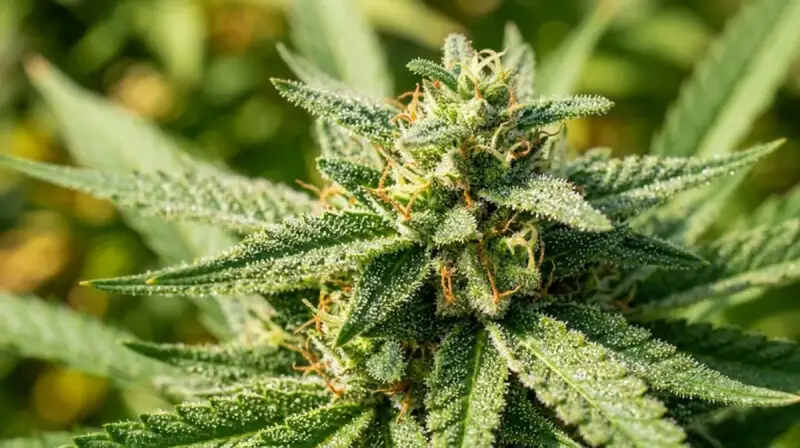
- Genetics: Granddaddy Purple × Durban Poison (most common attribution); indica-dominant (80/20); lineage disputed
- THC: 18–23%; CBD under 1%; primary terpenes: caryophyllene, myrcene, limonene
- Visual: dense purple-green buds with prominent orange hairs; classic West Coast dispensary appearance
- Effects: balanced physical relaxation with mental euphoria — less couch-lock than typical heavy indicas
- Medical: anxiety, stress, depression, and mild-to-moderate pain management
- Flavor: sweet cherry and blueberry with earthy undertones and a light tart finish matching the name perfectly
- Indoor yield: 350–400 g/m²; 8–9 week flower; performs well in humid climates; cooler outdoor conditions
Strain Quick-Reference
| Genetics | Granddaddy Purple × Durban Poison (primary); lineage disputed |
| Origin | California; West Coast dispensary market |
| Type | Indica-Dominant Hybrid (80/20) |
| THC | 18–23% |
| CBD | <1% |
| Primary Terpenes | Caryophyllene, Myrcene, Limonene |
| Flowering Time | 56–63 days (8–9 weeks) |
| Indoor Yield | 350–400 g/m² |
| Grow Difficulty | Moderate |
Genetics, Lineage & Disputed Parentage
Cherry Pie’s genetic history is one of the more debated topics in California cannabis culture. The most consistently cited parentage is Granddaddy Purple (Ken Estes’ California indica) crossed with Durban Poison (a South African sativa landrace). This combination explains the strain’s color inheritance from Granddaddy Purple and the uplift and mental energy contributed by Durban Poison’s sativa genetics.
However, several breeders and dispensaries have attributed Cherry Pie parentage to Girl Scout Cookies (GSC) replacing or supplementing the Durban Poison, which would place it in the Bay Area cookie-family genetic lineage. The GSC version typically produces a sweeter, creamier flavor with slightly different effect characteristics than the GDP × Durban version.
The most commercially distributed Cherry Pie — the version that became popular in California dispensaries — is most accurately characterized by its effect profile and flavor rather than by definitive genetic documentation. Both potential lineages are plausible based on the expressed characteristics.
What is consistent across all genuine Cherry Pie expressions: dense, often purple-tinged buds with prominent orange pistils, a pronounced sweet cherry-berry aroma, and a balanced indica-dominant effect that delivers physical relaxation without the extreme sedation of a pure indica like Afghani or Northern Lights.
Effects & Experience
Cherry Pie occupies a distinct middle ground in the indica-dominant hybrid category: heavy enough to relax the body and ease tension, but light enough to maintain mental engagement and social capacity. It is an evening strain that does not necessarily end the night early.
Onset (0–10 Minutes)
The onset is gentle by indica standards — a gradual mood uplift arrives first, likely driven by the Durban Poison sativa genetics. A pleasant euphoric warmth builds over the first five to ten minutes, accompanied by a relaxation of physical tension in the neck and shoulders.
Peak (15–80 Minutes)
The peak balances the mental euphoria with increasing physical ease. Body tension releases progressively without crossing into full sedation. Most users remain conversational and mentally active, making Cherry Pie suitable for social evenings, movies, or creative activities where some relaxation is welcome without total shutdown.
Tail (80–150 Minutes)
The tail is calmer and more sedating than the peak, with the indica genetics asserting more fully as THC metabolizes. Sleep often follows naturally, though most users can delay it if needed. The comedown is pleasant and smooth — no anxiety or restlessness typical of some high-sativa strains.
Medical Applications
Cherry Pie’s balanced profile makes it suitable for a broader range of medical applications than pure sedating indicas. Its mood-elevating effect combined with physical relaxation addresses both mental and physical symptom clusters simultaneously.
| Condition | Mechanism | Notes |
|---|---|---|
| Anxiety | Caryophyllene CB2; body relaxation reduces somatic anxiety symptoms | Moderate dose; well-tolerated by anxiety patients vs. pure sativas |
| Stress | Euphoric mood shift; physical tension release in muscles and shoulders | One of the most consistently recommended strains for stress |
| Depression | Mood elevation from Durban Poison sativa genetics; limonene activity | Evening use preferred; consistent mood lift without overstimulation |
| Mild Pain | Myrcene analgesic support; physical relaxation reduces tension-based pain | Appropriate for tension headaches, mild arthritis, general soreness |
Flavor & Aroma Profile
The flavor and aroma of Cherry Pie is one of its most commercially appealing qualities. The name is a precise descriptor: fresh sweet cherry on the inhale, blueberry and berry on the mid-palate, and a slight earthy tartness on the exhale that mirrors actual cherry pie filling. Well-cured Cherry Pie is one of the most immediately identifiable aromas in a dispensary display case.
| Terpene | Aroma | Effect Role |
|---|---|---|
| Caryophyllene | Spicy, earthy, wood | CB2 agonist; dominant terpene; anti-inflammatory and stress-reducing |
| Myrcene | Earthy, berry, herbal | THC potentiator; from GDP lineage; drives the indica body component |
| Limonene | Citrus, sweet cherry | Mood elevation; from Durban Poison sativa heritage; the uplift counterbalance |
Growing Cherry Pie
Cherry Pie is a moderately easy strain that suits intermediate growers. It does not have the extreme height challenges of sativa-dominant cultivars or the strict humidity requirements of some dense cookie-family strains. It adapts well to both indoor and outdoor environments.
| Factor | Indoor | Outdoor |
|---|---|---|
| Flowering Time | 56–63 days | Early–mid October |
| Yield | 350–400 g/m² | 400–600 g/plant |
| Height (indoor) | 70–110 cm | 100–160 cm |
| Difficulty | Moderate | Easy–Moderate |
| Humidity Tolerance | Better than most dense indicas | Performs well in cooler climates |
Cherry Pie develops a medium-sized bush with moderate branching. A single topping during veg produces a natural two-cola structure that benefits from minimal additional intervention. LST applied to spread branches increases canopy coverage and improves yields in smaller grow spaces.
Outdoor growers in cooler Northern California, Pacific Northwest, and European climates find Cherry Pie well-suited to the environment. Cooler nighttime temperatures in September trigger the anthocyanin production from Granddaddy Purple genetics, producing the characteristic purple-green bud coloration that makes Cherry Pie so visually distinctive in dispensary displays.
The dense bud structure requires airflow management in the final two weeks of flowering to prevent botrytis. Reduce humidity to 40–45% RH and ensure oscillating fans maintain air movement around the canopy. Outdoor growers harvesting in wet October conditions should monitor buds closely after mid-flower.
Cherry Pie vs. Similar Strains
| Strain | Type | THC | Key Difference |
|---|---|---|---|
| Granddaddy Purple | Indica | 17–23% | Parent strain; heavier sedation; more grape-dominant flavor |
| Durban Poison | Sativa | 16–22% | Parent strain; much more energizing; anise-sweet aroma; no body relaxation |
| Blueberry | Indica | 17–20% | Similar berry flavor; heavier indica sedation; lower THC ceiling |
| Mimosa | Sativa-Dom | 20–27% | Bright citrus vs. cherry; more energizing; daytime rather than evening |
Related Strains
- Granddaddy Purple — Cherry Pie’s indica parent; heavier, more sedating
- Durban Poison — Cherry Pie’s sativa parent; pure energy and anise flavor
- Blueberry — Berry-dominant indica; similar flavor family; DJ Short classic
- LA Confidential — More sedating California medical indica for comparison
- Trainwreck — Durban Poison-family sativa energy at the other end of the spectrum
Drug Test Detection Windows
Cannabis metabolites from any strain including this one are stored in body fat and released gradually. Detection windows depend primarily on frequency of use, body composition, metabolism, and individual physiology.
| Test Type | Occasional Use | Daily Use | Notes |
|---|---|---|---|
| Urine | 3–7 days | Up to 30 days | Most common workplace test; detects THC-COOH metabolite |
| Blood | Up to 24 hours | Up to 7 days | Active THC clears fastest; used in roadside testing |
| Saliva | 24–48 hours | Up to 72 hours | Common roadside test; window shorter than urine |
| Hair | Potentially detectable | Up to 90 days | 1.5-inch sample covers ~90 days of growth |
THC potency does not directly extend detection windows. A single session with this high-THC strain is not detectably different from a lower-THC strain after 48 hours in urine. Frequency is the primary variable. See our full drug test guide for comprehensive testing information.
Cannabinoid & Terpene Synergy
The effects of any cannabis strain are not produced by THC alone. The entourage effect describes how cannabinoids (THC, CBD, CBG, CBN) and terpenes interact synergistically to modulate the overall experience. Understanding this helps explain why two strains with identical THC percentages can feel completely different.
- Myrcene + THC: Myrcene increases blood-brain barrier permeability, potentiating THC uptake and enhancing body relaxation. High-myrcene strains feel heavier than their THC% suggests.
- Caryophyllene + THC: Caryophyllene’s CB2 binding adds an anti-inflammatory layer to the experience and can reduce anxiety by modulating the endocannabinoid system independently of CB1.
- Limonene/Terpinolene + THC: Mood-elevating terpenes counterbalance the sedative tendency of high myrcene, producing the uplifting character in sativa-dominant and balanced hybrids.
- CBD + THC: Even trace amounts of CBD (0.1–0.5%) can attenuate THC-induced anxiety by partial CB1 antagonism. This is part of why full-spectrum products behave differently than pure THC isolates.
Explore Cannabis Strain Comparisons
Compare this strain side-by-side with others in our database to understand how genetics, terpene profile, and effect duration differ across varieties.
- Full Strain Comparison Tool — Side-by-side comparison for any two strains
- Effects Database — Find strains by specific effect profile
- Terpene Guide — Understand how individual terpenes shape the experience
- Growing Guides — Detailed cultivation resources for every skill level
- Medical Cannabis Guide — Condition-specific strain recommendations
Drug Test Detection Windows
Cannabis metabolites from any strain including this one are stored in body fat and released gradually. Detection windows depend primarily on frequency of use, body composition, metabolism, and individual physiology.
| Test Type | Occasional Use | Daily Use | Notes |
|---|---|---|---|
| Urine | 3–7 days | Up to 30 days | Most common workplace test; detects THC-COOH metabolite |
| Blood | Up to 24 hours | Up to 7 days | Active THC clears fastest; used in roadside testing |
| Saliva | 24–48 hours | Up to 72 hours | Common roadside test; window shorter than urine |
| Hair | Potentially detectable | Up to 90 days | 1.5-inch sample covers ~90 days of growth |
THC potency does not directly extend detection windows. A single session with this high-THC strain is not detectably different from a lower-THC strain after 48 hours in urine. Frequency is the primary variable. See our full drug test guide for comprehensive testing information.
Cannabinoid & Terpene Synergy
The effects of any cannabis strain are not produced by THC alone. The entourage effect describes how cannabinoids (THC, CBD, CBG, CBN) and terpenes interact synergistically to modulate the overall experience. Understanding this helps explain why two strains with identical THC percentages can feel completely different.
- Myrcene + THC: Myrcene increases blood-brain barrier permeability, potentiating THC uptake and enhancing body relaxation. High-myrcene strains feel heavier than their THC% suggests.
- Caryophyllene + THC: Caryophyllene’s CB2 binding adds an anti-inflammatory layer to the experience and can reduce anxiety by modulating the endocannabinoid system independently of CB1.
- Limonene/Terpinolene + THC: Mood-elevating terpenes counterbalance the sedative tendency of high myrcene, producing the uplifting character in sativa-dominant and balanced hybrids.
- CBD + THC: Even trace amounts of CBD (0.1–0.5%) can attenuate THC-induced anxiety by partial CB1 antagonism. This is part of why full-spectrum products behave differently than pure THC isolates.
Explore Cannabis Strain Comparisons
Compare this strain side-by-side with others in our database to understand how genetics, terpene profile, and effect duration differ across varieties.
- Full Strain Comparison Tool — Side-by-side comparison for any two strains
- Effects Database — Find strains by specific effect profile
- Terpene Guide — Understand how individual terpenes shape the experience
- Growing Guides — Detailed cultivation resources for every skill level
- Medical Cannabis Guide — Condition-specific strain recommendations
Drug Test Detection Windows
Cannabis metabolites from any strain including this one are stored in body fat and released gradually. Detection windows depend primarily on frequency of use, body composition, metabolism, and individual physiology.
| Test Type | Occasional Use | Daily Use | Notes |
|---|---|---|---|
| Urine | 3–7 days | Up to 30 days | Most common workplace test; detects THC-COOH metabolite |
| Blood | Up to 24 hours | Up to 7 days | Active THC clears fastest; used in roadside testing |
| Saliva | 24–48 hours | Up to 72 hours | Common roadside test; window shorter than urine |
| Hair | Potentially detectable | Up to 90 days | 1.5-inch sample covers ~90 days of growth |
THC potency does not directly extend detection windows. A single session with this high-THC strain is not detectably different from a lower-THC strain after 48 hours in urine. Frequency is the primary variable. See our full drug test guide for comprehensive testing information.
Cannabinoid & Terpene Synergy
The effects of any cannabis strain are not produced by THC alone. The entourage effect describes how cannabinoids (THC, CBD, CBG, CBN) and terpenes interact synergistically to modulate the overall experience. Understanding this helps explain why two strains with identical THC percentages can feel completely different.
- Myrcene + THC: Myrcene increases blood-brain barrier permeability, potentiating THC uptake and enhancing body relaxation. High-myrcene strains feel heavier than their THC% suggests.
- Caryophyllene + THC: Caryophyllene’s CB2 binding adds an anti-inflammatory layer to the experience and can reduce anxiety by modulating the endocannabinoid system independently of CB1.
- Limonene/Terpinolene + THC: Mood-elevating terpenes counterbalance the sedative tendency of high myrcene, producing the uplifting character in sativa-dominant and balanced hybrids.
- CBD + THC: Even trace amounts of CBD (0.1–0.5%) can attenuate THC-induced anxiety by partial CB1 antagonism. This is part of why full-spectrum products behave differently than pure THC isolates.
Explore Cannabis Strain Comparisons
Compare this strain side-by-side with others in our database to understand how genetics, terpene profile, and effect duration differ across varieties.
- Full Strain Comparison Tool — Side-by-side comparison for any two strains
- Effects Database — Find strains by specific effect profile
- Terpene Guide — Understand how individual terpenes shape the experience
- Growing Guides — Detailed cultivation resources for every skill level
- Medical Cannabis Guide — Condition-specific strain recommendations
Jordan Price has spent over a decade working with licensed cultivators across California and Colorado, specializing in terpene-forward genetics and indoor production optimization.