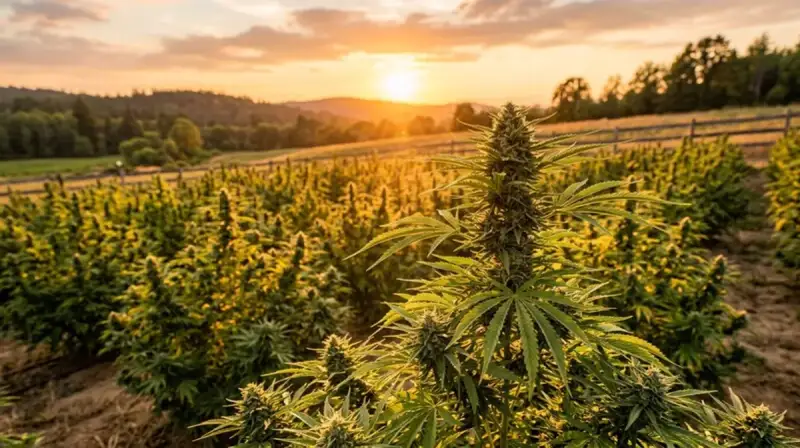
Blueberry x Blue Dream — an indica-dominant hybrid delivering authentic blueberry sweetness, 15–20% THC, and one of the most genuinely dreamy, sedating relaxation highs in the indica catalogue.
THC 15–20%Indica 70/30Flowering: 8–9 WeeksBlueberry x Blue Dream
15–20%
THC
0.1–0.5%
CBD
70/30
Indica/Sativa
8–9 Wks
Flowering
Key Findings
1.Dreamberry is a cross of the legendary Blueberry (DJ Short) and Blue Dream — combining Blueberry’s iconic terpene expression with Blue Dream’s improved yield and slightly elevated THC ceiling.
2.THC 15–20% with an indica-dominant profile — the effect onset is moderate in speed, building gradually into full-body relaxation over 20–30 minutes rather than hitting immediately.
3.Dominant myrcene terpene creates a heavy, sedating base that makes this one of the most genuinely sleep-supportive strains in the indica-dominant category — comparable to Granddaddy Purple or Northern Lights for nighttime use.
4.The “dreamy” quality refers to a specific mental state — thoughts become slow, wandering, and visual rather than analytical, creating a hypnagogic half-awake state that eases anxiety and promotes sleep onset.
5.Blueberry flavor authenticity is extremely high — the myrcene + caryophyllene + linalool combination reproduces fresh blueberry aroma more faithfully than almost any other strain in the Blueberry lineage.
6.Growing profile: compact to medium height (80–120cm indoors), beginner-friendly, 8–9 week flower, good mold resistance inherited from the Blueberry parent, produces dense purple-tinged buds in cold finishes.
7.Best for: insomnia, chronic pain, anxiety wind-down, muscle spasms, evening relaxation — not suited for daytime productivity or focus-oriented tasks.
Strain Overview & Genetics
Dreamberry occupies a specific niche within the vast blueberry-lineage family tree: it is the version of that genetics that actually delivers on the sedating, dreamy promise implied by its name. While many strains claim blueberry heritage, Dreamberry combines DJ Short’s original Blueberry with Blue Dream in a way that amplifies both the terpene expression and the indica relaxation without the heaviness of pure OG or Kush lines.
The Blue Dream parent contribution is critical and often underappreciated. Blue Dream adds a cerebral lift that prevents Dreamberry from becoming purely sedating — instead, the onset produces a pleasant, mildly euphoric mental warmth before the body relaxation takes over. This two-phase effect is characteristic of well-bred indica-dominant hybrids and makes Dreamberry more versatile than pure indicas like Afghani or Northern Lights.
The name is precise: the high produces a genuinely dream-like mental state. Cognition slows into pleasant, loosely connected thoughts — the kind of wandering, imaginative mental activity that occurs in the hypnagogic state between wakefulness and sleep. This quality is prized by users who experience racing, anxious thoughts at night, as Dreamberry gently redirects mental energy into softer, more passive territory.
Attribute
Detail
Genetics
Blueberry (DJ Short) x Blue Dream
Classification
Indica-dominant hybrid (70% indica / 30% sativa)
THC Content
15–20%
CBD Content
0.1–0.5%
Primary Terpenes
Myrcene, Caryophyllene, Linalool, Pinene
Flavor Profile
Blueberry, sweet berry, earthy, slight vanilla
Signature Quality
Dreamy sedation, authentic blueberry terpenes
Cannabinoid & Terpene Profile
Dreamberry’s cannabinoid composition sits in the moderate-to-strong range for indica hybrids. At 15–20% THC, it is accessible to intermediate consumers while remaining effective for experienced users. The modest CBD presence (<0.5%) provides minor entourage contribution without significantly moderating the psychoactive effect.
The terpene profile is dominated by myrcene, the most abundant terpene in cannabis and a key contributor to indica-type sedation. Research suggests myrcene may enhance THC’s passage through the blood-brain barrier, potentially amplifying the psychoactive and sedative effects. In Dreamberry, myrcene works in concert with beta-caryophyllene to create a warm, deeply relaxing body effect.
Dreamberry produces a characteristic two-phase effect that distinguishes it from simpler indicas. The first phase (minutes 1–20) is gentle and euphoric — a warm mental lift from the Blue Dream sativa genetics that creates a sense of calm happiness without stimulation. Thoughts soften and slow, worries recede, and a pleasant sense of ease settles in.
The second phase (minutes 20–45) is the full indica expression: a heavy, spreading body relaxation that starts in the shoulders and moves outward. Muscles release tension progressively, and the mental state transitions from gently euphoric to genuinely dreamy — slow, visual, passive. At standard doses, users remain conscious but deeply relaxed. At higher doses, sleep onset becomes likely.
The total duration is typically 2.5–3.5 hours, with the most sedating effects occurring in hours 1.5–2.5. The descent is gradual, with no abrupt comedown — users typically drift into sleep naturally rather than “crashing” as with some high-THC indicas.
Effect
Intensity
Duration
Phase
Euphoria
Moderate
45–90 min
Phase 1
Body Relaxation
Very High
2–3 hrs
Phase 2
Sedation
High
1.5–3 hrs
Phase 2
Dreamy Mental State
High
1.5–2.5 hrs
Phase 2
Happiness
Moderate
1–2 hrs
Phase 1–2
Focus / Energy
Very Low
Minimal
N/A
Flavor & Aroma Detail
Dreamberry delivers one of the most faithfully blueberry-scented cannabis experiences available. Breaking open the dense, resinous buds releases an immediate wave of fresh blueberry — not the artificial candy-blueberry of cheaper extracts, but something closer to ripe blueberries warmed in sunlight: sweet, slightly tart, with a moist earthiness underneath.
On combustion or vaporization, the inhale delivers a smooth, creamy blueberry sweetness that coats the palate. The myrcene contributes an underlying earthiness that grounds the fruitiness and prevents it from being cloying. On the exhale, linalool adds a faint floral note — almost like blueberry with a lavender finish — that lingers pleasantly.
At optimal vaporization temperatures (180–195°C), the terpene expression peaks. The blueberry quality is most distinct at these lower temperatures; higher temperatures push toward a more generic sweet-earthy profile as delicate terpenes burn off. For maximum flavor authenticity, low-temperature vaporization is strongly recommended.
Cold curing and proper storage significantly impact the flavor retention. Dreamberry stored in airtight glass at room temperature maintains its blueberry character for 4–6 months. Exposure to heat, light, or excessive air rapidly degrades the terpinene and ocimene fraction, leaving only the more stable myrcene base behind — functional but significantly less complex.
Medical & Therapeutic Applications
Dreamberry’s therapeutic profile centers on its sedating, anxiolytic, and anti-spasmodic properties. The high myrcene content combined with the indica genetics creates a reliable pharmacological toolkit for several medical conditions — particularly those involving nighttime symptom management.
Insomnia: One of the strongest use cases — the gradual sedation and dreamy mental state make sleep onset natural rather than forced; effective for both sleep latency and sleep maintenance
Anxiety disorders: Linalool + myrcene combination effectively quiets anxious thought loops, particularly effective for generalized anxiety in evening contexts
Chronic pain: Caryophyllene acts as a CB2 receptor agonist with anti-inflammatory properties; combined with myrcene-mediated muscle relaxation, provides reliable multi-mechanism pain relief
Muscle spasms and tension: The body-first relaxation profile makes it particularly effective for musculoskeletal tension, back spasms, and post-exercise recovery
PTSD (nighttime): The dreamy, passive mental state can interrupt hypervigilance patterns during the critical wind-down period before sleep
Appetite stimulation: Myrcene-heavy indicas are reliably effective appetite stimulants; useful for nausea-related appetite loss
Not recommended for: Daytime use, focus tasks, operating machinery, social anxiety requiring alertness
Dosing guidance for medical use: start with a single inhalation and wait 20 minutes before redosing. Dreamberry’s gradual onset makes overconsumption a common mistake — the sedation arrives slowly, and users who redose during the first 15 minutes often find themselves more sedated than intended. For edible applications, start at 5mg THC equivalent and allow 90 minutes for full effect.
Growing Guide
Dreamberry is one of the more forgiving indica-dominant hybrids for home cultivation. The Blueberry parent genetics contribute compact structure, decent mold resistance, and a predictable growth pattern — while the Blue Dream component adds vigor and improves resin production. The combination produces a plant that rewards basic technique without demanding expert-level intervention.
Indoor cultivation is straightforward. Plants remain compact at 80–120cm with no training, or can be pushed to 150cm+ with extended vegetative growth. A single topping at the fourth node significantly improves yield by creating multiple flowering tops without the height management challenges of sativa-dominant genetics. The 8–9 week flower period is a practical sweet spot for most growing schedules.
Parameter
Detail
Difficulty
Beginner–Intermediate
Indoor Yield
400–500g/m²
Outdoor Yield
500–700g/plant
Height (indoor)
80–120cm
Flowering Time
8–9 weeks
Outdoor Harvest
Late September–early October
Climate
Temperate to Mediterranean; tolerates cool nights
Mold Resistance
Good (Blueberry heritage)
Purple Expression
Strong purple/blue hues with cool overnight temperatures (<15°C)
Training
Single topping recommended; responds well to LST
One of Dreamberry’s most visually distinctive traits is its tendency to develop deep purple and blue coloration in the buds and leaves when exposed to cool nighttime temperatures in the final 2–3 weeks of flowering. This is an anthocyanin response and does not negatively impact potency or yield. Growers who want maximum color expression should allow overnight temperatures to drop to 12–15°C in the final weeks.
Nutrients: Dreamberry responds well to standard cannabis feeding protocols. It is not particularly nutrient-hungry, and overfeeding nitrogen in flower is a common mistake that reduces terpene expression and delays maturation. Back off nitrogen at the first sign of flower formation and transition to a phosphorus/potassium-dominant feed. The final two weeks should be a clean flush to maximize terpene retention and smoothness.
Consumption Methods & Recommendations
Dreamberry’s terpene profile is best preserved through low-temperature vaporization. A dry herb vaporizer set between 175–190°C delivers the full blueberry-linalool aromatic expression while producing a noticeably smoother effect onset than combustion. The gradual temperature approach — starting at 175°C and stepping up to 195°C — extracts the terpene spectrum progressively.
For traditional smoking, a glass pipe or water pipe delivers the cleanest flavor expression. Rolling papers add combustion byproduct flavors that compete with the delicate blueberry profile. Water filtration cools the smoke and reduces harshness without significantly affecting the terpene delivery.
Edibles made with Dreamberry concentrate or butter are particularly effective for sleep and pain applications, as the extended release profile (4–8 hours) maintains therapeutic effects through the night. Dose carefully — the gradual onset of both Dreamberry and edible cannabis together creates significant potential for overconsumption.
Tinctures under the tongue offer a middle path — faster onset than edibles (20–40 minutes), longer duration than inhalation (3–5 hours), and no respiratory involvement. Ideal for medical users who want consistent dosing without combustion or the full commitment of an edible dose.
Similar Strains
These strains share Dreamberry’s indica-dominant profile, berry terpene character, or sedating effect quality:
Strain Specialist at ZenWeedGuide. Covers cannabis genetics, terpene profiles, cultivation techniques, and the science behind strain-specific effects.
Last reviewed: May 2026
Frequently Asked Questions
What does Dreamberry taste like?
Dreamberry has a rich blueberry and sweet berry flavor profile with an earthy, slightly herbal undertone. The myrcene-dominant terpene combination delivers fresh blueberry on the inhale with a smooth, creamy finish. The Blueberry parent genetics express clearly in the aroma, making it one of the most authentically fruit-scented indica strains available. At low vaporization temperatures, a faint lavender-floral note from linalool adds complexity to what is otherwise a straightforwardly delicious berry profile.
Is Dreamberry good for sleep?
Dreamberry is an excellent choice for sleep support. Its indica-dominant genetics and high myrcene content produce a deeply relaxing body effect that transitions into sedation at higher doses. The dreamy, hazy mental state makes it difficult to maintain alertness, making it particularly effective for those with insomnia or difficulty winding down at night. Unlike some heavy indicas that cause a sudden “crash,” Dreamberry produces a gradual, comfortable transition toward sleep that most users find more pleasant and sustainable.
What are the parent strains of Dreamberry?
Dreamberry is a cross of Blueberry and Blue Dream. The Blueberry parent (DJ Short genetics) contributes the iconic fruity terpene profile and deep indica relaxation, while Blue Dream adds sativa cerebral elements, improves yield, and lifts the THC ceiling. The result is a well-balanced indica-dominant hybrid that captures the best of both parents — Blueberry’s authentic fruit character and sedating body high combined with Blue Dream’s uplifting mood quality and improved commercial viability.
How difficult is Dreamberry to grow?
Dreamberry is considered beginner-to-intermediate difficulty. It inherits manageable height from the Blueberry parent and decent mold resistance. Flowering takes 8 to 9 weeks indoors, and the plants respond well to low-stress training. Indoor yields average 400 to 500 grams per square meter, making it a practical choice for home cultivators. The main challenge is timing the harvest correctly — waiting for trichomes to turn from clear to milky-amber ensures maximum potency and sedative terpene expression rather than a premature, more cerebral harvest.