










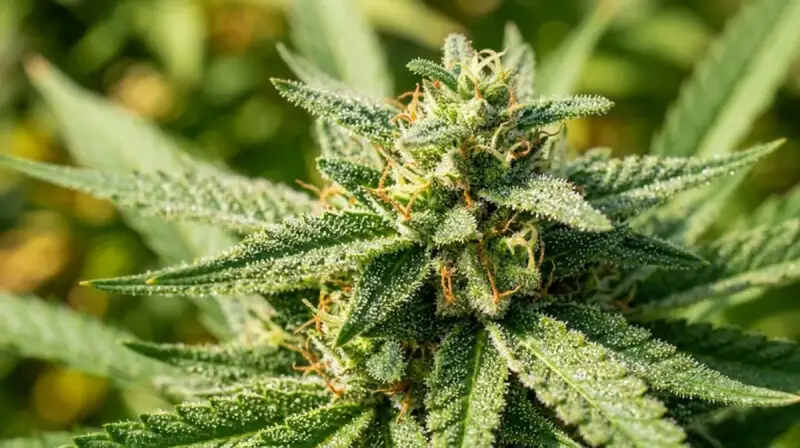
California Dream Overview
California Dream is a flagship hybrid from Mr. Nice Seeds, the prestigious seed company co-founded by Howard Marks (the celebrated cannabis activist), Shantibaba, and Neville Schoenmakers — the same Neville behind Neville’s Haze, referenced in the Hawaiian Snow entry. Mr. Nice Seeds has a reputation for producing some of the most carefully bred and genetically stable cannabis varieties in the world, and California Dream exemplifies this commitment to quality over novelty.
The cross pairs a Mexican sativa landrace — the indigenous cannabis of Mexico’s subtropical highlands, known for its sweet-floral-citrus aromatics and uplifting cerebral effects — with an Afghani indica landrace, the foundational genetics of the indica family, prized for its robust growth, resin production, and deeply relaxing physical effects. This combination of New World sativa and Central Asian indica represents one of the oldest and most fundamental hybrid formulas in cannabis breeding, and California Dream executes it with exceptional polish.
The plant’s morphology reflects its mixed heritage — plants are medium height with an intermediate structure between the tall, open sativa and the squat, branchy indica. Buds are medium-density, with a slightly elongated shape from the sativa side filled out with the resin density and calyx-packing of the Afghani genetics. The color is a pleasing medium green with orange pistils and adequate trichome coverage — not as crystalline as pure indicas but visually appealing and clearly of good quality.
California Dream occupies a sweet spot in the hybrid spectrum that makes it broadly accessible and widely appreciated: potent enough for experienced users, smooth enough for intermediates, versatile enough for multiple use contexts, and distinctively flavored enough to hold interest for connoisseurs. It is the kind of strain that earns genuine loyalty rather than hype-driven initial interest.
Cannabinoid & Terpene Profile
California Dream tests between 18% and 22% THC — a range that represents solid potency without the extreme territory of some modern hybrids. This places it in the upper-moderate tier: strong enough to satisfy experienced users while remaining approachable for those with developing tolerance. CBD is typically negligible, below 0.5%.
Myrcene is the primary terpene and its influence is perceptible throughout the experience. The earthy-herbal base of the California Dream aroma is myrcene-driven, and this terpene’s sedative body-relaxant properties explain why the initial sativa uplift transitions into deeper physical relaxation as the session progresses. The myrcene level is moderate — high enough to produce body effects but not so dominant as to overwhelm the sativa-derived cerebral component.
Alpha-pinene is the secondary terpene and the source of the strain’s characteristic pine freshness. Pinene is associated with alertness, memory retention, and bronchodilation — effects that align with the clear-headed, functional quality of California Dream’s mental phase. The pine note in the aroma is clean and fresh rather than heavy or resinous.
Linalool contributes a floral sweetness that elevates the aroma beyond simple earth-and-pine and gives California Dream its distinctive, slightly perfumed quality. The calming, anxiolytic properties of linalool contribute to the gentle, stress-free experience that makes this strain appropriate for users who are sensitive to anxiety-provoking cannabis.
Ocimene and caryophyllene appear as minor terpenes. Ocimene adds a subtle tropical sweetness and herbal freshness; caryophyllene contributes spice and anti-inflammatory properties. Together the terpene matrix produces California Dream’s multi-layered aromatic character and its balanced effect profile.
Effects & Experience
California Dream’s effect progression is one of its most distinctive and appreciated qualities — a clearly defined two-phase experience that delivers the best aspects of both its parent lineages in sequence rather than in conflict. This sequential quality gives users a reliable, predictable journey that is easier to plan around than strains with more unpredictable effect profiles.
Phase one is the sativa-dominant onset, arriving within 5 to 10 minutes of consumption. A warm, pleasant cerebral uplift elevates mood, enhances mental engagement, and produces a comfortable social and creative energy. Thoughts become more fluid and positive; sensory perception gains a gentle enhancement; conversation flows more easily. This phase is characterized by active engagement with the world rather than withdrawal from it — users feel alert, present, and genuinely good.
Phase two begins around 45 to 75 minutes into the session as the Afghani genetics assert their influence through the body. The initial mental clarity gradually softens into a more dreamlike state while the body simultaneously relaxes. Muscle tension dissolves, physical comfort increases, and the combination of mental ease and physical relaxation produces the signature California Dream ’hammock effect’ — the feeling of being perfectly, effortlessly at ease in whatever position you happen to be in.
Total experience duration is typically two to three hours with a gradual, pleasant comedown rather than an abrupt drop in effect. Sleep readiness is natural by the end of a standard evening session. Side effects are mild relative to higher-potency strains — dry mouth and mild dry eyes are the most common, with anxiety or discomfort being rare at moderate doses. California Dream is considered one of the more forgiving hybrid strains for users managing anxiety concerns.
Video Guide: California Dream Strain Review
Detailed review of California Dream’s genetics, aroma profile, effect timeline, and growing characteristics from Mr. Nice Seeds.
Flavor & Aroma in Detail
Opening a container of California Dream releases an aroma that is immediately appealing and distinctly different from the diesel-heavy OG strains that dominate many dispensary shelves. The dominant initial impression is sweet and floral — a clean, bright sweetness that is reminiscent of fresh wildflowers or light honey rather than heavy dessert sweetness. The Mexican sativa heritage is most apparent here, lending its characteristic floral-sweet-citrus quality to the top notes of the aroma.
The middle register of the aroma brings pine — fresh, clean alpha-pinene that is more reminiscent of a forest trail than of cleaning products or harsh resins. This pine quality adds an outdoorsy freshness and depth that complements the floral sweetness beautifully. Together the sweet-floral and pine notes create the kind of balanced, nature-inflected aroma that is increasingly rare in an era dominated by extreme dessert and fuel-dominant profiles.
The Afghani base notes emerge as an earthy, slightly hash-like foundation that becomes more apparent when the buds are ground. This earthy depth — warm, slightly spicy, and faintly resinous — grounds the lighter floral-pine elements and gives the aroma a satisfying complexity and completeness. The hash note connects California Dream to its ancient Afghani heritage and provides a counterpoint that serious connoisseurs appreciate.
In smoke or vapor, the sweet floral pine character translates faithfully. The smoke is smooth and the flavor is clean with the floral and pine notes most prominent on the inhale and the earthy sweetness most apparent on the exhale. The aftertaste is pleasant and lingers briefly — a clean, slightly sweet finish that does not produce the residual harshness of more resin-heavy strains.
Medical & Therapeutic Uses
California Dream’s balanced, two-phase effect profile and moderate potency make it a versatile medical option for patients managing a range of conditions. Its accessibility and relatively gentle effect curve make it particularly valuable for patients who are newer to medical cannabis or who are sensitive to the anxiety-provoking potential of more aggressive strains.
Stress and mood disorders: The uplifting sativa onset provides reliable mood elevation and stress relief, making California Dream a dependable choice for daytime and afternoon stress management. The absence of anxiety-exacerbating properties at moderate doses — partly attributable to the linalool content — makes it accessible to stress-sensitive individuals who might not tolerate higher-THC or more sativa-dominant options.
Mild to moderate pain: The Afghani-derived body relaxation in phase two provides effective relief for mild to moderate pain conditions — muscle soreness, tension headaches, minor joint pain, and general physical discomfort. For severe pain, higher-potency options like Pink Kush or Hardcore OG may be more appropriate, but California Dream is well-suited to everyday pain management without the level of sedation those strains produce.
Sleep preparation: When used in the early evening, California Dream’s progression from uplift to relaxation naturally sets up ideal conditions for sleep. Patients who find pure indicas too immediately sedating — preventing enjoyment of the pre-sleep evening hours — often find that California Dream allows for a period of pleasant, comfortable wakefulness before naturally transitioning toward drowsiness.
Nausea and appetite: The combination of sativa-driven THC activity and moderate body relaxation produces reliable antiemetic effects and appetite stimulation. This application is particularly relevant for patients undergoing treatments that affect appetite and cause nausea, where the mood-lifting sativa component also addresses the psychological dimension of treatment-associated distress.
Growing California Dream
California Dream is one of the more cultivator-friendly strains in the Mr. Nice Seeds catalog. The Afghani genetics contribute resilience, disease resistance, and compact growth habit, while the Mexican sativa adds vigor and the ability to thrive in a range of environmental conditions. This combination makes California Dream more forgiving than pure landrace sativas while producing higher quality than typical pure indicas.
Plant structure: Medium height — typically 90–130 cm indoors — with good lateral branching. The plant responds well to topping and produces a manageable canopy suitable for most indoor tent setups. The intermediate structure means it neither demands the height management of true sativas nor the extreme density management of heavy indicas, making it a practical choice for home growers.
Flowering time: 8 to 9 weeks from the 12/12 flip — on the faster end for a Mexican-influenced hybrid. Bud development is consistent and the finished flowers have an attractive combination of moderate density and good resin expression. Outdoor harvest in the Northern Hemisphere typically falls in early to mid-October.
Environmental tolerance: California Dream handles temperature fluctuation, humidity variation, and minor nutrient imbalances better than many modern high-THC hybrids. Its landrace Afghani heritage contributes natural resistance to mold and pest pressure that makes it appropriate for outdoor growing in a broader range of climates, including those with some autumn moisture.
Yield: Indoor production averages 400–500 g/m² under good conditions. Outdoor plants can yield 500–800 grams per plant in warm climates. The yield-to-quality balance is excellent, and the stable genetics from Mr. Nice Seeds mean phenotype consistency is above average — most plants from a packet will produce similar quality and effect profiles with modest phenotype variation.
Consumption Methods
California Dream’s pleasant, accessible flavor and moderate potency make it versatile across consumption methods. It is one of the more forgiving strains for casual and social consumption due to its gentle effect curve and low anxiety risk at moderate doses.
Dry herb vaporization at 175–190°C best showcases the sweet floral pine aroma, allowing the linalool and alpha-pinene to express fully before the higher-temperature myrcene dominance takes over. The two-phase effect profile is most clearly delineated at moderate vaporizer doses, allowing users to appreciate the sativa onset before the Afghani transition begins.
Joint smoking is a natural fit for California Dream’s balanced, social character. The flavor profile handles combustion gracefully and the effects are well-suited to shared, social consumption settings. The moderate potency reduces the risk of overconsumption that higher-THC strains carry in social settings where multiple rounds are common.
Edibles made with California Dream extract produce a more prominently indica-dominant experience, as the oral route amplifies the Afghani sedative component. This can be desirable for evening use or insomnia management but should be considered when choosing between edibles and inhalation. Standard low-dose starting approach applies.
Tinctures are a particularly good match for California Dream’s therapeutic applications. Sublingual delivery provides faster onset than edibles and more precise dosing, which is ideal for medical patients managing stress, mild pain, or sleep difficulties who want predictable, controllable effects without the respiratory implications of smoking.
Similar Strains Worth Exploring
Jordan Price has spent over a decade studying cannabis genetics, terpene chemistry, and cultivation practices. Working with dispensaries, seed banks, and patients across North America, Jordan translates complex botanical and pharmacological data into accessible guidance for consumers at every level of experience.