










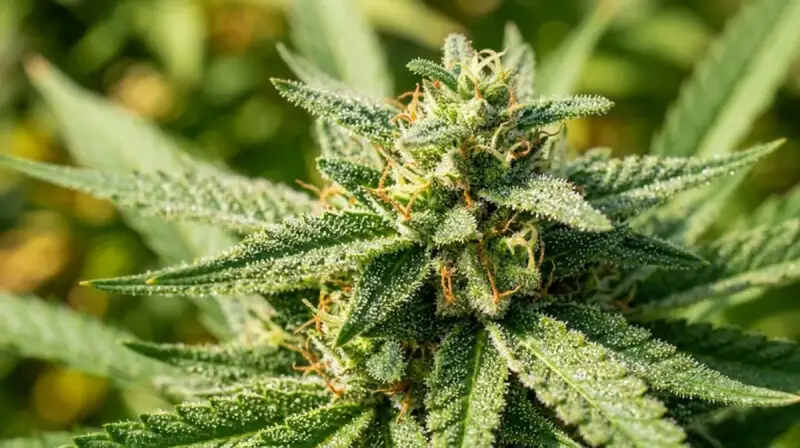
Bruce Banner regularly tests at 24–30% THC — one of the highest ranges of any commercially distributed strain. It is not recommended for beginners or consumers with low THC tolerance. High doses can cause anxiety, paranoia, and extreme sedation.
- Genetics: OG Kush × Strawberry Diesel by Dark Horse Genetics; sativa-dominant (60/40)
- THC: 24–30% — among the highest of any commercially distributed strain; CBD under 1%
- Three main phenotypes: #1, #2, and #3 (Delta 3 — most potent and most common at dispensaries)
- Terpenes: caryophyllene (dominant), limonene, myrcene; diesel-sweet-earthy aroma
- Effects: fast-acting intense cerebral rush (explains Hulk reference) followed by euphoric physical relaxation
- Medical: severe pain, PTSD, depression — best suited to high-tolerance patients
- Indoor yield: 400–500 g/m²; flowering time 8–10 weeks; heavy resin producer
Strain Quick-Reference
| Genetics | OG Kush × Strawberry Diesel |
| Breeder | Dark Horse Genetics |
| Type | Sativa-Dominant Hybrid (60/40) |
| THC | 24–30% |
| CBD | <1% |
| Primary Terpenes | Caryophyllene, Limonene, Myrcene |
| Flowering Time | 56–70 days (8–10 weeks) |
| Indoor Yield | 400–500 g/m² |
| Phenotypes | Bruce Banner #1, #2, #3 (Delta 3) |
Genetics & Lineage
Bruce Banner was created by Dark Horse Genetics through a cross of OG Kush and Strawberry Diesel. OG Kush provides the foundation: dense bud structure, heavy resin production, and the classic earthy-pine-gas terpene profile that defined California cannabis in the 2000s. Strawberry Diesel contributes sweetness, sativa cerebral energy, and the fruity diesel character that makes Bruce Banner’s aroma distinctive.
The name is a direct reference to Bruce Banner, the scientist alter ego of the Incredible Hulk from Marvel Comics — an apt metaphor for a strain that starts mild and builds to an overwhelming physical and mental force.
Multiple phenotypes were selected from the original cross. Bruce Banner #3, commonly called Delta 3, emerged as the most potent and consistent expression. It is the phenotype most widely distributed in legal dispensaries across Colorado, California, and other US markets. Some tests of Delta 3 have exceeded 28% THC, making it one of the highest recorded in regulated markets.
Bruce Banner #1 and #2 are less common but still circulate in some markets. #1 tends to express more sativa characteristics; #2 leans slightly more indica. Delta 3 represents the optimal balance of both parents.
Effects & Experience
The Hulk reference is well-earned. Bruce Banner’s effects arrive fast and hit hard, progressing through a euphoric cerebral surge before transitioning into substantial physical relaxation.
Onset (0–5 Minutes)
The onset is one of the fastest in the hybrid category. A powerful cerebral rush builds within minutes, characterized by heightened sensory awareness, euphoria, and a surge of mental energy. At high doses, this phase can feel overwhelming — first-time users often describe it as more intense than expected.
Peak (10–90 Minutes)
The peak phase maintains the cerebral energy while the indica genetics from OG Kush begin introducing a deep, full-body physical relaxation. This dual activation — stimulated mind in a relaxed body — is the defining experience of Bruce Banner at optimal doses. Creative and social use is common during this window, though high-dose users may find the sedation component increasingly dominant.
Tail (90–180 Minutes)
As the THC metabolizes, the cerebral intensity fades first, leaving a prolonged physical relaxation that can transition into heavy sedation at higher doses. The tail of Bruce Banner is notably longer than most hybrids, typically lasting 30–60 minutes longer than strains in the 20–22% THC range.
Medical Applications
Bruce Banner’s very high THC content makes it most appropriate for medical patients with established tolerance and conditions that require high-potency intervention.
| Condition | Mechanism | Patient Profile |
|---|---|---|
| Severe Pain | High-THC full-body relaxation; caryophyllene CB2 anti-inflammatory activity | High-tolerance patients; chronic pain |
| PTSD | Euphoric THC effect may interrupt intrusive thought patterns; deep relaxation | Experienced patients; evening use preferred |
| Depression | Intense euphoric onset; limonene mood elevation | Use cautiously; high THC can worsen depression in some |
| Insomnia | Heavy sedation at higher doses; OG Kush indica lineage | Evening use; start with small dose |
Flavor & Aroma Profile
Bruce Banner’s aroma combines the earthy diesel foundation of its Diesel parentage with a distinctive sweet strawberry note that gives the strain its name. The OG Kush influence adds pine and earth, creating a complex three-layer aroma that reads as diesel-sweet-earthy with citrus accents.
| Terpene | Aroma | Effect Role |
|---|---|---|
| Caryophyllene | Spicy, diesel, pepper | CB2 agonist; dominant terpene; anti-inflammatory backbone |
| Limonene | Sweet citrus, berry | Mood elevation; the Strawberry Diesel contribution to aroma |
| Myrcene | Earthy, herbal, pine | THC potentiator from OG Kush lineage; enhances body relaxation |
Growing Bruce Banner
Bruce Banner is a medium-difficulty cultivar that rewards consistent feeding and environmental management with exceptional resin yields. Its 60/40 sativa lean produces moderate height (not as stretchy as pure sativas) with the dense bud architecture of its OG Kush parent.
| Factor | Indoor | Outdoor |
|---|---|---|
| Flowering Time | 56–70 days | Late September–October |
| Yield | 400–500 g/m² | 500–700 g/plant |
| Height (indoor) | 80–130 cm | 150–200 cm |
| Difficulty | Moderate | Moderate |
| Resin Production | Very High (top-tier) | Very High |
The OG Kush genetics in Bruce Banner make it sensitive to overfeeding, particularly nitrogen toxicity. Keep nitrogen moderate during flowering and increase phosphorus and potassium from week 4 to support the heavy resin development. Feeding errors show quickly as discoloration of the fan leaves.
Bruce Banner benefits from defoliation during the first two weeks of flower to improve airflow and light penetration to lower bud sites. The dense OG-style buds it produces are susceptible to bud rot in high humidity; keep RH below 50% from week 5 of flower onward.
Bruce Banner vs. Similar High-THC Strains
| Strain | Type | THC | Key Difference |
|---|---|---|---|
| Gorilla Glue #4 | Hybrid | 25–30% | More indica-heavy; stronger sedation; similar resin output |
| OG Kush | Hybrid | 19–26% | Parent strain; earthier; slightly less potent on average |
| Strawberry Diesel | Sativa-Dom | 16–22% | Parent strain; lower THC; more pronounced sweet strawberry flavor |
| Trainwreck | Sativa-Dom | 18–25% | Similar rapid onset; lower average THC; lemon-pine versus diesel-sweet |
Related Strains
- OG Kush — Parent strain; earthy pine gas; the foundation of Bruce Banner
- Gorilla Glue #4 — Similar THC ceiling; heavier indica sedation
- Trainwreck — Fast-acting sativa-dominant with similar cerebral rush
- Sour Diesel — Diesel lineage cousin; more energizing; lower THC range
- MAC — Balanced hybrid with similar dispensary premium status
Drug Test Detection Windows
Cannabis metabolites from any strain including this one are stored in body fat and released gradually. Detection windows depend primarily on frequency of use, body composition, metabolism, and individual physiology.
| Test Type | Occasional Use | Daily Use | Notes |
|---|---|---|---|
| Urine | 3–7 days | Up to 30 days | Most common workplace test; detects THC-COOH metabolite |
| Blood | Up to 24 hours | Up to 7 days | Active THC clears fastest; used in roadside testing |
| Saliva | 24–48 hours | Up to 72 hours | Common roadside test; window shorter than urine |
| Hair | Potentially detectable | Up to 90 days | 1.5-inch sample covers ~90 days of growth |
THC potency does not directly extend detection windows. A single session with this high-THC strain is not detectably different from a lower-THC strain after 48 hours in urine. Frequency is the primary variable. See our full drug test guide for comprehensive testing information.
Cannabinoid & Terpene Synergy
The effects of any cannabis strain are not produced by THC alone. The entourage effect describes how cannabinoids (THC, CBD, CBG, CBN) and terpenes interact synergistically to modulate the overall experience. Understanding this helps explain why two strains with identical THC percentages can feel completely different.
- Myrcene + THC: Myrcene increases blood-brain barrier permeability, potentiating THC uptake and enhancing body relaxation. High-myrcene strains feel heavier than their THC% suggests.
- Caryophyllene + THC: Caryophyllene’s CB2 binding adds an anti-inflammatory layer to the experience and can reduce anxiety by modulating the endocannabinoid system independently of CB1.
- Limonene/Terpinolene + THC: Mood-elevating terpenes counterbalance the sedative tendency of high myrcene, producing the uplifting character in sativa-dominant and balanced hybrids.
- CBD + THC: Even trace amounts of CBD (0.1–0.5%) can attenuate THC-induced anxiety by partial CB1 antagonism. This is part of why full-spectrum products behave differently than pure THC isolates.
Explore Cannabis Strain Comparisons
Compare this strain side-by-side with others in our database to understand how genetics, terpene profile, and effect duration differ across varieties.
- Full Strain Comparison Tool — Side-by-side comparison for any two strains
- Effects Database — Find strains by specific effect profile
- Terpene Guide — Understand how individual terpenes shape the experience
- Growing Guides — Detailed cultivation resources for every skill level
- Medical Cannabis Guide — Condition-specific strain recommendations
Drug Test Detection Windows
Cannabis metabolites from any strain including this one are stored in body fat and released gradually. Detection windows depend primarily on frequency of use, body composition, metabolism, and individual physiology.
| Test Type | Occasional Use | Daily Use | Notes |
|---|---|---|---|
| Urine | 3–7 days | Up to 30 days | Most common workplace test; detects THC-COOH metabolite |
| Blood | Up to 24 hours | Up to 7 days | Active THC clears fastest; used in roadside testing |
| Saliva | 24–48 hours | Up to 72 hours | Common roadside test; window shorter than urine |
| Hair | Potentially detectable | Up to 90 days | 1.5-inch sample covers ~90 days of growth |
THC potency does not directly extend detection windows. A single session with this high-THC strain is not detectably different from a lower-THC strain after 48 hours in urine. Frequency is the primary variable. See our full drug test guide for comprehensive testing information.
Cannabinoid & Terpene Synergy
The effects of any cannabis strain are not produced by THC alone. The entourage effect describes how cannabinoids (THC, CBD, CBG, CBN) and terpenes interact synergistically to modulate the overall experience. Understanding this helps explain why two strains with identical THC percentages can feel completely different.
- Myrcene + THC: Myrcene increases blood-brain barrier permeability, potentiating THC uptake and enhancing body relaxation. High-myrcene strains feel heavier than their THC% suggests.
- Caryophyllene + THC: Caryophyllene’s CB2 binding adds an anti-inflammatory layer to the experience and can reduce anxiety by modulating the endocannabinoid system independently of CB1.
- Limonene/Terpinolene + THC: Mood-elevating terpenes counterbalance the sedative tendency of high myrcene, producing the uplifting character in sativa-dominant and balanced hybrids.
- CBD + THC: Even trace amounts of CBD (0.1–0.5%) can attenuate THC-induced anxiety by partial CB1 antagonism. This is part of why full-spectrum products behave differently than pure THC isolates.
Explore Cannabis Strain Comparisons
Compare this strain side-by-side with others in our database to understand how genetics, terpene profile, and effect duration differ across varieties.
- Full Strain Comparison Tool — Side-by-side comparison for any two strains
- Effects Database — Find strains by specific effect profile
- Terpene Guide — Understand how individual terpenes shape the experience
- Growing Guides — Detailed cultivation resources for every skill level
- Medical Cannabis Guide — Condition-specific strain recommendations
Drug Test Detection Windows
Cannabis metabolites from any strain including this one are stored in body fat and released gradually. Detection windows depend primarily on frequency of use, body composition, metabolism, and individual physiology.
| Test Type | Occasional Use | Daily Use | Notes |
|---|---|---|---|
| Urine | 3–7 days | Up to 30 days | Most common workplace test; detects THC-COOH metabolite |
| Blood | Up to 24 hours | Up to 7 days | Active THC clears fastest; used in roadside testing |
| Saliva | 24–48 hours | Up to 72 hours | Common roadside test; window shorter than urine |
| Hair | Potentially detectable | Up to 90 days | 1.5-inch sample covers ~90 days of growth |
THC potency does not directly extend detection windows. A single session with this high-THC strain is not detectably different from a lower-THC strain after 48 hours in urine. Frequency is the primary variable. See our full drug test guide for comprehensive testing information.
Cannabinoid & Terpene Synergy
The effects of any cannabis strain are not produced by THC alone. The entourage effect describes how cannabinoids (THC, CBD, CBG, CBN) and terpenes interact synergistically to modulate the overall experience. Understanding this helps explain why two strains with identical THC percentages can feel completely different.
- Myrcene + THC: Myrcene increases blood-brain barrier permeability, potentiating THC uptake and enhancing body relaxation. High-myrcene strains feel heavier than their THC% suggests.
- Caryophyllene + THC: Caryophyllene’s CB2 binding adds an anti-inflammatory layer to the experience and can reduce anxiety by modulating the endocannabinoid system independently of CB1.
- Limonene/Terpinolene + THC: Mood-elevating terpenes counterbalance the sedative tendency of high myrcene, producing the uplifting character in sativa-dominant and balanced hybrids.
- CBD + THC: Even trace amounts of CBD (0.1–0.5%) can attenuate THC-induced anxiety by partial CB1 antagonism. This is part of why full-spectrum products behave differently than pure THC isolates.
Explore Cannabis Strain Comparisons
Compare this strain side-by-side with others in our database to understand how genetics, terpene profile, and effect duration differ across varieties.
- Full Strain Comparison Tool — Side-by-side comparison for any two strains
- Effects Database — Find strains by specific effect profile
- Terpene Guide — Understand how individual terpenes shape the experience
- Growing Guides — Detailed cultivation resources for every skill level
- Medical Cannabis Guide — Condition-specific strain recommendations
Jordan Price has spent over a decade working with licensed cultivators across California and Colorado, specializing in terpene-forward genetics and indoor production optimization.