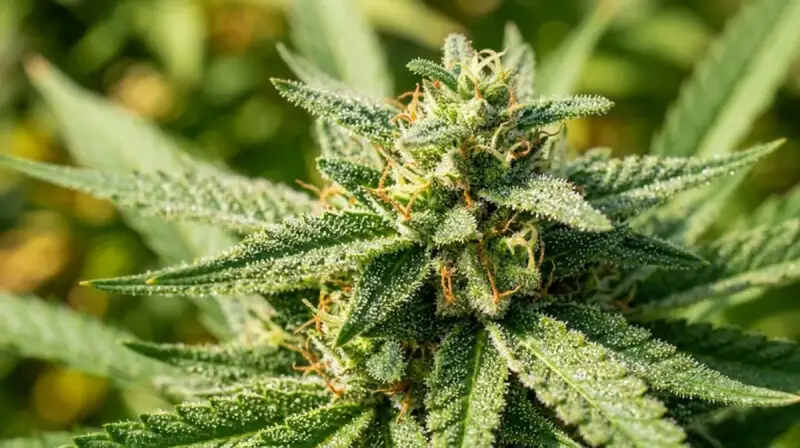
Medical cannabis legal after Prop 2 (2018) — but legislature weakened voter initiative before it took effect. Recreational illegal.
Key Findings — Utah Cannabis Laws
Recreational cannabis: Illegal — no adult-use program
Medical cannabis: Legal — Prop 2 (2018), modified by HB 3001 before taking effect
DABC oversight: Same state agency that oversees alcohol also regulates cannabis
Possession (non-patient): Any amount = Class B misdemeanor ($1,000 / 6 months)
Home cultivation: Illegal for all, including medical patients
30-day supply limit: Medical patients — specific product limits per month
CBD / hemp: Legal — 0.3% THC max per 2018 Farm Bill
Current Legal Status in Utah
Utah has a medical cannabis program, but its path to existence reflects the state’s distinctive political dynamics. Utah voters approved Proposition 2 in November 2018 with 53% of the vote — a citizen-initiated measure to create a comprehensive medical cannabis system. However, before the measure could take effect, the Utah legislature passed HB 3001 (the Utah Medical Cannabis Act) in a special session in December 2018, substantially modifying the voter-approved initiative.
Key changes made by HB 3001 included restricting qualifying conditions, eliminating provisions for dispensary storefronts in favor of a more pharmacy-like model, and placing the Department of Alcoholic Beverage Control (DABC) — the same state agency that governs alcohol sales — as a co-regulator of cannabis. Critics argued the legislature had undermined the will of voters, though supporters said the compromise bill protected key elements of the original measure while making it more workable.
Utah’s strong LDS (Latter-day Saints) religious culture, which officially opposes recreational drug use including cannabis, is a significant factor in the state’s conservative approach. Recreational legalization has no visible pathway through the Republican supermajority legislature, and no ballot initiative for recreational use has been filed.
Possession Penalties in Utah
Utah has no decriminalization for recreational cannabis. Any possession without a valid medical card is a criminal misdemeanor, regardless of amount (for small quantities). Larger amounts escalate to felony charges.
Amount
Charge
Max Penalty
Any amount (small possession)
Class B Misdemeanor
$1,000 / 6 months
Over 1 oz (28g) in public
Class A Misdemeanor
$2,500 / 1 year
100+ lbs (with intent to distribute)
First Degree Felony
5 years to life
Distribution to minor
Second Degree Felony
1–15 years
Valid medical card (within 30-day supply)
Legal
No penalty
Utah uses a tiered sentencing system. Repeat drug offenders may be sentenced under the Third Degree Felony Controlled Substance Act for amounts that would normally be misdemeanors. Utah also has mandatory drug testing and treatment requirements for certain offenses.
Utah Medical Cannabis Program
Utah’s program is jointly administered by the Utah Department of Health and Human Services (patient registry and physician oversight) and the Utah Department of Alcoholic Beverage Control (dispensary licensing and compliance). The DABC involvement is unique — no other state assigns an alcohol control agency to oversee cannabis dispensaries.
Qualifying Conditions
Qualifying Condition
Notes
Chronic pain
When alternatives are inadequate
Nausea / vomiting
Including chemotherapy-induced
Epilepsy / seizure disorders
Including treatment-resistant epilepsy
Multiple sclerosis
Spasticity and pain
HIV/AIDS
Associated wasting or pain
Crohn’s disease / IBD
Active inflammation
PTSD
Post-traumatic stress disorder
Autism spectrum disorder
Qualifying behavioral symptoms
Terminal illness
Physician-certified prognosis
Alzheimer’s disease
Added in legislative expansion
Patients are limited to a 30-day supply of cannabis products from licensed dispensaries. Specific product quantity limits vary by product type (flower, edibles, tinctures, etc.) and are set by the DABC. There are over 15 licensed cannabis dispensaries operating in Utah, with locations in Salt Lake City, Provo, Ogden, St. George, and other communities.
Home cultivation is not permitted under any circumstances — this was one of the provisions removed from Prop 2 by the legislature. All medical cannabis must be purchased through the licensed dispensary system.
The Prop 2 and HB 3001 Controversy
The story of Utah’s cannabis law is unusual. When Prop 2 passed with 53% support in November 2018, it created broad authority for a consumer-friendly medical cannabis system. The LDS Church — which had opposed Prop 2 — then participated in negotiations with state officials and cannabis advocates that produced the legislative compromise in HB 3001.
Critics of HB 3001 argued the legislature had overridden voters’ direct decision, a common concern when initiatives are amended by legislators. Supporters countered that the compromise addressed legitimate implementation concerns while preserving the core medical access patients needed.
The practical result: Utah has a functioning medical cannabis system with 15+ dispensaries, but patients face more restrictions than in most medical states, and the DABC oversight model remains distinctive nationally.
MW
Marcus Webb
Cannabis Law Researcher — ZenWeedGuide Editorial Team
Reviewed May 2026 — Sources: Utah DHHS, Utah Code Ann. § 26B-4-201 et seq., HB 3001 (2018), Prop 2 (2018), DABC
Utah patients must complete a two-step process. First, they need a medical cannabis card evaluation through a licensed Qualified Medical Provider (QMP) or Limited Medical Provider (LMP) who is registered with the Utah Dept. of Health and Human Services. The provider must confirm a qualifying condition and issue a Patient Evaluation through the state’s electronic health records system.
After the provider evaluation is completed in the system, patients can apply for the Utah Medical Cannabis Card through the Utah DHHS portal. Approved patients receive a card valid for 6 months (for most conditions) or up to 1 year (for terminal illness). The card is issued digitally and can be presented at dispensaries via smartphone.
Utah dispensaries are called “medical cannabis pharmacies” and operate under DABC oversight. There are over 15 licensed locations statewide. Products include flower (vaporization only — smoking is not permitted), edibles, tinctures, topicals, and capsules. The 30-day supply limit is tracked across all dispensaries in real time.
Drug Testing and Employment in Utah
Utah law does not require employers to accommodate medical cannabis patients. Employers may maintain drug-free workplace policies and take adverse action against employees or applicants who test positive for cannabis, regardless of medical card status. The Utah Medical Cannabis Act explicitly states it does not limit an employer’s ability to restrict or prohibit cannabis use by employees.
Utah has a significant number of employers who hold federal contracts (including defense contractors, federal agencies, and national parks operators), which adds additional layers of zero-tolerance requirements.
For patients balancing medical cannabis use with employment, timing and product choice matter significantly. Water-soluble THC from edibles may clear faster than lipid-soluble THC from smoked or vaped products. See the drug test guide for complete information on detection windows.
Utah Dispensary List (Licensed Medical Cannabis Pharmacies)
City
Dispensary
Region
Salt Lake City
Multiple licensed pharmacies
Wasatch Front
Provo
Licensed medical pharmacy
Utah Valley
Ogden
Licensed medical pharmacy
Northern Utah
St. George
Licensed medical pharmacy
Southern Utah
Logan
Licensed medical pharmacy
Cache Valley
Park City
Licensed medical pharmacy
Summit County
Current DABC-licensed dispensary locations. Always verify the official Utah DABC website for the most current list before visiting.
LDS Church Influence on Utah Cannabis Policy
The Church of Jesus Christ of Latter-day Saints (LDS) is the dominant religious institution in Utah, with approximately 60% of the state’s population identifying as members. The church has historically opposed recreational drug use including alcohol, tobacco, coffee, and cannabis. This religious influence has a measurable effect on Utah’s drug policy landscape.
When Proposition 2 was on the ballot in 2018, the LDS Church officially opposed it — a rare direct political stance. After the measure passed anyway, church representatives participated in the negotiations that produced the HB 3001 legislative compromise. This role in shaping the final law was unusual and drew both praise (for helping pass workable legislation) and criticism (for limiting what voters had approved).
Recreational legalization is seen as nearly impossible in Utah as long as the LDS Church maintains its opposition and the Republican-dominated legislature (many members of which are LDS) controls state lawmaking. The practical implication for Utahns is that neighboring states — particularly Nevada and Colorado — have recreational cannabis readily available to visitors, creating a border-state access dynamic similar to Iowa’s with Illinois and Minnesota.
Utah Medical Cannabis: Frequently Asked Questions
Can you smoke cannabis flower in Utah as a medical patient? No. Utah law prohibits smoking cannabis even for registered medical patients. Allowed consumption methods include vaporization (of concentrates or oils), edibles, tinctures, topicals, and capsules. Non-combustion dry herb vaporizers may be permitted — check with your dispensary.
Does Utah recognize out-of-state medical cards? No. Utah does not have a reciprocity program. Only Utah-registered patients may purchase from licensed medical cannabis pharmacies.
Why does the DABC regulate cannabis in Utah? The Department of Alcoholic Beverage Control was assigned cannabis oversight as part of the HB 3001 legislative compromise, which modified Prop 2 before it took effect. The idea was to use the state’s existing controlled substance retail oversight infrastructure for cannabis as well.
How many qualifying patients are in Utah? Utah has tens of thousands of registered medical cannabis patients as of 2025, with chronic pain being the most common qualifying condition. The number has grown steadily since dispensaries opened in 2020.
Cannabis Tourism in Utah’s National Parks Region
Utah is home to five national parks (Zion, Bryce Canyon, Arches, Canyonlands, Capitol Reef) and attracts millions of outdoor tourists annually. Visitors from recreational states like Nevada and Colorado sometimes mistakenly assume they can bring cannabis into Utah’s parks and public lands — this is not the case.
National parks are federal land. Cannabis possession on federal land is a federal offense regardless of state law. Even if Utah had recreational cannabis (it does not), possession in a national park would be illegal under federal law. Enforcement by National Park Service rangers can result in criminal charges processed in federal court.
Visitors from states where cannabis is legal should leave their cannabis at home before visiting Utah’s national parks, state parks, and other federal lands. The risks — federal criminal charges, loss of employment, disqualification from federal benefits — are significant. See the traveling with cannabis guide for comprehensive state-by-state travel advice.
Utah Visitors & Travelers:
Utah does not recognize out-of-state medical cannabis cards. The state has no decriminalization. Any recreational possession is a criminal misdemeanor. Visitors from Nevada or Colorado should leave all cannabis at home before entering Utah. Federal lands within Utah (national parks, national monuments, BLM land) are governed by federal law, making cannabis possession there a federal offense regardless of any state rules.
Utah Hemp and CBD
Hemp and hemp-derived CBD are legal in Utah under the 2018 Farm Bill and Utah’s Industrial Hemp Registration Act. The Utah Department of Agriculture and Food licenses hemp cultivators and processors. Retail CBD products at or below 0.3% THC are widely available in health stores, pharmacies, and online throughout the state.
Utah’s CBD market has grown significantly as consumer interest in non-psychoactive cannabinoids has increased. Hemp-derived CBD provides legal relief for many Utahns who do not qualify for the medical cannabis program or who prefer products without elevated THC content.