










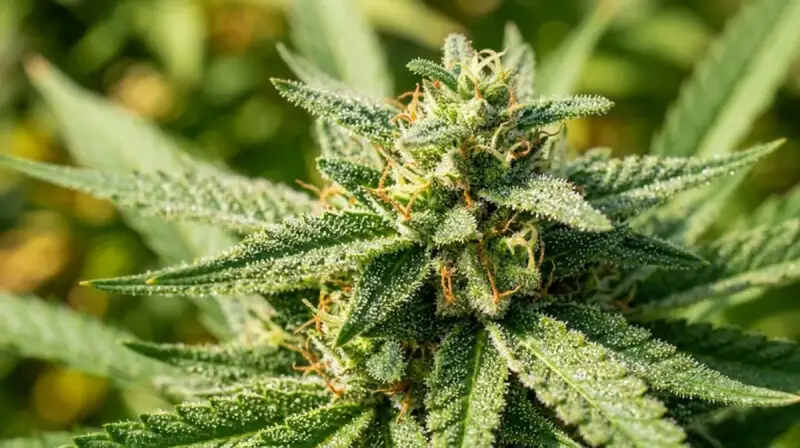
Travel and cannabis law are a collision of jurisdiction. State legalization only governs state territory. The moment you enter an airport, cross a state line on an interstate highway, or approach a customs checkpoint, you are operating under federal law — and under federal law, cannabis remains a Schedule I controlled substance with no medical or recreational exception.
- TSA scans for security threats, not drugs — but is legally required to report cannabis finds to local law enforcement.
- Crossing state lines with cannabis is a federal interstate commerce crime regardless of the laws in both states.
- A legal-state-to-legal-state flight route does not matter: the airport itself operates under federal jurisdiction.
- International travel with any amount of cannabis exposes you to the laws of the destination country — which may include mandatory prison sentences.
- CBD isolate in carry-on or checked bags carries low risk; full-spectrum CBD products carry moderate risk due to trace THC content.
- Cruise ships operating in federal (international) waters enforce federal drug law regardless of the departure port’s state laws.
- Medical cannabis cards provide zero federal exemption and are not recognized at TSA checkpoints, CBP, or by federal law enforcement.
Flying in the US: TSA Authority and What Actually Happens
The Transportation Security Administration operates under the Department of Homeland Security and is governed by federal law. TSA’s mandate is aviation security — identifying explosive devices, weapons, and threats to aircraft. Drug detection is not the primary mission. However, TSA security officers are required by federal policy to refer any discovered controlled substance to law enforcement at the airport.
In practice, what happens next depends heavily on airport location. At Los Angeles International Airport (LAX), a policy change means local LAPD officers will generally not arrest adults for state-legal quantities of cannabis. But this is a local law enforcement discretion call, not a legal protection. At airports in Texas, Oklahoma, Idaho, Wyoming, or any other state with stricter cannabis laws, the same TSA referral can result in arrest and prosecution.
The fundamental legal reality: you are gambling on local law enforcement discretion every time you bring cannabis through airport security. That’s not a risk worth taking when licensed dispensaries exist at virtually every legal-state destination.
Domestic Flights: Why the Route Doesn’t Matter
A common misconception is that flying from one legal state to another makes cannabis permissible on a domestic flight. It does not. The aircraft, the airport, the TSA checkpoint, and all federal airspace are governed by federal law. The fact that both your departure and arrival states have recreational cannabis is legally irrelevant at the federal level.
Cannabis on an aircraft is a federal possession violation at minimum. If the quantity or circumstances suggest distribution intent, federal trafficking charges become possible. No state legalization law shields you once you step into a federally controlled zone.
Road Trips: State Lines and Interstate Enforcement
Driving with cannabis within a legal state is generally lawful, provided it is in a sealed, closed container inaccessible to the driver and the driver is not impaired. The law changes the instant you cross a state border. Transporting cannabis across any state line constitutes federal drug trafficking under 21 U.S.C. § 841, regardless of the quantity or the laws in either state.
States with particularly aggressive border enforcement: Oklahoma and Texas both conduct active cannabis interdiction on I-40, I-35, and other corridors. Idaho (which borders five legal states) has been documented stopping and searching vehicles for cannabis with statistical frequency near its borders. Wyoming state troopers actively patrol I-80 and I-90 for drug transport.
Possession limits also vary dramatically by state. California allows 28.5 grams for adults; Nevada allows 28.35 grams; Oregon allows 1 ounce in public. Traveling into a state with lower limits than your origin — even without crossing a state line — can result in a state-level possession charge at your destination.
Medical Patients Traveling: Out-of-State Reciprocity
Only a small number of states recognize out-of-state medical cannabis cards through formal reciprocity agreements or broad statutory language. These include Washington D.C., Maine, and Oklahoma, with varying conditions. The vast majority of legal states — including California, Colorado, and Michigan — do not recognize out-of-state medical cannabis cards for purchasing or possession purposes.
Most importantly, no state reciprocity agreement provides any federal protection. Flying with a medical card from any state is still a federal violation. A medical card does not change your legal status at a TSA checkpoint, on a federal highway, or at any international border.
International Travel: A Categorical No
Bringing cannabis of any kind across an international border subjects you to two legal systems simultaneously: US federal export law and the destination country’s import law. Every country maintains its own controlled substance statute. Many impose penalties far more severe than the US federal minimum.
Japan imposes up to 5 years imprisonment for cannabis possession; Singapore up to 10 years and caning; the UAE has prosecuted tourists for trace quantities on clothing or in baggage. Customs inspection equipment is sensitive enough to detect residue. Cannabis is commercially available in legal states; it is not worth a foreign prison sentence to bring it to your destination.
The US Customs and Border Protection (CBP) also enforces federal law at all US entry and exit points. Attempting to bring cannabis into the US after international travel is a federal violation processed at CBP, not at the local police level.
CBD and Hemp Products When Flying
TSA policy does not specifically prohibit FDA-approved hemp-derived CBD products. CBD isolate — a chemically pure form of cannabidiol with no detectable THC — carries very low risk at a TSA checkpoint because it contains no scheduled controlled substance.
Full-spectrum CBD products contain up to 0.3% THC by law and carry moderate risk, primarily because a TSA officer may not have the field testing capability to distinguish hemp-derived full-spectrum from marijuana-derived products. Broad-spectrum CBD carries lower risk than full-spectrum but is not zero risk due to potential trace amounts depending on extraction quality.
If you carry CBD products, having a certificate of analysis (COA) from a third-party lab showing non-detectable THC is helpful if questioned. It does not provide legal immunity but demonstrates good faith and provides factual documentation to law enforcement.
Cruise Ships: Federal Waters, Federal Law
Cruise ships departing from US ports — including those departing from California, Washington, or other legal states — enter international and federal waters almost immediately after leaving port. Once in international waters, federal maritime law applies. Cannabis is prohibited on federally flagged vessels regardless of the state from which you departed.
Cruise lines also enforce their own zero-tolerance policies independently of federal law. Passengers discovered with cannabis on cruise ships have been disembarked at the nearest port and in some cases referred to federal maritime authorities. The departure port’s state cannabis laws provide no protection once the vessel leaves port.
Cannabis and Rental Cars
Major rental car companies — including Enterprise, Hertz, Budget, and Avis — all maintain contractual prohibitions on cannabis in rental vehicles. Violations can result in forfeiture of the damage deposit, additional cleaning fees ranging from $250 to $500, and in some cases charges for diminished vehicle value. These policies apply even in states where cannabis is fully legal.
From a practical standpoint, a rental car with cannabis odor may attract law enforcement attention if pulled over, particularly if crossing into a state with aggressive cannabis enforcement. The contractual risk and law enforcement risk combine to make cannabis use in rental vehicles a poor decision even in legal states.
Practical Risk Table
| Scenario | Risk Level | What Could Happen | Recommendation |
|---|---|---|---|
| Fly legal state to legal state with cannabis | High | Federal possession charge; law enforcement referral | Never. Buy at destination. |
| Drive across state line with cannabis | High | Federal trafficking charge; vehicle search | Never. Consume before crossing. |
| International travel with cannabis | Severe | Arrest, prosecution, foreign prison | Absolute no. No exceptions. |
| Fly with CBD isolate (verified, COA present) | Low | TSA questioning; possible confiscation | Permitted with COA; low risk |
| Fly with full-spectrum CBD | Moderate | Confusion with marijuana; possible referral | Carry COA; use isolate instead |
| Cannabis on cruise ship | High | Disembarkation; federal maritime charge | Never. Federal waters apply. |
| Drive within same legal state | Low | DUI if impaired; open container if unsealed | Sealed container; never impaired |