










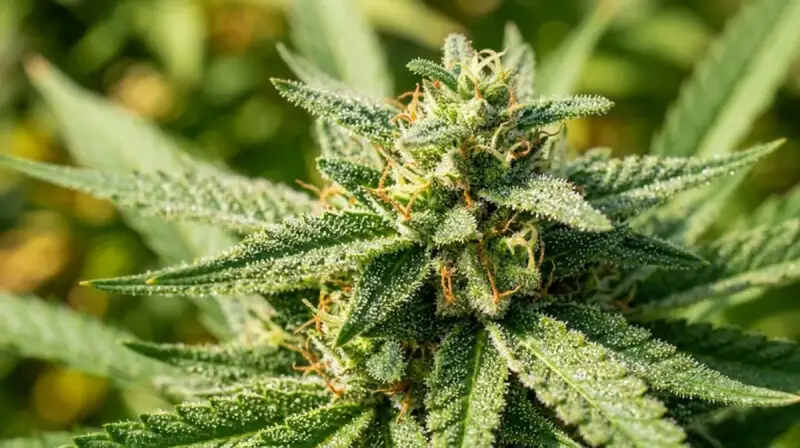
- HB 639 (2024): Adults 21+ may possess up to 3/4 oz (21.25 g) and grow up to 3 mature cannabis plants at home. This is legal — not a misdemeanor, not a violation — for compliant adults.
- No recreational retail: HB 639 creates possession and home grow rights but no licensed retail dispensary system. There is no legal way to purchase recreational cannabis in New Hampshire as of 2026.
- Medical programme (HB 573, 2013): New Hampshire’s Therapeutic Cannabis Program has been operating since 2013 with 4 licensed nonprofit Alternative Treatment Centers (ATCs). Medical patients may purchase from these dispensaries with a valid registry ID.
- Concentrate THC cap: Medical programme rules impose a 2% THC cap on concentrate products dispensed through the ATC system, making NH medical concentrates less potent than those in most other medical states.
- Retail bill repeatedly stalled: Multiple bills to create a retail cannabis market in New Hampshire have passed the House but died in the Senate. The NH Senate has been the structural barrier to full recreational retail.
- Libertarian tradition: New Hampshire’s “Live Free or Die” political culture has made home grow rights more politically achievable than a state-regulated retail market, which some legislators view as government overreach of a different type.
- No excise tax yet: Without a retail market, New Hampshire collects no cannabis excise tax revenue. Multiple analyses show NH forgoing $30–60 million in annual tax revenue.
New Hampshire Cannabis Law Quick Reference
| Category | Rule / Status |
|---|---|
| Recreational possession ≤3/4 oz (21+) | Legal under HB 639 (2024); no criminal or civil penalty |
| Recreational possession 3/4 oz–3/4 lb (21+) | Violation (civil); fine only, no criminal charge |
| Recreational possession >3/4 lb | Class B misdemeanor: up to $1,200 fine |
| Home grow (21+) | Up to 3 mature plants legal; must be in locked, enclosed space, not visible to public |
| Recreational retail dispensaries | None; no licensed recreational sales framework |
| Medical programme | Therapeutic Cannabis Program (HB 573, 2013); 4 nonprofit ATCs |
| Medical possession | Up to 2 oz (56 g) for registered patients |
| ATC THC cap (concentrates) | 2% THC maximum in concentrate products (medical) |
| Medical qualifying conditions | Cancer, glaucoma, HIV/AIDS, hepatitis C, ALS, muscular dystrophy, Crohn’s, PTSD, chronic pain (limited), and other approved conditions |
| Hemp (≤0.3% THC) | Legal; NH adopted federal Farm Bill standards |
| Public consumption | Not permitted; HB 639 does not authorize public use |
| Cannabis excise tax | None currently; no retail market exists |
| Expungement | Prior possession convictions for now-legal amounts may be expungeable; no automatic programme |
Understanding HB 639: What Changed in 2024
New Hampshire’s House Bill 639, signed into law in 2024, represents a significant but incomplete shift in cannabis policy. Prior to HB 639, all cannabis possession in New Hampshire was a criminal offense. After HB 639, adults 21 and older may legally possess up to three-quarters of an ounce (21.25 grams) of cannabis and cultivate up to three mature plants at home without criminal or civil penalty.
The bill was unusual in American cannabis reform history: it created legal possession and home cultivation rights without establishing a retail market. This approach reflects New Hampshire’s particular political dynamics. The House, which has historically had a more libertarian-leaning membership, has passed retail cannabis bills multiple times. The Senate, with a different political composition and different constituent pressures, has killed retail bills while showing more openness to personal freedom arguments for possession decriminalization and home grow.
Home cultivation under HB 639 requires that plants be grown in an enclosed, locked space not visible to the public. The 3 mature plant limit applies per adult, but the law does not specify a household maximum in the same way Colorado’s law does. Practical home growers in New Hampshire should consult the specific statute language and any regulatory guidance issued since passage.
The gap between legal possession and no legal source creates an obvious practical problem: where does a New Hampshire adult obtain cannabis to legally possess? The law does not answer this question. Adults may grow their own (3 mature plants) or obtain cannabis from unclear sources. In the absence of regulated retail, unregulated supply chains — illegal under state law for the seller — continue to serve the market. New Hampshire residents also cross the border into Massachusetts, which has operated recreational retail since 2018, for legal purchases that technically cannot be transported back into New Hampshire legally under federal interstate transport rules.
Home Grow Rules Under HB 639
| Element | Rule |
|---|---|
| Minimum age | 21+ |
| Maximum mature plants | 3 plants per qualifying adult |
| Immature/seedling plants | Not separately capped in the same manner; consult statute |
| Location | Enclosed, locked space; not visible to the public or from public area |
| Landlord rights | Landlords may prohibit cultivation on rental properties |
| Excess cultivation (small over limit) | Civil violation; fine |
| Excess cultivation (large commercial scale) | Criminal manufacturing charge; felony potential |
| Gifting between adults | Up to 1 oz permitted without compensation (personal use gifting) |
| Sale of home-grown cannabis | Illegal; no retail licence framework exists |
The home grow provision is practically meaningful for New Hampshire cannabis users who have growing experience or are willing to learn. Three mature plants can yield several ounces per harvest indoors and potentially significantly more outdoors in a seasonal grow. However, the investment in growing equipment, electricity, nutrients, and time must be weighed against the option of driving to Massachusetts for legal retail purchases — a route taken by many New Hampshire residents before and after HB 639.
New Hampshire Medical Cannabis Programme
New Hampshire established its Therapeutic Cannabis Program under HB 573 in 2013, making it one of the earlier New England states to create a medical programme (following Maine’s 1999 law and Rhode Island’s 2006 law). The programme is administered by the New Hampshire Department of Health and Human Services (DHHS) and allows qualifying patients to register and obtain cannabis from licensed Alternative Treatment Centers (ATCs).
New Hampshire’s medical programme is notable for being nonprofit-only: all four licensed ATCs must operate as nonprofit entities. This is uncommon nationally; most state medical programmes license for-profit dispensaries. The nonprofit requirement was intended to ensure patient access over profit motives, but critics argue it limits capital formation and expansion capacity.
| Medical Programme Element | Details |
|---|---|
| Licensed ATCs | 4 nonprofit Alternative Treatment Centers; locations in Manchester, Dover, Lebanon, and Nashua areas |
| Patient possession limit | 2 oz (56 g) per 10-day period |
| Concentrate THC cap | 2% THC maximum in dispensed concentrates |
| Qualifying conditions | Cancer, glaucoma, HIV/AIDS, hepatitis C, ALS, muscular dystrophy, Crohn’s disease, PTSD, lupus, Parkinson’s, multiple sclerosis, chronic pain (with physician confirmation), and other conditions as approved |
| Caregiver system | Patients may designate a caregiver to obtain cannabis on their behalf |
| Registry card | Required; issued by DHHS; must be renewed annually |
| Out-of-state patients | Limited reciprocity; other state patients may purchase in NH with valid out-of-state registry card for limited amounts |
| Physician requirements | Physician must have bona fide provider-patient relationship; must provide written certification |
The 2% THC concentrate cap is a significant limitation for medical patients who require higher-potency products for conditions like severe pain, chemotherapy-related nausea, or treatment-resistant PTSD. In states like Massachusetts or Maine, patients can access concentrates with 60–80% THC. New Hampshire’s 2% cap means medical concentrates provide very low psychoactive effect and limited efficacy for patients accustomed to standard medical-market products. Advocates have called for removing this cap but have not succeeded legislatively.
The Retail Bill’s Repeated Failure: New Hampshire’s Senate Problem
New Hampshire is the only state in New England without recreational retail cannabis (all five neighboring New England states — Massachusetts, Vermont, Connecticut, Maine, and Rhode Island — have operational recreational retail). This geographic isolation as the only non-retail state in the region is economically significant: New Hampshire residents who want legal recreational cannabis drive to Massachusetts, spending tax revenue in another state rather than New Hampshire.
The New Hampshire House has passed retail cannabis legislation multiple times with bipartisan support. Each time, the legislation has stalled in or been rejected by the New Hampshire Senate. Senate leadership, even when composed of legislators from both parties who support some cannabis reform, has struggled to coalesce around a retail framework. Concerns cited include regulatory complexity, impact on youth, implementation infrastructure costs, and in some cases philosophical opposition to a state-run or state-licensed cannabis market.
Ironically, some New Hampshire libertarians who support personal freedom to possess and grow cannabis oppose a regulated retail market because they view state licensing, taxation, and regulation of a commercial market as government overreach. This creates an unusual political coalition where libertarian anti-regulation sentiment and conservative anti-cannabis sentiment both oppose retail legislation for different reasons.
Economic analyses commissioned by advocacy groups have estimated New Hampshire is forgoing $30–60 million in annual tax revenue while simultaneously funding Massachusetts’ tax base through cross-border purchases. New Hampshire, which has no state income tax and no state sales tax (making it heavily dependent on property taxes and limited targeted taxes), would benefit disproportionately from cannabis excise tax revenue compared to states with broader tax bases.
Geographic Variation: Seacoast vs. Northern NH
New Hampshire’s political and social geography creates meaningful variation in cannabis enforcement culture and community attitudes. The Seacoast region — Portsmouth, Dover, Durham (home of UNH), Exeter, and Hampton — tends toward progressive-liberal politics, high educational attainment, and close proximity to Boston’s influence. Cannabis reform has broader cultural acceptance in this region, and enforcement of possession laws prior to HB 639 was relatively lenient at the discretion of local prosecutors and police.
Northern New Hampshire — Colebrook, Lancaster, Littleton, Berlin, and the North Country generally — is politically more conservative, more rural, and has historically seen stricter cannabis enforcement. Northern NH communities have high rates of opioid addiction, which some residents and law enforcement officials cite as context for conservative drug policy generally, even though cannabis and opioids are pharmacologically unrelated.
The Concord (state capital) and Manchester areas occupy a political middle ground. Manchester, as New Hampshire’s largest city with significant socioeconomic diversity, has had varied enforcement approaches. Concord’s legislative culture is shaped by the full diversity of the New Hampshire General Court, where representatives from across the state converge.
DUI and Cannabis in New Hampshire
New Hampshire’s DUI law (RSA 265-A:2) prohibits driving while under the influence of any controlled substance or any drug that impairs driving ability. There is no specific per se THC blood level limit in New Hampshire law. Prosecution requires evidence of impairment at the time of driving.
Drug Recognition Experts (DREs) are used by New Hampshire law enforcement to evaluate suspected impaired drivers. A DRE evaluation involves standardized tests assessing pupil dilation, muscle tone, vital signs, and physical indicators. A DRE opinion of cannabis impairment, combined with blood or urine evidence of cannabis presence, forms the basis of prosecution. Courts have accepted DRE testimony in New Hampshire drug DUI cases.
| DUI Offense | Penalties |
|---|---|
| First DUI (cannabis) | $500–$1,200 fine; 9–12 month license loss; mandatory 24-hour jail or 18 months IDIP; possible IID |
| Second DUI within 10 years | 17–60 days jail; $750–$2,000 fine; 3-year license revocation; mandatory IID |
| Third DUI within 10 years | 180 days–365 days jail; $750–$2,000 fine; permanent revocation (subject to appeal after 7 years) |
| Aggravated DUI (child in vehicle, high speed) | Enhanced jail and fines; class A misdemeanor or felony |
Employment and Housing
HB 639’s legalization of personal possession does not automatically create employment protections. New Hampshire has not passed an employment protection law for cannabis users comparable to those in New Jersey, Montana, or Minnesota. Employers in New Hampshire may still maintain drug-free workplace policies, test for cannabis, and take adverse employment action against employees who test positive.
This creates a notable tension: a New Hampshire adult may legally grow and possess cannabis under HB 639 but may be fired from their job for using it. The lack of employment protection is particularly significant in a state where many workers commute to Boston-area employers (some of which have Massachusetts state-law employment protections) while living in New Hampshire (which lacks those protections).
Federal employees and federally regulated workers in New Hampshire — including DOT-regulated drivers, Portsmouth Naval Shipyard workers, Pease Air National Guard Base personnel, and federal contractors — are subject to federal zero-tolerance policies regardless of HB 639.