










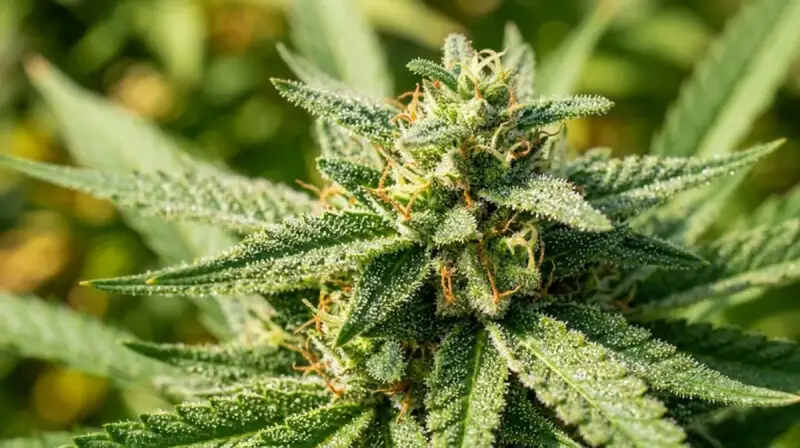
- Question 4 (November 2016): Massachusetts was the first East Coast state to vote for recreational cannabis legalization. The Cannabis Control Commission (CCC) was created to regulate the market. Retail sales launched November 2018.
- Possession: Adults 21+ may possess 1 oz in public and up to 10 oz at home. The 10 oz home storage allowance is significantly more permissive than many other legal states.
- Home grow: Adults 21+ may grow up to 6 plants per person; household maximum of 12 plants (regardless of number of adults). Plants must be secured and not visible to the public.
- 400+ dispensaries: CCC-licensed statewide. Boston/Cambridge cluster is one of the densest in the Northeast. Home delivery is legal and expanding statewide.
- Tax rate 17–20%: 10.75% state excise + 6.25% state sales tax + up to 3% local = 17–20% effective. Among the more competitive rates in the US, helping the legal market capture consumers.
- Social equity: CCC prioritizes economic empowerment applicants from impacted communities. A significant share of new dispensary openings are social equity licensees.
- Metrc seed-to-sale tracking: CCC uses Metrc to track all cannabis from cultivation through retail sale, ensuring product traceability and compliance.
- Barbuto ruling (2017): Massachusetts Supreme Judicial Court held that registered medical patients fired solely for off-duty cannabis use may have a disability discrimination claim. Landmark employment protection case.
Quick Legal Reference — Massachusetts
| Category | Rule / Limit |
|---|---|
| Recreational legal since | Question 4: November 2016; retail sales November 2018 |
| Medical legal since | Question 3: November 2012 (operational 2013) |
| Regulatory body | Cannabis Control Commission (CCC) — mass-cannabis-control.com |
| Public possession — flower | 1 oz (28.35 g) |
| Home possession — flower | Up to 10 oz |
| Home cultivation | 6 plants per adult; 12 plants per household max; locked, not visible |
| Concentrate purchase/possession | Determined by retail product limits; CCC regulations apply |
| Minimum purchase age | 21+ recreational; registered patient any age with physician certification |
| State cannabis excise tax | 10.75% |
| State sales tax | 6.25% |
| Local cannabis option tax | Up to 3% (municipalities hosting dispensaries) |
| Combined effective rate | 17% state + up to 3% local = 17–20% |
| Medical cannabis | Exempt from excise tax (sales tax only) |
| Public consumption | Prohibited; same locations as tobacco smoking bans; fines apply |
| Home delivery | Legal from licensed CCC retailers; expanding availability |
| Seed-to-sale tracking | Metrc system (CCC mandate) |
| DUI standard | Impairment-based; no per se THC blood limit |
| Employment — medical patients | Barbuto v. Advantage Sales (SJC 2017): potential disability discrimination claim if fired for off-duty use |
| Licensed dispensaries statewide | 400+ |
Massachusetts Cannabis History: Question 4 to the CCC
Massachusetts has a longer cannabis history than most East Coast states. Possession of under 1 ounce was decriminalized in 2008 (Question 2), and medical cannabis was approved by voters in November 2012 (Question 3), becoming operational in 2013.
Question 4 passed in November 2016 with 53.7% of the vote, making Massachusetts the first East Coast state to legalize recreational cannabis. The Massachusetts legislature spent considerable time developing the CCC framework before retail sales launched in November 2018.
The Cannabis Control Commission (CCC) is a three-member independent commission that operates outside the executive branch. Its mandate explicitly includes social equity, public health, and consumer safety alongside market oversight. Massachusetts was one of the first states to establish explicit economic empowerment applicant priority licensing pathways.
Massachusetts benefited early from being the first legal East Coast retail market. Consumers from neighboring states — especially New Hampshire (no legal market until 2024), Rhode Island, Connecticut, and Vermont — drove significant cross-border purchasing, particularly in the early years. The Springfield/Northampton area in western Massachusetts was an early hotspot for cross-state customers.
Possession and Home Cultivation
| Category | Recreational (21+) | Medical Patient |
|---|---|---|
| Public possession — flower | 1 oz (28.35 g) | 60-day supply per physician certification |
| Home possession — flower | Up to 10 oz | Per physician certification; typically more permissive |
| Home cultivation | 6 plants per adult; 12 plants per household max | 6 plants per patient (or per physician recommendation) |
| Cultivation requirements | Locked, secure; not visible from public or neighboring property | Same |
| Penalty — 1–2 oz excess in public | $100 civil infraction | N/A |
| Penalty — 2 oz+ in public | Criminal offense (misdemeanor or felony depending on quantity) | N/A |
| Gifting between adults | Up to 1 oz without compensation | N/A |
Massachusetts’s 10 oz home possession limit is notably generous — significantly above the 1 oz public limit and more permissive than California (no ceiling for harvest) but with an explicit 10 oz stored-purchase ceiling. The 12-plant-per-household cap applies even if four or five adults share a home; roommates cannot multiply individual allowances. Tenants should always check lease agreements.
Dispensaries and the Boston–Cambridge Cluster
Massachusetts has over 400 CCC-licensed dispensaries as of 2026, with significant concentration in the Boston metropolitan area, particularly Cambridge, Somerville, Brookline, and nearby cities. Western Massachusetts (Springfield, Northampton, Holyoke) and the South Shore are also significant retail areas.
| Feature | Details |
|---|---|
| Minimum age | 21+ recreational; registered patient any age with physician certification |
| Purchase limit | 1 oz flower or equivalent per transaction |
| Operating hours | Varies by local permit; typically 8 am–9 pm or 10 am–10 pm |
| Home delivery | Legal from licensed CCC retailers; expanding statewide availability |
| Social equity priority | CCC Economic Empowerment applicants receive priority licensing; growing share of new openings |
| Seed-to-sale tracking | Metrc system tracks all cannabis from cultivation through retail sale |
| License verification | CCC public license lookup at mass-cannabis-control.com |
Cambridge has one of the highest dispensary-per-capita ratios in the Northeast. Many Massachusetts dispensaries are dual-license (adult-use + medical) operations; some remain medical-only. Home delivery has expanded significantly, with statewide availability from multiple licensed delivery operators.
Tax Structure
| Tax Type | Rate | Notes |
|---|---|---|
| State cannabis excise tax | 10.75% | Adult-use only; medical cannabis exempt |
| State sales tax | 6.25% | Standard Massachusetts sales tax |
| Local cannabis option tax | Up to 3% | Municipalities hosting dispensaries may add up to 3% |
| Combined state rate | 17% | Excise + sales (before local add-on) |
| Maximum combined rate | ~20% | With maximum local option tax |
| Medical cannabis | Sales tax only (no excise) | Significant advantage for registered patients |
Massachusetts’s 17–20% combined tax rate is among the more competitive in the US compared to California (30–45%) and Washington (37%). This has helped the legal market capture a larger share of consumer spending. Cannabis excise tax revenue is distributed to hosting municipalities, the Cannabis Social Equity Trust Fund, and the state general fund.
Employment Rights: The Barbuto Ruling
Massachusetts has some of the most notable cannabis employment case law in the US. In Barbuto v. Advantage Sales and Marketing (Massachusetts Supreme Judicial Court, 2017), the SJC held that registered medical cannabis patients may have a disability discrimination claim under Massachusetts anti-discrimination law if fired solely because of off-duty cannabis use that caused a positive drug test.
The Barbuto ruling was landmark: it established that the state’s disability discrimination protections can extend to medical cannabis patients, creating a private right of action. This does not mean employers can never test or act on cannabis use — they can still enforce impairment-at-work standards and test for reasonable suspicion. But terminating a registered medical patient solely for a positive drug test from off-duty use may give rise to legal liability.
For adult-use recreational consumers without medical patient status, Massachusetts employment protections are more limited under current law. Employers may maintain drug-free workplace policies and act on positive tests. Safety-sensitive, federally regulated, and federal contractor roles have no protection under any state cannabis law.
Expungement and Social Equity
Massachusetts created an expedited expungement process for records involving conduct no longer criminal under current cannabis law. Individuals may petition for expungement of eligible cannabis convictions — for amounts now legal (up to 1 oz), without a mandatory waiting period. The Committee for Public Counsel Services and legal aid organizations provide free assistance for eligible petitioners.
The CCC’s Economic Empowerment (EE) priority licensing program provides priority application processing, fee reductions, and technical assistance for applicants from communities disproportionately affected by past cannabis enforcement. EE applicants have accounted for a growing share of new dispensary licenses in Massachusetts.
DUI and Public Consumption
Massachusetts does not have a statutory per se blood THC limit for cannabis OUI (Operating Under the Influence). Cannabis OUI is prosecuted under the same statute as alcohol OUI (MGL c.90 §24) using an impairment-based standard. Law enforcement uses standardized field sobriety tests, DRE evaluation, and blood tests (with consent or warrant).
The 5 ng/mL threshold has been discussed in Massachusetts courts as a benchmark but is not a statutory bright-line rule. OUI penalties: first offense up to 2.5 years jail, $500–$5,000 fine, 1-year license loss, mandatory driver alcohol education.
Public consumption: Cannabis consumption is prohibited in any area where tobacco smoking is prohibited under the Massachusetts Clean Air Act and related laws. This includes all indoor public spaces, workplaces, restaurants, and most outdoor public areas. No on-site consumption at dispensaries is broadly available (CCC working on regulations).
Massachusetts Cannabis for Tourists
| Topic | What Visitors Need to Know |
|---|---|
| Purchasing | Any valid government-issued ID showing 21+; no Massachusetts ID required |
| Boston dispensaries | Cambridge, Somerville, Brookline: one of the densest dispensary clusters in the Northeast |
| Hotels | Most prohibit smoking; vaporizers/edibles at guest’s discretion in private rooms; always confirm with property |
| Logan International Airport | Federal property; cannabis prohibited regardless of Massachusetts law |
| Interstate transport | Federal offense; do not drive cannabis to New Hampshire, Rhode Island, Connecticut, New York, or Vermont |
| Cape Cod / Martha’s Vineyard | Licensed dispensaries on Cape Cod; Martha’s Vineyard and Nantucket have had limited retail due to local approvals |
| Home delivery | Available statewide from licensed retailers — useful for visitors in areas without nearby storefronts |
Watch: Cannabis Laws Overview
Related State Guides
- California Cannabis Laws →
- Colorado Cannabis Laws →
- New York Cannabis Laws →
- Nevada Cannabis Laws →
- Florida Cannabis Laws →
- Washington Cannabis Laws →
View All 50 US State Cannabis Laws → | Legalization by State Overview →
How Long Does Weed Stay in Your System? → | Cannabis Effects Guide →