










- Quality seeds: 80–95% germination rate; old or damaged seeds significantly lower
- Feminized seeds are 99%+ female, eliminating male plant removal
- Autoflowers complete seed to harvest in 60–90 days without light-schedule changes
- CBD seeds contain hemp genetics producing <0.3% THC
- Seeds legal in many countries where cannabis plants are restricted
The Four Main Cannabis Seed Types
All cannabis seeds fall into one of four categories based on their genetics and the hormonal manipulation used during production. Understanding the differences will determine your grow timeline, yield potential, and how much attention the plants require.
Regular Seeds
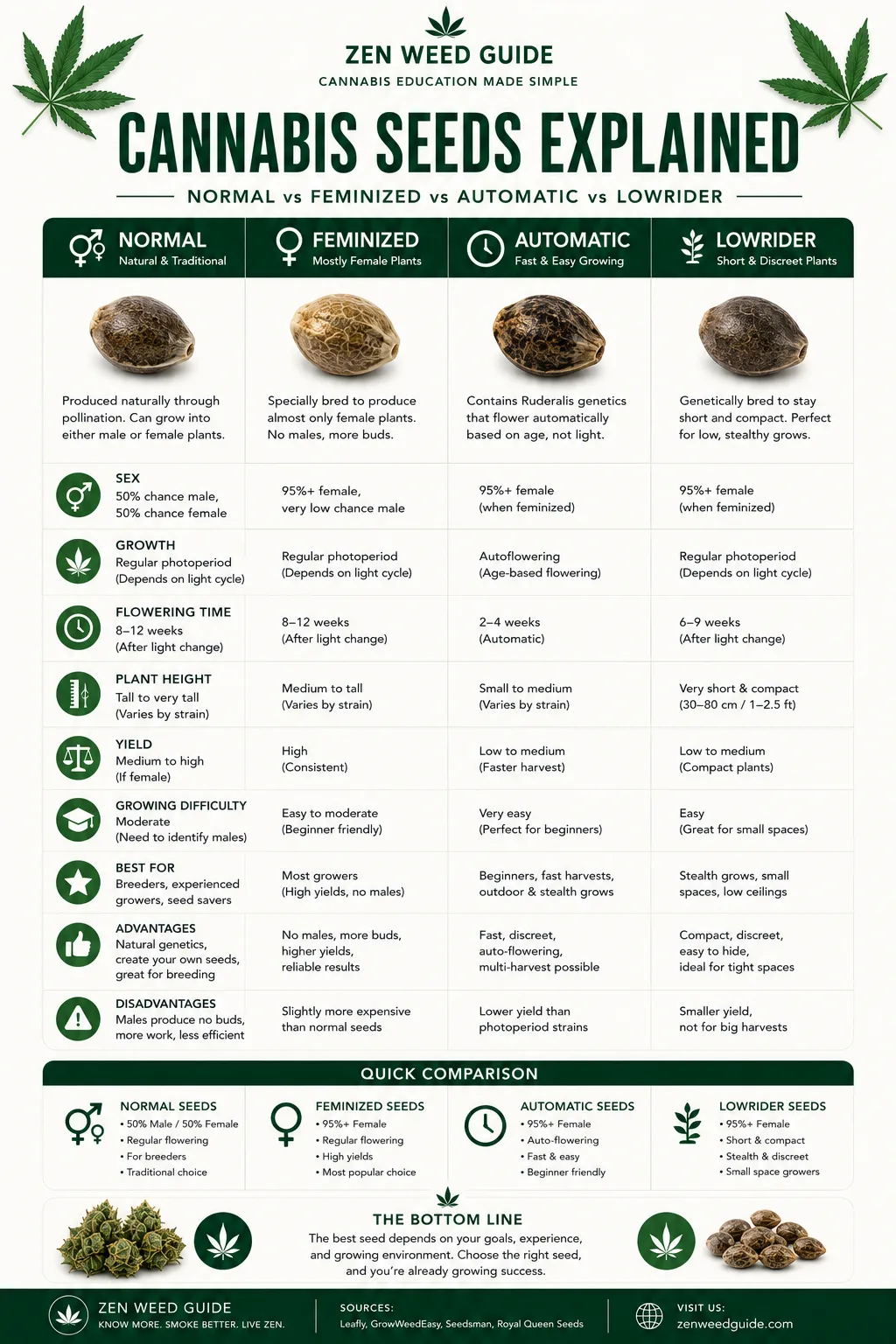
Regular seeds are produced by pollinating a female cannabis plant with male pollen. The result is approximately 50% male and 50% female offspring. Males produce pollen sacs instead of buds and must be identified and removed before they pollinate female plants. Regular seeds are preferred by breeders who want to maintain genetic diversity or create new strains. For harvest-focused growers, the need to sex and cull plants makes regular seeds less efficient.
Feminized Seeds
Feminized seeds are produced by forcing a female plant to produce pollen — typically by applying colloidal silver to block ethylene production, which induces male flower development on an otherwise female plant. Because both parents carry only female genetics (XX chromosomes), the resulting seeds are 99%+ female. This means nearly every plant grown from feminized seed will produce buds. Feminized seeds are the most popular choice for home growers.
Autoflowering Seeds
Autoflowering strains carry genetics from Cannabis ruderalis, a subspecies native to Central Asia and Eastern Europe that evolved to flower based on age rather than light cycle. Autoflowers do not require a change from 18/6 to 12/12 light schedule to trigger flowering — they begin flowering automatically after 3 to 4 weeks of growth. Most autoflowers complete the full seed-to-harvest cycle in 60 to 90 days. Yields are typically lower than photoperiod plants, but the speed and simplicity make them ideal for beginners and multiple annual outdoor harvests.
CBD Seeds (Hemp Genetics)
CBD seeds are bred from hemp varieties selected for high cannabidiol content and legally compliant THC levels (below 0.3% in most jurisdictions). These seeds produce plants that are rich in CBD, CBG, or other non-psychoactive cannabinoids and are used for medical, wellness, and industrial hemp production. CBD strains are generally easier to grow legally in countries with restricted cannabis laws.
Seed Type Comparison Table
| Seed Type | Sex Ratio | Light Requirement | Time to Harvest | Difficulty | Best For |
|---|---|---|---|---|---|
| Regular | ~50% female | Photoperiod (12/12) | 14–20 weeks | Advanced | Breeders, genetics |
| Feminized | 99%+ female | Photoperiod (12/12) | 14–20 weeks | Intermediate | Home growers, yield focus |
| Autoflowering | 99%+ female | Any (18/6 optimal) | 8–11 weeks | Beginner | Speed, outdoor, beginners |
| CBD / Hemp | Varies | Photoperiod or auto | 14–18 weeks | Beginner–Intermediate | CBD production, legal grows |
Germination Methods
Three germination methods are widely used, each with different success rates and requirements:
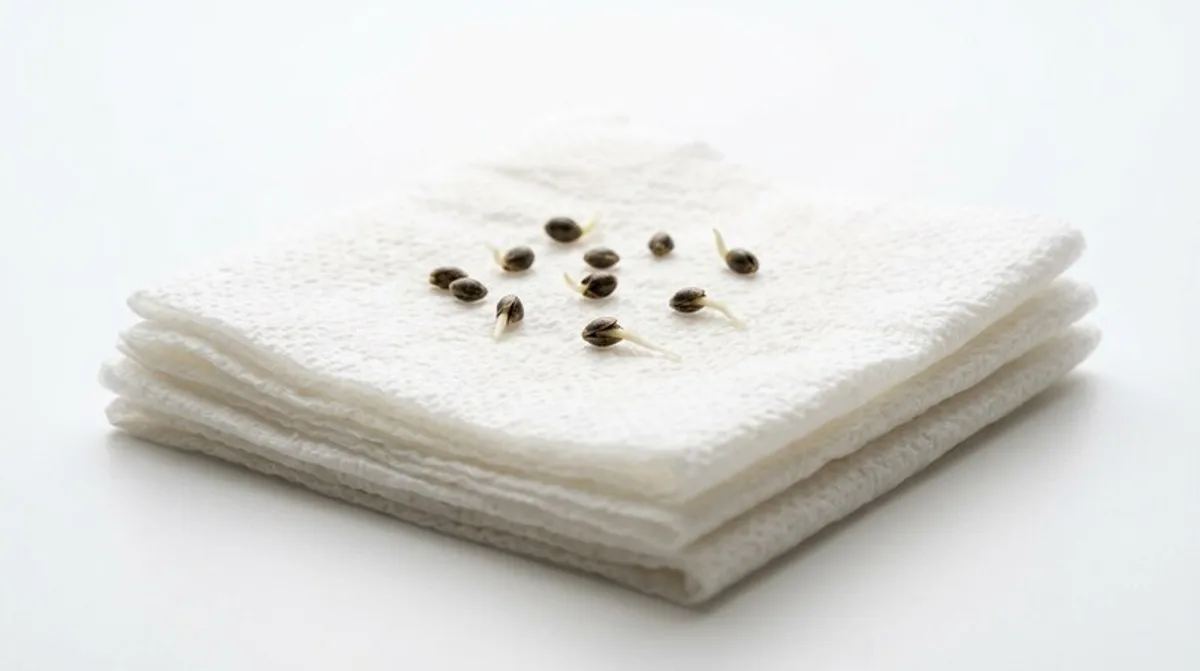
- Paper towel method: Place seeds between two damp paper towels on a plate, cover, and keep at 21–25°C. Taproots emerge in 24–120 hours. Transfer to soil as soon as the taproot reaches 0.5–1 cm.
- Direct soil germination: Place the seed 0.5–1 cm deep in moist, lightly fertilised seedling soil. Keep moist and warm. Less risk of transplant shock but slower and less visible progress.
- Water glass method: Soak seeds in a glass of water at room temperature for 12–24 hours until they sink and show a white taproot. Transfer immediately to soil or medium.
Germination rates for quality seeds from reputable breeders range from 80–95%. Old seeds (3+ years), improperly stored seeds, or visually poor seeds may germinate at 40–60% or lower.
Identifying Quality Seeds
Visual and tactile assessment gives a reliable pre-germination quality check. Quality seeds are dark brown or grey with tiger-stripe or mottled patterning on the shell. They feel firm under gentle pressure and appear plump and full rather than flat. Poor seeds are pale green or white (immature), soft when pressed (empty or degraded), or visibly cracked. A float test provides additional guidance: place seeds in room-temperature water and check after 1–2 hours. Seeds that sink are denser and typically more viable; seeds that float may be hollow or low quality, though this is not definitive.
Seed Storage
Correct storage extends seed viability from months to several years. The key variables are temperature, light, and humidity. Store seeds in an airtight container — a small mason jar with a sealed lid works well. Add a silica gel desiccant packet to keep relative humidity at 8–10%. Place the container in a refrigerator set to 4–8°C. Avoid freezing (damages seed cells) and avoid repeated temperature fluctuations from opening and closing frequently. Label containers with strain name and acquisition date. Properly stored seeds remain viable for 2–5 years.
Legal Status of Cannabis Seeds
Cannabis seeds occupy a distinct legal category in many jurisdictions. In the United Kingdom, seeds are not classified as a controlled substance and can be purchased legally as collector items, even though growing cannabis plants remains illegal. In Canada, federally legal cannabis laws permit licensed retailers to sell seeds openly. The Netherlands has long been a major seed export market. In the United States, seed legality depends on state law — seeds are legal in all states with adult-use programmes. Always verify the specific laws of your jurisdiction before purchasing or importing seeds, as rules vary significantly.
Frequently Asked Questions
Regular seeds produce approximately 50% male and 50% female plants. Feminized seeds are treated with colloidal silver to produce pollen from female plants, yielding seeds that are 99%+ female — eliminating the need to identify and remove males during the grow.
No. Autoflowering strains carry Ruderalis genetics and flower based on age rather than photoperiod. They complete seed to harvest in 60–90 days regardless of light schedule.
Quality seeds are dark brown or grey with tiger-stripe patterning, firm to gentle pressure, and plump. Pale, soft, or cracked seeds are typically poor quality. Seeds that sink in water after 1–2 hours tend to be more viable.
Store seeds in an airtight container with a silica gel desiccant in a refrigerator at 4–8°C. Properly stored seeds remain viable for 2–5 years. Avoid temperature fluctuations, light, and humidity above 10%.
In many countries, seeds are sold legally as novelty or collector items even where growing is restricted. The UK, Netherlands, and Canada are major seed markets. Always verify current laws in your specific jurisdiction.
Related Guides
Ann Karim
Cannabis educator and science writer at ZenWeedGuide. Specialises in translating peer-reviewed cannabis research into accessible consumer guidance.