How to Read a Cannabis Dispensary Menu: Products, Categories & Terminology
Dispensary menus are dense with abbreviations, percentages, and category labels that mean almost nothing without context. This guide decodes every section — flower tiers, concentrate types, edible dosing, and how to use COA data at point of sale.
7 Key Findings
Cannabis dispensary menus organize products into standardized categories: flower, pre-rolls, vapes, concentrates, edibles, tinctures, topicals, and accessories — each with distinct purchasing considerations
THC % on flower menus represents total potential THC (THCA × 0.877 + THC) — a 25% label means approximately 25mg per 0.1g serving, but actual absorption is 2–40% depending on consumption method
“Top shelf,” “mid shelf,” and “bottom shelf” are informal potency/quality tiers — most dispensaries now use “premium,” “house,” and “value” or similar branding, with price differentials of $5–25/eighth
Indica/sativa/hybrid labels on menus are marketing conventions — genetic research shows these terms are not reliable predictors of effects; terpene profiles on the COA are a better guide
“Live” in product names (live resin, live rosin, live resin cartridge) means the product was made from fresh-frozen cannabis, preserving terpenes that degrade during conventional drying
Edible doses are standardized at 10mg per serving in most states — products show total milligrams and servings per package, but actual effects vary dramatically by individual tolerance and metabolism
Pre-roll menus require scrutiny: “infused pre-rolls” contain concentrates (kief, distillate, shatter) and deliver significantly more THC than standard pre-rolls — often $15–35 vs. $5–10 for standard
Dispensary Product Categories: Complete Overview
Every licensed cannabis dispensary in the United States organizes its menu around a consistent set of product categories. Understanding what each category means — and what distinguishes good products from bad within each — is the foundation of confident dispensary shopping.
Dispensary Product Categories at a Glance
Category
Subcategories
THC Delivery
Price Range
Beginner-Friendly
Flower
Premium, house, value, smalls, shake
Inhaled, 15–35% bioavailability
$8–20/g, $25–60/8th
Yes (with low-THC options)
Pre-Rolls
Standard, infused, multi-pack
Inhaled, same as flower
$5–10 standard, $15–35 infused
Caution (infused are very strong)
Vapes
510-thread, pod, disposable
Inhaled, 20–40% bioavailability
$25–55/0.5g, $45–80/1g
Moderate (easy to overconsume)
Concentrates
Wax, shatter, badder, rosin, resin, diamonds
Inhaled (dabbed), 40–75% bioavailability
$25–80/g
No (for experienced users)
Edibles
Gummies, chocolates, drinks, fast-acting
Oral, 4–20% bioavailability
$12–30/100mg pack
Yes (start with 5mg)
Tinctures
Sublingual oil, RSO, FECO
Sublingual, 20–35% bioavailability
$30–60/30mL
Yes (precise dosing)
Topicals
Balm, lotion, transdermal patch
Topical (non-psychoactive except transdermal)
$20–60
Yes (no high)
Understanding Flower Menus
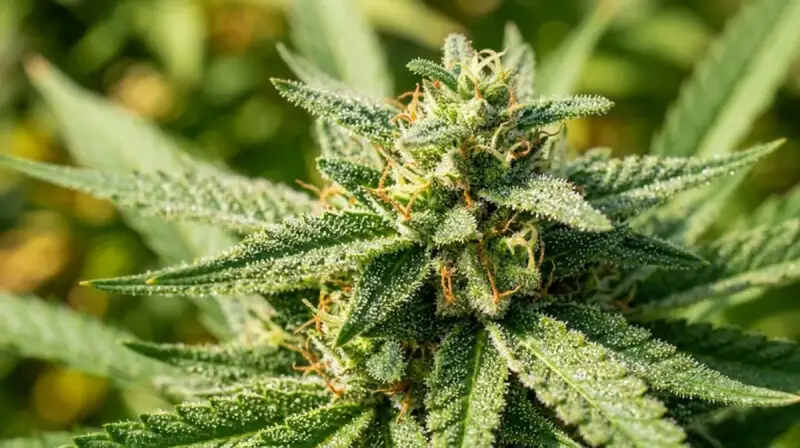
Flower menus are typically the most complex section of a dispensary menu, because they carry the most data per product. A well-presented flower listing should include: strain name, genetic type label (indica/sativa/hybrid), THC%, CBD%, terpene profile (often top 3 by %), price per size, and a batch or harvest date.
Reading THC and THCA labels: Raw flower contains primarily THCA — the non-psychoactive acid form of THC. When heated (smoked, vaped, or decarboxylated for edibles), THCA converts to THC at approximately 87.7% efficiency. So a flower labeled "30% THCA, 1% THC" has a total potential THC of (0.30 × 0.877) + 0.01 = 27.3%. Total THC is the number that matters for potency comparison. Some menus list THCA and delta-9 THC separately; others display only "Total THC" as the converted figure.
Price tiers by size:
Gram (1g): $8–20 — useful for trying a new strain
Eighth (3.5g): $25–60 — most common purchase unit, best price-per-gram balance
Quarter (7g): $45–90 — 10–20% per-gram discount vs. eighth
Ounce (28g): $100–240 — maximum legal single-purchase in most states; best value
Quality tiers: Most dispensaries use "premium" (small-batch, craft, top terpene expression), "house" (consistent, well-priced, reliable), and "value" (trim, shake, older stock, mechanically trimmed). Premium commands 30–60% price premiums over value for reasons that include bag appeal, cure quality, and terpene preservation — not necessarily THC% alone.
Harvest and package dates matter more than most consumers realize. Cannabis terpenes degrade rapidly after harvest — limonene and myrcene are particularly volatile. Flower packaged more than 6 months ago has lost significant aroma complexity regardless of THC%. Ask your budtender for the pack date, or look for it on the label. Some dispensaries post harvest date; most post at minimum the packaging date.
Concentrate and Vape Menus
Concentrates are the most diverse and confusing section of any dispensary menu. Product names describe extraction method, consistency, and source material — all at once. The key distinction that runs across all concentrate terminology is whether the product is solvent-based (made with butane, CO², or ethanol) or solventless (made with heat, pressure, ice, and water only).
Concentrate Types: Extraction Method and Characteristics
Product
Extraction
THC Range
Terpene Quality
Price/g
Shatter
BHO (butane)
70–90%
Low (most terpenes removed)
$25–40
Badder / Wax
BHO, whipped
65–85%
Moderate
$30–50
Live Resin
BHO from fresh-frozen
65–85%
Very high (preserved terps)
$40–65
Rosin
Solventless (heat + pressure)
55–75%
High (no solvent stripping)
$50–80
Live Rosin
Solventless from fresh-frozen
55–75%
Highest (premium product)
$60–100
Distillate
Wiped film distillation
85–99%
None (terpenes added back)
$20–35 (cartridge fill)
Vape cartridges: The cannabis vape market is dominated by 510-thread cartridges that fit a standard battery. The key distinction is whether the oil is distillate (highly refined, highest THC%, terpenes reintroduced) or live resin/rosin (full-spectrum, lower THC%, superior flavor and effect complexity). Distillate cartridges are cheaper and more potent by percentage; live resin/rosin cartridges offer a richer experience at a premium.
Hardware quality matters enormously for vapes. Cheap ceramic coils burn oil unevenly and may produce harmful byproducts. Look for CCELL hardware (ceramic cell technology) — the industry standard for even heating. Dispensary-branded cartridges often use CCELL; unbranded carts from unlicensed markets frequently do not.
Edible and Tincture Menus
Edibles are the most unpredictable cannabis product category and the most commonly misused by new consumers. The core issue is that oral cannabis undergoes first-pass liver metabolism — THC is converted to 11-hydroxy-THC, a metabolite that crosses the blood-brain barrier more efficiently than THC itself and produces effects that are stronger, longer-lasting, and often more physically sedating than inhaled cannabis.
Standard dosing in regulated markets:
Microdose: 1–2.5mg THC per serving — threshold effects, functional, suitable for beginners
Low dose: 2.5–5mg THC — mild effects, recommended starting dose for new users
Standard dose: 10mg THC — the legal serving unit in most US states; moderate intoxication
High dose: 20–50mg THC — strong effects; for experienced users with tolerance
Very high dose: 50mg+ THC — medical/heavy-tolerance users only
The most important rule with edibles: wait. Oral onset ranges from 30 minutes to 2 hours depending on metabolism, body weight, and whether you’ve eaten recently. The most common adverse edible experience occurs when a new user takes 10mg, feels nothing after 45 minutes, takes another 10mg, and then both doses hit simultaneously 90 minutes later. Start at 5mg, wait 2 full hours before considering additional dosing.
Fast-acting edibles use nanoemulsion technology to improve onset speed to 10–20 minutes. Nanoemulsion breaks oil droplets into nanoparticles (10–100nm) that absorb directly through mucous membranes rather than requiring digestion. Products labeled “fast-acting,” “nano,” or “quick onset” typically use this technology. Effects are also shorter-duration (2–3 hours vs. 4–8 hours for conventional edibles) and more predictable dose-to-effect.
Tinctures: Cannabis tinctures are alcohol- or MCT oil-based extracts intended for sublingual absorption. Held under the tongue for 60–90 seconds, onset is 15–30 minutes with moderate bioavailability (20–35%). Tinctures are the most dose-precise option: a 1mL dropper from a 30mL/300mg bottle delivers exactly 10mg per mL. RSO (Rick Simpson Oil) and FECO (Full Extract Cannabis Oil) are high-potency whole-plant concentrates also found in the tincture section, with doses measured in fractions of a syringe gram rather than milliliters.
Reading COA Data at Point of Sale
Every licensed cannabis product in a regulated US market must carry a COA (Certificate of Analysis) from an independent, ISO-accredited testing laboratory. The COA is the objective record of what a product actually contains. Knowledgeable consumers ask to see the COA before purchasing, especially for concentrates, edibles, and vapes where quality signals are less apparent than with flower.
How to request a COA: Most dispensaries have COAs on file by batch number. You can ask the budtender: “Can I see the COA for this batch?” Increasingly, dispensaries use QR codes on product labels that link directly to the lab report. Some point-of-sale software displays COA data in-menu.
What to look for on a COA:
Cannabinoid panel: THC%, THCA%, CBD%, CBG%, CBC% — verify that total THC matches menu claim within 10% tolerance (most states allow ±10–15% variance)
Terpene profile: Top terpenes by percentage. Myrcene, limonene, caryophyllene, linalool, pinene are the most common. A product with 2%+ total terpenes is typically high-quality flower
Pesticide panel: Pass/fail for regulated pesticides (California tests 66 compounds; Colorado tests 25). A single fail means the batch is non-compliant and should not be on the shelf
Heavy metals: Pass/fail for arsenic, cadmium, lead, mercury. Especially important for concentrates (which concentrate contaminants along with cannabinoids)
Residual solvents: Relevant for solvent-extracted concentrates (BHO, CO²). Pass/fail or ppm levels for butane, propane, ethanol, etc.
Batch number: Verify the batch number on the label matches the COA. This confirms the report is for your specific product lot, not a different batch used for documentation purposes
Price Guide and Value Assessment
Price per milligram of THC is the most objective way to compare value across product categories. A gram of 25% flower contains 250mg potential THC. If it costs $15, you’re paying $0.06/mg. A 1g live rosin at $75 with 65% THC contains 650mg — $0.12/mg. The flower is better value per THC milligram; the rosin may be preferred for terpene quality and experience despite the cost premium.
Price Per Milligram THC Comparison by Product Type
Product
Typical Price
Typical THC
Total THC mg
Price/mg THC
Value flower (3.5g)
$25
20%
700mg
$0.036
Premium flower (3.5g)
$50
28%
980mg
$0.051
Distillate cart (1g)
$45
85%
850mg
$0.053
Distillate shatter (1g)
$30
80%
800mg
$0.038
Gummies (100mg/pack)
$20
100mg total
100mg
$0.20
Flower oz (28g)
$150
22%
6,160mg
$0.024
The data above illustrates why experienced consumers often buy ounces: the per-mg THC cost of a bulk ounce purchase is typically 30–40% lower than an eighth of the same strain. Edibles are consistently the most expensive THC delivery method on a per-milligram basis — you’re paying for manufacturing, packaging, and regulatory compliance in addition to the cannabinoid content.
Loyalty programs and memberships are offered by most multi-location dispensary chains. Points systems typically return 2–5% of spend as store credit. First-time customer discounts (20–25%) are nearly universal. Medical card holders receive tax exemptions in most recreational states, reducing the effective price by 15–30% depending on state tax rates.
Frequently Asked Questions
What do indica, sativa, and hybrid mean on a dispensary menu?
Indica, sativa, and hybrid are marketing categories, not scientific classifications. Genetic research shows most commercial cannabis is genetically mixed regardless of labeling. Terpene profiles on the COA are a more accurate predictor of effects. The categories persist because consumers are familiar with them, not because they are scientifically meaningful.
What is the difference between live resin and regular concentrate?
Live resin is made from fresh-frozen cannabis — plants are frozen immediately after harvest instead of being dried and cured. This preserves volatile terpenes that degrade during conventional drying, producing a concentrate with a more complex, plant-accurate terpene profile. Live resin commands a 30–60% price premium over standard concentrates.
How many milligrams are in an edible?
Most US states standardize edible serving sizes at 10mg THC per serving. A standard 100mg edible package contains 10 servings. Products range from microdose (2.5mg per serving) to high-potency (25–100mg per piece). Always check total milligrams per package AND milligrams per serving — they are different numbers.
What does total THC mean on a menu?
Total THC represents potential THC after decarboxylation, calculated as THC + (THCA × 0.877). A product labeled 25% total THC means approximately 250mg of potential THC per gram. Actual THC absorbed depends on consumption method: smoking/vaping delivers 15–35% bioavailability; edibles deliver 4–20% but with stronger, longer effects.
Cannabis consumer guide writer and dispensary industry analyst. Covers product categories, pricing dynamics, and regulatory compliance across US licensed markets.
Reviewed by our editorial team — cannabis researchers, policy analysts, and medical writers with expertise across clinical research, dispensary operations, and US cannabis law. Content is fact-checked and updated regularly.