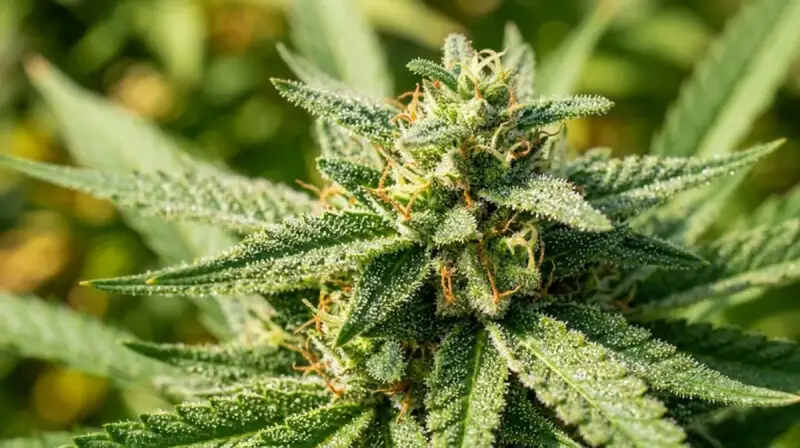
Lab-tested THC percentages for the top 15 most potent strains available, plus the science behind why raw THC numbers don’t tell the whole story about potency, quality, or experience.
Key Facts at a Glance
Highest lab-tested commercial THC: Godfather OG at 34–35%
Most consistently high-THC strains cluster at 25–30% THC
THC percentage alone does NOT predict subjective potency
HPLC testing is the gold standard; GC testing destroys THCA and underreports
Lab-to-lab variance can be 5–10 percentage points on identical samples
New users should avoid strains above 15% THC
Understanding THC Percentages
The THC percentage on a cannabis label refers to the total available THC in the flower — primarily expressed as THCA (tetrahydrocannabinolic acid) which converts to psychoactive THC when heated (decarboxylation). The formula used is: Total THC = (THCA × 0.877) + delta-9-THC. This means a flower labeled 25% THCA with minimal delta-9 will yield approximately 21.9% psychoactive THC when smoked or vaporized.
Because testing methodology varies significantly between labs — and because sampling a single bud from a plant doesn’t represent the average of the entire batch — THC percentages should be treated as estimates rather than precise measurements. Independent studies comparing identical samples across multiple licensed labs have found variance of up to 10 percentage points on the same material.
This is the most important concept to understand when evaluating potent cannabis. A landmark study from researchers at the University of Colorado found that flower and concentrate users who consumed higher-THC products did not report significantly greater intoxication or pleasure than those consuming lower-THC products. However, they did perform worse on short-term memory tests, suggesting cognitive impairment increased without a corresponding improvement in subjective experience.
The explanation lies in the entourage effect: the complex interplay between cannabinoids, terpenes, and flavonoids in whole-plant cannabis. Myrcene enhances membrane permeability, facilitating THC uptake. Limonene contributes anti-anxiety properties that make a high feel more manageable. Linalool adds a floral calming quality. Beta-caryophyllene activates CB2 receptors, contributing anti-inflammatory effects. When these compounds work together at a slightly lower THC percentage, the resulting experience can be richer, more enjoyable, and better tolerated than isolated high-THC flower.
The Role of Terpenes in Perceived Potency
Myrcene is the most common terpene in cannabis and has a well-documented synergistic relationship with THC. By increasing blood-brain barrier permeability, myrcene amplifies the speed of THC onset and the depth of sedation. Strains high in myrcene (Granddaddy Purple, OG Kush, Blue Dream) often feel subjectively stronger than their THC percentage alone would suggest.
Limonene — dominant in many citrus-forward strains — modulates dopamine and serotonin systems, contributing to mood elevation and reducing THC-induced anxiety. This makes high-limonene, high-THC strains like Super Lemon Haze feel manageable despite their potency. Strains low in anxiety-buffering terpenes can feel overwhelming at the same THC percentage.
Tolerance and High-THC Strains
For chronic users who have developed significant CB1 receptor tolerance, high-THC strains may produce effects similar to what lower-THC strains produce in occasional users. This is a key reason why tolerance management is inseparable from potency-chasing: chasing higher and higher THC percentages without periodic tolerance breaks leads to diminishing returns while increasing cost and risk.
Research from Washington State University found that regular high-THC cannabis use correlates with reduced CB1 receptor density in the striatum, cingulate cortex, and frontal regions — regions governing reward, attention, and decision-making. While receptor density largely recovers with abstinence, chronic high-THC consumption may reduce long-term sensitivity in heavy users.
How Cannabis THC Is Tested: Lab Methods Explained
Two primary methods are used for cannabis potency testing:
HPLC (High-Performance Liquid Chromatography) is the gold standard. It separates individual cannabinoids in solution without heat, preserving THCA as a distinct compound from delta-9-THC. This allows accurate calculation of total available THC after decarboxylation.
GC (Gas Chromatography) uses heat to volatilize the sample, which automatically decarboxylates THCA into THC before measurement. While accurate for total active THC, it destroys some minor cannabinoids and is less precise for the full spectrum.
Flower moisture content significantly affects results. Drier flower returns higher THC percentages simply because there is less water diluting the sample. A flower at 10% moisture testing at 22% THC might test at 25% at 6% moisture — without any actual difference in cannabinoid content.
Safety Warnings for High-THC Strains
Never give high-THC cannabis to anyone who has not explicitly consented and confirmed their tolerance level.
Cannabis-naive users should avoid all strains above 15% THC until they have established their baseline sensitivity.
High-THC strains significantly increase the risk of acute cannabinoid intoxication (greening out) in new or returning users.
Those with personal or family history of psychosis, schizophrenia, or bipolar disorder should avoid high-THC products entirely.
High-THC strains may have stronger impairment effects on driving; allow at minimum 4–6 hours before any motor vehicle operation.
Mixing high-THC cannabis with alcohol dramatically amplifies intoxication and impairment.
High THC vs High-Quality Cannabis: Key Differences
Factor
High THC % Focus
Quality-Focused Choice
Potency metric
Single cannabinoid %
Full cannabinoid + terpene panel
Experience depth
Can be one-dimensional, overwhelming
Nuanced, complex, enjoyable
Anxiety risk
Higher (without terpene buffer)
Lower (terpene-mediated)
Cultivation indicators
Often specialty indoor, trimmed tight
Aroma, color, trichome density, cure
Best for
High-tolerance users, specific medical need
Most recreational and medical users
AK
Ann Karim
Cannabis Science & Wellness Writer — ZenWeedGuide
Ann covers cannabis pharmacology, strain science, and lab testing methodology, bringing clarity to a market often driven by marketing over evidence.
Frequently Asked Questions
What is the highest THC percentage ever tested?
Lab-tested samples of Godfather OG have returned THC percentages of 34–35% in specialized cultivations. However, consistently available commercial flower typically ranges 25–30% at the highest end. Testing methodology and lab variability mean these peak numbers should be viewed with some skepticism.
Does higher THC mean a better high?
No. Research from UC Davis found no correlation between THC percentage and the subjective quality of the cannabis experience. Terpene profiles, the entourage effect, and individual tolerance play a much larger role. A complex 18% THC strain with rich myrcene and limonene content often produces a more enjoyable and multidimensional experience than a 30% THC strain lacking aromatic complexity.
How is THC percentage tested?
Commercial cannabis testing uses HPLC (high-performance liquid chromatography) to measure cannabinoid concentrations. Results are expressed as total THC, which includes both active delta-9-THC and the precursor THCA, converted using the formula: Total THC = (THCA × 0.877) + delta-9-THC. Testing accuracy varies between labs, and sampling methodology significantly impacts results.
Are high-THC strains safe for new users?
High-THC strains carry significant risk for cannabis-naive users or those with low tolerance. Doses that would be unremarkable for experienced users can cause acute anxiety, paranoia, rapid heartbeat, and overwhelming intoxication in beginners. New users should always start with strains under 15% THC and work up gradually over multiple sessions.
Share:
ZW
ZenWeedGuide Editorial
Reviewed by our editorial team — cannabis researchers, policy analysts, and medical writers with expertise across clinical research, dispensary operations, and US cannabis law. Content is fact-checked and updated regularly.