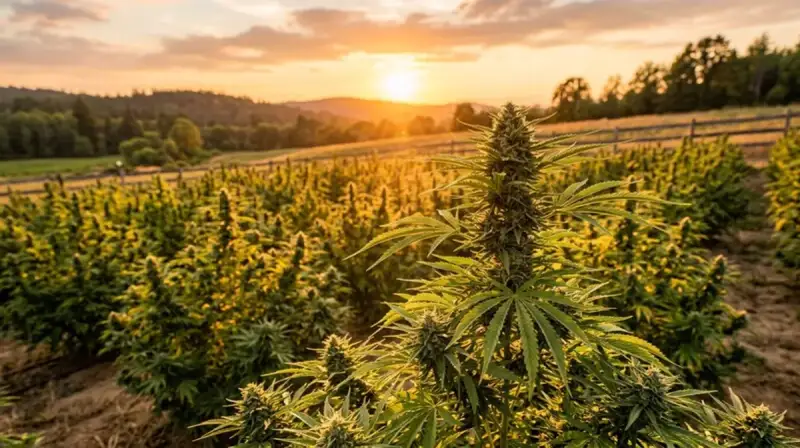
For Rastafari, ganja is not a drug — it is a sacrament, a biblical gift, a path to spiritual wisdom. This is the theology and practice behind the most widely recognised cannabis tradition in the world.
Rastafari consider cannabis a divine gift, referred to as the holy herb, wisdom weed, or healing of the nations.
The Origins of Rastafari and Cannabis Theology
The Rastafari movement emerged in Jamaica in the early 1930s among the poor Black population in response to colonial oppression and the Pan-African teachings of Marcus Garvey. Garvey had predicted that a great Black king would arise in Africa; when Haile Selassie I was crowned Emperor of Ethiopia in November 1930, Rastafari founders including Leonard Howell, Joseph Hibbert and Archibald Dunkley recognised him as the fulfillment of this prophecy and as Jah (God) in human form. The theology that developed drew on the Old Testament as a history of African people, identified Babylon as the corrupt Western colonial system, and positioned Ethiopia as the promised land.
Cannabis entered Rastafari theology as one of its defining practices, but its precise origin within the movement is debated. Some scholars credit early Indian-Jamaican integration: indentured Indian workers who brought ganja practice to Jamaica interacted with the Jamaican poor who formed the Rastafari movement’s base. Others point to biblical interpretation as the primary driver — early Rastafari elders developing the theology of cannabis as the holy herb through scriptural analysis. Leonard Howell’s community at Pinnacle in the 1940s cultivated cannabis as a crop and incorporated its use into community life. Police raids on Pinnacle in 1954 destroyed the community and scattered its members across Kingston, spreading Rastafari cannabis culture throughout Jamaica. Read the full Jamaican context in our Jamaican cannabis culture guide.
The Theology of Ganja: Biblical Interpretation
Rastafari ganja theology rests on several biblical passages interpreted as references to cannabis. Genesis 1:29 — “And God said, Behold, I have given you every herb bearing seed, which is upon the face of all the earth” — is read as divine authorisation of plant use including cannabis. Genesis 3:18 — “thou shalt eat the herb of the field” — is similarly interpreted. The most frequently cited passage is Revelation 22:2: “and the leaves of the tree were for the healing of the nations.” Rastafari interpret this tree as cannabis, and its healing leaves as the therapeutic and spiritual properties of ganja. Psalms 104:14 — “He causeth the grass to grow for the cattle, and herb for the service of man” — is understood as a direct reference to cannabis as a plant specifically designated for human spiritual use.
This biblical framework places Rastafari cannabis use in a fundamentally different conceptual category from recreational or even medical use. Ganja in Rastafari is not consumed for pleasure or treatment of symptoms but for spiritual communion. The Rastafari theologian Mortimo Planno, who mentored Bob Marley, articulated the distinction clearly: ganja opens the mind to Jah, quiets Babylon’s noise, and allows the practitioner to reason clearly about spiritual and political reality. This is why Rastafari refer to cannabis sessions as “reasoning” — the shared smoking of ganja facilitates philosophical discussion and communal spiritual exploration. The euphoria effects of cannabis that recreational users describe map onto what Rastafari call spiritual elevation. The distinction is context and intention.
Nyahbinghi: The Sacred Cannabis Ceremony
Nyahbinghi is the highest form of Rastafari worship, taking its name from an anti-colonial African resistance tradition. Nyahbinghi ceremonies occur on significant dates in the Rastafari calendar: Haile Selassie’s coronation anniversary on November 2, his birthday on July 23, Ethiopian Christmas on January 7, and Marcus Garvey’s birthday on August 17. They are hosted at tabernacles — Rastafari places of worship — and can continue for three, seven or even 21 days.
The ceremony centres on the sacred fire, around which elders lead extended drumming sessions using three drums: the bass, funde and repeater. Participants chant hymns called burrus, sing Psalms, read scripture, and engage in extended reasoning. Ganja is consumed throughout by initiated participants using a chalice (a ritual water pipe made from a coconut or gourd) or chillum (a straight-pipe stone or clay vessel). The shared cannabis sacrament is understood as the common element linking all participants in spiritual communion. The chalice is blessed before use and passed with ritual acknowledgement. Non-Rastafari are typically welcome to observe nyahbinghi but not to participate in the cannabis sacrament without proper understanding of the spiritual context.
The three drums of nyahbinghi correspond to a cosmological framework: the bass drum represents the foundation, the funde the heartbeat of Jah, and the repeater the spirit moving freely. This musical structure combines West African polyrhythmic tradition with Jamaican folk music roots and became a direct musical ancestor of reggae. Cannabis and music have been inseparable in this tradition for nearly a century. The global spread of reggae carried nyahbinghi rhythms and Rastafari ganja culture to every continent. Bob Marley’s international reach was the primary vector of this transmission.
Global Rastafari Communities and Legal Struggles
Rastafari communities now exist across the world: the United Kingdom has a significant Rastafari population particularly in cities with large Caribbean diaspora communities. The US, Canada, Ghana, Ethiopia, Brazil, New Zealand and across the Caribbean all have established communities. In each jurisdiction, Rastafari have faced legal conflicts over cannabis use as a religious sacrament. UK courts have consistently rejected religious exemption claims. US federal courts applying the Religious Freedom Restoration Act have produced inconsistent rulings. Only in Jamaica itself does explicit legal protection exist for Rastafari religious cannabis use since the 2015 amendment.
The legal argument for Rastafari cannabis exemptions faces a structural challenge: most drug laws apply universally without religious exemption clauses. The US precedent for religious exemptions to drug laws — established for Native American peyote use in specific circumstances — has not translated consistently to cannabis. European human rights law has similarly failed to produce clear Rastafari exemptions despite arguments under freedom of religion protections. The global cannabis legalisation movement offers Rastafari a potentially more durable solution: when cannabis is legally accessible to all adults, the need for a specific religious exemption becomes moot. Connect with the legal framework in our social equity and cannabis guide.
Rastafarians believe cannabis is the holy herb described in the Bible, given by Jah (God) for spiritual insight and healing. They use it during meditation and reasoning sessions and nyahbinghi ceremonies as a sacrament to achieve spiritual elevation and direct communication with Jah.
Which Bible verses do Rastafarians cite for cannabis?
Key verses cited include Genesis 1:29 (God gives seed-bearing plants), Genesis 3:18 (thou shalt eat the herb of the field), Psalms 104:14 (he causeth the grass to grow for the cattle and herb for the service of man), and Revelation 22:2 (the leaves of the tree were for the healing of nations).
What is a nyahbinghi ceremony?
Nyahbinghi is the most sacred Rastafari religious ceremony, featuring extended drumming, chanting of hymns (known as burrus), singing, prayer and communal ganja use. Ceremonies can last several days during important dates like Haile Selassie\'s coronation anniversary (November 2) and Ethiopian Christmas (January 7).
Is Rastafari use of cannabis legally protected?
Legal protection varies by jurisdiction. Jamaica\'s 2015 amendment explicitly protects Rastafari religious cannabis use. In the UK, Rastafari claims for religious exemption have been rejected by courts. In the US, the Religious Freedom Restoration Act has been used to argue for exemptions but has not produced consistent cannabis protection for Rastafari practitioners.
How did Rastafari spread globally?
Rastafari spread globally primarily through reggae music from the 1970s onward. Bob Marley\'s international fame brought Rastafari imagery, theology and ganja culture to audiences worldwide. By the 1980s, Rastafari communities existed in the UK, US, Canada, Ghana, Ethiopia and across the Caribbean diaspora.