Cannabis Legalisation Movement: From Prop 215 to Federal Reform
From a small advocacy organisation founded in 1970 to legal dispensaries across half of America, the cannabis legalisation movement is one of the most successful drug policy campaigns in history.
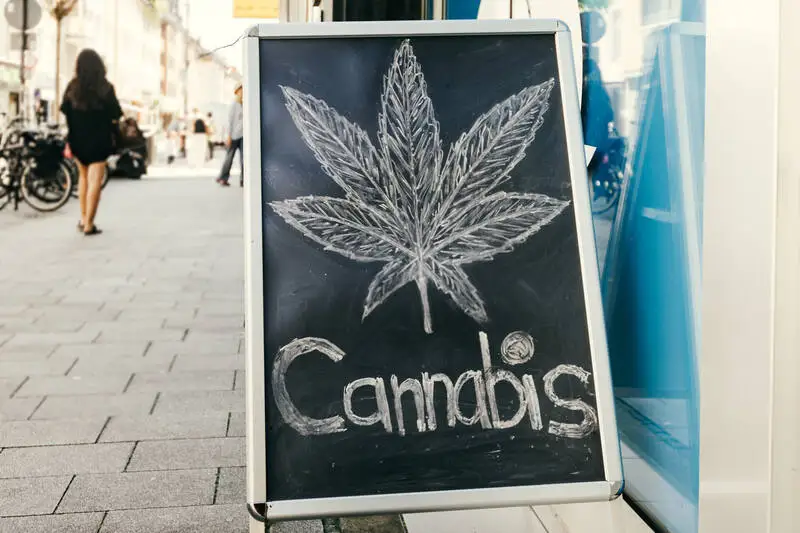
Legal dispensaries are the tangible result of 50 years of cannabis advocacy — a movement built on medical evidence, civil rights arguments and shifting public opinion.
NORML and the Foundations of Reform (1970–1995)
NORML — the National Organization for the Reform of Marijuana Laws — was founded by attorney Keith Stroup in Washington DC in 1970, the same year the Controlled Substances Act placed cannabis in Schedule I. Stroup had received a $5,000 seed grant from the Playboy Foundation. NORML’s founding mission was explicit: the organisation existed to lobby for the decriminalisation and eventual legalisation of cannabis through legal, political and educational advocacy. At its founding, this was a genuinely radical position. Gallup polling in 1969 showed only 12% of Americans supported legalisation.
NORML’s early victories were incremental. Oregon decriminalised cannabis possession in 1973 — the first state to do so. Alaska, California, Colorado, Maine, Minnesota, Mississippi, Nebraska, New York, North Carolina and Ohio followed with decriminalisation laws through the 1970s. These laws did not legalise cannabis but removed incarceration for personal possession, replacing it with civil fines. The practical effect was significant: tens of thousands fewer arrests annually and a legal signal that simple possession was not worth criminalising. California’s 1975 Moscone Act reduced possession of under an ounce to a $100 fine with no criminal record — a template other states followed. NORML’s strategy of building state-by-state reform rather than waiting for federal change was validated by these early victories and became the blueprint for all subsequent progress. Explore how Prop 215 built on this foundation in our dedicated Prop 215 guide.
Proposition 215: The Medical Cannabis Breakthrough (1996)
Proposition 215, the Compassionate Use Act, passed in California in November 1996 with 55.6% of the vote. It was the first successful medical cannabis ballot initiative in US history. The campaign was funded by a coalition including San Francisco financier Peter Lewis and Soros-funded policy organisations. The medical framing was deliberate and strategic: polling showed Americans were significantly more supportive of medical access than recreational use. Prop 215 required only a doctor’s recommendation — not a traditional prescription — to permit possession and cultivation of cannabis for patients with a broad list of qualifying conditions.
The federal government’s reaction was aggressive. The Clinton administration threatened to prosecute physicians who recommended cannabis and attempted to suppress the state law administratively. A federal court ruled that the administration could not criminalise doctors for recommending cannabis, protecting the medical access pathway. California’s dispensary network grew slowly through the late 1990s and rapidly through the 2000s. By 2010, California had over 1,000 dispensaries operating in a legal grey zone that the state government declined to fully regulate. Oregon, Washington, Alaska and Maine all passed medical cannabis initiatives within four years of Prop 215, establishing the pattern of state-level reform against federal resistance.
Colorado and Washington: Recreational Legalisation (2012)
Colorado Amendment 64 and Washington Initiative 502, both passed in November 2012, were the first recreational cannabis legalisation measures in US history. Colorado’s Amendment 64 passed with 55.3% of the vote and allowed adults over 21 to possess up to an ounce, grow up to six plants at home, and purchase from licensed retail stores. Colorado’s first retail dispensaries opened January 1, 2014 — a date celebrated annually in the cannabis industry. Tax revenue in Colorado’s first year of retail sales exceeded $70 million and was earmarked for school construction.
The Colorado and Washington experiments were watched globally as the first real-world tests of adult-use cannabis regulation within a federal prohibition framework. Both states collected substantial tax revenue, avoided predicted public health catastrophes, and demonstrated that regulated retail markets could displace significant portions of the illegal market. Oregon and Alaska joined with recreational legalisation in 2014; California, Nevada, Massachusetts and Maine in 2016. By 2024, recreational cannabis was legal in 24 states representing approximately 60% of the US population. Compare with the European approach in our Amsterdam guide and Barcelona social clubs guide.
Global Reform: Canada, Germany and the International Wave
Uruguay’s national legalisation in December 2013 under President Jose Mujica was the world’s first. Mujica, a former guerrilla fighter who served 14 years in prison under military dictatorship, framed legalisation as a public health intervention: the state would control and regulate the market to remove organised crime and protect young people. Cannabis was available only through licensed pharmacies at fixed prices and only to registered Uruguayan citizens — a model that prevented cannabis tourism while creating a functioning legal supply chain.
Canada’s Cannabis Act took effect in October 2018, creating the first G7 national legal cannabis market. Retail, online sales, licensed cultivation and processing all operated within a federal framework with provincial variation. Germany’s Cannabis Act (CanG), effective April 1, 2024, legalised possession of up to 25 grams for adults and limited home cultivation across the EU’s largest economy. The Netherlands, long associated with cannabis tolerance through the coffeeshop system, began a regulated supply experiment for coffeeshops in 2023. The global momentum is documented at NORML. Explore the on-the-ground experience in our Amsterdam coffeeshop history.
Legalisation Movement Timeline
Year
Event
Significance
1970
NORML founded
First professional cannabis advocacy organization in the US
1973
Oregon decriminalizes
First US state to remove incarceration for cannabis possession
1996
California Prop 215
First US medical cannabis legalization by ballot
2012
Colorado Amendment 64 + Washington I-502
First recreational legalization in US history
2013
Uruguay national legalization
First country to fully legalize recreational cannabis
When did the modern cannabis legalization movement begin?
The modern movement began with NORML\'s founding in 1970. The first major legislative victory was California\'s decriminalization in 1975. The breakthrough moment was Proposition 215 in California in 1996, the first successful medical cannabis ballot initiative, which opened the state-by-state reform era.
How many US states have legalized recreational cannabis?
As of 2026, over 24 US states plus Washington DC have legalized recreational cannabis for adults. A further 14 states have medical-only programs. Only a handful of states maintain full prohibition. Federal legalization remains pending despite substantial congressional support.
Which country first fully legalized cannabis nationally?
Uruguay became the first country to fully legalize recreational cannabis nationally in December 2013, allowing adults to purchase cannabis from pharmacies or grow limited quantities at home. Canada followed in October 2018 as the first G7 nation to do so.
What is NORML and what role did it play?
NORML (National Organization for the Reform of Marijuana Laws) was founded in 1970 by Keith Stroup. It has been the primary cannabis policy advocacy organization in the US for over 50 years, providing legal support, lobbying Congress, funding research and supporting ballot initiatives across states.
What is the current federal status of cannabis in the US?
Cannabis remains Schedule I federally under the Controlled Substances Act. In 2024, the DEA proposed rescheduling to Schedule III following an HHS review. If finalized, this would be the first federal acknowledgment of cannabis\'s medical utility since 1970 but would not create federal legalization.
What is cannabis social equity and why does it matter for legalization?
Cannabis social equity programs aim to ensure communities most harmed by prohibition benefit from legalization. This includes expunging criminal records, prioritizing licenses for BIPOC entrepreneurs, reinvesting tax revenue in affected communities and removing barriers that exclude those with cannabis convictions from the legal industry.