Hemp History Timeline: 10,000 Years of Industrial Cannabis
Hemp built ships, clothed armies, printed bibles and paved the way for the CBD industry. This is the complete industrial cannabis story from 8000 BCE to today.
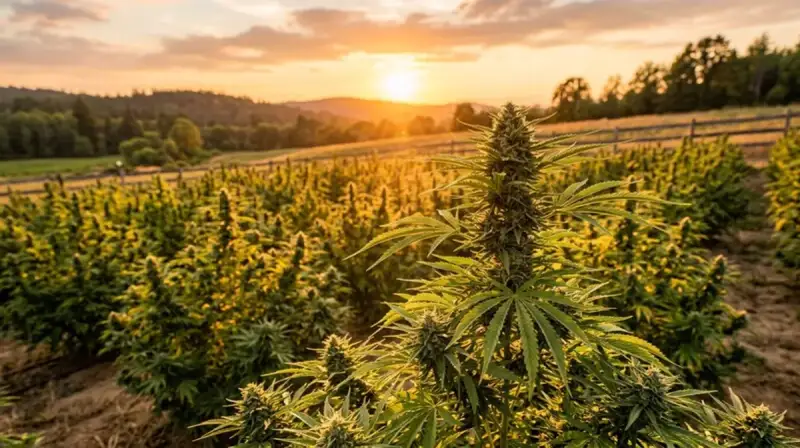
Industrial hemp — the same species as psychoactive cannabis, bred for fibre, seed and now CBD.
Hemp as Civilisation’s First Industrial Crop
Hemp is arguably the most versatile plant humans have ever cultivated. The stalks provide bast fibre of exceptional strength for rope, textiles and now composite materials. The seeds contain 30% oil rich in essential fatty acids including omega-3 and omega-6 in near-ideal ratios. The inner woody core (hurd or shiv) makes paper, animal bedding and hempcrete — a durable, carbon-sequestering building material. Every part of the hemp plant has an industrial application, which is why it was among the first plants domesticated and why its prohibition in the 20th century created serious material shortages during World War II.
Hemp cord impressions appear on Neolithic pottery in Taiwan dated to 8000 BCE. Hemp textiles from this period have been excavated across northern China. The plant spread westward along prehistoric trade routes — archaeological finds confirm hemp textile use in ancient Mesopotamia, Egypt and the Mediterranean world by 2000 BCE. By the Bronze Age, hemp rope was the engineering material of choice for construction, rigging and weaponry across Eurasia. Hemp’s fibre strength — it is one of the strongest natural fibres, exceeding cotton and approaching Kevlar per unit weight — made it irreplaceable for millennia. Explore the broader story in our complete cannabis history guide.
The significance of hemp to naval power cannot be overstated. Rigging for a single large sailing vessel required tons of rope. Hemp was the only plant capable of producing sufficient quantities of strong, salt-resistant fibre. British naval dominance in the 17th and 18th centuries depended on reliable hemp supply. England grew hemp domestically and imported massive quantities from Russia. When Napoleon attempted to cut British hemp supply by blockading Russian Baltic ports in the early 19th century, it contributed directly to his decision to invade Russia — a campaign that ended his empire. Hemp shaped geopolitics.
Hemp Paper: From China to Gutenberg
Hemp paper was invented in China around 100 BCE during the Han dynasty. The process involved retting (soaking) hemp stalks to separate fibres, then pulping and drying the fibre into sheets. This Chinese invention of paper using hemp fibre spread along the Silk Road to the Arab world in the 8th century CE, reaching Europe by the 12th century. Hemp paper was the dominant writing and printing surface for over 1,000 years before wood-pulp paper replaced it in the 19th century.
Gutenberg’s Bible of 1455, the first mechanically printed book in Europe, was printed on hemp paper. The Magna Carta was written on hemp parchment. Maps used in Columbus’s voyages were drawn on hemp. Early drafts of the US Declaration of Independence and Constitution were written on hemp paper. The cultural and political documents that define Western civilisation were inscribed on a cannabis-derived material. This historical irony — that the same plant family whose recreational use was criminalised in the 20th century produced the paper for humanity’s foundational documents — is not lost on cannabis historians. Read more in our ancient cannabis history guide.
Colonial America: Hemp as Legal Tender
Hemp was so essential in colonial America that several colonies passed laws requiring its cultivation. Virginia in 1619 mandated that all settlers must grow hemp. Massachusetts and Connecticut followed with similar laws. Hemp was accepted as legal tender for tax payments in Pennsylvania, Virginia and Maryland. George Washington grew hemp at Mount Vernon and kept detailed cultivation journals. Thomas Jefferson bred hemp varieties and designed a hemp-processing brake at Monticello. Benjamin Franklin’s paper mill produced hemp paper.
The US Navy’s first ships were rigged with American hemp rope. The Kentucky hemp industry, centred around Lexington, was the most productive in North America by 1800, supplying rope to the navy and bagging for the cotton industry. Cannabis strains developed in Kentucky for fibre production — known as Kentucky hemp landraces — were among the tallest cannabis varieties cultivated, reaching 4–5 metres. These genetics contributed to modern US outdoor cannabis cultivation after prohibition ended. Compare with contemporary cultivation in our Northern Lights strain guide.
The Prohibition of Hemp and Its Modern Revival
The 1937 Marihuana Tax Act targeted both psychoactive cannabis and hemp simultaneously, imposing prohibitive taxes and registration requirements that effectively ended commercial hemp farming in the United States. Hemp farmers received a brief exemption during World War II — the “Hemp for Victory” campaign encouraged cultivation to replace Filipino abaca rope supplies cut off by Japanese occupation — before prohibition resumed after the war. The 1970 Controlled Substances Act classified all cannabis, including hemp, as Schedule I, completing the prohibition.
The 2014 US Farm Bill permitted limited hemp research cultivation. The 2018 Farm Bill fully legalised hemp with 0.3% THC or less, triggering a CBD market boom that saw hemp acreage increase from 9,770 acres in 2017 to over 500,000 acres by 2019. The European Union permitted hemp cultivation from approved low-THC varieties throughout the prohibition era, maintaining agricultural knowledge. France and the Netherlands became significant hemp producers. Today the global industrial hemp market exceeds $5 billion annually, with applications spanning textiles, construction, food, cosmetics and pharmaceuticals. The CBD guide explains how hemp-derived cannabidiol became the industry’s most valuable product.
Complete Hemp History Timeline
Year
Event
Significance
8000 BCE
Hemp cord and textiles in Taiwan
Earliest confirmed human hemp use
100 BCE
Hemp paper invented in Han China
Precedes all other paper by 2,000 years
1455 CE
Gutenberg Bible printed on hemp paper
First mechanically printed book uses hemp
1619
Virginia mandates hemp cultivation
Hemp becomes legal tender in colonial America
1937
Marihuana Tax Act prohibits hemp
Ends century of American hemp industry
1942
Hemp for Victory campaign
WWII emergency reopens hemp farming temporarily
2018
US Farm Bill legalises hemp
Triggers global CBD industry and hemp farming revival
What is the difference between hemp and marijuana?
Hemp and marijuana are both Cannabis sativa but differ in THC content. Hemp contains 0.3% THC or less by dry weight, producing no psychoactive effect. Marijuana contains higher THC levels for recreational or medical use. The distinction is legal and agricultural, not botanical.
When was hemp paper invented?
Hemp paper was invented in China approximately 100 BCE during the Han dynasty. It predates wood-pulp paper by nearly 2,000 years. The Gutenberg Bible was printed on hemp paper in 1455.
Was the US Declaration of Independence written on hemp?
The engrossed parchment Declaration of Independence was written on animal skin (vellum), not hemp. However, early drafts were written on Dutch hemp paper, and hemp was a major crop for the founding fathers including Washington and Jefferson.
When did hemp become legal again in the United States?
The 2018 US Farm Bill legalised hemp cultivation federally, defining hemp as cannabis with 0.3% THC or less. This opened the legal CBD market and allowed commercial hemp farming to resume after nearly 80 years of prohibition.
What are the main uses of industrial hemp today?
Modern industrial hemp is used for CBD extraction, fibre (textiles, rope, building materials), seed oil (food and cosmetics), hempcrete (sustainable construction), bioplastics, biofuel, and paper. The global hemp market exceeded $5 billion in 2023.