Long before prohibition or dispensaries, cannabis was woven into the fabric of ancient civilisations from China to Egypt, India to Greece. Here is the complete ancient story.
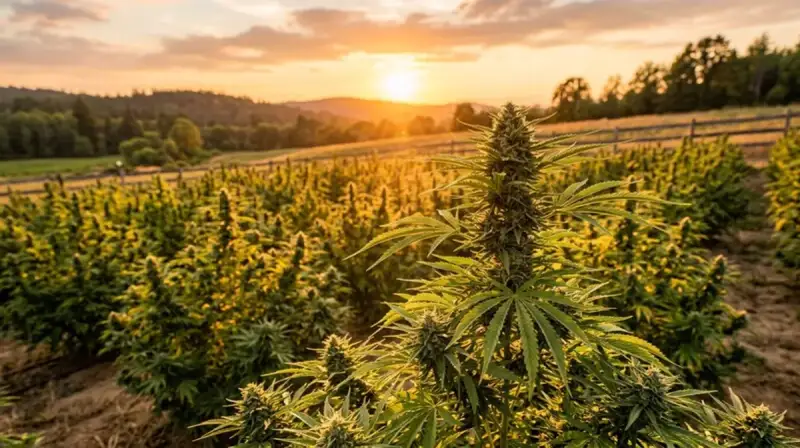
Cannabis sativa growing in natural light — one of humanity’s oldest cultivated plants.
Origins in Central Asia: The Birthplace of Cannabis
Modern genetic analysis has traced the origin of Cannabis sativa to the eastern Tibetan Plateau and surrounding Central Asian steppes, in what is today China, Kazakhstan and Mongolia. A 2021 study published in Science Advances analysed 110 whole cannabis genomes and concluded that the plant was first domesticated approximately 12,000 years ago during the early Neolithic period, making it one of the earliest plants cultivated by humans. Hemp-type and drug-type varieties diverged through selective breeding approximately 4,000 years ago, suggesting humans recognised and exploited different chemical profiles of the same species from deep antiquity.
Hemp cord impressions on Neolithic pottery from northern China date to approximately 10,000 BCE. Hemp seed cache sites in Yangshao culture locations along the Yellow River valley date to 6000 BCE. These communities grew cannabis for seed oil (a high-calorie food source), fibre (for rope, textiles and fishing nets) and later as medicine. The archaeological record suggests that cannabis cultivation spread from Central Asia westward with nomadic peoples and eastward into China simultaneously, following trade routes that predate the Silk Road by millennia.
The earliest confirmed evidence of psychoactive cannabis use comes from the Jirzankal Cemetery in the Pamir Mountains of western China. Wooden braziers excavated from this site and dated to approximately 500 BCE contained cannabis residue with unusually high THC levels — significantly higher than local wild cannabis populations — indicating deliberate cultivation of high-THC varieties for ritual inhalation. The braziers were placed inside tombs alongside human remains, confirming a ritual context. This discovery, published in Science Advances in 2019, pushed the confirmed timeline of intentional cannabis inhalation back by several centuries.
Ancient China: Medicine, Food and Fibre
China has the longest documented history of cannabis use. The legendary emperor Shen Nung, credited with founding Chinese medicine around 2700 BCE, documented cannabis as ma in his pharmacopoeia, the Shennong Bencao Jing. He described its use for rheumatism, gout, malaria and absent-mindedness, and noted that female plants produced stronger medicinal effects than male plants. This observation of sexual dimorphism and its relationship to potency predates modern understanding of THCA biosynthesis in female flowers by more than 4,000 years.
Cannabis seeds were among the five sacred grains of ancient China alongside millet, rice, wheat and soybeans. Cannabis seed oil pressed from hemp seed provided essential fatty acids for cooking. Hemp fibre from the stalks was processed into clothing, rope, bowstrings for Chinese armies, and eventually paper — Chinese hemp paper dates to approximately 100 BCE, making hemp the raw material for the world’s first paper. The Chinese character for hemp (ma) is one of the oldest pictographic characters in the Chinese writing system, suggesting the plant was sufficiently important to warrant its own dedicated symbol from the earliest development of written language.
Chinese medical texts continued documenting cannabis applications through the Han dynasty (206 BCE–220 CE). The Bencao Gangmu, the great Chinese materia medica compiled by Li Shizhen in 1596 CE, lists cannabis preparations for more than 100 medical conditions including pain, nausea, parasitic infections and mental illness. This text was influential across East Asia and represents the culmination of over 4,000 years of Chinese empirical observation of cannabis’s therapeutic properties. Compare these ancient properties to modern science in our CBD guide.
Ancient India: Sacred Plant of the Vedas
In ancient India, cannabis occupied a sacred position in both religion and medicine. The Atharvaveda, one of the four Vedas dating to around 1400–1200 BCE, lists bhanga (cannabis) as one of five sacred plants, calling it a source of happiness, liberation and compassion. The god Shiva is intimately associated with cannabis in Hindu tradition, said to have discovered the plant’s cooling properties while resting under it after a family dispute. His association with cannabis persists today in Hindu sadhus who use it as a sacrament during meditation and festivals.
Ayurvedic medicine, codified in the Charaka Samhita and Sushruta Samhita texts from approximately 600 BCE, documents cannabis preparations for anaesthesia during surgery, diarrhoea, pain, epilepsy and anxiety. The Sushruta Samhita specifically describes cannabis as an anaesthetic used during operations on the nasal septum and ear. These texts establish cannabis as a legitimate pharmaceutical in the most sophisticated medical system of the ancient world, predating Western interest in cannabis medicine by over 2,000 years. Our UK medical cannabis guide shows how this ancient tradition connects to modern prescribing.
Bhang — a preparation of cannabis leaves, milk, spices and sugar — has been consumed in India continuously for at least 3,000 years and remains legal and culturally integrated today. During Holi and Maha Shivaratri festivals, bhang consumption is widespread and socially accepted. This unbroken cultural continuity makes India unique in having maintained legal cannabis use through the entire global prohibition era, largely because British colonial authorities chose to regulate rather than ban bhang use.
Scythians, Persians and the Ancient Middle East
The nomadic Scythian people of the Central Asian steppes were among the most important vectors for spreading cannabis use across Eurasia. Herodotus, the Greek historian writing around 440 BCE, describes Scythian cannabis rituals in remarkable detail: they set up three poles, covered them with felt, and threw cannabis seeds onto red-hot stones inside the enclosure, howling with pleasure as the vapour enveloped them. Archaeological confirmation of this account came from excavated Scythian kurgans (burial mounds) containing small tents, heating apparatus and cannabis seeds — physical evidence matching Herodotus’s account with remarkable precision.
Cannabis spread into Persia (modern Iran) and the ancient Middle East through Scythian trade networks. The Zoroastrian sacred text Zend-Avesta, dating to around 600 BCE, lists bhanga as the foremost medicinal plant. Persian texts describe cannabis preparations for anxiety, fever and pain. From Persia, cannabis moved into the Arab world following the Islamic conquests of the 7th century CE, giving rise to the hashish culture that would eventually influence European Renaissance writers and 19th-century French intellectuals.
Ancient Egypt and the Mediterranean World
Evidence for cannabis use in ancient Egypt includes pollen found on the mummies of Ramesses II (died 1213 BCE) and Ramesses III, as well as cannabis residue in ceremonial vessels. The Ebers Papyrus, an Egyptian medical document from approximately 1550 BCE, describes a cannabis preparation administered vaginally to ease childbirth. This represents one of the earliest recorded uses of cannabis as a specific pharmaceutical intervention with a defined clinical indication.
In ancient Greece, hemp was primarily used for rope and textile. The physician Dioscorides, writing his pharmacopoeia De Materia Medica around 70 CE, described cannabis as a treatment for earache and inflammation, with seeds used to suppress sexual desire. Roman author Pliny the Elder in his Naturalis Historia (77 CE) described cannabis for treating burns, relieving joint pain, and as a general-purpose medicine. Both authors describe the intoxicating properties of cannabis smoke and oil with some fascination.
By the Roman period, cannabis was a fully globalised crop traded across the Mediterranean world. Roman legionaries used hemp rope to rig warships. Cannabis seeds were staple foods in northern European tribal cultures. The plant had already achieved what would take most other cultivated species thousands more years — becoming indispensable across every inhabited continent. Read our complete cannabis history to follow this story through prohibition and beyond.
Ancient Cannabis History Timeline
Date
Location
Event
8000 BCE
Taiwan / China
Hemp fibre cord and textiles — earliest confirmed use
2700 BCE
China
Shen Nung documents cannabis in medical pharmacopoeia
1550 BCE
Egypt
Ebers Papyrus records cannabis as medical preparation
1200 BCE
India
Atharvaveda lists cannabis as one of five sacred plants
Cannabis sativa likely originated on the steppes of Central Asia, in the region of modern Kazakhstan and Mongolia. Genetic analysis suggests the plant was first domesticated approximately 12,000 years ago, with hemp and drug-type varieties diverging around 4,000 years ago.
How did ancient Egyptians use cannabis?
Cannabis pollen has been found on mummies including Ramesses II. The Ebers Papyrus (1550 BCE) documents cannabis as a treatment for inflammation. Archaeological finds also suggest cannabis was used in ritual and possibly medicinal suppository preparations.
Did ancient Greeks use cannabis?
Herodotus documented Scythian cannabis vapour rituals around 440 BCE. The Greek physician Dioscorides listed cannabis in his pharmacopoeia around 70 CE for ear pain and inflammation. Greek texts also describe hemp rope and sail production.
What was soma in ancient India?
Some scholars argue that soma, the sacred psychoactive drink of the Rigveda, contained cannabis. Others identify it with Ephedra or Amanita muscaria. Cannabis is clearly documented in later Ayurvedic texts as bhanga, used for anaesthesia, digestion and ritual.
When did hemp textile production begin?
Hemp textile production is documented from approximately 8000 BCE in Taiwan. Impressions of hemp cord on pottery and hemp rope fragments appear in Neolithic Chinese archaeological sites. Hemp was among the earliest plants cultivated for industrial use.