










- Quick verdict: Balanced THC/CBD strains are safer for beginners and medical users; high-THC strains suit experienced consumers seeking strong recreational effects or specific therapeutic goals requiring maximum THC.
- Anxiety risk: High-THC strains carry meaningful anxiety and paranoia risk, especially at doses above 10–15mg THC. CBD in balanced strains acts as a partial anxiolytic buffer.
- CBD mechanism: CBD does not block the THC high — it modulates it. CBD acts as a partial CB1 antagonist and 5-HT1A agonist, blunting THC’s anxiety-promoting effects while preserving its analgesic and euphoric properties.
- Medical efficacy: High-THC is stronger for severe pain, nausea, and appetite stimulation; balanced strains are preferred for anxiety, inflammation, spasticity, and daytime function.
- Dependence risk: Research links higher THC concentration to accelerated tolerance and greater cannabis use disorder risk.
- Cannabis laws vary by state — always verify your local state cannabis laws before purchasing or consuming.
Overview: What Are We Actually Comparing?
When you walk into a dispensary or browse an online cannabis menu, the first number you’ll likely see is THC percentage. But that single metric tells only part of the story. The ratio of THC (tetrahydrocannabinol) to CBD (cannabidiol) fundamentally shapes how a strain feels, performs medically, and affects your overall wellbeing.
High-THC strains typically contain 20–35% THC (sometimes higher in concentrates) and minimal CBD, often below 1%. These dominate recreational dispensary shelves and have become the default expectation for many consumers following a decade of legal cannabis market growth optimized for potency.
Balanced THC/CBD strains contain roughly equal amounts of both cannabinoids — for example, 10–15% THC and 10–15% CBD. Some products lean toward a 2:1 or 1:2 ratio. These strains have gained significant traction in the medical cannabis community and among wellness-focused consumers who want therapeutic effects without overwhelming intoxication.
Understanding the difference matters more than ever. The average THC potency of legal cannabis products sold in the US has risen from roughly 4% in the 1990s to over 12% for flower today — far higher in extracts and concentrates. Meanwhile, CBD content has largely been bred out of commercial strains in the pursuit of maximum potency. This shift has real consequences for consumer safety, medical efficacy, and the overall cannabis experience. Explore individual cannabis strain profiles or learn more about how cannabinoids work in our dedicated guides.
Side-by-Side Comparison
| Criteria | High-THC Strains (20–35% THC) | Balanced THC/CBD Strains (1:1 Ratio) |
|---|---|---|
| Psychoactive Intensity | Very high — strong euphoria, possible overwhelm | Moderate — clear-headed, manageable high |
| Anxiety Risk | Higher — THC can amplify anxiety at elevated doses | Lower — CBD has demonstrated anxiolytic effects |
| Pain Relief | Strong, especially for neuropathic and chronic severe pain | Good, particularly for inflammatory pain |
| Medical Versatility | Nausea, appetite, sleep, severe pain | Anxiety, inflammation, seizures, spasticity, mild-moderate pain |
| Best User Experience Level | Intermediate to experienced consumers | Beginners, medical patients, sensitive individuals |
| Dependence Risk | Higher with prolonged high-dose use | Potentially lower — CBD may reduce compulsive use |
| Daytime Functionality | Impairs most users; not ideal for daytime tasks | Many users report productive, functional effects |
| Drug Test Impact | Will cause positive drug test result | Will also cause positive drug test result (THC present) |
| Terpene Complexity | Varies; often bred for potency over terpene depth | Often richer terpene profiles; entourage effect stronger |
| Availability | Widely available in most legal state markets | Growing availability; may be limited in some markets |
How CBD Moderates the THC Experience: The Science
Understanding why balanced strains feel different from high-THC strains requires understanding how CBD and THC interact at the molecular level. THC produces its psychoactive effects primarily by binding to CB1 receptors in the brain — particularly in regions associated with reward (nucleus accumbens), memory (hippocampus), and fear processing (amygdala). Activation of CB1 receptors in the amygdala, in particular, is associated with the anxiety and paranoia that some users experience with high-THC cannabis.
CBD’s role in this interaction is multifaceted. While CBD does bind to CB1 receptors, it acts as a negative allosteric modulator — it changes the shape of the receptor in a way that reduces THC’s binding efficiency without completely blocking it. This partially blunts THC’s stronger effects, including its anxiety-promoting amygdala activation, while preserving much of its analgesic and euphoric properties. Additionally, CBD activates 5-HT1A serotonin receptors (the same receptors targeted by certain anti-anxiety medications), producing its own independent anxiolytic effect that complements its CB1 modulation.
The net result: a 1:1 THC:CBD strain produces a psychoactive experience that most users describe as “cleaner,” more cognitively intact, less likely to trigger racing thoughts or panic, and easier to manage in social or professional contexts. It’s not simply a weaker version of a high-THC experience — it’s a qualitatively different pharmacological profile.
Deep Dive: High-THC Strains
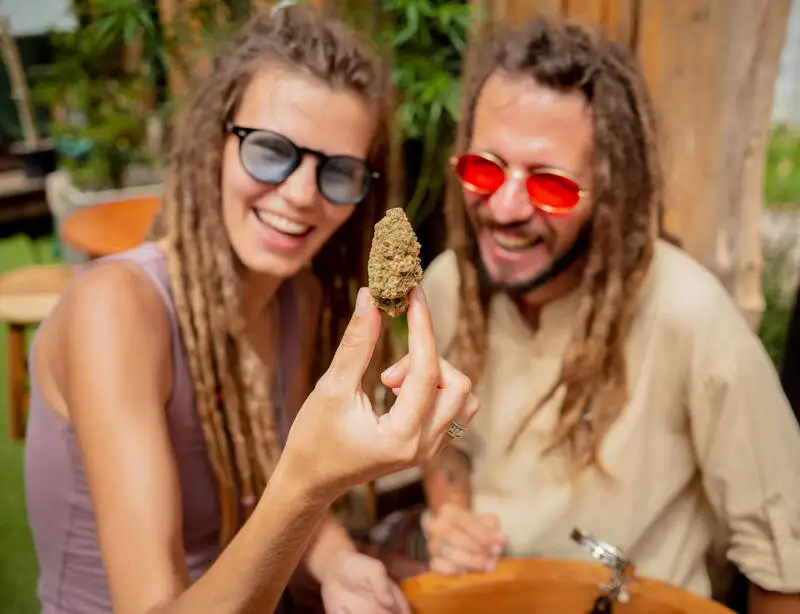
High-THC cannabis strains are the dominant product category in legal recreational markets. Strains like Girl Scout Cookies, Gorilla Glue #4, and Bruce Banner regularly test above 25% THC and have built massive consumer followings. But what does a high-THC designation actually mean in practice?
Strengths of High-THC Strains
- Potent euphoria: THC binds directly to CB1 receptors in the brain’s reward system, producing strong feelings of happiness, relaxation, and elevated mood — the classic cannabis “high.”
- Powerful pain relief: For patients with severe chronic pain, neuropathic conditions, or cancer-related pain, high THC levels can provide relief that lower-potency products cannot match. Multiple clinical trials support THC’s analgesic properties at the dosing levels achievable with high-THC strains.
- Appetite stimulation: High THC is highly effective for conditions like cachexia (wasting syndrome), HIV-related appetite loss, and chemotherapy-induced nausea.
- Sleep support: Many experienced users find high-THC indica-leaning strains highly effective for insomnia, reducing sleep onset time and increasing total sleep duration, though tolerance and dependency can develop.
- Dose efficiency: Less product needed to achieve strong effects — economically advantageous for regular medical patients with high tolerance.
Weaknesses of High-THC Strains
- Anxiety and paranoia: At high doses or in sensitive individuals, THC can trigger intense anxiety, racing thoughts, and panic — particularly in new users or those with anxiety predispositions. The risk is dose-dependent and significantly higher above 15–20mg THC.
- Cognitive impairment: High THC significantly impacts short-term memory, reaction time, and executive function. Cannabis-impaired driving is dangerous and carries serious legal consequences.
- Rapid tolerance buildup: Regular high-THC consumption quickly desensitizes CB1 receptors, requiring increasingly higher doses for the same effect over time.
- Not beginner-friendly: New consumers who start with high-THC products are far more likely to have a negative first experience, potentially creating lasting negative associations with cannabis.
- Psychosis risk in predisposed individuals: High-potency THC use is associated with increased risk of psychotic episodes in individuals with a personal or family history of psychosis or schizophrenia.
High-THC Strain Examples
| Strain | Typical THC % | Dominant Terpenes | Best Known For |
|---|---|---|---|
| Gorilla Glue #4 | 25–32% | Caryophyllene, myrcene, limonene | Heavy relaxation, euphoria, couch-lock |
| Bruce Banner | 27–30% | Terpinolene, caryophyllene, myrcene | Intense cerebral euphoria, creativity |
| Ghost Train Haze | 25–28% | Terpinolene, ocimene, myrcene | One of the highest-THC sativa strains; energizing but anxiety-prone |
| Strawberry Banana | 26–32% | Myrcene, caryophyllene, limonene | Euphoric, relaxing, sweet flavor profile |
Deep Dive: Balanced THC/CBD Strains
Balanced cannabinoid strains represent a return to cannabis’s natural chemical complexity. Before selective breeding pushed THC levels skyward, most cannabis plants contained meaningful amounts of both THC and CBD. Today, balanced strains are experiencing a renaissance, particularly in the medical cannabis and wellness communities.
Popular balanced strains include Cannatonic, Harlequin, AC/DC, Pennywise, and Dancehall — all of which feature near-equal THC and CBD content. These strains leverage the entourage effect: the well-documented phenomenon where cannabinoids and terpenes work synergistically to produce effects greater than the sum of their parts.
Strengths of Balanced THC/CBD Strains
- Anxiety modulation: CBD has demonstrated anxiolytic effects in multiple peer-reviewed studies, and its presence in a balanced strain counteracts THC’s anxiety-provoking potential — particularly the amygdala activation associated with panic responses.
- Anti-inflammatory properties: CBD is a potent anti-inflammatory compound via multiple pathways including TRPV1 receptor activation and adenosine reuptake inhibition, making balanced strains particularly effective for conditions like arthritis, multiple sclerosis, and inflammatory bowel disease.
- Reduced impairment: Many users report being able to function, focus, and even work while using balanced strains — something rarely possible with high-THC products at comparable doses.
- Seizure management: The FDA-approved CBD medication Epidiolex demonstrates clinically validated seizure-reducing properties. Balanced strains offer similar, though less concentrated, benefits for patients with seizure disorders.
- Beginner safety: Lower psychoactive intensity makes balanced strains far more forgiving for first-time or infrequent consumers exploring cannabis for the first time.
- Richer entourage effect: The presence of meaningful CBD alongside THC typically correlates with higher-quality terpene profiles and a more complete endocannabinoid system interaction.
Weaknesses of Balanced THC/CBD Strains
- Still intoxicating: THC in balanced strains is still enough to impair driving and some cognitive tasks. These are not “safe to drive” products regardless of their more manageable high.
- Lower availability: Many dispensaries in legal states carry limited balanced strain selections compared to their extensive high-THC catalog.
- May not satisfy experienced users: Consumers with high THC tolerance may find balanced strains underwhelming for recreational purposes, particularly those seeking the euphoria of high-potency concentrates.
- Cost: Some balanced and CBD-rich strains require additional breeding work and are less commonly available as budget options.
Balanced Strain Examples
| Strain | THC:CBD Ratio | Dominant Terpenes | Best Known For |
|---|---|---|---|
| Harlequin | 5:2 THC:CBD (~10% THC, 4% CBD) | Myrcene, caryophyllene, pinene | Functional daytime use, pain and anxiety without heavy high |
| Cannatonic | 1:1 to 1:2 THC:CBD | Myrcene, ocimene, caryophyllene | One of the original high-CBD medical strains; mild euphoria |
| AC/DC | 1:20 THC:CBD (~1% THC, 20% CBD) | Myrcene, caryophyllene, pinene | Minimal intoxication; near-CBD-only therapeutic effect from flower |
| Pennywise | 1:1 THC:CBD (~12% each) | Myrcene, caryophyllene, limonene | Strong anti-anxiety, anti-inflammatory; good for PTSD and seizures |
| Dancehall | 1:1 THC:CBD | Terpinolene, myrcene, caryophyllene | Uplifting, social, manageable daytime use |
Medical Efficacy Comparison
| Condition | High-THC Recommendation | Balanced Strain Recommendation |
|---|---|---|
| Severe Chronic Pain | Preferred — higher THC provides stronger analgesic ceiling | Good for mild-moderate pain and inflammation |
| Generalized Anxiety Disorder | Avoid or use very low doses only | Preferred — CBD reduces anxiety while THC provides mild relief |
| PTSD | Effective for nightmare reduction; risk of anxiety escalation | Preferred for most patients — better tolerability profile |
| Multiple Sclerosis Spasticity | Effective — THC has antispasmodic properties | Preferred — 1:1 THC:CBD (Nabiximols) is approved in UK/EU for MS |
| Nausea/Vomiting | Preferred — THC is the primary antiemetic cannabinoid | Useful but less potent for severe nausea |
| Appetite Stimulation | Strongly preferred — THC is the primary orexigenic cannabinoid | Weaker appetite stimulation than high-THC |
| Sleep Disorders | Effective short-term; tolerance and dependency risk | Better long-term profile; CBD improves sleep architecture |
| Inflammatory Conditions | Helpful but anxiety risk limits daily use | Preferred — CBD’s anti-inflammatory mechanisms are potent |
Which Should You Choose?
For the vast majority of cannabis beginners, medical patients, and consumers who use cannabis for functional daytime purposes, balanced THC/CBD strains are the smarter choice. They provide a genuine, nuanced cannabis experience while dramatically reducing the risk of anxiety, paranoia, and the kind of overwhelming intoxication that turns many people off cannabis entirely on their first try. The entourage effect from balanced strains is arguably more complete and therapeutically rich than from high-THC-only products.
High-THC strains remain the right choice for experienced recreational consumers who have developed tolerance and are specifically seeking the intense euphoria or strong sedation that maximum THC provides. They also remain clinically appropriate for severe pain patients, those dealing with significant nausea, or patients with high-tolerance established over time. The key is honest self-assessment about your experience level, sensitivity, and what you actually want from cannabis. Visit our state cannabis guides to verify availability of balanced strains in your area.
Frequently Asked Questions
Is a 1:1 THC:CBD strain too mild for recreational use?
For consumers with established THC tolerance, a 1:1 strain at typical dispensary potencies (8–14% THC) can indeed feel mild compared to high-potency concentrates or 30%+ flower. However, for casual consumers or those who use cannabis occasionally for relaxation or social enjoyment, balanced strains often deliver a more enjoyable, more controllable experience precisely because the effects don’t escalate as unpredictably. Consuming a balanced strain in larger quantities gradually is also easier and safer than attempting to fine-tune intake of 30%+ THC flower.
How do I find balanced strains at my dispensary?
Ask your budtender specifically for strains with CBD content above 5% or a THC:CBD ratio closer to 1:1 or 2:1. Many dispensary menus now filter by cannabinoid ratio. Also look for medical-oriented product lines, as these more frequently feature balanced profiles. Specific cultivars to ask for include Harlequin, Cannatonic, Pennywise, ACDC, Ringo’s Gift, and any house-branded 1:1 lines from established medical cannabis brands.