










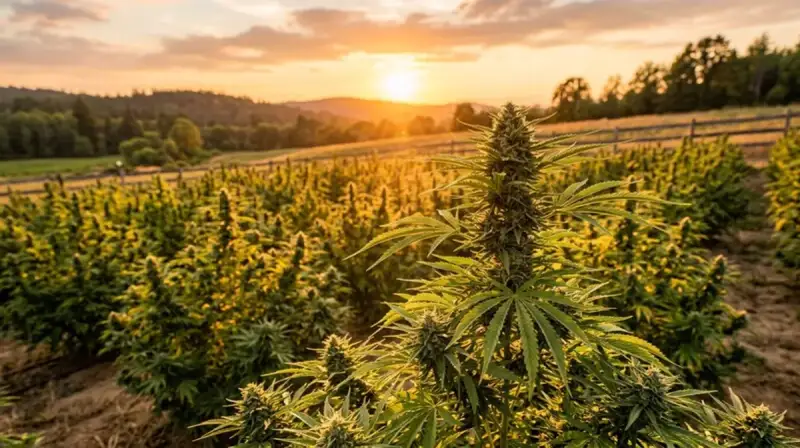
Red Congo: The African Landrace Sativa for Experienced Consumers
Red Congo is among the most prized and least commonly encountered cannabis landraces available in the modern legal market. Originating from the equatorial rainforest regions of the Congo basin in Central Africa, it represents a cannabis genetic lineage that has developed in one of the most biodiverse ecosystems on earth, far removed from the commercial breeding programs that have shaped the majority of cannabis varieties available today. For experienced sativa enthusiasts who have grown bored of the homogenized effect profiles that dominate contemporary hybrid-saturated dispensary menus, Red Congo offers something genuinely different: a pure, uncompromised equatorial sativa experience with exceptional potency (THC 18–22%), a distinctively earthy-spice-tropical terpene character, and an intensely cerebral, long-duration effect that reminds you why pure sativa landraces occupied a category of reverence in cannabis culture before hybrid breeding became universal.
- Origin: Congo basin region, Central Africa (pure sativa landrace)
- Type: 100% pure sativa landrace — no hybrid genetics
- THC: 18–22% (high for a pure landrace; potent)
- CBD: <1% (trace levels typical of pure sativa landraces)
- Primary Terpenes: Myrcene, Caryophyllene, Pinene
- Aroma/Flavor: Earthy, spicy, tropical fruit, herbal depth, woody notes
- Effects: Intense cerebral energy, sharp mental clarity, motivation, euphoria — 3–4 hour duration
- Best for: Experienced sativa consumers; physical activity; creative and analytical work; daytime use only
- Not recommended for: New or casual users; anxiety-prone consumers; evening use
- Flowering time: 12–16+ weeks (long, equatorial landrace) — requires patience
- Availability: Rare — specialized seed banks; occasional craft dispensaries
| Attribute | Detail |
|---|---|
| Type | Pure sativa landrace (100%) |
| Origin | Congo basin, Central Africa (Democratic Republic of Congo / Republic of Congo region) |
| Genetics | Congo landrace — no hybrid parentage; naturally selected over centuries |
| THC | 18–22% |
| CBD | <1% |
| Primary Terpenes | Myrcene, Caryophyllene, Pinene |
| Aroma | Earthy, spicy, tropical fruit, herbal, woody |
| Flavour | Rich earth, spice, tropical sweetness, herbal depth |
| Effects | Intense cerebral energy, mental clarity, motivation, euphoria |
| Duration | 3–4 hours primary effects; 1–2 hours residual |
| Best Time | Morning to early afternoon (daytime only) |
| Flower Time | 12–16+ weeks (equatorial landrace; among the longest available) |
| Availability | Rare — specialized landrace seed banks; occasional craft dispensaries |
Red Congo Overview: African Landrace Origins
The cannabis landraces of Central Africa represent one of the least-understood and most underappreciated genetic lineages in the global cannabis gene pool. While South African Durban Poison achieved international fame and has been incorporated into numerous successful commercial hybrids (most famously Girl Scout Cookies and its derivatives), the equatorial Central African landraces — including the varieties from the Congo basin region — remain largely confined to specialist genetics circles and landrace preservation projects.
The Congo basin encompasses some of the most ecologically extreme environments on earth: equatorial rainforest with high year-round temperatures, intense and sustained UV radiation, high humidity, and near-constant rainfall distributed across a twelve-month growing season. Cannabis developing in this environment over centuries of natural selection adapted in ways that distinguish it sharply from both temperate-climate landraces (like Mexican, Colombian, or Jamaican varieties) and from the Afghan and Himalayan indica landraces that contributed heavily to modern hybrid breeding.
The adaptations relevant to cannabis consumers are primarily in the cannabinoid and terpene profiles. Equatorial sativas like Red Congo produce extremely high THC content as a natural UV-protection mechanism: dense trichome production shields reproductive plant structures from intense equatorial sunlight. The terpene profiles lean toward earthy, aromatic, and spice-forward compounds rather than the sweet, fruity, or fuel-dominant profiles that characterize other geographic lineages. The effect profile — intensely cerebral, very long duration, high energy — reflects adaptation to an environment where physical stamina and alertness would have had evolutionary value.
Red Congo as a commercially available variety was preserved and stabilized by a small number of dedicated landrace genetics collectors who acquired authentic material directly from the Congo region. The strain name reflects both the geographic origin and the striking visual characteristic of mature Red Congo plants: the pistils (hairs) on mature flowers develop a distinctive reddish-orange coloration that gives the buds their characteristic appearance. This reddish pistil trait is common to several Central African landrace varieties and is a visual indicator of genetic authenticity.
Red Congo Cannabinoid & Terpene Profile
Red Congo’s cannabinoid profile is exceptional for a pure sativa landrace. While many African landraces test at moderate THC levels (12–16%), Red Congo consistently measures in the 18–22% range — potency levels that equal or exceed many commercial hybrids. This high potency in a pure landrace is a function of the extreme UV environment in the Congo basin, which drove trichome production to levels far higher than landraces from less intense light environments.
The CBD content, as with virtually all pure sativa landraces, is negligible (<1%). The vast majority of commercially grown cannabis landraces that achieved their identity in warm, equatorial environments are CBG-dominant during vegetative growth and convert aggressively to THC during flowering, leaving minimal CBD in the final product. This is pharmacologically relevant: the absence of meaningful CBD means there is no significant CB1 receptor modulation that would blunt the THC effect. Red Congo’s 18–22% THC arrives without a CBD buffer, which contributes to the intensity and clarity of the effect profile.
| Terpene | Aroma Character | Effect Contribution | Congo Basin Context |
|---|---|---|---|
| Myrcene | Earthy, herbal, subtle tropical fruit | Physical ease; mild sedation-reduction at lower doses; herbal grounding | High myrcene typical in equatorial landraces; in Red Congo, earthy rather than fruity expression |
| Caryophyllene | Spicy, peppery, earthy, woody | CB2 agonist — anti-inflammatory; grounding of cerebral effect; stress modulation | Caryophyllene-dominant terpene profiles are common in Central African landraces; explains spice note |
| Alpha-Pinene | Fresh pine, sharp, clean herbal | Mental clarity amplifier; bronchodilator (aids inhalation delivery); mild acetylcholinesterase inhibition (memory benefit) | Pinene expression is less common in equatorial varieties; Red Congo’s occurrence distinguishes it |
| Limonene | Citrus, lemon, orange peel | Mood elevation; stress reduction; anti-anxiety modulation | Present in trace-moderate levels; contributes tropical citrus dimension to the profile |
| Humulene | Earthy, woody, herbal, slightly floral | Anti-inflammatory; mild appetite suppression; grounding earthy quality | Humulene contributes to the distinctive earthy depth of Red Congo vs. other sativa landraces |
The caryophyllene dominance in Red Congo’s secondary terpene profile is the key to understanding its distinctive earthy-spice aroma. While most well-known sativa strains lean toward citrus (limonene), pine (pinene), or fruit (myrcene in fruity expression), Red Congo presents a more complex and less sweet aromatic character. The earthy-spice combination evokes the forest floor of tropical hardwood environments — rich organic earth, aromatic wood resins, and subtle warm spice. For consumers accustomed to sweeter or more fruit-dominant sativa profiles, Red Congo is an education in how diverse the cannabis aroma landscape actually is across different geographic gene pools.
The presence of alpha-pinene as a significant terpene is particularly interesting from a pharmacological perspective. Research suggests that pinene may act as an acetylcholinesterase inhibitor, meaning it could enhance memory formation and information retention — a potential counterbalance to THC’s known short-term memory effects. Whether this interaction is clinically meaningful in cannabis consumption is still being studied, but it is consistent with Red Congo users’ frequent reports of unusually clear and coherent mental states compared to other high-THC varieties.
Red Congo Effects: Intense Cerebral Energy
Red Congo’s effect profile is the reason landrace sativa enthusiasts seek it out despite its rarity, difficult cultivation, and demanding effect intensity. It represents what cannabis researchers and connoisseurs call a “pure sativa experience” — an effect profile shaped by thousands of years of natural adaptation in an equatorial environment, unmodified by hybridization with indica or ruderalis genetics.
Onset (0–25 minutes): Red Congo onset is gradual compared to many high-THC hybrid strains, reflecting the pharmacokinetic characteristics of pure sativa landrace cannabinoid profiles. The first signal is a subtle mental brightening and sharpening of awareness, typically arriving 15–25 minutes after inhalation. This gradual onset can mislead inexperienced users into consuming more than intended before the full effect is felt — a risk that contributes to its not-for-beginners reputation.
Rising phase (25–60 minutes): The effects build progressively and significantly during this phase. Mental energy accelerates, focus sharpens dramatically, and a pronounced euphoric confidence emerges. The cognitive experience is often described as a heightened state of awareness rather than an altered one — thoughts are clear, fast, and well-connected; perceptions are vivid without distortion; physical senses (particularly sound and vision) are enhanced in a clean, non-psychedelic manner.
Peak effects (60–150 minutes): Red Congo’s peak is the defining characteristic that sets it apart in cannabis experience terms. The intensity of mental energy and clarity at this stage is what experienced users mean when they describe pure sativa landraces as categorically different from hybrids. Physical energy is high; mental activity is rapid and focused; motivation is pronounced. There is no body weight, no drowsiness, no cognitive muddiness. The effect is described by many as the most functional state cannabis can produce — genuinely useful for physical work, outdoor activities, and creative problem-solving.
Tapering (150–240 minutes): The gradual descent from the peak maintains functional quality throughout. Unlike some high-THC hybrids that produce a sharp energy cliff, Red Congo tapers smoothly into a pleasant, slightly elevated baseline before resolving. The extended total duration (3–4 hours from onset to resolution) is characteristic of pure sativa landrace metabolism and distinguishes Red Congo from hybrids that resolve in 1.5–2 hours.
| Effect | Intensity (1–10) | Character | Duration |
|---|---|---|---|
| Cerebral Energy | 10/10 | Intense, clean, sustained | 3–4 hours |
| Mental Clarity / Focus | 9/10 | Sharp, analytical, vivid | 2–3 hours peak |
| Euphoria | 9/10 | Confident, motivated, positive | 2–3 hours |
| Physical Energy | 8/10 | Motivating, mobile, active | 2–3 hours |
| Creativity | 8/10 | Expansive, rapid, associative | 2–3 hours |
| Physical Relaxation | 1/10 | Essentially absent; slight muscle ease only | N/A |
| Sedation / Couch-lock | 0/10 | Completely absent at normal doses | N/A |
| Anxiety Risk (high dose) | High for sensitive users | Potency + intensity can trigger anxiety or paranoia in inexperienced users | Resolves with effect |
The intensity of Red Congo’s cerebral effect deserves emphasis as a safety note for newer consumers: this is a potent, high-THC pure sativa with no indica-derived sedating buffer. For consumers whose cannabis experience consists primarily of indica-dominant or balanced hybrid strains, the Red Congo experience can be disorienting in its intensity and duration. Experienced sativa users who actively seek this kind of effect will find Red Congo exceptional; casual consumers or those prone to anxiety should approach with significant caution and very modest initial doses.
Watch: Red Congo Strain Deep Dive
Red Congo Flavor Profile: Earthy, Spice & Tropical
Red Congo’s flavor profile is one of the most distinctive in the cannabis world — and one of the most divisive. Unlike the sweet fruit, citrus-dominant, or fuel-forward profiles that dominate contemporary commercial cannabis, Red Congo presents a complex, deep earthy-spice character that is simultaneously more subtle and more complex than most modern strains. For consumers who have only encountered commercially optimized hybrids, the first encounter with Red Congo can be genuinely surprising: where are the candy notes, the diesel, the fruit punch? What replaces them is something older, deeper, and more rooted in the actual organic chemistry of the plant’s natural environment.
Aroma (pre-combustion): Fresh Red Congo buds release a rich, complex scent: warm earth and organic matter in the foreground, then a layer of dry spice (think black pepper and cardamom) overlaid by the distinctive reddish-orange pistils that contribute a subtle floral-metallic note. Beneath these top notes, there is a subtle tropical fruit quality — something between guava and papaya rather than the more familiar mango or citrus — that adds sweetness without sweetening the overall impression. The aroma is deep and persistent rather than immediately striking; it rewards slow inhalation and time.
Combustion flavor: On combustion, Red Congo’s earthy-spice profile intensifies. The smoke is thick with organic richness — forest floor, damp hardwood, aromatic resins. The spice note (caryophyllene) becomes more prominent on the inhale. The tropical fruit quality emerges on the exhale as a sweet counterpoint to the earthy depth. The aftertaste is long-lasting and pleasant: earthy, slightly herbal, with a warm spice finish that lingers in a way that high-terpene cannabis should.
Vaporization: At low temperatures (175–185°C), the terpene character of Red Congo is most clearly expressed: the spice notes are vivid, the earthiness is clean and precise, and the tropical fruit quality is more apparent. Higher vaporization temperatures (190–210°C) bring out heavier, more combustion-like flavors that emphasize the earthy depth at the expense of the lighter tropical notes.
Medical Cannabis Applications
Red Congo’s high potency, extended duration, and absence of sedation make it a specialized medical cannabis option that serves a specific population of patients well. Its effect profile is most relevant to conditions that benefit from mental energy, mood elevation, and physical activation — a different therapeutic target than the relaxation, pain management, and sleep benefits typically associated with indica-dominant varieties.
| Condition | Mechanism | Suitability | Cautions |
|---|---|---|---|
| Depression (treatment-resistant) | Intense mood elevation; dopaminergic activation; serotonergic interaction | High — effect intensity beneficial for severe depression; long duration reduces re-dosing frequency | High THC can cause anxiety in some patients; start very low; not for anxious depression phenotype |
| Fatigue / Chronic Fatigue | CNS energization; strong dopaminergic component | High — among the most energizing cannabis varieties available | Evening use contraindicated; can interfere with sleep if taken too late |
| PTSD (certain presentations) | Mood elevation; mental activation; hypervigilance in some patients may benefit from cerebral occupation | Moderate — individual response highly variable; some PTSD presentations worsen with high-THC sativa | Avoid if PTSD involves anxiety, paranoia, or hyperarousal; consult physician |
| HIV/AIDS — fatigue and appetite | CB1 appetite stimulation (late phase); CNS energy early phase | Moderate — long history of African landraces in HIV patient communities in Africa | Drug interactions possible; consult physician if on antiretroviral therapy |
| Migraines (prophylactic) | Anti-inflammatory terpenes (caryophyllene CB2 agonism); vasodilatory effects | Low-moderate — anecdotal evidence; not well-studied | High-THC use can trigger headaches in some individuals; individual response varies |
Growing Red Congo
Red Congo cultivation is a significant undertaking that demands both patience and skill. As a pure equatorial sativa landrace, it carries all the growing challenges that caused breeders to develop indica-influenced hybrids in the first place: extreme height, very long flowering periods, and specific climate requirements. However, for growers who are willing to invest the time and adapt their space to the plant’s needs, Red Congo produces a product that cannot be approximated by any hybrid shortcut.
| Growing Factor | Detail | Management Strategy |
|---|---|---|
| Plant height | Extremely tall — 200–400cm+ outdoors; 150–250cm+ indoor unmanaged | Aggressive topping from early veg, combined with heavy LST or SCROG, is essential for indoor cultivation. Outdoors, allow full expression for maximum yield. |
| Flowering time | 12–16 weeks indoor; equatorial photoperiod outdoor (near-unlimited season) | Patience is the primary requirement. Do not harvest early — the full terpene and cannabinoid profile develops only in the final weeks. Plan for the longest flowering strain in your facility. |
| Yield indoor | Moderate — 250–400g/m² with SCROG; landrace yield is lower than optimized hybrids | SCROG maximizes the long branching structure; expect lower efficiency per watt than hybrid varieties but unique product quality in return |
| Yield outdoor | High potential in ideal climate — equatorial/tropical origin means enormous plant size possible | Full equatorial season (essentially year-round in tropical climates) produces large plants with substantial yield; in temperate zones, season extension may be needed |
| Climate requirement | Tropical to subtropical preferred; equatorial origin | Warm, humid, high UV environment ideal. Indoor growers can simulate with high-intensity lighting and temperature management. Cold climates seriously challenge this strain outdoors. |
| Humidity management | High humidity during veg, reduce significantly in late flower | Despite equatorial origin, late-flowering dense buds are susceptible to botrytis in high-humidity environments. Reduce RH below 50% in weeks 10+ to protect the crop. |
| Nutrient protocol | Moderate feeding; sensitive to overfeeding | Landrace genetics are adapted to relatively nutrient-poor tropical soils. Organic growing methods often produce superior terpene expression compared to heavy synthetic feeding. |
| Harvest timing | Extremely important — premature harvest loses essential character | Use jeweler’s loupe or digital microscope. Harvest at 60–70% milky/30–40% amber trichomes for maximum cerebral effect. Later harvest (majority amber) shifts effects toward less desirable sedation. |
The indoor cultivation of Red Congo requires a fundamental adaptation of approach compared to growing indica-dominant or short-cycle hybrids. Growers who measure success by grams-per-watt-per-day will find Red Congo economically impractical. Growers who measure success by product uniqueness, terpene complexity, and effect profile distinctiveness will find the investment worthwhile. Several celebrated craft cannabis producers in legal markets have included Red Congo or Congo landrace genetics in their specialty lineups for exactly this reason — it is a product that cannot be obtained by any other means than growing the actual plant.
Organic growing methods are particularly recommended for Red Congo cultivation. The strain’s terpene profile — the earthy, spice, and deep organic character that makes it distinctive — is enhanced by soil-grown, organically fed cultivation and suppressed somewhat by heavy synthetic nutrient regimes. Many experienced Red Congo growers report that the difference between organic-grown and synthetically-grown Red Congo is more noticeable in the terpene profile than in most other strains. Building living soil with compost, worm castings, and biological inoculants creates the rhizosphere complexity that the plant’s genetics expect.
Consumption Methods for Red Congo
Red Congo’s specific properties — high potency, long duration, intense effect profile, and complex earthy terpene character — have implications for how it is best consumed and by whom.
Dry herb vaporizer (recommended): Low-temperature vaporization (175–190°C) is the optimal delivery method for Red Congo, both for safety and for experience quality. At low temperatures, the caryophyllene, myrcene, and pinene terpenes that define Red Congo’s character are expressed clearly without combustion interference. The gradual onset through vaporization is also more manageable than high-efficiency inhalation delivery, giving time to assess effect magnitude before redosing. Starting with a single draw and waiting 20 minutes before any additional consumption is strongly recommended for new Red Congo users regardless of their overall cannabis experience level.
Joint or pipe: Traditional combustion delivers Red Congo’s effects effectively but provides less terpene nuance. The earthy-spice character is present but coarser than vaporization. For social contexts where convenience matters more than flavor maximization, combustion is practical. The potency consideration applies regardless of delivery method.
Edibles: Red Congo in edible form produces an extremely long-duration, intensely cerebral experience that can last 6–10 hours in sensitive individuals. For experienced users who specifically want extended duration, Red Congo edibles at conservative doses (5–7.5mg THC) can deliver remarkable results. For the vast majority of consumers, inhalation at controlled doses is the more manageable approach to this already-demanding strain.
Concentrates: Red Congo concentrate — particularly live resin or full-spectrum extract — amplifies both the potency and the terpene character significantly. The earthy-spice depth is intensified and the cerebral effect is considerably more acute. Concentrate consumption of Red Congo is appropriate only for highly experienced consumers with well-established sativa tolerance; the combination of concentrate-level THC delivery and Red Congo’s inherent intensity creates a profound experience that is not suitable for casual use.
Similar Strains to Red Congo
Pure sativa landraces occupy a rare category in the contemporary cannabis market. The following strains share characteristics with Red Congo through either African landrace genetics, pure sativa effect profiles, or similar terpene character.
| Strain | Similarity to Red Congo | THC | Key Difference |
|---|---|---|---|
| Durban Poison | African landrace sativa; intense cerebral; earthy-sweet | 20–26% | South African vs. Central African origin; sweeter, anise-heavy terpene profile; shorter flower time (9–10 wks) |
| Acapulco Gold | Pure sativa landrace; long duration; intense cerebral | 19–24% | Mexican origin; caramel-coffee terpene profile; similar effect intensity and duration; different continent, similar plant type |
| Lambsbread | Pure sativa landrace (Jamaican); intense energy; earthy-herbal | 19–25% | Jamaican origin; spicy-herbal rather than earthy-spice; Bob Marley association; similarly rare and sought-after |
| Malawi Gold | African landrace; extreme duration; cerebral | 16–22% | East African (Malawi) origin; even longer flowering time; incense and tropical aroma; extreme rarity |
| Ghost Train Haze | Intensely cerebral; high THC; energetic | 25–30% | Modern American hybrid (not landrace); much higher THC; less earthy, more chemical-fuel character; shorter flower time |
Author
Frequently Asked Questions: Red Congo
What is Red Congo strain?
Red Congo is a pure sativa landrace from the Congo basin region of Central Africa, with THC 18–22%. It is prized for intensely cerebral, energetic effects that experienced sativa users describe as among the most clear-headed of any cannabis variety. The name references both its geographic origin and the distinctive reddish-orange pistils on mature buds.
What are the effects of Red Congo?
Red Congo produces intensely cerebral, energetic effects with sharp mental clarity, euphoric confidence, and physical motivation lasting 3–4 hours. There is essentially no physical sedation. New or casual cannabis users should approach with significant caution due to potency (18–22% THC) and intensity.
How long do Red Congo effects last?
Red Congo effects last notably longer than most hybrids: 3 to 4 hours for the primary effect period, with residual elevation for 1–2 additional hours. This extended duration is characteristic of pure equatorial sativa landraces. Factor this duration into timing when planning activities.
Is Red Congo good for experienced sativa users?
Yes — Red Congo is specifically well-suited to experienced sativa enthusiasts seeking pure landrace character: clean, cerebral, energetic, free of indica influence. For consumers who find modern hybrid strains too heavy or muddled, Red Congo offers something categorically different. Not recommended for casual or new users.