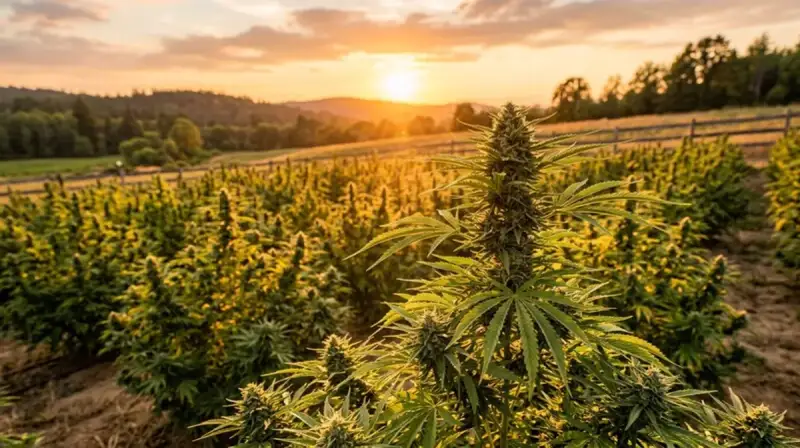
Pure Panamanian sativa landrace — legendary 1960s–70s strain. 16–20% THC, 3–5 hour cerebral high, collector’s genetics with 11–13 week flowering.
THC
16–20%
CBD
<0.5%
Type
Sativa 100%
Flowering
11–13 Weeks
7 Key Findings
Panama Red is one of the most historically significant cannabis strains — a pure Panamanian sativa landrace smuggled into the USA during the 1960s–70s, regarded as some of the finest cannabis of its era
THC 16–20% — moderate by modern standards, but the pure sativa effect profile produces a uniquely long-lasting, clear, functional cerebral high fundamentally distinct from modern hybrids
Long flowering time (11–13 weeks) is its primary limitation for modern growers — but the full sativa expression requires this extended photoperiod to fully develop terpene and cannabinoid complexity
Terpene profile: terpinolene / ocimene / limonene — producing spicy, citrus, cedar, and pine aromas characteristic of Central American equatorial sativas
The “red” refers to prominent red/orange pistils that develop during late flowering — a phenotypic characteristic of the original Panamanian genetics, not a color-triggered trait
Effects last exceptionally long: 3–5 hours of sustained cerebral euphoria with minimal body effect — described as a “thinking high” with strong creative and social properties
Collector’s and connoisseur strain — rarely available commercially; mostly preserved by seed collectors and cannabis genetic heritage programs worldwide
Strain Overview
Panama Red occupies a unique position in cannabis history. It is not a hybrid, not a breeder creation, not a laboratory product — it is an original landrace sativa that grew wild or in traditional cultivation in the tropical highlands of Panama for generations before American smugglers brought it north in the 1960s. During the counterculture era, it was considered premium imported cannabis — the Panamanian equivalent of Colombian Gold or Acapulco Gold.
The strain became an icon. New Riders of the Purple Sage recorded a song named after it in 1973. Vietnam veterans brought seeds and stories home. Its clear, functional, extraordinarily long-lasting cerebral high was unlike anything being grown domestically at the time, and it set a standard for what pure sativa cannabis could feel like that no modern hybrid has quite replicated.
Today, Panama Red is preserved by landrace genetics specialists and collector seed banks. Its extreme growing requirements — 11–13 weeks of flowering, tropical climate preference, very tall growth habit — make it commercially impractical in an era dominated by fast-finishing hybrid strains. But for growers and connoisseurs interested in cannabis history, it remains essential.
Property
Detail
Genetics
Panamanian sativa landrace (pure sativa)
Origin
Panama (tropical highlands / equatorial climate)
Era
1960s–1970s (USA counterculture period)
Classification
Sativa (100% or near-pure landrace)
THC Range
16–20%
CBD
<0.5%
Availability
Rare; seed collectors and heritage programs only
Effects Profile
Panama Red’s effects are the defining reason for its legendary status. Unlike modern high-THC hybrids that often produce fast-onset, intense, and relatively short experiences, Panama Red delivers a building, sustained, clear-headed cerebral high that lasts 3–5 hours. The onset is gradual — 20–30 minutes before full effect — and the peak is characterized by expansive creative thinking, social energy, and a sense of mental clarity rather than sedation or confusion.
The body component is minimal. Panama Red is a brain experience: users report increased verbal fluency, philosophical thinking, sensory enhancement (music sounds richer, colors appear more vivid), and strong social motivation. It was the strain of artists, musicians, and writers in the 1960s and 1970s counterculture for exactly these reasons. Even at 16–20% THC, the pure sativa cannabinoid profile does not produce the paranoia or anxiety that high-percentage modern hybrids sometimes cause in sensitive users.
Effect
Intensity
Notes
Creativity
Very High
Primary reported effect; expansive thinking
Euphoria
Very High
Sustained 3–5 hours
Energy
High
Functional, motivated energy
Focus
High
Clear-headed; not scattered
Sociability
High
Social motivation, verbal fluency
Body High
Very Low
Minimal — pure cerebral experience
Terpene Profile
Panama Red’s terpene profile reflects its equatorial landrace origin. Terpinolene leads — unusually common as a dominant terpene and producing the distinctive pine-cedar-spice aroma that Old World cannabis connoisseurs associate with classic Central American sativas. Ocimene adds sweet floral and herbal complexity, while limonene contributes the citrus brightness that gives Panama Red its characteristic fresh, energizing scent.
The low myrcene content is significant: myrcene is the terpene most associated with sedative indica effects. Panama Red’s terpene profile is essentially the inverse of an indica strain — high in terpinolene and ocimene, low in myrcene — which directly corresponds to its stimulating, non-sedating, cerebral effect profile.
Panama Red smells like a tropical forest crossed with a spice market. The dominant impression on opening is cedar, pine resin, and a bright citrus-spice warmth — complex and immediately identifiable as something different from the sweet, candy-like profiles that dominate modern hybrid cannabis. There is an almost incense-like quality to the aroma: old-world, natural, and layered.
The smoke is notably smooth for a pure sativa. The flavor on the inhale is spiced citrus with a cedar warmth; the exhale delivers a long, lingering finish of pine resin and sweet herbs. Long-time cannabis connoisseurs who experienced Panama Red in its 1970s commercial era consistently describe it as one of the most complex and satisfying flavor profiles they ever encountered, and contemporary growers working with heritage genetics report that the terpene expression in properly-cured specimens justifies its legendary reputation.
Growing Guide
Panama Red is an advanced-level grow — not appropriate for beginners or anyone without significant space, time, and climate management capability. As a pure equatorial sativa landrace, it evolved under tropical conditions with 12/12 light cycles year-round and no seasonal temperature variation. Replicating these conditions indoors requires either accepting very long photoperiod cycles or using specialized techniques to accelerate maturation.
Height is the most immediate challenge: Panama Red can reach 200–300cm indoors if not aggressively trained. Topping, LST, and SCROG techniques are mandatory. The 11–13 week flowering period means significantly higher electricity costs for indoor grows, and the long cycle increases exposure to pests and mold. Outdoors, the strain requires a tropical or near-tropical climate — it will not finish properly in northern temperate climates before first frost. However, for growers in Southern California, Florida, or tropical regions, outdoor Panama Red plants can produce extraordinary yields of 600–900g per plant.
Parameter
Value
Notes
Difficulty
Advanced
Experienced growers only
Indoor Yield
300–400 g/m²
SCROG + aggressive training required
Outdoor Yield
600–900 g/plant
Tropical climate, full season
Height
200–300 cm
Mandatory topping/training indoors
Flowering Time
11–13 weeks
Photoperiod; longest of all common strains
Climate
Tropical / equatorial
Florida, SoCal, Hawaii outdoors
Harvest (Outdoor)
Late November–December
Much later than hybrid strains
Medical Uses
Panama Red’s pure sativa profile makes it valuable for specific medical applications where stimulation and mood elevation are therapeutic goals and sedation is contraindicated. For patients managing depression, fatigue, and ADHD, the long-lasting cerebral uplift, sustained focus, and social motivation are directly beneficial — and the clear-headed nature of the high means users can remain functional throughout the therapeutic window.
For mood disorders, the combination of terpinolene and limonene with the pure sativa cannabinoid profile provides a sustained elevation that differs qualitatively from the quick-onset, short-duration experiences of modern hybrids. Medical cannabis patients who struggle with high-THC anxiety and paranoia from indica or hybrid strains often tolerate Panama Red well, as the equatorial sativa cannabinoid metabolism tends to produce less anxiogenic response in sensitive users. Its rarity, however, limits clinical accessibility significantly.