










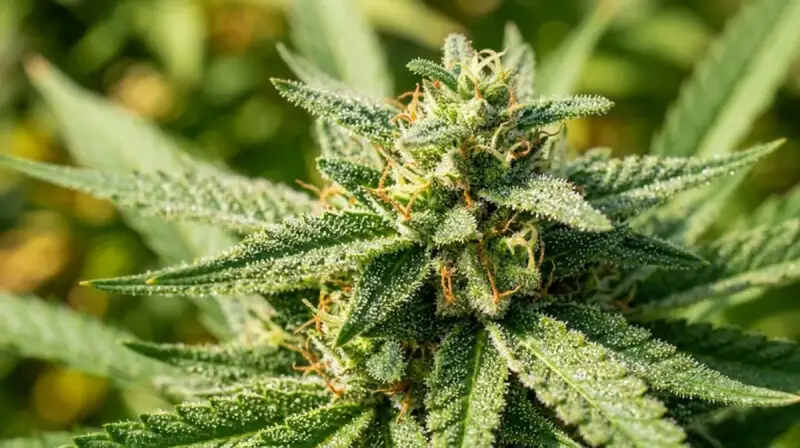
Grape Ape: California’s Most Iconic Purple Indica
Grape Ape is a classic California indica that has earned its place in the cannabis canon through a combination of extraordinary grape-candy flavor, deep physical sedation, and spectacular purple coloration. Developed by Apothecary Genetics as a three-way cross of Mendocino Purps, Skunk #1, and Afghani, and brought to global prominence by Barney’s Farm through multiple Amsterdam Cannabis Cup wins, it is simultaneously one of the most recognizable strains by aroma and one of the most reliable for nighttime medical use. For insomnia, chronic pain, and PTSD patients, Grape Ape is a consistent, well-documented choice.
- Grape Ape was developed by Apothecary Genetics and popularized by Barney’s Farm — a three-way cross of Mendocino Purps, Skunk #1, and Afghani that combines the fruit flavor of Mendocino with the growth characteristics of Skunk
- One of the most distinctively grape-scented strains in existence — the dominant myrcene + linalool + caryophyllene profile creates an intensely sweet grape candy aroma
- THC 18-21% with classic heavy indica effects: immediate full-body relaxation, significant sedation within 30-45 minutes, strong appetite stimulation, pain relief
- The vivid purple coloration (inherited from Mendocino Purps) develops naturally in cool overnight temperatures — among the most photogenic purple strains available
- Multiple Cannabis Cup awards at Amsterdam competitions — recognized for both flavor and potency
- Fast flowering (7-8 weeks) and compact growth — one of the easier heavy indicas to grow, suitable for intermediate indoor growers
- Medical: insomnia, chronic pain, stress, PTSD, appetite stimulation — the heavy sedation and appetite effects make it particularly useful for chemotherapy patients and eating disorders
Genetics & Origins: Three-Way California Indica
Grape Ape’s genetic architecture is a deliberate study in complementary indica strengths. Mendocino Purps — a legendary Mendocino County, California variety known for its fruit flavor, purple expression, and potent relaxation — forms the flavor and visual foundation. Skunk #1, one of the most influential cannabis varieties in breeding history, contributes growth vigor, structural consistency, and a reliable earthy backbone that grounds the fruit notes. Afghani — the ancient Central Asian indica landrace — provides the deep physical sedation, dense bud structure, and heavy resin production that elevates Grape Ape from a flavor variety to a serious medical indica.
Apothecary Genetics, a California-based seed company, developed the original Grape Ape cross. Barney’s Farm, the Amsterdam-based seed bank and dispensary responsible for some of the most commercially successful cannabis varieties of the 2000s and 2010s, acquired and popularized the genetics internationally. Barney’s brought Grape Ape to the Amsterdam Cannabis Cup, where it won multiple awards for indica quality and flavor — cementing its reputation well beyond the California market where it originated.
Grape Ape belongs to a broader family of Mendocino-flavored California indicas alongside Granddaddy Purple (Ken Estes’ Purple Urkle x Big Bud cross) and Mendo Breath. The three strains share regional DNA but differ significantly in their terpene expression and effect profiles — GDP leans grape and berry, Mendo Breath leans vanilla-caramel, and Grape Ape leans most intensely toward a concentrated grape-candy sweetness. For a side-by-side comparison, see our strain comparison tool.
Terpene Profile: Grape Candy & Earthy Depth
Grape Ape’s extraordinary grape-candy aroma is driven by a myrcene-dominant terpene profile with significant linalool contribution. Myrcene at ~0.48% is among the highest concentrations measured in any widely available indica — it provides both the herbal earthiness that grounds the aroma and the potent sedative body effect. Linalool’s floral sweetness interacts with myrcene to create the concentrated fruit quality. Caryophyllene’s spicy depth adds complexity. Read our full terpene guide.
| Terpene | Concentration | Aroma Note | Primary Effect |
|---|---|---|---|
| Myrcene | ~0.48% | Earthy, musky, grape, herbal | Muscle relaxation, sedation, THC potentiation |
| Linalool | ~0.35% | Floral, lavender, grape sweetness | Anxiolytic, sedation, sleep enhancement |
| Caryophyllene | ~0.28% | Spicy, peppery, earthy | Anti-inflammatory, CB2 agonist, stress |
| Humulene | ~0.18% | Earthy, hoppy, woody | Anti-inflammatory |
| Alpha-Pinene | ~0.12% | Pine, fresh | Mental clarity, bronchodilator |
Myrcene at 0.48% is particularly significant for medical users. Research suggests myrcene potentiates THC’s sedative effects by facilitating BBB permeability, contributing to the “couch-lock” phenomenon more strongly than THC alone. Combined with linalool’s sleep-promoting properties, this makes Grape Ape pharmacologically distinct from other 18-21% THC strains with lower myrcene concentrations — the effect is heavier and more sedating than the THC number alone would suggest.
Effects: Full-Body Indica Sedation
Grape Ape delivers a definitive heavy indica experience. The 90/10 indica dominance means there is minimal cerebral activity — what little sativa component exists provides only a brief initial mood lift before the body effect takes complete control. This is emphatically a nighttime strain. Explore cannabis effects in full detail or see the sedation effects guide.
| Effect | Intensity | Onset | Duration |
|---|---|---|---|
| Sedation | Very High | 30–45 min | 2–4 hrs |
| Full Body Relaxation | Very High | 15–30 min | 2–4 hrs |
| Body High | Very High | 15–30 min | 2–3 hrs |
| Euphoria | Moderate | 5–15 min | 45–90 min |
| Happiness | Moderate | 5–15 min | 1–2 hrs |
| Appetite Stimulation | Very High | 20–40 min | 2–3 hrs |
| Creativity | Low | — | — |
Phase 1: Brief Warm Euphoria (0–20 min)
Grape Ape opens with a short-lived but genuine warmth — a mood lift and sense of happiness that makes the first few minutes pleasant and social. This sativa-like opener is brief by design: the Afghani and Mendocino Purps genetics quickly assert their dominance, and what follows is unmistakably indica. Use this window for light conversation or settling into a comfortable space before the body effect arrives.
Phase 2: Progressive Body Takeover (20–60 min)
The transition from Phase 1 to Phase 2 in Grape Ape is notably fast — within 20-30 minutes of onset, a heavy, warm pressure spreads from the chest through the limbs. Muscle tension releases comprehensively. Any remaining mental activity becomes dreamlike rather than sharp. Hunger arrives at this phase with considerable force — Grape Ape’s appetite stimulation is a defining trait, useful therapeutically and important to plan around recreationally.
Phase 3: Deep Sedation & Sleep (60 min+)
In the final phase, Grape Ape delivers what it is known for: deep, comfortable sedation that transitions naturally into sleep for most users within 1-2 hours. Couch-lock is common and pronounced. At standard doses (1-2 hits), most users will be asleep within 90-120 minutes. At higher doses, onset of sedation is faster. This reliability is one reason Grape Ape has maintained its medical reputation over many years despite the emergence of higher-THC competitors.
Flavor & Aroma: Grape Candy & Sweet Earth
The flavor of Grape Ape is one of its most celebrated qualities. The first encounter — breaking open a well-cured nug or opening a jar — delivers an immediate burst of artificial grape candy that is intensely recognizable. It is not subtle. The nose is sweet, fruity, and almost confectionery in its initial impression. Up close, earthy Skunk and Afghani undertones add depth — preventing the profile from being one-dimensional.
The smoke or vapor is rich and sweet on inhale, carrying the grape note through to a smooth, earthy exhale. The Afghani genetics contribute a thick, resinous quality to the smoke that coats the palate. The finish is grape with an earthy, slightly hoppy note from the humulene content. At lower vaporizer temperatures (185-195°C), the grape and linalool sweetness is most prominent. At higher temperatures (200-215°C), the caryophyllene spice and myrcene earthiness come forward. The purple coloration of well-grown specimens — particularly striking under indoor lighting — makes Grape Ape one of the most photographed strains in dispensary showcases globally.
Growing Grape Ape
Grape Ape is one of the more accessible heavy indicas for intermediate growers. The combination of short flowering time (7-8 weeks), compact growth habit (70-110cm indoors), and Skunk #1’s inherent vigor and resilience makes it significantly less demanding than many comparable heavy indicas, including Afghani-heavy genetics that can be finicky about nutrition and humidity.
| Parameter | Indoor | Outdoor |
|---|---|---|
| Flowering Time | 7–8 weeks | Early-Mid October harvest |
| Yield | 400–500g/m² | 500–650g per plant |
| Height | 70–110cm | 100–150cm |
| Difficulty | Easy–Medium | Easy–Medium |
| Mold Resistance | Moderate | Moderate (monitor in late flower) |
| Climate | Temperate, 22–26°C | Temperate, Mediterranean-type |
Grape Ape’s compact stature makes it an excellent choice for tent growers with limited vertical space. Even without topping, the plant rarely exceeds 110cm indoors. Topping once in early veg significantly improves cola count and yield. SOG (sea of green) setups work particularly well given the short flowering time and uniform height. The Afghani genetics mean dense, heavy buds in late flower — good air circulation in the final 2 weeks is essential to prevent botrytis (bud rot) in higher-humidity environments. See our indoor growing basics and organic pest control guide for full setup detail.
To trigger purple coloration indoors, drop nighttime temperatures to 12-16°C for the final 2-3 weeks of flower. This is the optimal window for anthocyanin expression. Temperatures must be genuinely cool — mild variations of 2-3°C are insufficient. Diurnal temperature swings of 8-12°C consistently produce the deep purple buds that make Grape Ape so distinctive. The purple coloration does not affect potency or flavor. Read our when to harvest guide for harvest timing detail.
Medical Uses
Grape Ape’s heavy indica profile makes it one of the most consistently useful medical strains for conditions requiring body effect, sedation, and appetite stimulation. Its relatively approachable growing difficulty and wide dispensary availability make it more accessible than some comparable medical indicas. Always consult a licensed healthcare provider before using cannabis for any medical condition.
| Condition | Mechanism | Notes |
|---|---|---|
| Insomnia | Myrcene + linalool sedation + THC sleep induction | 1–2 hrs before bed; consistent effect |
| Chronic Pain | Caryophyllene CB2 + THC analgesic + myrcene potentiation | Evening/nighttime use |
| PTSD / Anxiety | Linalool anxiolytic + heavy relaxation interrupting rumination | Evening; avoid high doses if anxiety-prone |
| Appetite Stimulation | THC ghrelin + myrcene potentiation (strong) | Chemotherapy nausea, eating disorders, cachexia |
| Muscle Spasms / Tension | Myrcene muscle relaxant + THC antispasmodic | Evening; MS, fibromyalgia, tension headaches |
| Stress | Euphoric onset + deep physical release | After-work; not for active-day use |
For chemotherapy patients specifically, Grape Ape’s combination of very strong appetite stimulation and deep nausea-relieving sedation covers two of the primary quality-of-life challenges of chemotherapy simultaneously. For insomnia patients, the myrcene+linalool combination provides a dual-pathway approach to sleep induction that many patients find more effective than myrcene-only indicas. Read our full cannabis for insomnia guide, cannabis for pain guide, and cannabis for PTSD guide for detailed condition coverage.
Similar Strains
Grape Ape sits within the premium California indica category alongside Granddaddy Purple, Mendo Breath, and several other fruit-forward heavy indicas. The table below compares key differences for dispensary selection. Use our strain comparison tool or browse the full strain index.
| Strain | Type | THC | Shared Quality | Key Difference |
|---|---|---|---|---|
| Granddaddy Purple | Indica | 17–23% | Purple California indica, sedation | Berry/grape mix vs. concentrated grape, slightly lighter effect |
| Mendo Breath | Indica 80/20 | 19–22% | Mendocino genetics, deep sedation | Vanilla-caramel flavor vs. grape; slower flowering |
| Northern Lights | Indica | 16–21% | Heavy body sedation, Afghani heritage | Pine/sweet flavor, classic 80s genetics |
| Purple Kush | Indica | 17–22% | Purple coloration, deep sedation | Earthy/floral flavor vs. grape candy; OG lineage |
| Sherbet | Hybrid 60/40 | 18–24% | Fruit flavor, California craft genetics | Much more balanced effects, citrus-berry vs. grape |
Related: All Cannabis Strains · Effects Guide · What Is a Cannabis Strain? · Granddaddy Purple · Myrcene Terpene