










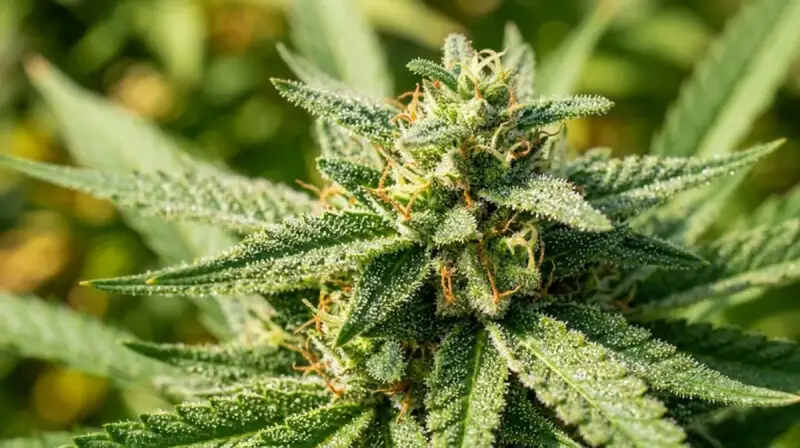
Congolese: Africa’s Rarest Cerebral Landrace
Congolese is one of the rarest and most sought-after cannabis landraces in existence — a pure or near-pure sativa originating in the lowland regions of the Democratic Republic of Congo. With a lower THC range than modern hybrids (14-18%), it compensates with an extraordinarily long-lasting, deeply cerebral high lasting 4-6 hours that is qualitatively distinct from anything a hybrid can produce. Coveted by genetic preservationists, experienced cannabis collectors, and breeders seeking genuine African sativa genetics, Congolese is not a dispensary staple — it is a living piece of cannabis history.
- Congolese is one of the rarest and most prized African sativa landraces — originating in the lowland regions of the Democratic Republic of Congo and collected by genetic preservation projects
- Lower THC (14-18%) but extremely long-lasting cerebral high (4-6 hours) characteristic of equatorial African sativas — the experience is qualitatively distinct from modern high-THC hybrids
- Unlike most commercial sativas, Congolese tends toward a grounded, philosophical “thinking high” rather than anxious or racing thoughts — attributed to the equatorial landrace terpene balance
- Extremely long flowering period (12-14 weeks) limits commercial viability — Congolese is primarily cultivated by collectors, genetic preservationists, and enthusiasts
- Dominant terpenes: terpinolene / ocimene / pinene — producing an unusual earthy, spicy, citrus, and forest-floor aroma quite different from hybridized Western genetics
- Increasingly difficult to source authentic Congolese genetics — many labeled “Congolese” seeds are mislabeled hybrids; true specimens come from genetic preservation collections (ACE Seeds, etc.)
- Important in cannabis breeding history: African genetics contributed to the development of many classic 1970s-80s strains including the Durban Poison lineage
Origins & Genetics: The Democratic Republic of Congo
Cannabis has been cultivated in Central and West Africa for centuries — some ethnobotanical accounts suggest Congolese peoples have used the plant ceremonially and medicinally for over 1,000 years. The Democratic Republic of Congo sits almost exactly on the equator, and the cannabis that evolved in its lowland tropical climate developed over generations into strains uniquely adapted to high humidity, intense equatorial light, and a stable 12/12 photoperiod that barely varies across the seasons. These are the conditions that shaped Congolese genetics.
Unlike the breeding-program strains developed in California, the Netherlands, or Spain, a true Congolese is an open-pollinated landrace — meaning it has been selected by the local environment and by human cultivation practices over many generations without deliberate hybridization. The result is a genetically diverse but phenotypically consistent plant that expresses the characteristic African sativa traits: extreme height, loose airy buds, long internodal spacing, very long flowering time, and a terpene profile dominated by terpinolene, ocimene, and pinene rather than the myrcene-dominant profiles of most commercial cannabis.
Congolese genetics were collected and preserved by seed banks specializing in African cannabis, most notably ACE Seeds (Spain), which has one of the most comprehensive African landrace genetics collections available to the public. Without these preservation efforts, true Congolese genetics would be at risk of being lost to hybridization — a fate that has already overtaken many African landraces whose names survive on labels but whose genetics have been diluted beyond recognition. See our DRC cannabis country guide and our Africa cannabis overview for regional context.
Congolese genetics sit within a broader African sativa family that includes Durban Poison (South Africa), the Malawi Gold, and Kilimanjaro strains. African genetics more broadly contributed to the first-generation sativa hybrids that defined Western cannabis culture in the 1970s and 1980s, often through Colombian x African F1 crosses. Understanding Congolese is, in part, understanding the ancestry of modern cannabis itself.
Terpene Profile: Earthy, Citrus & Forest Floor
Congolese’s terpene profile is immediately distinctive to experienced cannabis users. Dominated by terpinolene and ocimene — both rare as lead terpenes in commercial cannabis — it produces an aroma unlike almost any hybrid: earthy, faintly citrus, with a forest-floor quality that has been described as “green,” “fresh pine,” and “herbaceous.” There is none of the fuel, candy, or cookie aromas that define modern hybrids. Explore the full terpenes guide for in-depth coverage of each compound.
| Terpene | Concentration | Aroma Note | Primary Effect |
|---|---|---|---|
| Terpinolene | ~0.40% | Fresh pine, floral, herbal | Uplifting, anti-oxidant, mild sedation at high concentrations |
| Ocimene | ~0.30% | Sweet, herbal, woody, tropical | Uplifting, decongestant properties |
| Alpha-Pinene | ~0.22% | Pine, fresh forest | Mental clarity, memory retention, bronchodilator |
| Limonene | ~0.18% | Citrus, lemon | Mood elevation, anti-anxiety |
| Myrcene | ~0.10% | Earthy, musky | Minor muscle relaxation |
The terpinolene + ocimene combination is characteristic of African equatorial sativas. Terpinolene is associated with uplifting, energizing effects and is found in high concentrations in Jack Herer (which carries some African sativa genetics), among others. Pinene’s presence at 0.22% likely contributes to the mental clarity and focus that Congolese users report — pinene is a bronchodilator that may enhance bioavailability and is associated with acetylcholinesterase inhibition, potentially supporting memory and alertness. The near-absence of myrcene explains why Congolese does not produce the body-heavy, sedative effect that most modern cannabis provides.
Effects: A 4–6 Hour Cerebral Journey
Congolese’s effect profile requires a different framework than most cannabis strains. Its lower THC does not mean a weaker experience — it means a different one. The high is primarily cerebral, focused, and energetic, with almost no body component. Duration is 4-6 hours, which is 2-3x longer than most modern hybrids. This reflects the landrace quality: equatorial sativa genetics did not evolve for quick recreational effects. Explore cannabis effects in detail.
| Effect | Intensity | Onset | Duration |
|---|---|---|---|
| Creativity | Very High | 20–40 min | 3–6 hrs |
| Energy | High | 15–30 min | 3–5 hrs |
| Focus | High | 20–40 min | 2–4 hrs |
| Euphoria | High | 20–35 min | 2–4 hrs |
| Cerebral Intensity | Very High | 20–40 min | 4–6 hrs |
| Body High | Very Low | — | — |
| Sedation | None | — | — |
The Congolese High: Grounded Rather Than Anxious
What most experienced Congolese users emphasize is the quality of the high, not just its intensity. High-THC modern sativas often produce a wired, edge-of-anxiety cerebral experience. Congolese tends toward something different: a grounded, philosophical mental clarity that lends itself to deep concentration, artistic work, or sustained conversation. This is not guaranteed — set, setting, and individual biochemistry all play a role — but the terpinolene/pinene/ocimene profile appears to modulate the THC experience in a way that reduces anxiety relative to limonene-dominant commercial sativas at comparable THC levels.
The 4-6 hour duration must be factored into any use decision. Congolese is not a strain to try before work, a social obligation, or any activity requiring reliable recovery time. Plan for a half-day. The slow, gradual onset — 20-40 minutes, unusually long for smoked cannabis — means impatient users who re-dose risk an overwhelming experience. Start low, wait fully, and give the strain time to express itself.
Flavor & Aroma: Forest Floor, Citrus & Spice
Congolese has an aroma profile that stands out sharply from the modern cannabis market. The nose is green, earthy, and faintly citrus — more reminiscent of a forest floor or fresh herbs than anything candy or fuel-adjacent. Up close, a woody spice note from the ocimene and a bright pine freshness from the terpinolene and pinene create a complex, natural fragrance. The smoke or vapor is relatively light — less dense than a resin-heavy hybrid — with a clean, herbal exhale and a citrus-pine finish that lingers briefly.
Experienced smokers who have sampled Durban Poison, Malawi Gold, or other African sativas will recognize a family resemblance: the same green-earthy freshness, the same absence of the dessert-candy notes that dominate the modern market. At its best, Congolese smells like what cannabis is: a plant with deep roots in the equatorial tropics, not a lab-engineered flavor delivery system.
Growing Congolese: Expert Only
Congolese is one of the most challenging cannabis strains to cultivate successfully. The combination of extreme flowering time, very tall growth habit, and sensitivity to non-equatorial conditions makes it a project for experienced growers only. It is emphatically not suitable for beginners.
| Parameter | Indoor | Outdoor (optimal) |
|---|---|---|
| Flowering Time | 12–14 weeks | Until late December (equatorial) or with light dep. |
| Yield | 250–350g/m² | 500–800g per plant |
| Height | 150–250cm (needs control) | 200–350cm |
| Difficulty | Very Hard | Hard (equatorial / subtropical only) |
| Climate | Warm, high humidity, stable temps | Equatorial tropical (DRC-type climate) |
| Mold Resistance | Moderate (airy buds help) | Good in native climate |
Indoor cultivation of Congolese requires aggressive height management from the beginning of flower. The plant stretches dramatically in the first 4-6 weeks after flip — a 60cm veg plant can reach 200cm+ by mid-flower. SCROG (screen of green) or heavy LST is essential. Even then, room height must be planned for at least 250cm. See our SCROG guide and LST guide for technique detail.
Buds are characteristically loose and airy — unlike the dense, resinous nuggets of modern hybrids. This is partly why Congolese is not commercially viable: the low bud density produces lower yields per gram compared to modern strains. However, the airy structure does provide natural resistance to botrytis (bud rot), which is one small advantage. For outdoor cultivation, equatorial or sub-tropical climates are essential; temperate European or North American outdoor conditions will not allow Congolese to finish naturally before frost. Read our strain guide and growing section for full cultivation resources.
Medical Uses
Congolese’s medical profile is focused on the mind rather than the body. Its energizing, focused, long-lasting cerebral effect makes it potentially useful for conditions where daytime function and mental engagement are the priority. Always consult a licensed healthcare provider before using cannabis for any medical condition.
| Condition | Mechanism | Notes |
|---|---|---|
| Depression (moderate) | Long-duration mood elevation, energy restoration | Daytime, low-to-moderate dose |
| Fatigue / Low Energy | Energizing sativa effects, 4-6 hr duration | Morning or early afternoon only |
| ADHD / Focus Disorders | Pinene cognitive clarity + focused cerebral high | Low dose only; paradoxically sedating at high doses |
| Mood Disorders | Extended euphoric cerebral stimulation | Should avoid if anxiety-prone |
Congolese is not appropriate for pain, insomnia, muscle disorders, or any condition requiring body-effect cannabis. Its near-zero sedation and negligible body component mean it provides nothing for physical medical applications. For those conditions, see our cannabis for pain guide and cannabis for insomnia guide for appropriate strain options.
Similar Strains: African & Equatorial Sativas
Congolese belongs to a small, highly specialized category of African and equatorial sativa landraces. These are not common dispensary strains — they are collector and preservation specimens. The table below compares Congolese to related or effect-comparable strains. Browse the full strain index.
| Strain | Origin | THC | Similarity | Key Difference |
|---|---|---|---|---|
| Durban Poison | South Africa | 15–20% | African sativa, energizing, cerebral | Shorter flower (9-10w), anise/pine aroma, wider availability |
| Jack Herer | Netherlands (African genetics) | 18–24% | Terpinolene-forward, energizing, creative | Hybrid (Haze + Skunk), shorter flower, much more available |
| Amnesia | Netherlands/UK (Haze lineage) | 20–25% | Cerebral sativa, long effect duration | Higher THC, haze genetics, more anxiety risk |
| Super Silver Haze | Netherlands | 18–23% | Long-lasting cerebral energy | Haze hybrid, more commercial, shorter flower |
| Granddaddy Purple | California | 17–23% | n/a (opposite profile) | Pure indica comparison for reference |
Related: All Cannabis Strains · Effects Guide · What Is a Cannabis Strain? · Granddaddy Purple · Terpinolene Terpene