










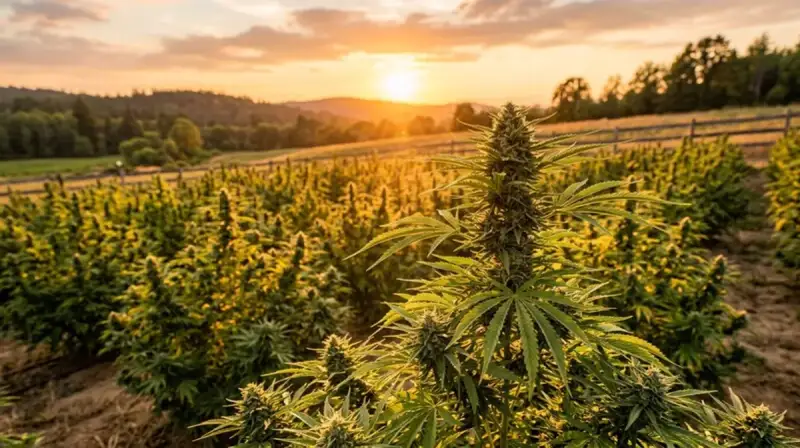
- Genetics: Green Crack × Tres Dawg (Rare Dankness)
- Breeder: Rare Dankness (Colorado)
- Named After: The Appalachian mountain range (Alabama to Maine)
- THC Range: 18–22%
- Top Terpenes: Terpinolene, Caryophyllene, Myrcene
- Main Effects: Energetic, clear-headed, focused, uplifting — Green Crack energy tempered by Dawg earthiness
- Medical Uses: Fatigue, depression, ADHD, stress
- Yield (Indoor): 350–450g/m² | Grow Difficulty: Moderate
- Aroma: Earthy, citrus, pine — clean and complex
Genetics & Rare Dankness Breeding Programme
Appalachia was created by Rare Dankness, a Colorado-based seed company that has built a reputation for precision genetic work combining elite cuts with stabilised, consistent seed production. The cross brings together Green Crack — the relentlessly energetic sativa made famous by Snoop Dogg’s naming — and Tres Dawg, a Chemdawg 4 × Afghani cross that anchors the Dawg family’s genetic legacy.
The pairing is intentionally complementary rather than reinforcing. Green Crack delivers pure sativa energy, bright citrus-tropical terpenes, and mental clarity at a level few strains can match. Tres Dawg provides the counterbalance: earthy, grounding Dawg genetics that smooth out Green Crack’s potential edge, add body depth, and introduce the complex diesel-earth terpene character that Chemdawg lineages are famous for. The result is a sativa-dominant strain that retains Green Crack’s functional energy while acquiring a level of complexity and groundedness that makes it more versatile and accessible.
The Tres Dawg parent — itself a Chemdawg 4 × Afghani F1 — connects Appalachia to the broader Dawg and Chemdawg family, linking it genetically to strains like Stardawg, OG Kush, and Sour Diesel. The Afghani component introduces the physical depth and resin-production traits that prevent Appalachia from being purely a head strain.
Green Crack Crosses: Comparison
Green Crack has been used extensively as a breeding parent to add sativa energy to other genetic lines. This table places Appalachia within that broader cross-breeding landscape.
| Strain | Green Crack × | Effect Character | Aroma | THC |
|---|---|---|---|---|
| Appalachia | Tres Dawg | Energetic + earthy Dawg depth | Earthy, citrus, pine | 18–22% |
| Green Crack (original) | — (Skunk #1 lineage) | Pure cerebral energy, racy | Citrus, tropical, sweet | 17–25% |
| Green Crack CBD | CBD Skunk Haze | Mild energy, very balanced | Citrus, sweet | 5–8% |
| Green Alien | Alien OG | Energetic + strong body | Citrus, OG fuel | 20–26% |
| Green Dream | Blue Dream | Uplifting, smooth, creative | Berry, citrus, herbal | 17–22% |
Rare Dankness Genetics: Selected Catalogue Highlights
Rare Dankness has developed a distinctive portfolio of Colorado-bred strains that balance potency with genetic precision. Appalachia is one of their most recognised releases. This table provides context for where it sits within their broader output.
| Strain | Genetics | Type | Primary Effect | Notable For |
|---|---|---|---|---|
| Appalachia | Green Crack × Tres Dawg | Sativa-dominant | Focused energy | Rare Dankness flagship sativa |
| Ghost Train Haze | Ghost OG × Neville’s Wreck | Sativa-dominant | Extreme cerebral intensity | High THC, multiple awards |
| Tres Dawg | Chemdawg 4 × Afghani | Hybrid | Balanced cerebral + body | Appalachia parent; Dawg family anchor |
| Rare Dankness #1 | Ghost OG × Chemdawg Sour D | Hybrid | Euphoria, body relaxation | Diesel-OG hybrid; original RD release |
| Rare Dankness #2 | Chem’s Sister × Rare Dankness #1 | Hybrid | Potent full-spectrum | Chemdawg genetic concentration |
Cannabinoid & Terpene Profile
Appalachia’s terpene identity blends Green Crack’s Terpinolene-led brightness with the Caryophyllene-Myrcene earthiness of Tres Dawg. The result is a clean, complex profile that reads as earthy-citrus-pine — distinctive enough to stand out in a crowd and versatile enough to appeal across different preference profiles. See our terpene guide for full compound details.
| Compound | Type | Typical % | Sensory Role | Reported Effect |
|---|---|---|---|---|
| THC | Cannabinoid | 18–22% | — | Euphoria, focus, mood elevation |
| CBD | Cannabinoid | <1% | — | Minimal modulation |
| Terpinolene | Terpene | 0.4–0.9% | Pine, herbal, fresh | Uplifting, clear-headed |
| Caryophyllene | Terpene | 0.3–0.6% | Spicy, pepper, earthy | Anti-inflammatory, CB2 activity |
| Myrcene | Terpene | 0.2–0.5% | Earthy, musky, herbal | Grounding, body relaxation |
| Limonene | Terpene | 0.1–0.4% | Citrus, lemon | Mood elevation, anxiety reduction |
Effects of Appalachia
Appalachia is best understood as Green Crack with a personality transplant. The energy is there — the focused, motivating cerebral stimulation that Green Crack is famous for — but the Tres Dawg genetics add complexity, earthiness, and a grounding physical component that prevents the experience from tipping into anxiety. Onset via smoking or vaping is rapid at 5–15 minutes; peak at 20–45 minutes; full duration 2–3 hours. See our effects guide for broader context.
Phase 1: Clean Cerebral Activation (0–20 min)
Appalachia opens with Green Crack’s signature cerebral surge — a clean, bright mental clarity that feels like waking up on an ideal morning. Motivation arrives without the restlessness or anxiety edge that pure Green Crack can produce in sensitive users. Creative thinking becomes active, focus narrows pleasantly to the task at hand, and the Dawg earthiness provides just enough grounding to prevent the experience from feeling unmoored.
Phase 2: Focused Peak (20–90 min)
The peak is productive and social. Appalachia sits in the optimal zone for daytime use: focused enough for work or study, euphoric enough for social settings, mobile enough for outdoor activities. The Caryophyllene from Tres Dawg contributes anti-inflammatory CB2 activity during this phase — useful for users dealing with low-grade physical discomfort alongside fatigue or depression. The overall tone is upbeat and positive without the manic quality that very potent sativas can produce.
Phase 3: Smooth Descent (90 min+)
The high winds down smoothly as Myrcene’s relaxing influence becomes more prominent relative to the fading Terpinolene energy. Most users at moderate doses remain functional and comfortable during this phase. At higher doses, mild drowsiness can emerge. The transition is clean rather than abrupt, which is characteristic of well-bred Dawg genetics. For medical cannabis users targeting fatigue, depression, or ADHD, the focused peak phase is most therapeutically relevant.
Appalachia inherits the dense bud structure and trichome production of its Dawg genetics while expressing the sativa growth pattern of the Green Crack parent.
Functional Sativa Comparison: Appalachia vs. Alternatives
Appalachia sits in a competitive category of functional daytime sativas. This comparison helps identify which strain best suits different user profiles and conditions.
| Strain | Type | Energy Level | Anxiety Risk | Best For | Aroma |
|---|---|---|---|---|---|
| Appalachia | Sativa-dom hybrid | High | Low–moderate | Focus, ADHD, depression, fatigue | Earthy, citrus, pine |
| Green Crack | Sativa | Very high | Moderate (can be racy) | Energy, daytime tasks | Citrus, tropical |
| Sour Diesel | Sativa-dom hybrid | High | Moderate | Depression, social energy | Diesel, citrus |
| Jet Fuel | Sativa-dom hybrid | High | Low–moderate | Daytime, creative work | Fuel, pine, citrus |
| Durban Poison | Pure sativa | High | Moderate–high (pure sativa) | Focus, mental energy | Sweet, anise, earth |
Growing Appalachia
Appalachia combines Green Crack’s vigorous sativa growth pattern with the structural stability of Tres Dawg’s Afghani genetics. The result is a moderately challenging strain that grows more manageably than pure sativas — height is controlled by the Afghani component — while still requiring attention to branching and canopy management.
| Parameter | Indoor | Outdoor | Notes |
|---|---|---|---|
| Flowering Time | 8–9 weeks | Mid October | Faster than pure Green Crack |
| Yield | 350–450g/m² | 400–550g per plant | Moderate; increases significantly with training |
| Height | 90–140cm | 120–180cm | Moderate stretch; Afghani genes control height vs. pure sativa |
| Difficulty | Moderate | Moderate | Reliable; not as demanding as pure Sour Diesel |
| Preferred Medium | Soil or coco | Well-draining loam | Responsive to organic nutrients |
| Odour | Moderate–strong | Earthy-citrus from week 4 | Less pungent than OG/Diesel crosses; carbon filter still recommended |
Related Guides
Stardawg Sour Diesel Jet Fuel OG Kush Terpinolene Terpene Focus Effects Cannabis for Fatigue Drug Testing Guide Compare Strains All StrainsJordan Price
Cannabis cultivation specialist and strain researcher. Jordan has grown cannabis across soil, coco, and hydroponic systems for over a decade, with a focus on terpene expression and genetic documentation. Full profile →