










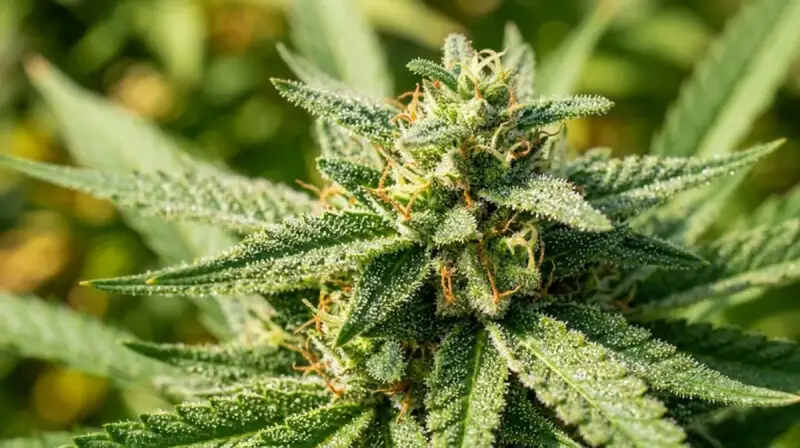
- Most restrictive category: Wyoming has no medical cannabis programme of any kind — not even a low-THC CBD oil exception for epilepsy. This places Wyoming among a handful of the most restrictive states in the US alongside Idaho and Kansas.
- Possession penalties: Up to 3 oz is a misdemeanor (up to 12 months jail, $1,000 fine). Over 3 oz triggers felony possession charges. Any amount of concentrates is a felony.
- Concentrate felony: Any amount of cannabis concentrate (wax, shatter, oil) is a felony in Wyoming regardless of quantity. This is unusually severe and creates severe risk for tourists traveling from legal states who carry vape cartridges.
- High arrest rate: Wyoming has among the highest cannabis arrest rates per 100,000 residents in the nation despite its sparse rural population. Major interstate highways (I-80, I-25) are active enforcement zones.
- Tourism gray zone: Wyoming is surrounded by states that have or are developing cannabis programmes (Montana, Colorado, Utah, Idaho, South Dakota, Nebraska, Kansas). Tourists from legal states bring significant illegal cannabis into Wyoming.
- Hemp and CBD legal: Following the federal Farm Bill, hemp-derived CBD products are legal and sold in Cheyenne, Jackson, and other Wyoming communities.
- No reform expected: The Wyoming Legislature has a Republican supermajority with deep ideological opposition to cannabis. No medical or recreational cannabis bill is expected to pass in the foreseeable future.
Wyoming Cannabis Law Quick Reference
| Category | Rule / Penalty |
|---|---|
| Recreational cannabis | Fully illegal |
| Medical programme | None — no programme of any kind |
| Possession ≤3 oz (first offense) | Misdemeanor: up to 12 months jail; $1,000 fine |
| Possession ≤3 oz (second offense) | Misdemeanor: up to 12 months; $1,000 fine |
| Possession >3 oz | Felony: up to 5 years prison; $10,000 fine |
| Possession of any concentrate (any amount) | Felony: up to 5 years; $10,000 fine |
| Distribution (≤3 oz, no payment) | Misdemeanor: up to 6 months; $750 fine |
| Distribution (for remuneration / >3 oz) | Felony: up to 10 years; $10,000 fine |
| Large-scale trafficking | Felony: up to life imprisonment (large commercial quantities); substantial fines |
| Home cultivation (any plants) | Felony (manufacturing); up to 5 years |
| Paraphernalia | Misdemeanor: up to 6 months; $750 fine |
| Hemp (≤0.3% THC) | Legal; Wyoming hemp programme |
| CBD products | Legal; widely sold statewide |
| Delta-8 THC | Gray area; sold in Cheyenne and Jackson; enforcement inconsistent |
| Decriminalization | None at state or local level |
The Concentrate Felony: Wyoming’s Most Dangerous Cannabis Law for Tourists
Wyoming’s most dangerous provision for tourists from legal states is the felony classification for cannabis concentrates. In Wyoming, any amount of cannabis concentrate — a single vape cartridge, a small container of wax, a pre-filled pen — is a felony offense. There is no misdemeanor threshold for concentrate possession. The charge is immediate felony regardless of whether the person has one gram or one hundred grams.
The practical risk for tourists is acute. Millions of visitors travel through Wyoming annually to reach Yellowstone National Park, Grand Teton National Park, and Jackson Hole ski and outdoor recreation destinations. Many of these visitors come from Colorado, California, Washington, Montana, or other legal states where they may have legally purchased vape cartridges, edibles with concentrate, or cannabis-oil tinctures. Bringing these products into Wyoming in a vehicle creates felony exposure the moment the vehicle crosses the state line.
A vape pen carrying 0.5 grams of concentrate purchased legally at a Colorado dispensary, transported into Wyoming by a tourist on their way to Yellowstone, results in a felony charge under Wyoming law. The tourist’s legal purchase in Colorado is irrelevant to Wyoming’s criminal framework. Wyoming state troopers on I-80 (the primary east-west route) and US-26/89 (through Jackson and the Tetons) actively enforce cannabis laws and have documented numerous arrests of tourists.
This risk extends to edibles containing concentrate-derived THC, which would likely be classified as concentrate under Wyoming’s statute, and to cannabis oil products. Flower — regular dried cannabis — is treated differently, with a misdemeanor threshold of 3 oz. But any form of processed, extracted, or concentrated cannabis product is felony territory regardless of amount.
Enforcement: High Arrest Rates Despite Rural Sparsity
Wyoming’s cannabis arrest data presents a paradox: despite being a sparsely populated, rural state with vast areas where law enforcement presence is minimal, Wyoming consistently ranks among the highest states in cannabis arrests per 100,000 residents. The ACLU and FBI Uniform Crime Report data consistently place Wyoming in the top tier nationally for cannabis arrest rates on a per-capita basis.
Several factors explain this. Wyoming’s major interstate highways — I-80 running east-west across the southern part of the state, and I-25 running north-south from Colorado to Casper and Buffalo — are primary overland routes and carry substantial traffic including from legal states. Wyoming State Highway Patrol has historically been aggressive in traffic enforcement, and cannabis detection is a standard part of roadside stops. The smell of cannabis in a vehicle constitutes probable cause for a search under Wyoming law.
| Enforcement Zone | Risk Level | Notes |
|---|---|---|
| I-80 corridor (Evanston–Cheyenne) | Very high | Primary route from Utah/Nevada/California; active trooper patrols; documented cannabis interdiction operations |
| I-25 (Colorado border–Cheyenne–Casper) | High | Direct route from Colorado (legal) north; high traffic; known enforcement zone |
| US-191 (Jackson Hole/Teton area) | High | Tourism corridor; visitors from legal states; year-round enforcement |
| US-89 (Yellowstone region) | Moderate–High | Major tourist route; Park service jurisdiction inside parks; Wyoming state law on approach roads |
| Remote rural areas | Low practical risk | Sparse enforcement; but if stopped, full penalties apply; no local de-emphasis |
Jackson Hole (Teton County) deserves special attention. Jackson is one of Wyoming’s most affluent and culturally progressive communities, home to significant wealth, outdoor recreation industry, and a transient population of resort workers who may come from legal states. Teton County has historically had somewhat different cultural norms around cannabis than the rest of Wyoming, but there is no local decrim ordinance and Wyoming state law applies in full. The Teton County Sheriff’s Office enforces state cannabis law, and arrests of Jackson-area residents and visitors do occur.
The No-Medical-Programme Reality
Wyoming’s absence of any medical cannabis programme — including the CBD-oil-for-epilepsy laws that passed even in arch-conservative states like Texas, Tennessee, Georgia, and Alabama — reflects the depth of resistance within the Wyoming Legislature. Multiple medical cannabis bills have been introduced over the years, including bills modeled on the limited CBD laws of other conservative states. All have failed.
Wyoming’s political environment is dominated by a Republican supermajority that includes members ideologically opposed to any form of cannabis legalization as a matter of principle, not only politics. The state’s Republican Party platform explicitly opposes cannabis legalization. Unlike some conservative states where pragmatic legislators have supported limited medical bills citing constituent cases of children with epilepsy, Wyoming’s legislative culture has not produced sufficient support even for the most restrictive medical carve-outs.
Wyoming also lacks a citizen initiative process for statutory changes that would bypass the legislature, similar to Tennessee. Reform requires legislative action, and without meaningful Republican support in the legislature or a demographic shift that changes legislative composition, there is no viable near-term pathway. The Wyoming political reform cycle is structurally slow: legislative sessions occur annually, but the political composition of the legislature is stable, and primary elections — the de facto election in most districts — reward conservative positions on cannabis.
Hemp, CBD, and Delta-8 in Wyoming
Wyoming adopted hemp cultivation rules following the federal 2018 Farm Bill, allowing hemp agriculture and retail hemp-derived CBD products. Hemp CBD shops operate in Cheyenne, Casper, Laramie, Rock Springs, and Jackson, selling oils, tinctures, gummies, and topical products. The Wyoming Department of Agriculture oversees hemp licensing.
The legal hemp market creates the same field-testing complexity in Wyoming as in other states: hemp flower is visually and olfactorily identical to cannabis. Wyoming law enforcement officers rely on field tests that cannot reliably distinguish between legal hemp and illegal cannabis, which has complicated some prosecutions and led to some dismissed cases where defendants demonstrated their product was hemp-derived.
Delta-8 THC is sold openly in Wyoming despite the legal gray area. Wyoming has not passed specific delta-8 prohibition legislation, but Wyoming prosecutors have argued that delta-8, as a THC isomer, falls within the controlled substance definition. Retail delta-8 sales continue nonetheless, particularly in tourist-heavy areas like Jackson where customers from legal states are familiar with the product.
National Parks and Federal Land: Special Considerations
Wyoming contains an extraordinarily large proportion of federal land: approximately 48% of Wyoming’s total land area is federally managed, including Yellowstone National Park, Grand Teton National Park, Bridger-Teton National Forest, Shoshone National Forest, and vast BLM holdings. On all federal land, federal cannabis law applies regardless of any state law — and since Wyoming itself prohibits cannabis, there is no state-federal conflict. Cannabis is simply illegal everywhere in Wyoming.
National Park Service rangers enforce federal law in Yellowstone and Grand Teton. Cannabis possession in either park is a federal misdemeanor. Visitors from Colorado, California, or other legal states who consume cannabis in Yellowstone or carry cannabis into the parks face federal charges that can result in fines, removal from the park, and potentially criminal records. The combination of federal park regulations and Wyoming state law creates a total prohibition environment across essentially the entire state geography.
DUI and Cannabis in Wyoming
Wyoming’s DUI law (W.S. 31-5-233) prohibits driving while under the influence of any controlled substance. Wyoming does not have a specific per se THC blood threshold; impairment must be demonstrated. However, Wyoming also has a provision that makes driving with any amount of cannabis in the blood a per se DUI offense for drivers who test positive during a valid law enforcement stop with no independent impairment evidence required beyond the positive test.
| DUI Offense | Penalties |
|---|---|
| First DUI (cannabis) | Up to 6 months jail (2 days mandatory); $750 fine; 90-day license suspension |
| Second DUI within 10 years | 7 days–6 months jail; $750 fine; 1-year license revocation |
| Third DUI within 10 years | Not less than 30 days jail; $3,000 fine; 3-year revocation |
| Fourth+ DUI | Felony; up to 7 years prison; $10,000 fine; lifetime revocation |
| DUI with serious injury (any offense) | Felony; substantial prison enhancement |
Wyoming uses blood draws, not urine tests, as the primary chemical testing method for DUI. This means active THC (not metabolites) is typically measured. For frequent cannabis users, blood THC levels may remain above negligible levels for several days after last use even without active impairment, but Wyoming courts have accepted chemical evidence combined with driving observations as sufficient for conviction without requiring independent proof of impaired driving ability.
Employment, Housing, and Federal Conflict
Wyoming has no employment protection for cannabis users. Employers may test, terminate, and refuse to hire based on positive cannabis results. Wyoming’s major employment sectors including energy (oil, gas, coal), ranching, tourism, and federal government employment all maintain strict drug-free workplace standards.
Federal government employment is particularly significant in Wyoming. The US Department of Agriculture, Forest Service, BLM, National Park Service, and multiple military facilities (F.E. Warren AFB in Cheyenne houses the 90th Missile Wing) employ thousands of Wyoming residents. All federal employment is subject to federal zero-tolerance drug policies with no state-law exception.
Wyoming’s extractive energy sector (coal mining, oil drilling, natural gas production) involves safety-sensitive operations subject to Department of Transportation drug testing regulations for many workers. DOT drug testing includes cannabis and is federally mandated regardless of state law. A positive test results in removal from safety-sensitive duties and triggers a federally mandated return-to-duty process.