










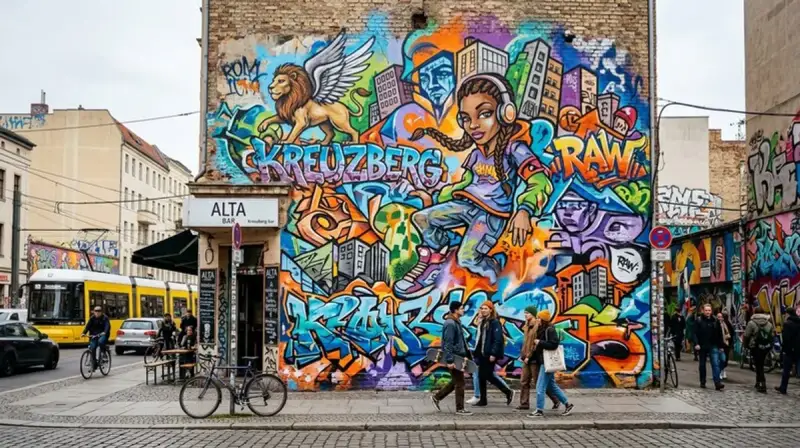
Berlin’s Cannabis Social Club Scene
Berlin has long been a centre of European cannabis culture — from the historic Hanftag demonstrations on Alexanderplatz to the informal markets in Görlitzer Park, the city’s relationship with cannabis is decades old. When Germany passed the Konsumcannabisgesetz (KCanG) on 1 April 2024, legalising possession for adults 18+, and then the Cannabisanbaugesetz (CanG) on 1 July 2024, creating the framework for non-commercial Cannabis Social Clubs, Berlin was better prepared than any other German city to respond.
Within months of the CanG coming into force, Berlin had more registered CSC applications than any other German city. The capital’s existing network of civic associations (Vereine), its politically engaged cannabis community, and its tradition of collective self-organisation created ideal conditions for the rapid emergence of a diverse CSC landscape. From Kreuzberg to Spandau, from Prenzlauer Berg to Neukölln, Berlin’s CSCs reflect the full spectrum of the city’s neighbourhoods and populations.
Germany’s approach to cannabis legalisation is genuinely unique globally. Rather than creating a commercial retail market — the model adopted by US states, Canada, and the Netherlands — Germany’s first legal phase centres on non-commercial, community-governed clubs. This means Berlin’s cannabis scene in 2024 and 2025 looks nothing like Amsterdam or Denver. There are no dispensary storefronts with display cases and budtenders. Instead, there are registered associations, member meetings, collective cultivation programmes, and distribution systems that prioritise community trust over retail convenience.
For cannabis tourists visiting Berlin, this is both a disappointment and an education. You cannot walk into a Berlin CSC and buy cannabis. But you can witness the emergence of a cannabis culture that prioritises harm reduction, community governance, and non-commercial values — a model that may prove more durable and less commercially distorted than the retail-first approaches adopted elsewhere.
The German CSC Model Explained
Under the Cannabisanbaugesetz, a Cannabis Social Club must be a registered non-profit association (Verein) with between 1 and 500 members. All members must be German residents aged 18 or over. The club cultivates cannabis collectively and distributes it to members at cost — the fee structure may only cover actual cultivation and operating expenses. No profit may be generated.
Members may receive up to 25 grams per day (30g for over-21s), with a monthly maximum of 50 grams (60g for over-21s). Clubs may not consume cannabis on their premises. They may not advertise publicly. They must maintain a 200-metre distance from schools, kindergartens, playgrounds, and other youth facilities. Annual auditing and reporting requirements apply.
The registration process for CSCs in Germany has been administered by state-level authorities (Landesbehörden), with Berlin’s registrations handled through the city’s health authority. Processing times have varied, with some clubs waiting many months for approval while operating in planning mode. By mid-2025, several hundred CSCs had been registered across Germany, with Berlin among the leading cities.
How to Get Access
Featured Berlin Cannabis Social Clubs
Information on this page is provided for educational purposes only. Cannabis law in Germany is evolving rapidly. Always verify current regulations with official sources. ZenWeedGuide does not facilitate or encourage illegal activity.