









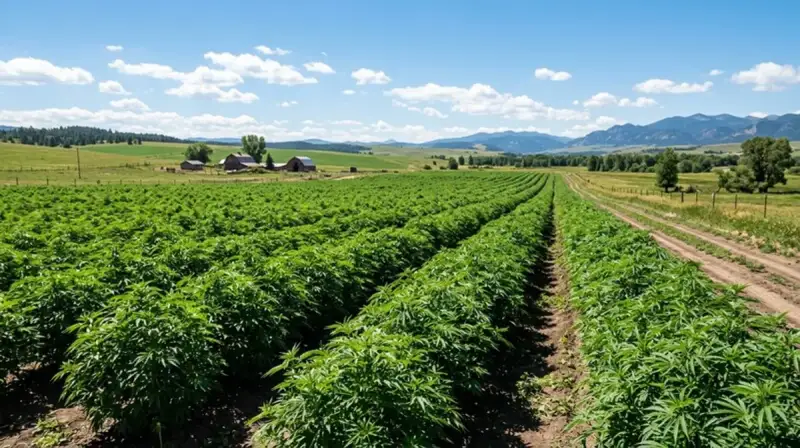
Cold Climate Cannabis: What Consumers & Growers Need to Know in 2025
ZenWeedGuide Editorial Team |
By the ZenWeedGuide Editorial Team | Updated June 2025 | Cannabis laws vary by state. Always verify local regulations before purchasing or growing.
- Over a dozen US states classified as cold-climate or northern-tier have enacted adult-use or medical cannabis laws, creating a rapidly expanding market in challenging growing conditions.
- Autoflowering cannabis varieties can complete their entire life cycle in as few as 70–90 days, making them viable even in states with very short growing seasons.
- States like Alaska, Maine, Michigan, Minnesota, Vermont, Montana, and Colorado have all legalized recreational cannabis despite average winter lows well below freezing.
- Cold snaps during late flowering can trigger purple coloration in anthocyanin-rich strains but can also destroy trichomes and degrade cannabinoid content if frost occurs.
- Indoor cultivation — utilizing greenhouses and controlled environments — has become the dominant production method in northern states, accounting for an estimated 70–80% of commercial output.
- Consumers in cold-climate states report strong demand for warming, indica-leaning strains and high-CBD products during winter months.
- Home cultivation rights vary significantly by state; some cold-climate states like Vermont and Michigan allow up to 6 plants per adult at home.
Background: Why Cold Climate Cannabis Matters
Cannabis originated in Central Asia — a region known for its harsh continental climate — and humans have been cultivating it under challenging conditions for thousands of years. The Cannabis ruderalis subspecies, which evolved in Siberia and surrounding regions, developed the critical autoflowering trait precisely as an adaptation to short growing seasons and cold temperatures. This genetic heritage is now at the center of a modern revolution in northern US cannabis cultivation.
For most of the 20th century, cannabis cultivation in the United States was dominated by warm-weather, sunbelt states and illicit indoor operations nationwide. The legalization wave that began in 2012 with Colorado and Washington fundamentally changed that equation. Suddenly, states like Maine, Vermont, Michigan, and — perhaps most dramatically — Alaska found themselves needing to build legal cannabis industries from the ground up in environments that present unique agricultural and logistical challenges.
The significance extends well beyond farming. Northern-tier states collectively represent tens of millions of Americans who consume cannabis legally or medicinally. Understanding how climate affects cannabis strains, terpene profiles, and product availability is increasingly important for everyday consumers making purchasing decisions at dispensaries. Whether you live in Minneapolis, Burlington, or Anchorage, cold climate dynamics are shaping what ends up on the shelf.
From a public policy standpoint, cold-climate legalization has also challenged some of the most common criticisms of cannabis reform. Critics once argued that legalization in permissive, warm-weather states like California was culturally unique and not exportable. The successful rollout of adult-use programs in Minnesota, Vermont, and Montana has largely put that argument to rest. According to our state-by-state cannabis guide, all six New England states now have some form of legal cannabis, despite some of the harshest winters in the continental US.
For growers — both commercial operators and home cultivators exercising their rights under state law — cold climate presents a specific set of challenges: shortened outdoor seasons, risk of early frost, humidity fluctuations that encourage mold, and heating costs that can make indoor cultivation expensive. But it also presents surprising advantages: cold nights can enhance terpene production in certain cultivars, natural pest pressure is often lower than in humid southern states, and the culture of self-reliance in northern communities has driven impressive DIY innovation in greenhouse and cold-frame growing techniques. Our cannabis growing guides explore many of these techniques in depth.
"The idea that cannabis can only thrive in California or Amsterdam is a myth rooted in decades of prohibition-era thinking. Some of the most robust, flavorful, and potent cannabis in the world now comes from northern states and northern-latitude breeders who've embraced the genetics that evolved precisely for these conditions."
Key Developments: Cold Climate Cannabis Milestones
The story of cold-climate cannabis legalization and cultivation is one of steadily accelerating change. From the first medical programs in northern states through the current wave of adult-use expansions, each milestone has reshaped the market and the growing landscape.
| Year | Milestone | State / Region | Significance |
|---|---|---|---|
| 1998 | Medical cannabis legalized | Alaska | First Arctic-climate state to legalize medical use; established that northern states could build functional cannabis programs |
| 1999 | Medical cannabis legalized | Maine | New England's first medical program; cold-climate New England dispensary model begins to develop |
| 2004 | Medical cannabis legalized | Vermont | Strict medical program in one of the coldest states in the contiguous US |
| 2008 | Medical cannabis legalized | Michigan | Largest cold-climate state medical program at the time; robust home-grow culture emerges in the Upper Midwest |
| 2014 | Recreational cannabis legalized | Alaska | First state above 60° latitude to legalize adult use; proves viability of Arctic-region cannabis retail |
| 2016 | Recreational cannabis legalized | Maine | New England's first adult-use law; cold greenhouse growing becomes central to commercial strategy |
| 2018 | Recreational cannabis legalized | Vermont | First state to legalize via legislature (not ballot initiative); home cultivation rights included from day one |
| 2018 | Recreational cannabis legalized | Michigan | Largest Midwest adult-use market; explosive dispensary growth in cold-climate urban and rural communities |
| 2020 | Recreational cannabis legalized | Montana | Northern Rocky Mountain market opens; short outdoor season drives indoor cultivation investment |
| 2023 | Recreational cannabis legalized | Minnesota | Major Midwest market with 3+ million potential adult consumers; first sales launched 2025 |
| 2024–2025 | Autoflowering genetics mainstream | Nationwide | Third-generation autoflowering strains now match photoperiod varieties in potency; cold-climate home growing surges |

Impact on Consumers: What Cold Climate Cannabis Means for You
If you're a cannabis consumer living in a northern state, the cold-climate dynamic affects your experience in more ways than you might realize — from the strains available at your local dispensary to pricing, product variety, and even the effects of what you're consuming.
Product availability and pricing: Because outdoor cultivation is limited to roughly 3–5 months in most northern states, commercial producers rely heavily on indoor and greenhouse operations year-round. This raises production costs and historically contributed to higher retail prices in cold-climate states compared to California or Oregon, where sun-grown outdoor cannabis can dramatically reduce per-unit costs. However, as northern markets mature and efficiency improves, prices have been steadily normalizing. Michigan, for example, saw dramatic price compression between 2021 and 2024 as supply scaled up.
Strain selection at dispensaries: Consumers in cold-climate states often find a different strain mix than their counterparts in sunbelt states. Indica and indica-dominant hybrid strains tend to dominate northern menus because they finish faster outdoors and are perceived as warming and sedating — culturally appropriate for long, cold winters. Sativa-dominant varieties, which have longer flowering cycles and prefer warm temperatures, are more commonly available as indoor grows in northern dispensaries than as outdoor-grown products.
Home cultivation: Several cold-climate states explicitly permit home cultivation as part of their adult-use frameworks. Michigan allows up to 12 plants per household; Vermont allows up to 6 per person (up to 12 per household); Maine allows up to 3 mature plants per adult. For home growers in these states, cold-climate considerations are deeply practical. Autoflowering varieties have become enormously popular with northern home growers precisely because they can be planted in late May or early June and harvested by late August or September — well ahead of the first hard frost that typically arrives in September or October in many northern states.
Medical patients: For medical cannabis patients in cold-climate states, supply chain reliability is a significant concern. Harsh winter weather can disrupt transportation and distribution, and patients in rural areas of states like Alaska, Montana, or Maine may face genuine access challenges during winter months. Many medical patients and advocates in these states have pushed for robust home cultivation rights for exactly this reason — to ensure access regardless of weather or dispensary availability.
Drug testing considerations: It's worth noting that cannabis legality does not affect federal employment or drug testing in many industries. Our drug testing guide explains how THC metabolites can remain detectable for weeks regardless of when or where the cannabis was consumed. Cold-climate consumers should be aware that no climate, strain, or consumption method eliminates drug test risk in regulated industries.
| State | Adult Use? | Home Grow Allowed? | Max Home Plants | Avg Winter Low (°F) | Primary Cultivation Type |
|---|---|---|---|---|---|
| Alaska | Yes (2014) | Yes | 6 plants | 5–15°F | Indoor / Greenhouse |
| Maine | Yes (2016) | Yes | 3 mature plants | 10–20°F | Indoor / Mixed Outdoor |
| Vermont | Yes (2018) | Yes | 6 per adult | 5–15°F | Indoor / Greenhouse |
| Michigan | Yes (2018) | Yes | 12 per household | 15–25°F | Indoor / Outdoor (summer) |
| Montana | Yes (2020) | Yes | 4 plants | 10–20°F | Indoor / Limited Outdoor |
| Minnesota | Yes (2023) | Yes (2025) | 8 plants per household | -5–10°F | Indoor (market developing) |
| Colorado | Yes (2012) | Yes |