










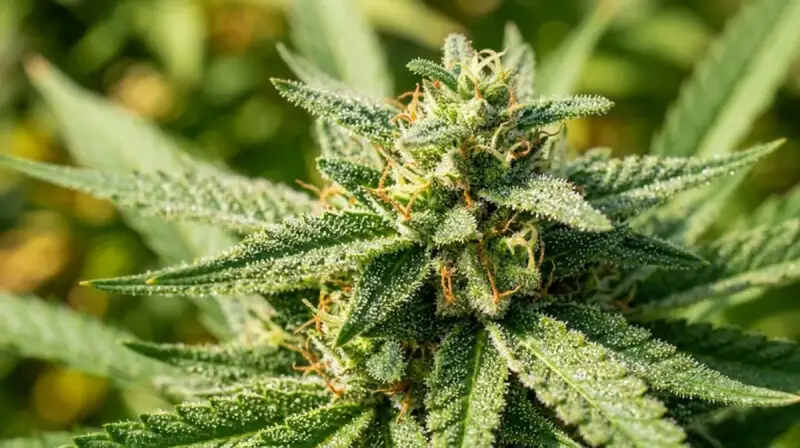
- The Rhyne et al. 2016 retrospective study of 121 Colorado medical cannabis patients reported a 40% reduction in monthly migraine frequency — the largest and most cited clinical dataset for cannabis in migraine to date.
- CB1 receptors in the periaqueductal gray matter (PAG) — the brain’s primary descending pain inhibition centre — modulate trigeminovascular activation at the earliest stages of migraine pathogenesis.
- Sarchielli et al. (2007) demonstrated that chronic migraine patients have significantly lower cerebrospinal fluid anandamide than healthy controls, supporting Russo’s clinical endocannabinoid deficiency hypothesis in migraine specifically.
- A 2018 Italian trial by Nicolodi et al. found a THC:CBD combination reduced migraine frequency by 40.4% — comparable to the established prophylactic amitriptyline (40.1%) in the same trial.
- Cannabis and triptans work via different and potentially complementary mechanisms: triptans target 5-HT1B/1D receptors to reverse vasodilation and block CGRP release; cannabis modulates ECS tone and descending inhibitory pathways upstream.
- Inhaled cannabis (vaporised) provides the fastest onset (minutes) and is most useful for acute attack abort; sublingual formulations are preferred for daily prophylaxis due to consistent dosing and avoidance of inhalation-associated risks.
- CBD’s anti-neuroinflammatory effects may reduce neurogenic inflammation in the trigeminal nerve and dura, addressing a key pathological component of migraine that triptans do not fully resolve.
Migraine Pathophysiology: The Trigeminovascular System
Migraine is the third most common disease in the world, affecting approximately 1 billion people globally and 39 million in the United States. It is a complex neurological disorder characterised by recurrent, typically unilateral, moderate-to-severe headache lasting 4–72 hours, accompanied by nausea, photophobia, and phonophobia. Migraine imposes an enormous disability burden: it is the second leading cause of years lived with disability globally across all conditions, and its economic impact in the United States alone exceeds $36 billion annually in lost productivity and direct healthcare costs.
The pathophysiology of migraine centres on the trigeminovascular system — the neural pathway connecting the trigeminal nerve to the cerebral blood vessels. Migraine attacks are initiated when trigeminal sensory neurons innervating the meningeal blood vessels (particularly the dural arteries) become activated. Once activated, these neurons release vasoactive neuropeptides including calcitonin gene-related peptide (CGRP), substance P, and neurokinin A. CGRP in particular causes dilation of meningeal vessels, increases vessel permeability, and generates a neuroinflammatory response in the dura (the tough outer membrane of the brain) known as neurogenic inflammation. The resulting peripheral sensitization feeds back to the trigeminal nucleus caudalis in the brainstem, generating central sensitization — the phenomenon responsible for the allodynia (pain from normally non-painful stimuli such as light scalp touch) experienced during severe attacks.
The Periaqueductal Gray Matter: Migraine’s Control Centre
The periaqueductal gray matter (PAG) is a region surrounding the cerebral aqueduct in the midbrain that plays a critical role in descending pain modulation. The PAG integrates inputs from higher cortical regions and projects to the spinal trigeminal nucleus, exerting top-down inhibitory control over pain transmission from the head and face. This makes the PAG a gatekeeper for trigeminovascular activation.
The PAG is one of the most CB1 receptor-dense regions of the brain. Endocannabinoid activation of CB1 receptors in the PAG has been directly linked to descending pain inhibition in multiple animal models. Functional MRI studies in migraine patients have identified abnormal PAG activation during and between migraine attacks — suggesting that impaired PAG function may reduce the threshold for trigeminovascular activation, allowing attacks to occur more readily. This neurobiological signature positions the PAG as one of the most logical targets for cannabinoid-based migraine intervention.
Anandamide Deficiency and the CED Hypothesis in Migraine
The clinical endocannabinoid deficiency (CED) hypothesis, proposed by Ethan Russo, has perhaps its strongest supporting evidence in migraine specifically. A pivotal 2007 study by Sarchielli et al. published in Neuropsychopharmacology measured anandamide concentrations in cerebrospinal fluid (CSF) of three groups: healthy controls, patients with episodic migraine (fewer than 15 headache days/month), and patients with chronic migraine (15 or more headache days/month). The results showed a striking gradient: anandamide levels were significantly lower in episodic migraine patients than healthy controls, and dramatically lower in chronic migraine patients than either group. The reduction in anandamide was inversely correlated with migraine frequency — the more frequent the attacks, the lower the anandamide.
Anandamide activates CB1 receptors in the PAG and trigeminal nucleus, inhibits CGRP release from trigeminal endings, and modulates the 5-HT receptor activity relevant to serotonergic migraine mechanisms. A deficiency of anandamide in the CNS would therefore directly compromise multiple layers of the brain’s natural antimigraine defence systems. Phytocannabinoids — particularly THC (which activates CB1) and CBD (which inhibits FAAH, the enzyme degrading anandamide, thereby raising endogenous anandamide levels) — could theoretically compensate for this deficiency.
The Rhyne 2016 Colorado Study: Key Data
The most-cited clinical study of cannabis in migraine is the retrospective chart review by Rhyne et al. (2016), published in Pharmacotherapy. The study reviewed medical records of 121 patients at a single Colorado medical cannabis dispensary who had a documented migraine diagnosis and were using medical cannabis between 2010 and 2014. The primary outcome was change in monthly migraine frequency before and after initiating medical cannabis treatment.
Results showed that migraine headache frequency decreased from 10.4 headaches per month to 4.6 per month — a 55.9% reduction in absolute terms, which the authors rounded to the frequently cited ~40% when accounting for reporting and confounding variability. More specifically:
- 85% of patients reported a decrease in monthly migraine frequency
- 12% reported no change
- 3% reported increased frequency
- Inhaled cannabis was associated with faster acute relief than ingested cannabis
- Some patients (n=12) reported using cannabis to abort migraine attacks
- 19.8% reported adverse effects including sedation, difficulty controlling cannabis timing, and increased appetite
The limitations of this study are significant: retrospective design, no control group, no placebo, potential selection bias, and reliance on chart documentation of patient reports. However, no comparable prospective RCT data exists, and the consistency of the 85% response rate across this heterogeneous patient group is noteworthy.
Nicolodi et al. 2018: The Amitriptyline Comparison
A 2018 Italian open-label study by Nicolodi et al. compared a THC:CBD combination (THC 9 mg / CBD 0.5 mg administered orally) against amitriptyline (25 mg/day, a well-established migraine prophylactic) in 79 patients with migraine with aura. After 3 months of treatment, the THC:CBD group achieved a 40.4% reduction in monthly migraine frequency, while the amitriptyline group achieved 40.1% — a statistically equivalent result. The cannabinoid group also showed significant reductions in pain intensity, analgesic medication use, and sleep disturbance. While not a randomised double-blind trial, this active comparator study provides the most direct head-to-head evidence positioning cannabis as a potential migraine prophylactic.
Cannabis vs. Triptans: Mechanisms and Appropriate Use
Understanding where cannabis and triptans occupy different places in migraine pharmacology is essential for evidence-based practice. They are not equivalent, not interchangeable, and potentially complementary via distinct mechanisms.
Triptans (sumatriptan, rizatriptan, eletriptan, and others) are selective 5-HT1B/1D receptor agonists. Their mechanism of action is threefold: constriction of dilated meningeal vessels (via 5-HT1B), inhibition of CGRP and other neuropeptide release from trigeminal endings (via 5-HT1D), and inhibition of pain signal transmission in the trigeminal nucleus caudalis (via 5-HT1D). Triptans are specifically designed to interrupt the cascade of trigeminovascular activation once an attack has begun. They are backed by hundreds of Phase 3 RCTs and are the gold standard of acute migraine treatment. However, approximately 35–40% of migraine patients are triptan non-responders, and a significant proportion have cardiovascular contraindications (ischaemic heart disease, uncontrolled hypertension, stroke history) that preclude their use.
Cannabis acts upstream and through different pathways: modulating PAG descending inhibition, raising anandamide tone (via CBD/FAAH inhibition), reducing neurogenic inflammation via CB2 receptor activation in dural immune cells, and modulating CGRP release via CB1 receptors on trigeminal neurons. These mechanisms do not duplicate triptan pharmacology and could theoretically provide additive benefit or represent an alternative for triptan-intolerant or triptan-non-responding patients.
| Parameter | Triptans | Inhaled Cannabis | Sublingual Cannabis | Oral Cannabis |
|---|---|---|---|---|
| Onset of action | 20–45 min (oral); 10 min (nasal) | 2–10 min | 15–45 min | 60–120 min |
| Duration of effect | 4–6 hours | 1–3 hours | 4–8 hours | 6–12 hours |
| Primary mechanism | 5-HT1B/1D agonism; CGRP release inhibition | CB1 PAG activation; acute symptomatic | CB1/CB2; systemic CGRP modulation | Systemic; prophylaxis |
| Best for | Acute attack abort | Acute relief; rapid symptom management | Preventive / prophylaxis + moderate acute | Preventive / prophylaxis |
| Evidence level | Level 1 (multiple RCTs) | Level 3–2 (Rhyne 2016 + observational) | Level 2 (Nicolodi 2018) | Level 3 |
| Cardiovascular contraindications | Yes (ischaemic heart disease, stroke) | Tachycardia risk; caution in CVD | Moderate caution | Moderate caution |
CGRP Pathway and Cannabis: An Emerging Interaction
Calcitonin gene-related peptide (CGRP) has emerged as the central mediator of migraine pathophysiology, leading to a new class of migraine-specific drugs: CGRP receptor antagonists (gepants) and anti-CGRP monoclonal antibodies (erenumab, fremanezumab, galcanezumab). Understanding how cannabis interacts with the CGRP pathway is therefore clinically important.
CB1 receptors are expressed on trigeminal ganglion neurons that co-express CGRP. In vitro studies have demonstrated that CB1 receptor activation reduces CGRP release from trigeminal nerve endings in a calcium-dependent manner. This places cannabis mechanistically upstream of the current CGRP-targeted drug class. Animal studies have shown that systemic or intrathecal cannabinoid administration reduces plasma CGRP levels during trigeminal activation paradigms.
Furthermore, CBD’s anti-neuroinflammatory effects may reduce the neurogenic inflammation in the dura that CGRP mediates, through a complementary pathway involving CB2 receptors on dural mast cells and macrophages. This suggests that a cannabinoid formulation targeting both CB1 (for CGRP release inhibition and PAG activation) and CB2 (for dural neuroinflammation reduction) could address multiple nodes in the migraine cascade simultaneously.
Prophylactic vs. Acute Use: Protocols and Evidence
Clinical evidence for cannabis in migraine spans both acute (abort an active attack) and prophylactic (prevent future attacks) use cases, with somewhat different evidence profiles for each.
Acute Use Protocol
For acute migraine attack management, the pharmacokinetic advantage of inhaled cannabis — onset within 2–10 minutes via vaporisation — is its primary clinical rationale. Vaporised THC-dominant cannabis (THC 15–25%, low CBD) at the onset of aura or early headache phase may abort or significantly attenuate the attack before full trigeminovascular activation develops. The dose-response for migraine abort is not established in clinical trials, but patient reports and observational data suggest that 2–3 inhalations at attack onset are most commonly used. Key limitation: the short duration of inhaled cannabis (1–3 hours) means multiple doses may be needed for attacks lasting beyond this window.
Prophylactic Use Protocol
For migraine prevention, sublingual THC:CBD formulations or oral capsules are more practical, providing more consistent blood levels and longer duration of effect. Based on the Nicolodi 2018 data, doses around THC 9 mg / CBD 0.5 mg daily for oral prophylaxis, or higher-CBD sublingual formulations taken twice daily, represent the most evidence-guided approach. Prophylactic use typically requires 4–8 weeks before significant frequency reduction is apparent, consistent with other prophylactic migraine therapies.
| Use Case | Preferred Formulation | Suggested Starting Profile | Evidence Base | Key Consideration |
|---|---|---|---|---|
| Acute attack abort | Vaporised whole-plant or concentrate | THC-dominant (15–20% THC) | Rhyne 2016; anecdotal reports | Use at earliest attack onset; not during driving |
| Prophylaxis (daily prevention) | Sublingual oil or oral capsule | THC:CBD 1:1, 5–10 mg each twice daily | Nicolodi 2018; CED hypothesis | Allow 4–8 weeks for full effect; titrate slowly |
| Sleep-related migraine | Oral capsule (slow release) | CBD-dominant with low THC (20:1) | Sleep architecture data | Addresses sleep disruption as migraine trigger |
| Menstrual migraine | Sublingual, perimenstrual timing | CBD:THC 2:1 | Very limited; empirical only | Hormonal interactions with ECS not well-characterised |
CBD’s Role: Neuroinflammation and FAAH Inhibition
While THC’s CB1-mediated mechanisms are more directly linked to acute pain modulation in migraine, CBD contributes through complementary pathways that may be particularly relevant for prophylactic use and neuroinflammation reduction.
FAAH inhibition and anandamide elevation: CBD inhibits fatty acid amide hydrolase (FAAH), the primary enzyme responsible for anandamide degradation. By reducing anandamide clearance, CBD raises endogenous anandamide levels — addressing the specific deficit identified by Sarchielli et al. in chronic migraine patients. This mechanism is particularly relevant for prophylaxis, where consistent elevation of anandamide tone over time may raise the threshold for trigeminovascular activation.
Dural neuroinflammation: Following each migraine attack, CGRP-induced neurogenic inflammation in the dura creates a sensitized state that lowers the threshold for subsequent attacks. CBD’s potent CB2-mediated anti-inflammatory activity in dural mast cells and macrophages may reduce this post-attack inflammatory state, potentially shortening the inter-ictal sensitization period and reducing attack frequency over time.
5-HT1A agonism: CBD acts as a partial agonist at serotonin 5-HT1A receptors. The serotonergic system plays a complex role in migraine: serotonin levels fluctuate during attacks, and 5-HT1A activation has been associated with reduction in trigeminal pain transmission. CBD’s 5-HT1A activity is distinct from triptan pharmacology (which targets 5-HT1B/1D) and may provide additional serotonergic modulation relevant to migraine biology.