










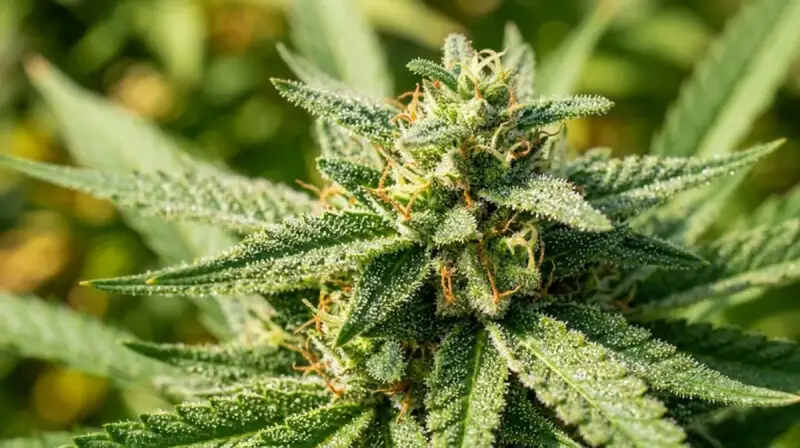
- No cannabis-based treatment is FDA-approved for Alzheimer’s disease; all applications remain investigational, though the clinical pipeline is expanding significantly.
- A 2016 Salk Institute preclinical study demonstrated THC reduced beta-amyloid protein levels and related inflammation in human neuronal cell cultures via amyloid precursor protein processing modulation.
- CBD exerts neuroprotective effects via CB2 receptor activation in microglia, reducing neuroinflammatory cytokines including TNF-α, IL-1β, and IL-6 — a mechanism directly relevant to Alzheimer’s pathology.
- Nabilone (synthetic THC) reduced agitation scores by approximately 30% versus placebo in a 2019 Canadian randomised trial targeting BPSD in Alzheimer’s patients, with manageable sedation as the main side effect.
- Terpene profiles matter: beta-caryophyllene (CB2 agonist), linalool (anxiolytic), and alpha-pinene (acetylcholinesterase inhibitor) all have specific mechanistic relevance to Alzheimer’s symptom targets identified in Russo’s 2006 terpene review.
- THC requires extreme caution in elderly patients: age-related hepatic metabolism changes, increased blood-brain barrier permeability, and existing cognitive vulnerability create heightened risk of confusion, orthostasis, and fall.
- CB1 receptor density is measurably reduced in Alzheimer’s-affected hippocampus and cortex, while CB2 receptor expression increases on activated microglia — making CB2 a particularly relevant therapeutic target.
Alzheimer’s Disease: Pathology and Targets for Cannabinoid Intervention
Alzheimer’s disease is the most common cause of dementia, accounting for 60–80% of all dementia cases worldwide. It is a progressive neurodegenerative disorder characterised by two hallmark pathological processes: extracellular accumulation of beta-amyloid plaques between neurons, and intracellular tau protein neurofibrillary tangles within neurons. Together, these disrupt synaptic communication, trigger sustained neuroinflammation, and ultimately cause widespread neuronal death — particularly in the hippocampus, entorhinal cortex, and association cortices responsible for memory and higher cognition.
The disease affects approximately 6.9 million Americans aged 65 and older and is the sixth-leading cause of death in the United States. Its global prevalence is expected to nearly triple by 2050 as populations age. Despite decades of research and multiple failed disease-modifying drug trials targeting amyloid and tau pathways, effective treatments that slow disease progression remain elusive. It is in this context of unmet need that cannabinoid research has attracted growing scientific and clinical interest.
The Beta-Amyloid Hypothesis and Cannabinoid Interactions
The dominant — though increasingly contested — theory of Alzheimer’s pathogenesis holds that the accumulation of beta-amyloid (Aβ) peptide fragments triggers a cascade of neuroinflammation, tau hyperphosphorylation, and neuronal death. Beta-amyloid is generated by cleavage of amyloid precursor protein (APP) by beta-secretase (BACE1) and gamma-secretase enzymes. When this cleavage produces Aβ42 (a 42-amino-acid fragment), the resulting peptides are prone to aggregation into oligomers and plaques.
THC has been shown in preclinical research to modulate APP processing. The landmark 2016 Salk Institute study, published in Aging and Mechanisms of Disease, demonstrated that low concentrations of THC reduced Aβ protein levels and related inflammatory markers in human neuronal cell cultures. THC appeared to promote the non-amyloidogenic pathway of APP processing, reducing Aβ42 production. While this was an in vitro cell culture study — not a human clinical trial — it provided a direct cellular-level mechanism for THC’s potential disease-modifying activity and catalysed significant subsequent research.
Neuroinflammation as a Primary Driver
Neuroinflammation is now understood to be not merely a consequence but an active driver of Alzheimer’s pathology. Activated microglia (the brain’s resident immune cells) in and around amyloid plaques release pro-inflammatory cytokines including TNF-α, IL-1β, IL-6, and reactive oxygen species. This inflammatory microenvironment accelerates tau phosphorylation, damages synapses, and creates a destructive feedback loop in which amyloid activates microglia, which worsen amyloid pathology further. CB2 receptors are highly expressed on activated microglia, and both THC and CBD can reduce microglial pro-inflammatory activation via CB2 agonism — making the endocannabinoid system a particularly relevant anti-inflammatory target in Alzheimer’s.
Russo’s Terpene Paper and the Entourage Hypothesis
A 2006 paper by Ethan Russo in the British Journal of Pharmacology, titled “Terpenes and the Entourage Effect,” identified several cannabis terpenes with specific mechanistic relevance to dementia. Alpha-pinene was identified as an acetylcholinesterase inhibitor — a mechanism shared by the approved Alzheimer’s drugs donepezil and rivastigmine — while also counteracting short-term memory impairment associated with THC. Beta-caryophyllene was identified as a selective CB2 agonist with potent anti-inflammatory activity. Linalool and myrcene were identified for their anxiolytic and sedating properties relevant to agitation and sleep disturbance management in dementia. Russo argued that full-spectrum cannabis products leveraging these terpene profiles might outperform isolated cannabinoids for complex neurological conditions including dementia.
CBD: Neuroprotective Mechanisms in Detail
CBD has been the most extensively studied cannabinoid in the context of Alzheimer’s neuroprotection, partly because its lack of psychoactive effects makes it more accessible to elderly patients and caregivers and partly because its multi-target pharmacology aligns well with the multifactorial nature of Alzheimer’s pathology.
CB2 Receptor Activation and Microglial Modulation
Unlike CB1 (which drives THC’s psychoactive effects), CB2 receptors are expressed primarily on immune cells, including microglia in the brain. In Alzheimer’s disease, CB2 receptor expression dramatically upregulates on activated microglia surrounding amyloid plaques — a compensatory mechanism suggesting the endocannabinoid system is attempting to limit neuroinflammation. CBD activates CB2 receptors and promotes an anti-inflammatory microglial phenotype, reducing TNF-α and IL-1β release. In transgenic Alzheimer’s mouse models, CB2 activation reduced plaque burden and improved cognitive performance across multiple paradigms.
Tau Phosphorylation Reduction
Tau hyperphosphorylation, driven by kinases including GSK-3β and CDK5, is central to neurofibrillary tangle formation. CBD has been shown to inhibit GSK-3β activity, reducing tau phosphorylation. In a 2011 study using transgenic 3xTg-AD mice, chronic CBD treatment reduced tau phosphorylation at multiple disease-relevant epitopes. Reduction of tau pathology is now considered as important a target as amyloid reduction in Alzheimer’s disease-modifying strategies.
Hippocampal Neurogenesis
Adult hippocampal neurogenesis — the formation of new neurons in the dentate gyrus — is impaired in Alzheimer’s disease and inversely correlated with disease severity. CBD has been shown to promote neurogenesis in the adult hippocampus via 5-HT1A and TRPV1 receptor activation, independent of CB1 agonism. In Alzheimer’s mouse models, chronic CBD treatment restored neurogenesis rates toward normal and was associated with improved performance on spatial memory tasks.
BPSD: Behavioural Symptoms and the Clinical Evidence for Cannabis
Behavioural and Psychological Symptoms of Dementia (BPSD) affect up to 90% of Alzheimer’s patients at some point during the disease course. They include agitation, aggression, psychosis (hallucinations, delusions), sleep disturbance, anxiety, depression, apathy, and wandering. BPSD are a leading driver of caregiver burnout, early nursing home placement, and patient suffering. Current pharmacological options for BPSD — primarily antipsychotics, benzodiazepines, and antidepressants — have significant safety concerns including increased stroke risk and mortality in dementia patients, creating urgent need for alternative approaches.
This is where the clinical evidence for cannabis is strongest. Several small but rigorously designed trials have assessed cannabinoid effects specifically on BPSD outcomes using validated instruments including the Pittsburgh Agitation Scale (PAS) and the Neuropsychiatric Inventory (NPI).
| Symptom Domain | Most Relevant Cannabinoid | Evidence Level | Effect Size | Key Study |
|---|---|---|---|---|
| Agitation / Aggression | Nabilone (synthetic THC), low-dose THC | Level 2 (small RCT) | 30% reduction in NPI agitation subscale (Nabilone 2019) | Herrmann et al. 2019, New England J Medicine Evidence |
| Sleep Disturbance | Low-dose THC, CBD | Level 2 (open-label) | Significant improvement in sleep quality scores; reduced nocturnal awakenings | Walther et al. 2006; Volicer et al. 1997 |
| Appetite / Weight Loss | THC (CB1-mediated orexigenic effect) | Level 2 (RCT) | Significant weight gain in Alzheimer’s patients over 6 weeks vs. placebo | Volicer et al. 1997; Krishnan et al. 2009 |
| Anxiety | CBD (5-HT1A agonism) | Level 3 (observational) | Modest reductions in caregiver-rated anxiety; limited controlled data | Zanelati et al. 2010 (preclinical) |
| Pain (comorbid) | THC/CBD combination | Level 2 (small RCT) | Reduced pain behavior scores in dementia patients unable to self-report | Pickering et al. 2011 |
| Cognitive Function | No cannabinoid | Level 4 | No evidence of benefit; THC may worsen cognition acutely | Multiple negative trials |
The 2019 Nabilone Trial
The most methodologically rigorous trial to date was a randomised, double-blind, crossover study by Herrmann et al. (2019) published in the New England Journal of Medicine Evidence. Forty-two patients with moderate-to-severe Alzheimer’s disease and clinically significant agitation were randomised to Nabilone (synthetic THC) 1–2 mg daily or placebo for 6 weeks. The Nabilone group showed a statistically significant 30% reduction in the Pittsburgh Agitation Scale score compared to placebo. Secondary outcomes included improved overall caregiver burden and sleep quality. Sedation was the most common side effect, occurring in 45% of Nabilone patients versus 16% on placebo; this was generally manageable and did not lead to study discontinuation.
THC Safety in Elderly Patients: Critical Considerations
Elderly patients with Alzheimer’s disease represent a uniquely vulnerable population for THC administration. Several age- and disease-related factors substantially alter THC pharmacokinetics and pharmacodynamics, requiring radically more conservative dosing than in younger, cognitively intact adults.
- Reduced hepatic CYP3A4 activity: THC is metabolised primarily by hepatic CYP3A4 enzymes, which decline significantly with age. The result is an extended half-life, higher peak plasma concentrations, and prolonged psychoactive effects from the same dose that would have minimal impact in a younger adult.
- Increased blood-brain barrier permeability: Alzheimer’s pathology is associated with compromise of the blood-brain barrier, allowing higher CNS exposure to psychoactive substances including THC.
- Existing cognitive vulnerability: THC’s acute effects on working memory, attention, and executive function are superimposed on existing Alzheimer’s cognitive deficits, potentially causing confusion, disorientation, agitation paradoxically worsening, and psychosis-like states.
- Orthostatic hypotension and fall risk: THC causes vasodilation and can significantly lower blood pressure, particularly on standing. In elderly patients already at fall risk, this is a serious safety concern requiring assessment of baseline blood pressure and careful monitoring.
- Drug interactions: Alzheimer’s patients typically take multiple medications including acetylcholinesterase inhibitors, antihypertensives, and antipsychotics. THC is a CYP3A4 and CYP2C9 substrate, with interaction potential across many of these drug classes.
| Cannabinoid / Product | Agitation | Sleep | Appetite | Pain | Cognitive Safety | Recommended Starting Dose |
|---|---|---|---|---|---|---|
| Nabilone (synthetic THC) | Strong evidence | Moderate evidence | Moderate evidence | Limited evidence | Caution: sedation | 0.5 mg at bedtime |
| Low-dose oral THC | Moderate evidence | Moderate evidence | Good evidence | Limited evidence | Caution: confusion risk | 1–2.5 mg twice daily |
| CBD (isolate or broad-spectrum) | Limited evidence | Limited evidence | Minimal | Limited evidence | Favourable | 5–10 mg twice daily |
| THC:CBD 1:1 combination | Moderate evidence | Moderate evidence | Moderate evidence | Moderate evidence | Better tolerated than THC alone | 1.25 mg THC / 1.25 mg CBD |
Current Clinical Trials and Research Pipeline
The clinical evidence base for cannabinoids in Alzheimer’s disease is growing rapidly, with multiple trials underway as of 2026. Key active trials include:
- SACT Trial (UK): The Sativex Alzheimer’s Cannabinoids Trial, a Phase 2 randomised controlled trial assessing Sativex (THC:CBD oromucosal spray) for BPSD in Alzheimer’s patients across multiple UK sites. Results are anticipated in late 2026.
- NIDA-funded CBD trial (USA): A Phase 2 trial assessing pharmaceutical-grade CBD for agitation in Alzheimer’s disease, funded by the National Institute on Drug Abuse. Primary outcome is NPI agitation subscale at 8 weeks.
- Brazilian CBD dementia trial: A double-blind trial of CBD 300 mg/day for 24 weeks in mild Alzheimer’s patients, assessing cognitive and neuropsychiatric outcomes, sponsored by the Federal University of Sao Paulo.
- Israeli geriatric cannabis programme: An observational follow-up study of 60 mg THC-based medical cannabis daily in elderly dementia patients in Israeli care facilities, with long-term safety and BPSD outcome data collection.
Patients or caregivers interested in enrolling in clinical trials can search active studies at ClinicalTrials.gov using search terms “cannabinoid Alzheimer” or “CBD dementia.”