










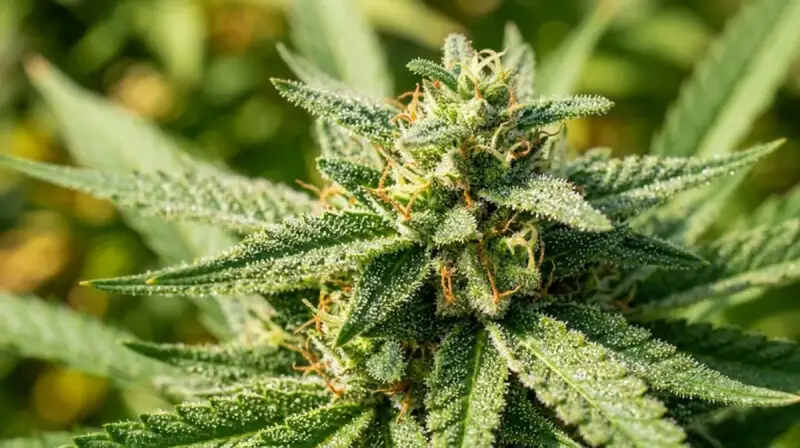
Master Comparison: THC vs CBD
THC and CBD are the two most abundant cannabinoids in the cannabis plant, but they work through fundamentally different mechanisms and produce very different outcomes. The table below covers every key dimension side by side.
| Factor | THC (Tetrahydrocannabinol) | CBD (Cannabidiol) |
|---|---|---|
| Psychoactive | Yes — primary psychoactive compound | No — does not produce a high |
| Mechanism of action | Direct CB1 receptor agonist (orthosteric binding) | Negative allosteric modulator at CB1; activates TRPV1, 5-HT1A, GPR55 |
| Onset (smoked) | 2–10 minutes | 2–10 minutes (effects subtle at low dose) |
| Duration | 2–4 hours (smoked), 4–8 hours (edibles) | 4–8 hours (therapeutic effects) |
| Federal legal status (US) | Schedule I controlled substance | Legal from hemp (<0.3% THC); Schedule V for Epidiolex |
| Drug test risk | High — detectable 3–30+ days | Low (isolate); moderate risk with full-spectrum products |
| Anxiety risk | High at doses above 10–15 mg | Low — may reduce anxiety (5-HT1A mechanism) |
| Appetite | Strongly stimulates appetite (CB1 hypothalamic pathway) | Minimal direct appetite effect |
| Sleep | Reduces REM sleep; may improve sleep onset | May improve sleep via anxiety reduction at therapeutic doses |
| Tolerance | Yes — CB1 downregulation with heavy use | Minimal |
| Dependence potential | ~9% lifetime rate (heavy daily users) | Not clinically established |
| Main medical uses | Nausea, chronic pain, spasticity, appetite stimulation | Epilepsy (FDA), anxiety, inflammation, neuroprotection |
| Side effects | Anxiety, dry mouth, red eyes, memory impairment, tachycardia | Drowsiness (high dose), GI upset, drug interactions (CYP2C9) |
| Available products | Flower, oil, edibles, concentrates, vapes, tinctures | Oils, capsules, gummies, topicals, isolate powder |
THC Effect Levels by Dose
THC follows a biphasic dose-response curve: low doses are typically anxiolytic and euphoric, while high doses can trigger anxiety, paranoia, and cognitive impairment. Edible doses require a separate calculation because first-pass liver metabolism converts THC into 11-OH-THC, which is 4–5 times more potent at crossing the blood-brain barrier.
| Dose Level | Approximate THC Amount | Typical Effects | Caution |
|---|---|---|---|
| Microdose | 1–2.5 mg | Subtle mood lift, mild focus enhancement, minimal cognitive impact | Ideal for first-time or anxiety-prone users |
| Low | 2.5–5 mg | Mild euphoria, relaxation, light sensory enhancement | Standard dispensary “starter” edible dose |
| Moderate | 5–15 mg | Clear psychoactive effect, increased appetite, stronger euphoria, some memory impairment | Not recommended for inexperienced users; risky in edible form |
| High | 15–30 mg | Intense high, time distortion, heavy sedation, possible anxiety | High anxiety risk; tolerance required |
| Very High / Ultra | 30–50 mg+ | Overwhelming intoxication, potential panic, hallucination (rare), prolonged impairment | Dangerous without established tolerance; common cause of ER visits |
Note on edibles: Always wait a minimum of 2 hours before redosing an edible. Onset is delayed 30–120 minutes. Liver metabolism is highly individual — slow metabolizers (CYP2C9 variants) can experience effects lasting 8–12 hours from a moderate dose.
CBD Medical Evidence by Condition
CBD has been studied in clinical trials and observational research for a wide range of conditions. Evidence quality varies significantly. The FDA has approved Epidiolex (pharmaceutical CBD) only for specific paediatric epilepsy syndromes; all other uses remain off-label or investigational.
| Condition | Evidence Level | Notes & Key Studies |
|---|---|---|
| Dravet syndrome (epilepsy) | Strong — FDA Approved | Epidiolex RCT: 39% reduction in seizure frequency vs placebo (Devinsky 2017, NEJM) |
| Lennox-Gastaut syndrome | Strong — FDA Approved | Second Epidiolex approval indication; similar RCT evidence base |
| Social anxiety disorder | Moderate | Bergamaschi 2011: 300 mg CBD reduced VAMS anxiety in simulated public speaking test |
| PTSD | Moderate | Elms 2019 case series: CBD adjunct reduced PTSD symptom checklist scores; larger RCTs pending |
| Inflammatory conditions | Moderate (animal/pilot) | Robust preclinical anti-inflammatory data via CB2 + TRPV1; human RCTs limited |
| Insomnia / sleep | Preliminary | Shannon 2019 retrospective: 66.7% sleep improvement at 25–175 mg/day; not double-blind RCT |
| Chronic pain | Preliminary (CBD-alone) | Most strong pain evidence involves CBD+THC combinations; pure CBD pain data weaker than THC |
| Schizophrenia | Preliminary | McGuire 2018 RCT: CBD added to antipsychotic improved symptoms vs placebo; small trial |
| Substance use disorder | Emerging | Early trials for opioid and cocaine craving reduction; not clinical standard |
Legal Status: THC vs CBD
Legal status is one of the most practically significant differences between THC and CBD. CBD derived from hemp (cannabis with <0.3% THC by dry weight) was federally legalised in the US by the 2018 Farm Bill. THC remains a Schedule I substance at the federal level regardless of state recreational laws.
| Jurisdiction | THC Status | CBD Status |
|---|---|---|
| US Federal | Schedule I (illegal) | Legal from hemp (<0.3% THC) since 2018 Farm Bill |
| US — 24 Rec States | Legal for adults 21+ at state level; still federally illegal | Legal; sold alongside THC products in dispensaries |
| US — Medical-only States | Legal with qualifying condition + medical card | Legal (hemp-derived); medical cannabis CBD also available |
| Canada | Legal nationally (Cannabis Act 2018) | Legal nationally |
| Germany | Legal for personal use from April 2024 (up to 25 g public / 50 g home) | Legal (<0.2% THC hemp-derived) |
| United Kingdom | Class B controlled substance (recreational illegal) | Legal if <1 mg THC per product, from licensed suppliers |
| Netherlands | Tolerated in licensed coffee shops (gedoogbeleid); illegal otherwise | Legal (<0.05% THC) |
| Australia | Medical only (TGA approval); ACT adults decriminalised | OTC CBD approved by TGA at low doses since 2021 |
Drug Testing: What You Actually Need to Know
Drug testing distinguishes THC and CBD in ways that often confuse consumers. Standard workplace drug tests (urine immunoassay, SAMHSA 5-panel) test for THC-COOH — a metabolite of THC — not for CBD. This has critical practical implications:
- Pure CBD isolate will not trigger a positive result at the 50 ng/mL SAMHSA cutoff.
- Full-spectrum CBD products contain up to 0.3% THC by weight. Heavy or prolonged use can accumulate enough THC-COOH to produce a positive test.
- Broad-spectrum CBD (THC removed) carries minimal risk but is not zero-risk; manufacturing variation means trace THC may be present.
- Mislabeling is widespread: A 2017 JAMA study found 26% of 84 commercially available CBD products were mislabeled — many contained more THC than stated on the label.
- DOT drug testing (transportation industry) enforces zero tolerance and does not recognise CBD product use as a valid defence for a positive result.
| Product Type | THC Test Risk | Reason |
|---|---|---|
| THC flower / concentrates | Very High | Direct THC intake, detectable 3–30+ days depending on use frequency |
| THC edibles / tinctures | Very High | Same as above; edibles may have longer detection due to 11-OH-THC accumulation |
| Full-Spectrum CBD oil | Moderate | Trace THC (<0.3%); cumulative risk with daily use or high doses |
| Broad-Spectrum CBD | Low-Moderate | THC removed but batch variation possible; not verified by all labs equally |
| CBD Isolate | Very Low | Pure CBD; no THC present when properly manufactured and third-party tested |
| CBD Topicals | Very Low | Minimal systemic absorption through skin |
Product Types: THC, CBD, and Combined
| Product Format | THC Available | CBD Available | Combined Available | Best For |
|---|---|---|---|---|
| Flower (cannabis bud) | Yes | Hemp/CBD flower available | Yes (high-CBD strains) | Experienced users, fast onset required |
| Oils / Tinctures | Yes (dispensary) | Yes (widely available) | Yes (1:1 ratio products) | Dosing precision, fast-ish onset, medical use |
| Edibles / Gummies | Yes (dispensary) | Yes (mass market) | Yes | Discreet use, long-duration effects |
| Topicals / Salves | Yes (recreational states) | Yes (widely available) | Yes | Localised pain, inflammation; no systemic high |
| Vape cartridges | Yes | Yes (hemp-derived) | Yes | Fast onset, discrete; lung-health caution |
| Capsules | Yes | Yes | Yes | Precise dosing, pharmaceutical feel |
| Concentrates / Dabs | Yes (70–95%+) | CBD isolate/shatter available | Less common | High-tolerance users; not for beginners |
How to Choose: THC or CBD?
The right cannabinoid depends entirely on your goal. The decision framework below covers the most common use cases:
| Your Goal | Recommended | Ratio Guidance | Notes |
|---|---|---|---|
| Anxiety relief without intoxication | CBD | CBD isolate or broad-spectrum | 5-HT1A mechanism; avoid high-THC products which can worsen anxiety |
| Chronic pain (severe / neuropathic) | THC+CBD combined | 1:1 to 2:1 THC:CBD | Whiting 2015 JAMA: combination superior to either alone for neuropathic pain |
| Sleep onset (acute insomnia) | Low-dose THC or THC+CBD | 5 mg THC + 5 mg CBD | THC reduces sleep onset latency; CBD reduces THC-anxiety at bedtime |
| Epilepsy (clinical) | CBD (Epidiolex) | CBD only — prescription product | Only FDA-approved cannabinoid for epilepsy; requires physician supervision |
| Recreational / euphoric experience | THC | 2.5–10 mg to start | Start low; wait 2h if edible; CBD in combination reduces anxiety risk |
| Drug test upcoming (<30 days) | CBD isolate only | Isolate, third-party tested | Avoid all THC and full-spectrum products; verify COA before purchase |
| PTSD symptoms | CBD (off-label) or low-THC | CBD 25–50 mg/day | High THC can destabilise PTSD patients; consult prescriber for combined approach |
The Entourage Effect: THC + CBD Together
The entourage effect, described extensively by Russo (2011, British Journal of Pharmacology), proposes that cannabinoids, terpenes, and flavonoids work synergistically when consumed together rather than in isolation. Within this framework, CBD plays a specific modulatory role when combined with THC:
- Anxiety reduction: CBD acts as a negative allosteric modulator at CB1 receptors (Laprairie et al. 2015), blunting THC-induced anxiety and paranoia without fully blocking its therapeutic effects.
- Extended therapeutic window: CBD inhibits CYP2C9-mediated THC metabolism, increasing plasma THC levels and duration — which can extend pain relief but also extend impairment.
- Improved pain profile: Clinical studies on Sativex (1:1 THC:CBD oromucosal spray) show superior pain relief compared to THC-only formulations in multiple sclerosis spasticity and neuropathic pain.
- Nausea and appetite: CBD modulates the CB1-mediated appetite stimulation of THC but does not fully block it; the combination may offer better nausea control than either compound alone.
Not all researchers accept the entourage effect equally. A 2020 review by Ferber et al. distinguished between true synergy (combination more effective than additive sum of parts) and simple additive effects. Practical implication: full-spectrum or broad-spectrum products are likely preferable to isolates for most medical applications, but pure CBD isolate remains appropriate when THC must be completely avoided.