










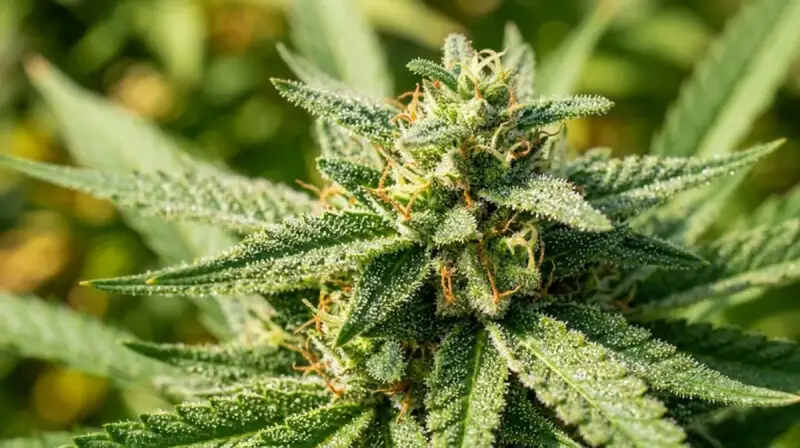
- Autoflowering strains typically finish at 40 to 80 cm — the most reliable choice for spaces under 100 cm height.
- Indica-dominant photoperiod genetics stay 30 to 40 percent shorter than sativa-dominant varieties, making them far more manageable in height-restricted spaces.
- LST applied in the first 3 to 4 weeks of growth can keep virtually any strain compact by redirecting vertical growth horizontally without cutting.
- Pot size is a primary height determinant — restricting autoflowers to 5 to 7 litre containers keeps most strains under 70 cm.
- Strains bred specifically for indoor and guerrilla growing (Critical Mass, Royal Dwarf, Northern Lights) consistently perform well in constrained spaces without specialist management.
- A 60 x 60 cm tent with a 200 W LED can yield 40 to 80 g dry weight per cycle with the right compact autoflowering strain and basic LST.
Understanding Space Requirements Before Choosing a Strain
Small-space cannabis cultivation is primarily a management challenge. The grow environment — tent dimensions, light type, ventilation capacity, and total headroom — sets hard limits on what is physically achievable. Choosing a strain without first calculating these limits leads to the most common small-space mistake: a plant that outgrows its environment in the third week of flowering, requiring emergency intervention.
Before selecting a strain, establish your space parameters with precision. Measure the usable height inside the tent (total height minus the light fixture depth, minus the light-to-canopy distance required for your specific lamp, minus pot height). This final figure is your maximum plant height at harvest. For most small tents under a standard LED, the usable canopy height works out to 60 to 100 cm from the growing medium surface.
Also account for flowering stretch. Most cannabis strains grow 50 to 100 percent taller during the first two to three weeks of the flowering stage before vertical growth stops. A plant that is 45 cm when you flip to flower may reach 85 cm by week three. Factor this into all height calculations.
Space Category Reference Guide
| Space Type | Floor Size | Usable Height | Max Plant Height | Plants | Realistic Yield per Cycle |
|---|---|---|---|---|---|
| Closet grow | 60 x 60 cm | 100 to 120 cm | 55 to 65 cm | 1 | 30 to 60 g |
| Small tent | 80 x 80 cm | 160 cm | 70 to 85 cm | 1 to 2 | 60 to 120 g |
| Medium tent | 100 x 100 cm | 180 cm | 85 to 100 cm | 1 to 3 | 120 to 250 g |
| Standard tent | 120 x 120 cm | 200 cm | 90 to 110 cm | 2 to 4 | 200 to 450 g |
Top 15 Cannabis Strains for Small Spaces
| Strain | Type | Height | Flowering | Yield (dry) | Best Technique | Notes |
|---|---|---|---|---|---|---|
| Royal Dwarf | Auto ruderalis hybrid | 40 to 60 cm | 8 to 9 weeks | 30 to 80 g/plant | LST only | Purpose-bred for minimal height; reliable in 5L pots |
| CBD Auto Charlotte’s Angel | Auto CBD | 50 to 70 cm | 9 to 10 weeks | 40 to 100 g/plant | LST | Very low THC; stays compact; ideal for CBD-focused grows |
| Critical Mass | Indica-dominant photo | 60 to 100 cm | 6 to 7 weeks flower | 100 to 200 g/plant | LST or topping early | Short internodes; heavy yielder for its size |
| Northern Lights | Indica photo | 70 to 100 cm | 7 to 8 weeks flower | 80 to 160 g/plant | LST or light topping | Classic compact indica; easy to manage in small tents |
| Blueberry | Indica-dominant photo | 80 to 110 cm | 7 to 8 weeks flower | 80 to 140 g/plant | LST | Slower grower; good for methodical small-space management |
| White Widow Auto | Auto hybrid | 60 to 100 cm | 9 to 10 weeks | 50 to 130 g/plant | LST | Beginner-friendly auto; consistent performance in any setup |
| AK-47 Auto | Auto sativa-hybrid | 60 to 100 cm | 8 to 10 weeks | 60 to 120 g/plant | LST essential | Can stretch more than pure indica autos; manage early |
| Pineapple Express Auto | Auto hybrid | 60 to 90 cm | 8 to 9 weeks | 50 to 110 g/plant | LST | Fast and compact; fruity terpene profile |
| Gorilla Glue Auto | Auto hybrid | 60 to 100 cm | 8 to 10 weeks | 60 to 150 g/plant | LST | High resin; slightly taller than pure indica autos |
| Zkittlez | Indica-dominant photo | 80 to 120 cm | 7 to 8 weeks flower | 100 to 180 g/plant | LST or topping | Compact structure; exceptional terpene profile |
| Cream Caramel | Indica photo | 50 to 80 cm | 7 to 8 weeks flower | 70 to 130 g/plant | LST or minimal topping | One of the shortest photoperiod strains available |
| OG Kush (with topping) | Hybrid photo | 80 to 120 cm managed | 8 to 9 weeks flower | 100 to 200 g/plant | Topping + LST | Requires training to stay compact; excellent results when managed |
| Gelato (with LST) | Hybrid photo | 80 to 120 cm managed | 8 to 9 weeks flower | 100 to 200 g/plant | LST essential | Quality genetics; needs early LST to manage height |
| Blue Dream (with LST) | Sativa-dominant photo | 100 to 160 cm managed | 9 to 10 weeks flower | 150 to 250 g/plant | Aggressive LST + topping | Only for tents 160 cm+ height; requires experienced management |
| Royal Cheese | Indica-dominant photo | 70 to 110 cm | 7 to 8 weeks flower | 90 to 170 g/plant | LST | Compact, resilient; good for beginners in small photoperiod grows |
Autoflowering vs. Feminized Photoperiod for Small Spaces
The autoflowering vs. feminized debate is particularly important in small-space cultivation because the differences between them directly affect the height and timing constraints that define small grows.
Autoflowering strains flower automatically based on age, not light cycle. This means you can run 20 hours of light per day throughout the entire life cycle, accelerating growth and shortening total cycle time to 8 to 12 weeks from seed to harvest. Most autoflowering strains stay under 80 cm in a 7-litre pot. The trade-off is that autos are less tolerant of training mistakes — there is no ability to extend the vegetative phase to recover from damage.
Feminized photoperiod strains require a light schedule change to 12/12 to trigger flowering. This gives the grower complete control over when flowering starts, allowing the vegetative phase to be extended until height is managed via training. The downside in small spaces is that flowering stretch is often more pronounced than in autos, and the total cycle time from seed to harvest is longer (12 to 20 weeks).
For absolute beginners in small spaces, autoflowering strains with LST training are the lowest-risk starting point. For growers comfortable with training techniques, indica-dominant photoperiod strains like Critical Mass, Northern Lights, or Royal Cheese offer more control over final plant structure and often produce denser buds than autoflowering equivalents.
Training for Height Control in Small Spaces
Regardless of strain choice, training is the primary tool for height management in small spaces. The three most useful techniques for compact grows are:
LST (Low Stress Training): The safest and most versatile option for all strain types, including autoflowers. By bending the main stem and all dominant branches toward the container rim and securing them with ties, the grower keeps the canopy below a target height while increasing lateral bud site development. LST adds almost no recovery time and can be started as early as week 2 of growth.
Topping: Creates two main colas from one, reducing the single tall central apex that causes height problems. Topping is best used in photoperiod strains with sufficient vegetative time to recover. After topping, the two resulting branches are typically managed with LST to keep both below the target height. Not recommended for autoflowering strains by beginners due to the limited recovery window.
SOG (Sea of Green): Uses many small plants flipped to flower while still compact, producing one main cola per plant at a consistent low height. Effective in small tents but requires more plants and more frequent germination cycles. Particularly efficient when using feminized clones of a proven compact strain.
Light Distance and Heat Management in Small Spaces
In a small tent, the proximity of the light source to the plant canopy is a constant management challenge. Unlike large tents where the light can be raised without consequence, small tents have a hard ceiling that limits how much vertical space is available between the lamp and the plant tops.
Key principles:
- LED panels: Modern quantum board LEDs generate less heat than HID lights and can run closer to the canopy — typically 30 to 50 cm during veg and 40 to 60 cm during flower. Always follow manufacturer specifications for your specific unit.
- Temperature monitoring: In a small, enclosed space, heat accumulates quickly. Use a canopy-level thermometer. Target 22 to 26°C during lights-on. Above 28°C causes stress and stretching; above 30°C begins damaging growth. A small clip fan circulating air between the lamp and canopy reduces temperature differentials significantly.
- Light burn vs. heat stress: In small spaces these are often confused. Light burn (bleaching at the very tips of buds or leaves closest to the lamp) occurs when light intensity is too high regardless of temperature. Heat stress (curling, tacoing of leaves) is temperature-driven. Both are managed by raising the light, but in a small tent that option is limited — reducing lamp intensity or adding a larger inline fan may be the practical solution.
- Calculate before you plant: Pot height + plant height + minimum light-to-canopy distance + light fixture depth should never exceed total tent height. If it does, revise strain choice or reduce pot size before germinating.
Frequently Asked Questions
What are the best strains for a small grow tent?
For a small grow tent (60 to 80 cm width), autoflowering strains like Royal Dwarf, White Widow Auto, and CBD Auto Charlotte are consistently excellent choices. They stay under 60 to 80 cm, require no light cycle change, and finish in 8 to 10 weeks from seed. Indica-dominant photoperiod strains like Northern Lights and Critical Mass are the best alternatives when autoflowering genetics are not preferred, particularly for growers who want more control over vegetative period length.
What is the shortest cannabis strain?
Royal Dwarf is one of the consistently shortest commercially available strains, typically reaching only 40 to 60 cm at harvest. Other very compact options include CBD Auto Charlotte (50 to 70 cm), Cream Caramel photoperiod (50 to 80 cm), and Critical Mass with LST applied early. Growing conditions — particularly pot size, light intensity, and vegetative duration — significantly influence the final height of any strain. Restricting to a 5-litre pot and keeping light at lower intensity during veg are the most effective non-genetic height controls available.
Can I grow cannabis in a closet?
Yes. A standard bedroom closet with at least 60 x 60 cm floor space and 150 cm height can support one autoflowering cannabis plant under a small LED panel (100 to 200 W). Critical requirements are: complete light-proofing during the dark period (even brief light leaks can disrupt flowering in photoperiod strains), a small inline fan for ventilation and CO2 replenishment from outside the closet, and a carbon filter for odour control. The most common closet grow mistake is insufficient ventilation, which leads to heat and humidity problems that damage plants regardless of strain quality.
Do autoflowers stay small?
Most autoflowering strains stay significantly smaller than photoperiod strains, typically reaching 40 to 80 cm at harvest. However, size varies with genetics and growing conditions. In large containers with high-intensity light and abundant nutrients, some autoflowering strains can reach 100 cm or more. Restricting pot size to 5 to 7 litres and managing light intensity are the most effective ways to control autoflower height. Genetics matter most — choose strains marketed specifically for compact or dwarf growth if height is a primary constraint.
Optimising Pot Size for Small Space Grows
Container size is one of the most direct and most frequently overlooked tools for height control in small grows. Root volume directly correlates with above-ground plant size: larger containers produce larger plants, and restricting root space limits overall plant development including final height.
For autoflowering strains in small spaces, 5 to 7 litre containers are the standard recommendation. This provides enough root volume for the plant to develop properly and produce a satisfying yield, while physically limiting the plant from growing into the 100+ cm heights that the same genetics can reach in 15 to 20 litre pots under generous conditions.
For photoperiod strains in small spaces, the pot size choice depends on how long the vegetative phase will run. A plant that will only be vegged for 3 to 4 weeks before flowering can be grown in an 8 to 11 litre container. A plant intended for extended vegetative growth (6 to 8 weeks) to fill a SCROG screen needs 15 to 18 litres to avoid the root restriction that stunts growth and yield before the screen is filled.
Fabric pots (air pruning pots) are popular in small grows for their ability to prevent root circling and promote a dense, fibrous root structure. This maximises nutrient and water uptake efficiency within the limited soil volume available in compact containers.
Ventilation Requirements in Small Grow Spaces
Adequate ventilation is non-negotiable in any cannabis grow, but the tight dimensions of small spaces make it particularly critical. A poorly ventilated small tent accumulates heat, humidity, and CO2-depleted air faster than a large space, and the negative effects on plant health, pest resistance, and yield quality compound quickly.
The baseline ventilation requirement for any grow space is a complete air exchange every 1 to 3 minutes. For a 60 x 60 x 160 cm tent (approximately 58 litres of air), this means an inline fan rated at a minimum of 20 to 60 cubic metres per hour. In practice, given the resistance of carbon filters and ducting, a fan rated at 2 to 3 times this minimum ensures adequate airflow under real-world conditions.
Beyond the inline extraction fan, small spaces benefit significantly from one or two small clip fans directed at the canopy. Canopy air movement serves two purposes: it strengthens stems by providing mechanical stimulation (improving structural integrity to support heavy buds) and it reduces the boundary layer of humid air that sits on leaf and bud surfaces, decreasing mould risk substantially.
Temperature and humidity targets for small spaces are the same as for large grows: 22 to 26°C and 55 to 65 percent RH during vegetative growth, dropping to 40 to 50 percent RH during late flowering. In small spaces these targets are harder to maintain during warm weather — LED lighting rather than HPS reduces heat load considerably, which is one of several reasons modern LED panels are particularly well-suited to compact grow setups.
Germination and Seedling Management for Small Space Grows
The first two weeks of a cannabis plant’s life determine the trajectory of the entire grow. Small-space growers benefit from getting this phase right because there is no room for slow-starting plants that consume limited grow space without producing proportionate yields.
Germination: The paper towel method (two damp paper towels, seeds between them, kept at 22 to 25°C in a dark location) consistently achieves 95 percent or higher germination rates. Tap roots typically emerge within 24 to 72 hours. Transfer to the growing medium once the tap root is 1 to 2 cm long — no longer, as longer tap roots are more easily damaged during transplant.
Seedling environment: The first two weeks require slightly higher humidity than later growth stages — 65 to 70 percent RH supports cotyledon and early leaf development. Keep light intensity moderate during this phase: seedlings do not yet have the leaf mass or root development to process high light intensity and will bleach or stunt under excessive photon flux.
Selecting the strongest seedling: If germinating multiple seeds to select the best plant for a single-plant small grow, allow all seedlings to develop to 3 to 4 nodes before making your selection. Choose the plant showing the strongest stem, tightest internodal spacing, and deepest green colour. Discard or gift the weaker seedlings.
Harvest Timing and Drying in Small Spaces
Knowing when to harvest and how to dry effectively in a small space completes the cultivation cycle and determines final product quality regardless of how well the grow was managed.
Harvest timing: Trichome inspection under magnification (60x to 100x loupe or jeweller’s magnifier) is the most reliable harvest timing method. Clear trichomes indicate immaturity. Milky white trichomes indicate peak THC content. Amber trichomes indicate THC degradation to CBN. Most growers harvest at 70 to 90 percent milky with 10 to 30 percent amber, depending on preference for effects profile.
Drying in small spaces: A harvested plant needs 7 to 14 days of slow drying in a cool (18 to 21°C), dark, well-ventilated space with 50 to 60 percent RH. In a small grow tent, the drying phase often uses the same tent as the grow (while the next cycle germinates separately). Remove the grow light and run only the extraction fan at low speed to maintain gentle airflow without rapid moisture loss.
Curing: After initial drying until stems snap rather than bend, transfer buds to sealed glass jars and store in a cool, dark location. Open jars for 15 to 20 minutes twice daily for the first two weeks to release excess moisture. Properly cured buds develop superior flavour, smoother smoke, and improved shelf life. This step is frequently rushed or skipped by impatient growers — and it is frequently the difference between good and exceptional results.
Odour Control in Compact Grows
Cannabis cultivation produces strong terpene odours that become pronounced from week 3 or 4 of flowering onward. In small spaces, this is often the primary practical challenge beyond the grow itself — particularly for growers in apartments or shared living situations.
A carbon filter connected to the inline extraction fan is the standard and most effective odour control solution. The activated carbon in the filter adsorbs terpene molecules from the air before it is exhausted outside the grow space. A correctly sized carbon filter (matching the CFM rating of the extraction fan) running continuously from the first signs of flowering odour will eliminate detectable smell from the exhaust air entirely.
Carbon filters have a finite lifespan, typically 12 to 18 months of continuous use before the activated carbon becomes saturated and adsorption efficiency drops. Replace the carbon filter at the first sign of odour breakthrough rather than after a fixed schedule, as usage patterns vary considerably.
Additional odour management measures that complement carbon filtration: ONA gel placed near (but not inside) the grow space absorbs ambient odour; ensuring positive pressure does not push unfiltered air through tent seams or zips; and running the extraction fan continuously during flowering rather than on a timer to prevent odour accumulation during off cycles.
Strain Selection for SOG (Sea of Green) in Small Spaces
The Sea of Green method — running many small plants, each producing one dominant cola, flipped to flower as soon as possible — is a technique that pairs particularly well with small spaces and compact strains. In a SOG setup, plant height is controlled not through training but through early flowering: plants are switched to a 12/12 light cycle at 2 to 3 weeks of vegetative growth, when they are still short, and the resulting single colas finish at 50 to 70 cm.
The best SOG strains for small spaces are fast-flowering, indica-dominant photoperiod varieties with predictable, compact structure. Critical Mass, Northern Lights, Cream Caramel, and Royal Cheese are all well-suited to this approach. The consistent structure of these strains means that when multiple plants are run under a single light, all colas finish at approximately the same height, maximising light efficiency without the complexity of ScrOG training.
SOG requires more plant starts per cycle than ScrOG (typically 4 to 9 plants in a 120 x 120 cm tent versus 1 to 4 for ScrOG), which may conflict with plant count limits in some jurisdictions. However, in spaces without restrictions, SOG with compact indica strains can produce a harvest every 10 to 12 weeks with minimal technical complexity.
Common Problems in Small Space Grows and How to Prevent Them
Small spaces amplify problems faster than large ones. A nutrient issue, pest infestation, or temperature spike that would be a minor inconvenience in a 2.4m x 2.4m commercial-scale room can damage or destroy a single-plant small tent grow before the grower has time to identify and respond.
Nutrient burn: Small containers have less buffering capacity than large pots. A slight overfeeding that a 20-litre soil pot might absorb without visible symptoms can cause tip burn and curl in a 5-litre pot within 48 hours. Start at 50 to 75 percent of recommended nutrient concentrations and increase only if plants show deficiency symptoms.
Overwatering: The most common beginner error in small grows. Lift the pot before and after watering to develop a feel for dry versus saturated weight. Water only when the container feels noticeably lighter and the top 2 to 3 cm of medium is dry. In fabric pots, sides will feel stiff when wet and soft when dry — a useful supplementary indicator.
pH drift: In small containers, pH fluctuations in the root zone can cause rapid nutrient lockout. Test the pH of your water and nutrient solution at every watering and adjust to 6.0 to 6.5 for soil, 5.8 to 6.2 for coco. Periodic runoff pH testing (measuring the pH of water draining from the bottom of the pot) tells you what the root zone is experiencing.
Root bound plants: When a plant’s root system fills the container completely, growth slows dramatically and nutrient uptake efficiency drops. In photoperiod grows where the vegetative phase will be extended beyond 6 weeks, ensure the initial container is large enough to avoid needing a mid-grow transplant. If roots are visibly circling the bottom drainage holes, transplant up one size immediately.
Yield Expectations: Realistic vs. Advertised Numbers
Seed bank yield figures are almost universally based on ideal conditions: optimal temperature, humidity, CO2 levels, lighting, nutrition, and experienced grow management. Home growers, particularly those new to the hobby, typically achieve 50 to 75 percent of advertised maximum yields in their first few grows.
This is not a failure — it is normal. The gap closes with experience as the grower develops better intuition for the plant’s needs and the specific characteristics of their grow environment. By the third or fourth grow in the same space, most growers are consistently hitting 80 to 90 percent of advertised maximums under good conditions.
Realistic first-grow yield expectations by setup:
- 60 x 60 cm tent, 200W LED, 1 autoflower: 20 to 50g dry weight
- 80 x 80 cm tent, 300W LED, 1 to 2 autoflowers: 40 to 90g dry weight
- 120 x 120 cm tent, 600W LED, 2 to 4 autoflowers: 100 to 200g dry weight
- 120 x 120 cm tent, 600W LED, 1 to 2 photoperiod plants with LST: 150 to 300g dry weight
These ranges account for typical beginner learning curve. Experienced growers in the same setups regularly exceed the upper end of these ranges, with 400 to 600g achievable in a well-managed 120 x 120 cm tent running a ScrOG with topped photoperiod genetics.
Understanding Indica vs. Sativa Height Genetics
The indica/sativa classification, while an oversimplification of cannabis genetics, remains a useful rough guide for predicting height in small grows. Understanding the structural differences between the two growth patterns helps growers make better strain selection decisions before committing to a grow cycle.
Indica-dominant strains typically exhibit: compact internodal spacing (short distance between leaf nodes on the main stem), broad fan leaves, a tendency toward bushy lateral growth rather than vertical dominance, and a relatively low flowering stretch (40 to 60 percent height increase in flower). These characteristics naturally produce plants that stay shorter and wider, making them well-suited to height-restricted spaces.
Sativa-dominant strains typically exhibit: long internodal spacing, narrow fan leaves, strong apical dominance (pronounced central stem), and a high flowering stretch (80 to 150+ percent in extreme cases). In a small tent without aggressive training, a sativa-dominant plant can easily triple in height between the start of flowering and harvest, far exceeding the available headroom.
Modern cannabis genetics are almost universally hybridised, meaning most commercially available strains sit on a spectrum between pure indica and pure sativa expression. A strain marketed as “indica-dominant” by a reputable seed bank has been selected for the structural characteristics of indica genetics while often retaining some of the aroma, effect, or yield characteristics of sativa influence. For small spaces, indica-dominant hybrids with 60 to 70 percent indica genetics are the practical sweet spot: compact enough to manage without extreme intervention, yet complex enough to offer the quality and yield that motivates cultivation in the first place.
Seed vs. Clone for Small Space Grows
The choice between starting from seed and starting from cuttings (clones) affects the timeline, consistency, and complexity of a small space grow in ways that are worth understanding before beginning.
Seed advantages: No mother plant required; seeds can be stored for years; genetic variation allows phenotype selection; no risk of inheriting pests or diseases from a donor plant; legal to purchase and import in most jurisdictions. For beginners and occasional growers, seeds are the practical default.
Clone advantages: Genetic uniformity across all plants in the grow (critical for multi-plant SOG setups where height consistency matters); known phenotype characteristics before committing to a full cycle; plants begin life with a more developed root structure than seedlings (faster early growth); no germination failure risk. For experienced growers running perpetual cycles, clones from a proven mother plant eliminate the variability that seeds introduce.
Clone risks in small spaces: Any pest or disease present on the mother plant transfers to every clone. Spider mites, russet mites, and certain fungal issues can be introduced to an otherwise clean grow space through a single infected cutting. Inspect clones carefully before introduction and consider a short quarantine period in a separate space before moving them into the main grow tent.
Reading Seed Bank Data for Small Space Planning
Seed bank product pages provide a standardised set of data points that, when read correctly, give a reliable picture of how a strain will behave in your specific small space. Knowing which data points matter most saves time and prevents poor strain choices.
Indoor height range: The most directly relevant figure. Look for strains listed as 60 to 100 cm for small tents. Be aware that seed bank heights are typically measured at the apex of an untopped plant under ideal conditions. Add 10 to 20 percent to the listed height to account for real-world variation, and remember that the listed height does not include pot height, which adds another 15 to 30 cm below the growing medium surface.
Flowering time: Given in weeks from the switch to 12/12 (for photoperiod strains) or from germination (for autoflowers). Shorter flowering times (6 to 8 weeks) mean faster turnaround in your space. Longer flowering times (10 to 12 weeks) may indicate higher-yielding or more resin-rich genetics that justify the extended commitment of space and resources.
Yield per m²: Use this figure only as a relative comparison between strains, not as an absolute prediction. The conditions used to generate seed bank yield data are typically optimised far beyond what most home growers achieve. The relative difference between a 400g/m² strain and a 600g/m² strain is likely real, but the absolute numbers for your setup will be lower than both figures.
Lighting Options for Small Tent Grows
Choosing the right light for a small grow space is as important as choosing the right strain. An underpowered light in an otherwise ideal setup caps yield potential regardless of genetics or training technique. An overpowered light in a small tent creates heat management problems that no amount of ventilation can fully offset.
The practical standard for small grow tents in the current market is a quality LED quantum board. For a 60 x 60 cm tent, a 100 to 150 W true-draw LED delivers adequate PPFD for productive flowering. For an 80 x 80 cm tent, 200 to 300 W. For a 120 x 120 cm tent, 400 to 600 W. These are actual power consumption figures at the wall — many budget LED products advertise wattages that bear no relationship to their real power draw.
When evaluating LED products for small spaces, request or look up PPFD maps at your intended hanging height. A light that delivers 800 µmol/m²/s at the centre of a 60 x 60 cm footprint but only 300 µmol/m²/s at the corners is unsuitable for a full-canopy SCROG or SOG setup in that size space. Choose lights with high uniformity ratios (above 0.7 edge-to-centre) to ensure consistent light intensity across the entire trained canopy.
Checklist Before Starting Your First Small Space Grow
Before germinating the first seed, verify that all of the following are in place. Missing equipment at the start of a grow cycle forces improvised solutions under time pressure, which rarely produces good results.
- Grow space: Tent or closet assembled, light-proof, with hangers or supports for the light fixture and any screens or training equipment
- Lighting: Appropriate LED panel installed, tested, and positioned at the correct distance for your strain’s seedling phase requirements
- Ventilation: Inline extraction fan connected to a carbon filter, with intake opening at the base of the tent and exhaust at the top; at least one clip fan for canopy air movement
- Growing medium and containers: Correct pot size for your chosen strain and grow duration; quality soil or coco coir with appropriate perlite addition (20 to 30 percent for soil, 0 percent for pure coco)
- Nutrients: Base vegetative and flowering nutrients; pH up and pH down solutions; EC/TDS meter and pH meter both calibrated
- Environmental monitoring: Thermometer/hygrometer at canopy level; ideally a second unit at the intake point to compare ambient vs. grow-space conditions
- Training equipment: Soft plant ties or garden wire for LST; sterilized pruning scissors for any topping; SCROG screen or materials if running a screen setup
- Timer: Reliable light timer set for your chosen light schedule (18/6 for vegetative photoperiod or continuous 20/4 for autoflowers; 12/12 trigger ready for the flowering flip)
With all of these in place before the first seed goes into soil, the grow can proceed without the reactive problem-solving that characterises most first-grow learning experiences. The strain you choose determines the ceiling; the preparation determines how close you get to it.
Summary: Small Space Strain Selection Principles
The foundation of a successful small space grow is strain selection that matches the physical constraints of the environment rather than fighting against them. Autoflowering strains in 5 to 7 litre pots are the lowest-risk entry point for beginners and consistently produce satisfying results without requiring advanced training knowledge. Indica-dominant photoperiod strains offer more control for experienced growers who want to manage vegetative period length and canopy structure. Sativa-dominant genetics require either significant headroom or aggressive early training and are rarely the right choice for spaces under 150 cm height.
Train early, train consistently, and match your equipment to your chosen strain rather than adapting the strain to inadequate equipment. The best small space grows are the result of planning made before germination: the right strain, the right pot size, the right light, and the right training approach decided in advance rather than improvised as problems arise.