










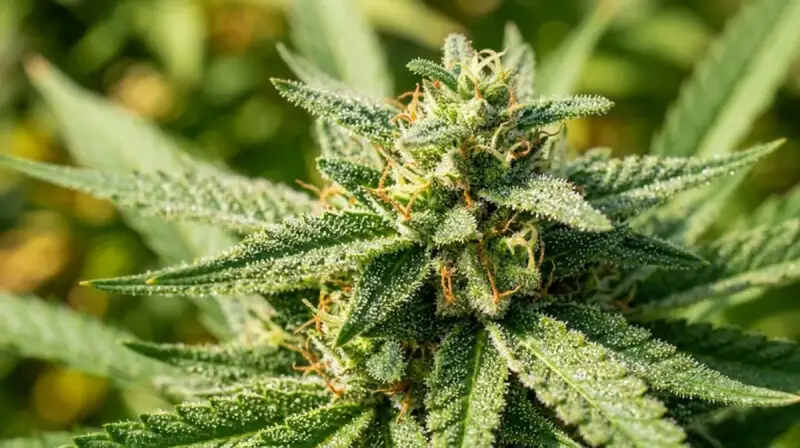
- Cannabis is Schedule I federally — the same category as heroin, and a higher schedule than cocaine (Schedule II)
- State legalization does NOT override federal law — federal prohibition applies in all 50 states
- Federal employees and anyone with a federal security clearance cannot legally use cannabis in any state
- Cannabis businesses cannot use federal banking — most dispensaries operate cash-only
- Non-citizens risk deportability for cannabis use even in fully legal states
- Crossing any state line with cannabis is federal drug trafficking regardless of state law on either side
- HHS recommended rescheduling to Schedule III in 2023; DEA review and final rule are still pending
What Schedule I Actually Means
The Controlled Substances Act (CSA), passed in 1970, organizes all controlled substances into five schedules based on medical use and abuse potential. Schedule I is the most restrictive category. To qualify for Schedule I, the DEA must find three things: the substance has a high potential for abuse; it has no currently accepted medical use in treatment in the United States; and there is a lack of accepted safety for use under medical supervision. Schedule I substances include heroin, LSD, psilocybin, and cannabis. By contrast, cocaine is Schedule II because it has a narrow accepted medical use as a topical anesthetic. Methamphetamine is also Schedule II. This scheduling places cannabis in a more restricted category than either cocaine or methamphetamine — a classification that most researchers and many physicians consider scientifically unjustified given decades of clinical evidence. The placement of cannabis in Schedule I was not the result of scientific review. The Shafer Commission, appointed by President Nixon to evaluate cannabis scheduling, recommended in 1972 that cannabis be decriminalized. Nixon rejected the report. Internal records later revealed that political motivations — particularly targeting Black communities and anti-war protesters — were central to the decision to maintain Schedule I status.Federal Penalties for Cannabis
| Offense / Amount | First Offense | Second Offense | Notes |
|---|---|---|---|
| Possession (any amount) | Up to 1 year, $1,000 fine | Up to 2 years, $2,500 fine | Personal use |
| Distribution (less than 50 kg) | Up to 5 years, $250,000 fine | Up to 10 years, $500,000 fine | Includes gifting in some interpretations |
| Distribution (50–100 kg) | Up to 40 years, $2M fine | Mandatory life if prior felony | Trafficking quantities |
| Cultivation (under 50 plants) | Up to 5 years | Up to 10 years | Treated same as distribution weight |
| Cultivation (100–999 plants) | 5–40 years mandatory minimum | 10 years–life | Federal mandatory minimum applies |
| Interstate transport (any amount) | Up to 5 years | Up to 10 years | Separate offense from possession |
State vs. Federal Law: The Core Conflict
The US Constitution’s Supremacy Clause (Article VI) establishes that federal law is the supreme law of the land when it conflicts with state law. Technically, federal cannabis law preempts all state legalization laws. In practice, the federal government has largely chosen not to enforce federal law against state-compliant cannabis activity. The framework for federal non-interference was established in 2013 via the Cole Memorandum, a DOJ guidance document authored by Deputy Attorney General James Cole. It instructed federal prosecutors to deprioritize cases involving state-licensed cannabis businesses that complied with state law. In January 2018, Attorney General Jeff Sessions formally rescinded the Cole Memo, returning prosecutorial discretion to individual US Attorneys. Despite the rescission, large-scale federal prosecution of state-legal operations has not materialized — but the legal risk has never been eliminated. The current DOJ policy is effectively “don’t make it a priority” without a formal written directive. This creates ongoing legal uncertainty for cannabis businesses, banks, and investors operating in legal states.Real-World Federal Impacts
| Sector | Federal Impact | Notes |
|---|---|---|
| Banking | Banks risk federal money laundering charges for serving cannabis clients | Most dispensaries operate cash-only; limited access to loans, credit cards, payroll banking |
| Employment | Federal drug-free workplace rules apply to all federally contracted employers | Millions of private employees tested under federal contractor requirements |
| Federal Housing | Cannabis use is grounds for eviction or denial of housing assistance | Applies even in fully legal states |
| Immigration | Cannabis use or admission = inadmissibility; prior conviction = deportability | Applies to visa holders, green card holders, and asylum seekers |
| Gun Ownership | Federal Form 4473 asks about cannabis; lying is a federal crime | Cannabis users are legally prohibited from purchasing firearms under federal law |
| Security Clearance | Recent cannabis use disqualifies applicants regardless of state law | Adjudicators evaluate recency, frequency, and intent to stop |
| Research | Schedule I restricts research supply; DEA registration required | FDA-approved trials face significant procurement and IRB barriers |
| Interstate Commerce | Cannabis cannot legally cross state lines | Each state’s legal market must be entirely self-contained |
| Bankruptcy | Federal courts will not discharge cannabis business debts | Cannabis businesses cannot access federal bankruptcy protection |
| Tax (IRS 280E) | Cannabis businesses cannot deduct normal business expenses | Effective tax rates often 60–80% of gross profit for operators |
Cannabis Banking: Why Dispensaries Run on Cash
Federal banking law requires banks to file Suspicious Activity Reports (SARs) for any transaction they suspect involves proceeds from illegal activity. Because cannabis is federally illegal, every transaction a dispensary processes technically involves drug proceeds. Banks that accept cannabis business accounts risk federal money laundering prosecution, loss of FDIC insurance, and Federal Reserve access. The result: the majority of cannabis dispensaries in the US cannot accept credit or debit cards, have difficulty making payroll, cannot get business loans, and must transport large amounts of physical cash. The SAFE Banking Act would protect banks from federal penalties for serving state-licensed cannabis businesses. It has passed the House seven times since 2019 but has consistently stalled in the Senate. The companion SAFER Banking Act incorporates expanded consumer protections. As of mid-2026, neither has been enacted.Federal Employees: Zero Tolerance, No Exceptions
The Drug-Free Workplace Act of 1988 requires federal agencies to maintain drug-free workplaces. Executive Order 12564 extended this requirement to all federal employees. Cannabis is explicitly listed as a prohibited substance with no exception for medical use. This affects military personnel (all branches), TSA employees, federal law enforcement (DEA, FBI, CBP), postal workers, and any employee of a federal contractor meeting the $100,000 threshold. Cannabis use while off-duty and in a legal state is still grounds for termination. Security clearance holders face separate adjudicative guidelines: recent use within the past year is generally disqualifying.Immigration Consequences
For non-citizens — including lawful permanent residents (green card holders) — cannabis-related activity carries severe immigration consequences. Under the Immigration and Nationality Act, admitting to cannabis use is grounds for inadmissibility. A cannabis conviction, including simple possession, can make a non-citizen deportable. This applies even when the use occurred in a fully legal state. US Customs and Border Protection officers routinely ask about cannabis use at all ports of entry. Admitting use — or having evidence on a phone or social media — can result in permanent inadmissibility. Immigration attorneys consistently advise non-citizens to avoid all cannabis use regardless of state legal status.Firearms and Cannabis
Federal firearms law (18 USC 922(g)(3)) prohibits any person who is “an unlawful user of or addicted to any controlled substance” from purchasing, possessing, or transferring firearms. ATF Form 4473, required for any licensed dealer sale, asks whether the buyer is an unlawful user of cannabis. Answering “no” while being a cannabis user is a federal felony — up to 10 years in federal prison. The ATF has formally clarified that state medical cannabis card holders are prohibited persons under federal law regardless of their state’s laws.Research Barriers Under Schedule I
Schedule I classification creates unique research obstacles. Researchers must obtain a Schedule I researcher registration from the DEA. All cannabis used in federally funded research must come from DEA-authorized sources. For decades, the only federally authorized cannabis cultivation facility was at the University of Mississippi, producing cannabis widely criticized as unrepresentative of commercially available products. IRBs at universities receiving federal funding face pressure not to approve cannabis studies. Clinical trials involving administering cannabis to humans require FDA, DEA, and often additional agency approvals. The result is a substantial gap in clinical evidence — particularly for smoked or vaped cannabis, high-potency products, and long-term effects — that cannot be adequately addressed under current federal rules.Rescheduling vs. Descheduling: Where Things Stand
In August 2023, HHS formally recommended to the DEA that cannabis be rescheduled from Schedule I to Schedule III — the first time a federal health agency officially recommended relaxing cannabis scheduling. Schedule III status would acknowledge accepted medical use, reduce federal penalties, and potentially eliminate the IRS 280E burden for cannabis businesses. However, Schedule III status would not legalize cannabis. It would remain a controlled substance — a system incompatible with the existing state dispensary model. Only full descheduling (complete removal from the CSA) would resolve the conflict between state and federal law. Descheduling requires an act of Congress. The STATES Act would effectively defer to state law on cannabis, but it has not advanced to a floor vote in either chamber.The SAFE Banking Act and STATES Act: Legislative Attempts
Congress has made repeated attempts to address the federal-state cannabis conflict through targeted legislation. The most prominent is the SAFE Banking Act (Secure and Fair Enforcement for Mortgage Licensing Act), which would specifically protect financial institutions from federal prosecution for servicing state-licensed cannabis businesses. It has passed the House of Representatives with bipartisan support seven times since its first passage in 2019. Each time, Senate leadership has declined to bring it to a floor vote. The SAFER Banking Act (2023) added anti-money laundering provisions and expanded protections to ancillary businesses serving the cannabis industry. The STATES Act (Strengthening the Tenth Amendment Through Entrusting States) takes a broader approach: it would amend the Controlled Substances Act to exempt state-legal cannabis activities from federal prosecution entirely. Under the STATES Act, cannabis would still be federally controlled, but individuals and businesses operating in compliance with state law would not be subject to federal penalties. The act has been introduced multiple times but has not advanced beyond committee in either chamber. The MORE Act (Marijuana Opportunity Reinvestment and Expungement Act) goes further still: it would deschedule cannabis entirely, expunge prior federal cannabis convictions, and create a federal trust fund funded by cannabis taxes to support communities disproportionately impacted by cannabis prohibition. The MORE Act passed the House in 2020 and again in 2022 but has not received a Senate vote.Federal Property and National Parks
Federal prohibition applies with full force on all federal land and property regardless of surrounding state law. This includes: all national parks and national forests; Bureau of Land Management (BLM) lands; federal courthouses, post offices, and government buildings; military installations and bases; all airports (which fall under federal jurisdiction via the FAA); and all interstate highways. A person driving through a national park with legally purchased state cannabis is committing a federal crime. Cannabis purchased in a Colorado dispensary is illegal the moment you enter Rocky Mountain National Park. Washington DC presents a unique situation: cannabis possession (up to 2 ounces) is legal under DC law, but federal employees working in DC federal buildings are prohibited from use, and cannabis cannot be legally sold commercially in DC due to congressional restrictions on DC legislation. The result is a system where DC residents can possess and grow cannabis but cannot legally purchase it.IRS Section 280E: The Cannabis Tax Penalty
Internal Revenue Code Section 280E is one of the most financially punishing aspects of federal cannabis prohibition for legal businesses. It provides that no deduction or credit is allowed for any amount paid in connection with the “trafficking” of a Schedule I or Schedule II controlled substance. Because cannabis is Schedule I, licensed cannabis businesses cannot deduct ordinary business expenses: rent, payroll, utilities, marketing, legal fees, or most operating costs. The only deductions available are Cost of Goods Sold (COGS) — the direct cost of producing the cannabis product itself. This means cannabis businesses with a 50% gross margin may pay federal tax on their entire gross profit rather than their net income, resulting in effective tax rates of 60–80% of actual profits. Many profitable dispensaries pay more in federal taxes than they earn in net income. Rescheduling to Schedule III would eliminate the 280E burden, as it only applies to Schedule I and II substances.IRS Section 280E: The Cannabis Tax Burden
Internal Revenue Code Section 280E was enacted in 1982 in response to a drug dealer who successfully deducted business expenses from his illegal income. It provides that no deduction or credit is allowed for any amount paid in connection with the trafficking of a Schedule I or Schedule II controlled substance. Because cannabis is Schedule I, licensed dispensaries and producers cannot deduct rent, payroll, utilities, marketing, security, legal fees, or most ordinary business expenses from their federal taxable income.
The only permitted deductions are Cost of Goods Sold (COGS). This creates an effective federal tax rate of 60–80% on operating profits for many cannabis businesses. A dispensary with $1M in gross revenue and $600K in operating costs might owe federal tax on $700K rather than $400K in net income. Many profitable cannabis businesses operate at a net loss after federal taxes. Rescheduling to Schedule III would eliminate the 280E burden, since the provision only covers Schedule I and II.
Federal Property: Where Prohibition Is Absolute
Federal cannabis prohibition applies with no exceptions on all federally owned or controlled property. This includes national parks, national forests, Bureau of Land Management lands, military bases, post offices, federal courthouses, all airport facilities (under FAA jurisdiction), and all interstate highway rest areas. Carrying legally purchased state cannabis into a national park is a federal crime regardless of which state surrounds the park.
Washington DC occupies a unique position: possession is legal under DC law, personal cultivation is permitted, but commercial retail sale is prohibited by congressional budget rider. Federal workers in DC buildings face full federal drug-free workplace requirements despite surrounding legalization. The result is a market where residents can possess cannabis but must obtain it through non-commercial means.
Federal Housing: Public Housing and Cannabis Use
The US Department of Housing and Urban Development (HUD) and the Federal Housing Administration (FHA) have explicit policies prohibiting cannabis use in public housing and by recipients of federal housing assistance. Under the Drug-Free Public Housing Act, public housing authorities must establish and enforce policies prohibiting use or possession of any controlled substance on housing premises.
This means residents of Section 8 housing, public housing projects, and other federally assisted housing programs can face eviction for cannabis use regardless of state law. Cannabis-legal states cannot override this federal housing policy. Some state and local governments have passed tenant protection laws attempting to limit cannabis-related evictions in private housing, but federally assisted housing remains governed by federal rules with no exception for state-legal use.
The intersection of federal housing policy and cannabis reform has disproportionate impact on low-income communities who rely on federal housing assistance. Many cannabis advocates view housing protections as a critical equity component of comprehensive cannabis reform that purely state-level legalization cannot address.
Despite repeated House passage, the MORE Act has not received a Senate floor vote. Senate procedure requires 60 votes to overcome a filibuster, a threshold cannabis reform legislation has not been able to meet as of mid-2026. Federal cannabis descheduling through Congress requires either a significant political realignment or procedural changes to Senate rules.
Separately, several states have passed resolutions formally requesting that Congress take action on cannabis banking and federal scheduling. The Conference of State Legislatures, the National Governors Association, and the US Conference of Mayors have all passed resolutions urging federal cannabis reform. The pressure from state governments represents an unprecedented level of bipartisan agreement across the political spectrum.